80s Slang Popular Phrases & Meanings Explained 2026
80s slang revolutionized the way an entire generation communicated, bringing radical expressions and bodacious phrases into everyday conversations.
This decade gifted us with some of the most iconic linguistic creativity, from Valley Girl speak to surfer lingo that spread across America.
Whether you’re reliving nostalgic memories or discovering these terms for the first time, understanding 80s slang opens a window into a vibrant era of pop culture, music, and social dynamics.
These expressions weren’t just words—they represented attitude, confidence, and a unique cultural identity that still influences modern language today.
Table of Contents
What Was 80s Slang?
80s slang represented a cultural phenomenon that transformed everyday communication during one of the most colorful decades in history. This unique vocabulary emerged from various subcultures including surfers, Valley Girls, hip-hop artists, and preppy college students.
The language of the 1980s reflected the decade’s bold personality. Everything was bigger, brighter, and more expressive. Words like “radical” and “tubular” weren’t just adjectives—they were declarations of enthusiasm that captured the era’s energy.
Most 80s slang originated from California’s surf culture and San Fernando Valley speech patterns. These regional expressions quickly spread nationwide through movies, music, and MTV, becoming part of mainstream American vocabulary.
Origins of 80s Slang Culture
The roots of 80s slang trace back to multiple cultural movements that converged during this transformative decade. Surfer culture from Southern California contributed terms like “gnarly” and “radical” that originally described waves and surfing maneuvers.
Valley Girl culture, immortalized by Frank Zappa’s 1982 song “Valley Girl,” introduced phrases like “gag me with a spoon” and “totally tubular.” These expressions became synonymous with teenage speech patterns across America.
Hip-hop’s explosion in the 1980s brought urban slang into the mainstream. Artists and breakdancers popularized terms like “fresh,” “def,” and “word,” which crossed cultural boundaries and influenced broader youth vocabulary.
The rise of MTV and teen movies like “The Breakfast Club,” “Fast Times at Ridgemont High,” and “Bill & Ted’s Excellent Adventure” amplified these slang terms. Pop culture became the vehicle that transported regional expressions into every American household.
Popular 80s Slang Terms for Approval
Rad/Radical
Radical meant something was extremely cool, excellent, or impressive. Shortened to “rad,” this surfing term became one of the decade’s most versatile expressions of approval. The Teenage Mutant Ninja Turtles popularized it even further in the late 80s and early 90s.
Tubular
Tubular originally described the hollow, curved shape of a perfect surfing wave. By the mid-80s, it evolved to mean anything fabulous, exciting, or absolutely fantastic. Combined with “totally,” it became the quintessential 80s phrase.
Bodacious
Bodacious blended “bold” and “audacious” to describe something impressive, awesome, or attractive. The term gained prominence through CB radio culture before Bill & Ted’s Excellent Adventure made “bodacious babes” a pop culture staple.
Bad
Confusingly, “bad” meant something was actually very good in 80s slang. This ironic usage, popularized by Michael Jackson and hip-hop culture, showed approval for everything from fashion to music to attitude.
Bitchin’
Choice described anything of high quality, top-notch, or worthy of selection. If someone’s outfit was “choice,” it meant they looked absolutely fantastic and fashionable.
Gnarly
Gnarly originally meant dangerous or challenging in surf culture, but evolved to describe anything extreme, cool, or impressive. Fast Times at Ridgemont High cemented its place in 80s vocabulary.
Fresh
Fresh meant new, exciting, or exceptionally cool. This hip-hop originated term described everything from stylish clothes to innovative music to confident attitudes.
Def
Def was short for “definite” or “definitely,” but transformed into a term meaning excellent or outstanding. It became a staple of urban and hip-hop influenced speech patterns.
Awesome
Awesome described anything exceptionally good or impressive. While not unique to the 80s, this decade elevated its usage to describe virtually anything positive or exciting.
Common 80s Expressions and Phrases
Gag Me With a Spoon
This Valley Girl phrase expressed disgust or disbelief at something gross, ridiculous, or offensive. Variations included “gag me with a blowdryer” or “gag me with a phone book.”
Take a Chill Pill
Telling someone to “take a chill pill” meant they needed to relax and calm down. The phrase originated on college campuses, referencing medication used to calm hyperactivity.
What’s Your Damage?
This question asked why someone was acting out, upset, or behaving strangely. Made famous by the movie “Heathers,” it was a confrontational way to ask “what’s your problem?”
As If
“As if” expressed disbelief, rejection, or dismissal of an idea or suggestion. It conveyed that something was completely unrealistic or would never happen.
Psych!
Yelling “Psych!” meant you had just tricked someone by making them believe something untrue. It was the 80s equivalent of “just kidding” but more emphatic.
No Duh
“No duh” was a sarcastic response meaning “obviously” or stating the completely obvious. It mocked someone for saying something everyone already knew.
Totally
“Totally” functioned as an intensifier meaning “completely” or “definitely.” Valley Girl culture made it ubiquitous, often paired with other slang like “totally rad” or “totally tubular.”
Like
“Like” became a filler word inserted throughout sentences, particularly in Valley Girl speech. “Like, are you going to the mall?” became a stereotypical 80s sentence structure.
For Sure
“For sure” expressed enthusiastic agreement, often pronounced with Valley or surfer inflection. It meant “definitely” or “absolutely” with added emphasis.
To the Max
“To the max” meant to the maximum extent or fullest degree possible. “Grody to the max” described something extremely gross or disgusting.
80s Slang for People and Descriptions
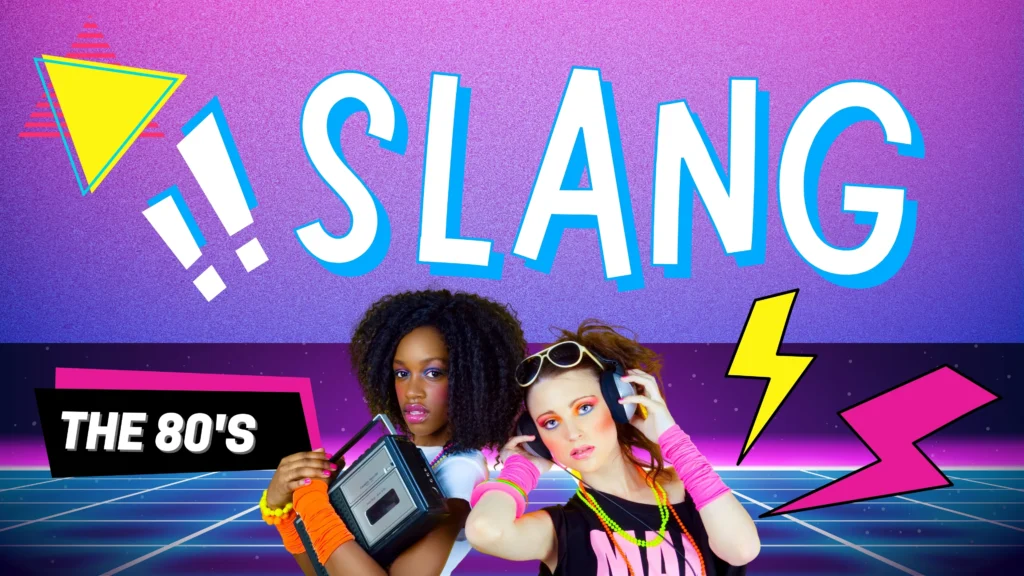
Dude/Dudette
Dude was a casual term to address anyone, though typically male. Dudette served as the unofficial female version, popularized during the decade’s surf culture influence.
Bod
Bod was short for “body,” used when complimenting someone’s physical appearance or physique. “Check out that bod!” meant someone looked physically attractive.
Airhead
Airhead described someone not very bright or intelligent. It was an insult suggesting someone’s head was empty of thoughts or common sense.
Spaz
Spaz, short for “spastic,” described someone hyperactive, clumsy, or overreacting to situations. While common in the 80s, it’s now considered insensitive.
Wastoid
Wastoid referred to a worthless or dim-witted person, often someone whose substance abuse was ruining their life. John Hughes coined the term for “The Breakfast Club.”
Yuppie
Yuppie stood for “Young Urban Professional” or “Young Upwardly-Mobile Professional.” It described career-oriented, wealthy, usually white individuals focused on money and social status.
Preppy
Preppy described the collegiate style and attitude, characterized by Polo or Izod shirts, deck shoes, and cloth belts. Preppies embraced traditional, clean-cut fashion.
Wannabe
A wannabe was someone who desperately wanted to be like someone else, usually a celebrity or popular person. Madonna wannabes flooded the mid-80s.
Poser
A poser was someone pretending to be something they weren’t, particularly in skateboard and punk culture. Similar to wannabe but more deceptive.
Big Kahuna
Big Kahuna referred to an important person, leader, or someone in charge. Borrowed from Hawaiian surf culture, it described authority figures.
Negative 80s Slang Terms
Bogus
Bogus meant fake, counterfeit, or disappointing. If something was bogus, it was ridiculous, unfair, or a total letdown.
Lame
Lame described anything boring, uncool, or negative. It expressed disappointment or criticism of people, situations, or things.
Grody/Grodie
Grody meant disgusting or gross. This Valley Girl term often appeared in the phrase “grody to the max” for something extremely repulsive.
Bummer
Bummer described disappointing situations or unfortunate circumstances. “That’s a total bummer” expressed sympathy or shared disappointment.
Harsh
Harsh meant severe, unfair, or mean-spirited. “That’s harsh” responded to insults, criticism, or unfortunate situations.
Burn
Getting “burned” meant being insulted or embarrassed by someone’s cutting remark. The sensation of a burn represented the sting of humiliation.
Bag Your Face
This insult told someone they were so ugly they should hide their face behind a bag. It was a particularly cruel appearance-based insult.
Barney
Barney described an unattractive or uncool male. It became an insult suggesting someone lacked appeal or social standing.
Geek
Geek described someone not hip or socially aware, often implying stupidity or awkwardness. Before tech culture embraced it, geek was purely negative.
Generic
Generic meant of poor quality, poorly planned, or unoriginal. It expressed disappointment in something’s lack of uniqueness or value.
Action-Based 80s Slang
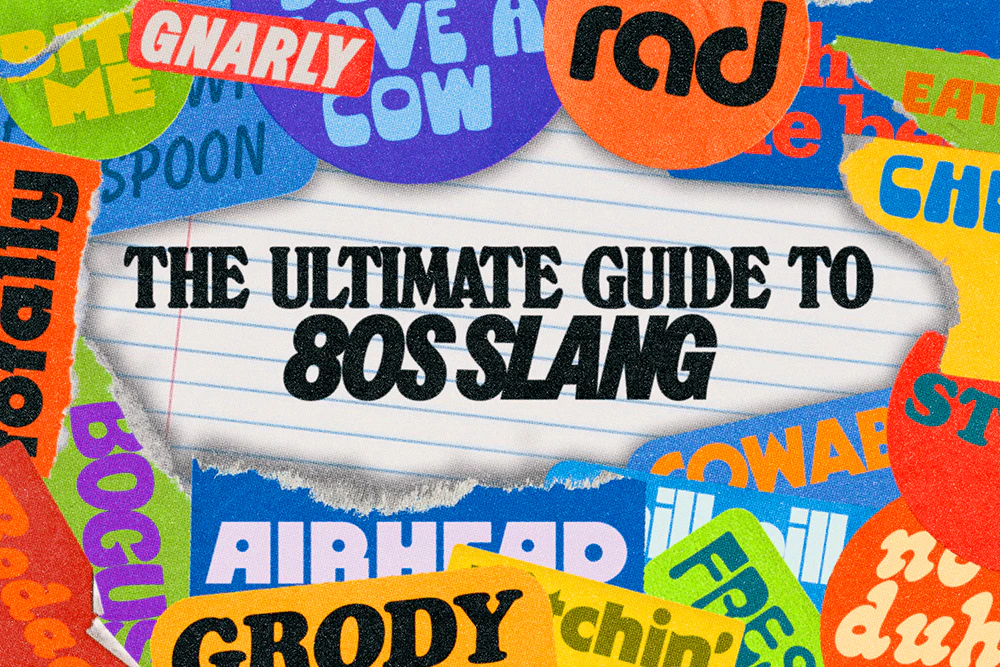
Scarf
To scarf meant eating food quickly and in large quantities. “I scarfed that pizza” meant devouring it at record speed.
Ralph
Ralph was slang for vomit or throwing up. It could be used literally or to express disgust at something repulsive.
Veg/Veg Out
Vegging out meant relaxing completely, doing nothing, or disengaging mentally. Like a vegetable, you were inactive and unproductive.
Motor
To motor meant to move quickly or leave a place. “I gotta motor” announced your departure with urgency.
Jet
To jet meant leaving quickly or hurrying away. “Gotta jet” was a casual way to announce your exit.
Bounce
Bounce meant to leave or depart from a location. It conveyed movement and casual departure without ceremony.
Book/Book It
To book it meant running away quickly or leaving in a hurry. It suggested urgent movement or escape.
Chow Down
Chow down meant eating heartily or with enthusiasm. It emphasized the act of consuming a meal with gusto.
Chill/Chill Out
Chill or chill out meant to relax, calm down, or hang out casually. It promoted a laid-back, stress-free approach.
Bust a Move
Bust a move meant to dance, take action, or make a bold move. It encouraged confident, decisive action.
Regional 80s Slang Variations
Valley Girl Influence
Valley Girl slang from California’s San Fernando Valley dominated 80s speech patterns. Characterized by “like” as a filler word, uptalk intonation, and phrases like “gag me with a spoon,” this dialect spread through movies and music.
Frank Zappa’s daughter Moon Unit voiced the iconic song that defined this speech pattern. Films amplified Valley speak, making it synonymous with teenage communication nationwide.
East Coast Urban Slang
East Coast cities, particularly New York, contributed hip-hop influenced slang. Terms like “fresh,” “def,” and “word” emerged from urban culture and hip-hop music.
This regional variation emphasized coolness, authenticity, and street credibility. It contrasted sharply with California’s surfer and Valley Girl influences.
Southern California Surf Culture
Surf culture originated terms like “gnarly,” “radical,” and “tubular.” These words originally described waves, maneuvers, and surfing conditions before entering mainstream vocabulary.
Movies like “Fast Times at Ridgemont High” showcased this dialect, spreading it beyond coastal communities to landlocked regions.
Boston and New England Terms
New England contributed phrases like “wicked” as an intensifier meaning “very” or “extremely.” “Wicked bad” could mean either very bad or very good, depending on context.
Regional variations showed how 80s slang adapted to local speech patterns while maintaining core vocabulary.
80s Slang in Pop Culture
Movies That Defined 80s Language
“The Breakfast Club” introduced “wastoid” and popularized numerous teen expressions. John Hughes films captured authentic teenage speech patterns and amplified them.
“Fast Times at Ridgemont High” showcased surf culture slang. Sean Penn’s character Jeff Spicoli embodied the laid-back surfer vocabulary that defined an era.
“Bill & Ted’s Excellent Adventure” made “bodacious,” “excellent,” and “party on” cultural touchstones. The film’s linguistic influence extended well into the 1990s.
“Heathers” contributed darker slang like “What’s your damage?” and showcased how language reflected social hierarchies and teenage cruelty.
Music’s Impact on 80s Vocabulary
Frank Zappa’s “Valley Girl” satirized and immortalized San Fernando Valley speech patterns. This single song influenced how an entire generation spoke.
Hip-hop artists like Run-DMC, LL Cool J, and the Beastie Boys introduced urban slang to suburban audiences. Music videos on MTV spread these terms nationwide instantly.
Madonna’s influence created “wannabes” who copied her style and vocabulary. Pop music became a linguistic delivery system for slang terms.
Television’s Role
MTV revolutionized how quickly slang spread across America. Music videos, VJs, and shows like “Yo! MTV Raps” accelerated linguistic trends.
“The Simpsons,” which debuted in 1989, captured and satirized 80s slang. Bart Simpson’s “Don’t have a cow, man” became a catchphrase transcending the show.
Sitcoms and teen dramas incorporated contemporary slang, legitimizing and spreading these expressions to families watching together.
How 80s Slang Influenced Modern Language
Lasting Terms Still Used Today
Many 80s expressions remain in current vocabulary. “Awesome,” “totally,” and “like” as a filler word persist in everyday speech across generations.
“Chill” and “chill out” maintained relevance, evolving with modern usage but retaining their core meanings. These terms proved linguistically durable.
Even terms like “rad” occasionally resurface, often ironically, showing the lasting cultural impact of 80s linguistic creativity.
Evolution of Slang Patterns
The 80s established patterns for how slang spreads through media, particularly visual media like MTV and movies. This model predicted internet-era viral language.
Regional slang’s nationalization through pop culture began in earnest during the 80s. The decade demonstrated how entertainment could homogenize linguistic diversity.
Ironic language use, like “bad” meaning good, became commonplace. This linguistic playfulness influenced later generations’ approach to slang creation.
Nostalgia and Retro Usage
Modern speakers often use 80s slang ironically or nostalgically. Saying something is “totally tubular” acknowledges the phrase’s dated quality while embracing its charm.
Retro parties and themed events revive 80s vocabulary, keeping these terms circulating in cultural memory. This nostalgia ensures continued recognition across generations.
Contemporary media referencing the 80s reintroduces these terms to younger audiences, creating cyclical awareness and appreciation.
Comparison: 80s Slang vs. Modern Slang
| 80s Slang Term | Modern Equivalent | Usage Context |
|---|---|---|
| Rad/Radical | Lit/Fire | Expressing approval |
| Tubular | Epic/Amazing | Describing something fantastic |
| Gnarly | Sick/Insane | Showing something extreme or cool |
| Fresh | Drip/Flexing | Referring to style or fashion |
| Gag Me With a Spoon | I Can’t Even | Expressing disgust or disbelief |
| Take a Chill Pill | Calm Down/Relax | Telling someone to relax |
| Psych! | Just Kidding/JK | Indicating you were joking |
| What’s Your Damage? | What’s Your Problem? | Confrontational question |
| As If | No Way/Yeah Right | Expressing disbelief |
| To the Max | 100%/To the Fullest | Emphasizing maximum extent |
Similarities in Slang Evolution
Both 80s and modern slang emerge from youth subcultures. Music, fashion, and social movements drive linguistic innovation across decades.
Visual media remains crucial for slang dissemination. MTV’s role in the 80s parallels TikTok’s influence today on how quickly language spreads.
Regional variations still exist but get quickly nationalized or globalized through digital platforms. The mechanism changed but the pattern persists.
Key Differences
Modern slang spreads exponentially faster through social media. What took months or years in the 80s now happens in days or hours.
Internet culture creates more ephemeral slang. 80s terms had longer lifespans because media saturation developed more gradually.
Global connectivity means modern slang crosses international borders instantly, while 80s slang remained more culturally and nationally specific.
The Psychology Behind 80s Slang
Identity and Belonging
Slang served as linguistic markers of group membership. Using correct 80s terminology signaled belonging to particular social circles or subcultures.
Teenagers used distinctive vocabulary to create boundaries between themselves and adults. This linguistic separation asserted independence and generational identity.
Regional and cultural variations in slang helped individuals identify others from similar backgrounds, creating instant connections and shared understanding.
Rebellion and Expression
Colorful, exaggerated language represented rebellion against formal communication standards. “Gag me with a spoon” shocked adult sensibilities, which was precisely the point.
Creating and using slang allowed young people to express themselves in ways traditional vocabulary couldn’t capture. “Bad” meaning good exemplified this creative inversion.
The boldness of 80s slang matched the decade’s broader cultural confidence. Language reflected the era’s attitude that bigger and bolder was better.
Social Hierarchies
Knowing and correctly using current slang determined social standing. Using outdated terms or misusing expressions marked someone as uncool or out of touch.
Different slang vocabularies distinguished preppies from punks, surfers from urban kids. Language reinforced and reflected social divisions and affiliations.
The speed at which slang evolved created constant pressure to stay current, maintaining social hierarchies based on cultural awareness.
Teaching and Learning 80s Slang Today
Educational Value
Studying 80s slang provides insights into linguistic evolution and cultural history. It demonstrates how language reflects and shapes social realities.
Understanding this vocabulary helps interpret 80s media accurately. Movies, music, and television make more sense when their language is comprehensible.
Historical slang study shows patterns of innovation, adoption, and obsolescence that apply to contemporary language evolution.
Cultural Appreciation
Learning 80s slang connects people to an important cultural era. Even those who didn’t experience the decade can appreciate its linguistic creativity.
These terms represent more than words—they encapsulate attitudes, values, and social dynamics that defined a generation’s experience.
Appreciating historical slang develops empathy and understanding for different communication styles across time periods.
Practical Applications
Themed parties, retro events, and costume occasions benefit from authentic 80s vocabulary. Using period-appropriate slang enhances authenticity and entertainment value.
Writers, actors, and content creators need accurate 80s language for period pieces. Understanding this vocabulary ensures realistic historical representation.
Language learners studying English can examine slang to understand informal communication and cultural context beyond textbook vocabulary.
Why 80s Slang Remains Iconic
Cultural Significance
The 1980s represented a unique convergence of cultural forces that made its slang particularly memorable. MTV, blockbuster movies, and mainstream hip-hop created unprecedented linguistic influence.
This decade’s confidence and boldness infused its vocabulary. Terms weren’t subtle—they were declarative, expressive, and impossible to ignore.
The visual nature of 80s culture meant slang was always accompanied by distinctive fashion, music, and attitudes, creating complete cultural packages.
Nostalgia Factor
Those who lived through the 80s carry strong emotional connections to its language. Hearing familiar phrases triggers powerful memories and feelings.
Popular culture’s cyclical nature regularly revives 80s aesthetics, bringing its vocabulary back into temporary circulation. Retro trends keep these terms alive.
Each new generation discovering 80s culture through parents, media, or fashion finds the slang charming, excessive, and entertainingly dated.
Linguistic Creativity
The 80s demonstrated remarkable linguistic inventiveness. Words like “bodacious” showed creative blending while phrases like “gag me with a spoon” revealed imaginative expression.
This creativity made the vocabulary inherently memorable. Unusual combinations and exaggerated expressions stuck in cultural memory more than subtle terms.
The decade proved language could be playful, bold, and fun. This approach to communication contrasted with more reserved previous eras.
Common Misconceptions About 80s Slang
Not All Terms Originated in the 80s
Many terms labeled “80s slang” actually originated earlier. “Gnarly” came from 1970s surf culture, while “bitchin'” dates to the 1960s.
The 80s popularized and mainstreamed these expressions rather than inventing them. MTV and movies spread regional terms nationally, creating the impression of 80s origins.
Understanding this distinction shows how the decade served as a cultural amplifier, broadcasting existing terms to unprecedented audiences.
Regional Variation Was Significant
Not everyone in the 80s used the same slang. Valley Girl speak dominated California but wasn’t universal in New York or Atlanta.
Urban, suburban, and rural communities developed different vocabularies. Media created a homogenized impression that didn’t reflect actual diversity.
Age, race, and social class also affected which terms people used. The “typical 80s slang” represents a specific demographic slice rather than universal experience.
Usage Context Mattered
Terms had specific appropriate contexts. Using surfer slang away from beach communities might seem forced or inauthentic to locals.
Social situations determined which vocabulary was appropriate. School, family, and formal settings limited slang use compared to peer interactions.
Tone and delivery were as important as the words themselves. “Radical” could be genuine or sarcastic depending on inflection and context.
Frequently Asked Questions (FAQs)
What does “radical” mean in 80s slang?
Radical meant extremely cool, excellent, or impressive. Often shortened to “rad,” it expressed strong approval for anything from surfing moves to fashion choices. The term originated in surf culture before becoming mainstream 80s vocabulary.
Why did “bad” mean “good” in the 80s?
“Bad” meaning good was ironic slang popularized by Michael Jackson and hip-hop culture. This linguistic inversion showed linguistic creativity and rebellion against conventional meaning, making it a perfect expression of 80s attitude and confidence.
What is Valley Girl slang?
Valley Girl slang originated from California’s San Fernando Valley and was characterized by uptalk intonation, the frequent use of “like” as a filler word, and phrases like “gag me with a spoon.” Frank Zappa’s 1982 song “Valley Girl” popularized this distinctive speech pattern nationwide.
Are any 80s slang terms still used today?
Yes, many 80s terms remain current including “awesome,” “totally,” “chill,” and “like” as a filler word. While some terms are used ironically or nostalgically, others became permanent fixtures in English vocabulary and evolved with contemporary usage.
What movies popularized 80s slang?
Key movies include “The Breakfast Club,” “Fast Times at Ridgemont High,” “Bill & Ted’s Excellent Adventure,” and “Heathers.” These films showcased authentic teenage speech patterns and introduced or amplified terms that became cultural touchstones for the entire decade.
What does “tubular” mean?
Tubular originally described the hollow, curved shape of a perfect surfing wave. In 80s slang, it evolved to mean anything fabulous, exciting, or fantastic. “Totally tubular” became one of the decade’s most recognizable phrases.
What is the difference between “rad” and “gnarly”?
Both expressed approval, but “rad” meant purely excellent or cool, while “gnarly” originally meant extreme, dangerous, or challenging before evolving to mean impressive or awesome. Gnarly carried slightly edgier connotations than the more universally positive rad.
What does “gag me with a spoon” mean?
This Valley Girl phrase expressed disgust, disbelief, or horror at something gross, ridiculous, or offensive. It was deliberately exaggerated and visual, capturing the decade’s tendency toward dramatic, colorful expression.
Why was 80s slang so colorful and exaggerated?
The 80s embraced bigger, bolder aesthetics in all areas—fashion, music, architecture, and language. Slang reflected this cultural confidence with exaggerated, creative expressions that matched the decade’s overall personality and attitude toward self-expression.
How did MTV influence 80s slang?
MTV spread slang nationally and internationally at unprecedented speed. Music videos, VJs, and shows exposed audiences to regional terms, urban vocabulary, and youth culture expressions, making MTV a primary vehicle for slang dissemination throughout the decade.
Conclusion
80s slang remains a fascinating linguistic legacy that continues influencing modern communication decades after the era ended.
These radical expressions captured a generation’s creativity, confidence, and cultural identity through bold, memorable vocabulary.
From Valley Girl uptalk to surfer terminology to hip-hop innovations, the decade produced linguistic diversity that reflected America’s varied subcultures.
Whether you’re studying language evolution, appreciating cultural history, or simply enjoying nostalgic entertainment, understanding 80s slang connects you to a transformative period in communication history.
These terms weren’t just words—they were attitudes, identities, and declarations that something totally tubular was happening in American culture.