90s Slang Words You Totally Forgot About 2026
90s slang was something truly special — raw, creative, and dripping with the confidence of a generation raised on hip-hop, grunge, Saturday morning cartoons, and iconic films like Clueless.
Whether you were a 90s kid living it in real time or a millennial who inherited these phrases from older siblings, the language of the nineties hit different. Many of these words vanished somewhere between Y2K and the rise of social media.
But in 2026, the nostalgia is back harder than ever. This complete guide rounds up the best, funniest, and most forgotten 90s slang terms — with meanings, examples, origins, and which ones are quietly making a comeback.
Table of Contents
What Made 90s Slang So Unique?
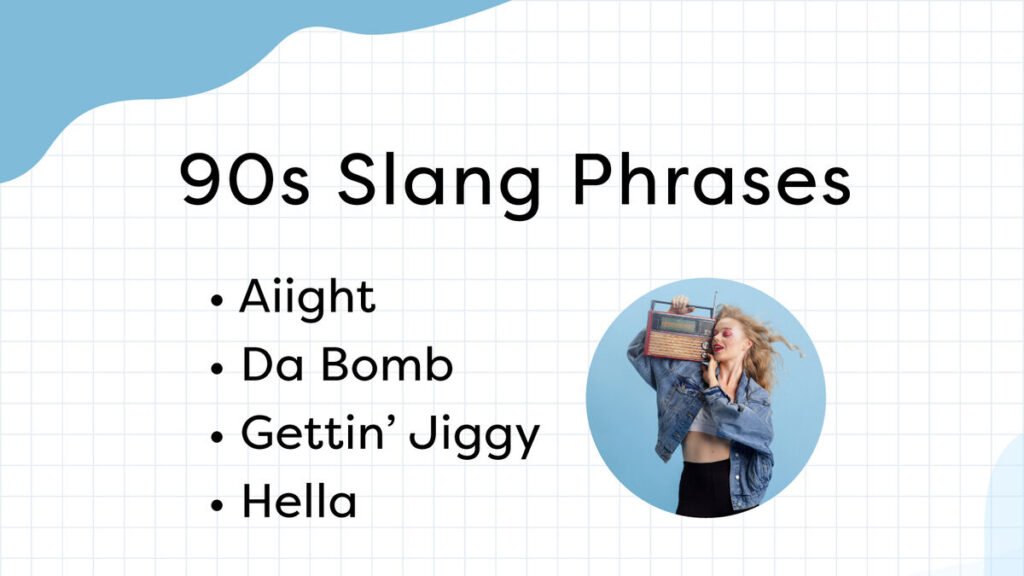
90s slang didn’t spread through apps, trending sounds, or viral tweets. It moved through school hallways, boom boxes, VHS tapes, and three channels of after-school TV.
That offline origin gave 90s slang something modern internet language often lacks — staying power. Words built on real cultural moments last longer than words born from a 30-second clip.
The decade was a linguistic melting pot. African American Vernacular English (AAVE) drove most of the era’s freshest expressions. Hip-hop artists, comedians, and screenwriters blended street lexicon with pop culture references to create a vocabulary that felt genuinely alive.
The American Dialect Society named “duh” the Most Useful Word of 1997. That should tell you everything about how seriously the nineties took its language.
The Big List of 90s Slang: A to Z
A — All That, As If, Aiight
- All That meant someone or something was the absolute best. Used admiringly or sarcastically depending on tone. “She thinks she’s all that” meant someone had too much ego. “That concert was all that and a bag of chips” was pure, uncut praise.
- As If was the dismissive queen of 90s slang. Made immortal by Alicia Silverstone in Clueless (1995), it meant “I strongly disagree” or “absolutely not.” No eye roll required — though one was always recommended.
- Aiight was a smooth, lazy version of “all right” that came straight out of hip-hop culture. You said aiight when you were agreeing to something but didn’t want to sound too enthusiastic about it.
B — Bounce, Buggin’, Boo, Bomb
- Bounce meant to leave. Short, direct, perfect. “Let’s bounce” required no explanation. You were done. You were leaving. Goodbye.
- Buggin’ meant overreacting or acting irrational. Made famous in Clueless — “I’m totally buggin’!” It came from hip-hop culture and spread everywhere in the mid-90s.
- Boo was your significant other. Simple, affectionate, instantly recognisable. Calling someone your boo in 1997 was the equivalent of “partner” today.
- Da Bomb described something so good it was almost dangerous. If something was da bomb, it was the best thing you’d encountered all week. “That pizza is da bomb” was a genuine compliment.
C — Chill, Chillin’ Like a Villain, Crunk
- Chill / Chill Out meant calm down or relax. Still used today, though it feels slightly quainter than it did in 1994.
- Chillin’ Like a Villain elevated a simple “I’m relaxing” into a whole personality. Popularised by Batman: The Animated Series, this phrase had rhythm, rhyme, and instant cool.
- Crunk combined “crazy” and “drunk” — or by some accounts, “crazy” and “funk.” Either way, if the party was crunk, things were escalating. Lil Jon later weaponised the word in the early 2000s, but its roots are firmly 90s.
D — Dope, Dis, Duh
- Dope simply meant excellent, impressive, or cool. Borrowed from hip-hop culture and used across every social group by the late 90s. Still very much alive today.
- Dis was short for “disrespect.” To dis someone was to insult or put them down publicly. Everyone knew to be careful about who they diss’d.
- Duh was a one-word shut-down for obvious statements. The American Dialect Society’s Word of the Year in 1997. If someone said something painfully obvious, you hit them with a slow, drawn-out “duuuh” and walked away.
F — Fly, Fresh, Frontin’, Four-One-One
- Fly meant stylish, attractive, or impressively cool. Originating in AAVE, it became mainstream by the early 90s. Jennifer Lopez was literally called a “Fly Girl” on In Living Color. Fly remains one of the most effortlessly cool words the decade produced.
- Fresh meant new, clean, impressive, and of great quality. Used to describe looks, moves, shoes, and ideas. “Looking fresh” was among the highest compliments available.
- Frontin’ meant pretending to be something you’re not. Putting on a fake facade or trying to impress people dishonestly. If you were frontin’, people noticed.
- The 411 meant information or the full story. Named after the directory assistance phone number. “What’s the 411?” was asking for the latest news, gossip, or update. Mary J. Blige named her debut album What’s the 411? in 1992 — which tells you exactly when this phrase peaked.
G — Get Jiggy With It, Grunge, Gnarly
- Get Jiggy With It meant to dance freely, have fun, or get loose. Will Smith’s 1997 hit made this phrase inescapable. If someone told you to get jiggy with it, the only correct response was to start moving.
- Grunge wasn’t just a music genre — it became a lifestyle descriptor. If something was grungy, it was raw, unpolished, and aesthetically dark. Seattle’s music scene gave the word its cultural weight.
- Gnarly described something wild, extreme, or impressive (sometimes dangerously so). A gnarly skate trick was both terrifying and respect-worthy at the same time.
H — Hella, Homie, Hyped
- Hella was a Northern California-born intensifier meaning “very” or “a lot.” “That test was hella hard.” “This pizza is hella good.” Its geographic origin gave it a slight West Coast flavour that Gen Z later fully adopted and owns to this day.
- Homie / Homies meant close friend or companion. Rooted in hip-hop culture and referring to someone from your neighbourhood. By the mid-90s it had crossed every cultural boundary imaginable.
- Hyped meant extremely excited or pumped up. If you were hyped, nothing was going to slow you down. The concept remains fully intact in today’s language — just slightly repackaged.
K — Keepin’ It Real, Kickin’ It
- Keepin’ It Real meant staying authentic, true to yourself, and not putting on a show. This phrase carried genuine weight in 90s culture — it was a value statement, not just slang.
- Kickin’ It simply meant relaxing or hanging out. No agenda, no drama. Just being with your people and taking it easy.
M — My Bad, Mint, Mad
- My Bad is perhaps the most successful 90s slang survivor of all time. It means “my mistake” or “my fault” — and it is still in everyday use across every English-speaking country on earth. Simple, honest, perfectly efficient.
- Mint described something in perfect or flawless condition. “That car is mint” or “she looked mint tonight.” More common in British 90s slang but widely understood.
- Mad was used as an intensifier, similar to “very” or “really.” “That was mad good.” “I’m mad tired.” It gave extra emphasis without requiring extra syllables.
N — Not!, No Duh, Narc
- Not! was tacked onto the end of a statement to reverse it sarcastically. “I totally love Mondays… NOT!” It appeared on The Simpsons in 1992 and on the Banished Words List in 1993 — a sign that it was everywhere.
- No Duh was the slightly more aggressive cousin of “duh.” Used to point out that someone had just stated something painfully obvious. Usually accompanied by an eye roll and mild contempt.
- Narc meant a snitch or informer — someone who told adults or authority figures about other people’s behaviour. To narc on someone was a serious social offence in any 90s schoolyard.
O — Off the Hook, OG, Outtie
- Off the Hook meant something was so good it exceeded all normal standards. “That finale was off the hook!” If something was off the hook, it went beyond the limits of what you expected.
- OG stood for “original gangster” — meaning someone authentic, respected, and from the original era of something. In 90s culture, being called an OG was a significant compliment.
- Outtie or “I’m outtie” meant you were leaving. A variation on “I’m out of here” with extra 90s flavour.
P — Phat, Psych!, Posse
- Phat meant cool, excellent, or attractive. The hip-hop community used it from the late 80s and it hit mainstream by 1992. Rumours circulated that it was an acronym for “pretty hot and tempting” — but linguists trace it directly to AAVE origins.
- Psych! was the verbal trap of the decade. You built someone up, then yelled “Psych!” to reveal the whole thing was a setup. Identical in spirit to today’s “just kidding” but far more dramatic.
- Posse was your crew, your group, your people. If you rolled with a posse, you moved as a unit. The word came straight from hip-hop culture and translated across every social circle.
R — Rad, Rents, Represent
- Rad was short for “radical” and meant something was impressively cool. Born in 80s skate culture, it remained fully active in early and mid-90s vocabulary. Saying something was “totally rad” was the highest available praise.
- Rents was slang for parents. Short, dismissive, and universal among teenagers. “My rents are home” was sufficient warning for any 90s gathering.
- Represent meant to show pride in where you came from — your city, your school, your crew. Rooted in hip-hop, it spread to sports culture and beyond.
S — Schwing!, Sketch, Snap
- Schwing! came entirely from Wayne’s World and Mike Myers. It expressed instant attraction or excitement. Usually accompanied by a hip thrust. Not subtle. Very effective.
- Sketch / Sketchy described something that seemed unsafe, suspicious, or just plain wrong. “That guy is sketchy” needed no further explanation. This one survived the 90s completely intact.
- Snap was an exclamation of surprise or acknowledgment — equivalent to “oh wow” or “dang.” Quick, versatile, and extremely 90s.
T — Talk to the Hand, Tight, Trippin’
- Talk to the Hand was a full stop. It ended conversations, dismissed arguments, and announced that you were done. Usually paired with a palm thrust toward the speaker’s face. Its full form — “talk to the hand ’cause the face ain’t listening” — was a complete dramatic performance.
- Tight meant excellent, very good, or exactly right. It overlapped with “fly” and “fresh” in the coolness spectrum. “That song is tight” was sincere appreciation.
- Trippin’ meant overreacting, behaving erratically, or thinking irrationally. “Why are you trippin’?” was the verbal equivalent of telling someone to calm down and think clearly.
W — Whatever, Word, Wack
- Whatever was the great verbal shrug of the 90s. Made legendary by teenagers everywhere, it expressed complete indifference to whatever was being said. Usually accompanied by a hand gesture forming a “W.”
- Word expressed agreement, acknowledgment, or confirmation. “Word” as a one-syllable reply meant “I hear you, I agree, that checks out.” The Dictionary.com team noted that this meaning peaked in the 1990s.
- Wack meant bad, lame, or of poor quality. If something was wack, it failed on every level. The opposite of fresh, fly, or phat.
90s Slang by Category
Cool / Impressive
| 90s Slang Word | Meaning | Example Usage |
|---|---|---|
| Da Bomb | The absolute best | “This track is da bomb.” |
| All That | The greatest, top tier | “That performance was all that.” |
| Fly | Stylish and cool | “You’re looking fly today.” |
| Fresh | New and impressive | “Those kicks are fresh.” |
| Phat | Excellent or attractive | “That beat is phat.” |
| Rad | Radically cool | “That trick was totally rad.” |
| Sick | Impressively good | “That goalwas sick.” |
| Dope | Really good | “This album is dope.” |
| Tight | Excellent | “The new episode was tight.” |
| Off the Hook | Beyond excellent | “That concert was off the hook.” |
Dismissals / Comebacks
| 90s Slang Phrase | Meaning | Example Usage |
|---|---|---|
| As If | Absolutely not | “You think I’d date him? As if!” |
| Talk to the Hand | I’m not listening | “Talk to the hand.” |
| Whatever | Total indifference | “Whatever. I don’t even care.” |
| Not! | Sarcastic reversal | “I love homework… NOT!” |
| No Duh | Obviously | “No duh, everyone knows that.” |
| Psych! | Just kidding | “I got you tickets — Psych!” |
| Don’t Go There | Don’t say it | “Don’t even go there right now.” |
People / Relationships
| 90s Slang Word | Meaning | Example Usage |
|---|---|---|
| Boo | Romantic partner | “Spending the night with my boo.” |
| Homie / Homies | Close friends | “Just chillin’ with my homies.” |
| Posse | Your crew | “Me and my posse are rolling up.” |
| OG | Respected original | “She’s a real OG in this game.” |
| Rents | Parents | “My rents are home, we can’t.” |
| Bae | Beloved, before anyone else | “That’s my bae right there.” |
Actions / Behaviours
| 90s Slang Term | Meaning | Example Usage |
|---|---|---|
| Bounce | Leave | “This party’s dead — let’s bounce.” |
| Get Jiggy With It | Dance / have fun | “The music’s on — get jiggy with it!” |
| Kickin’ It | Hanging out | “We’re just kickin’ it at mine.” |
| Frontin’ | Faking it | “He’s frontin’ — that’s not his car.” |
| Trippin’ | Overreacting | “Why are you trippin’ over that?” |
| Buggin’ | Acting irrational | “I’m totally buggin’ right now.” |
| Keepin’ It Real | Being authentic | “I’m just keepin’ it real with you.” |
90s Slang That Survived Into 2026
Not all 90s slang died when the decade ended. Some of it is so efficient, so perfectly constructed, that it simply never left.
- My Bad is perhaps the clearest example. It is used daily, globally, by people who have no idea it was 90s slang. It filled a linguistic gap — a casual, low-stakes admission of fault — that no other phrase has replaced.
- Chill never left either. Its meaning evolved slightly and its tone softened, but telling someone to chill is as natural in 2026 as it was in 1996.
- Dope survived through hip-hop and streetwear culture. What began as neighbourhood slang became the default adjective for creative excellence across music, art, and fashion.
- Sketch / Sketchy transferred into everyday English with barely any adjustment. A sketchy situation in 2026 means the same thing it did in 1994.
- Hella survived almost entirely intact, having been adopted by Gen Z and given new life on social media.
- Bae made a full-circle journey — started in the 90s, disappeared, exploded in the early 2010s, and is now part of standard casual vocabulary.
Where Did 90s Slang Come From?
Understanding the origins of 90s slang makes it more than just a nostalgic list — it becomes a cultural timeline.
Hip-Hop and AAVE
The biggest single source of 90s slang was African American Vernacular English (AAVE), carried and amplified through hip-hop music.
Words like fly, fresh, dope, phat, bounce, and homie all originated in Black American communities and spread globally through music. Without hip-hop, the 90s vocabulary would have been a fraction of what it became.
ESPN anchor Stuart Scott was among the first mainstream media figures to bring hip-hop language into televised sports commentary — broadcasting phrases like “Booyah!” to millions.
Movies and TV
Clueless (1995) is the single most cited source of 90s slang in popular culture. The film introduced or popularised “as if,” “buggin’,” “whatever,” “totally,” and “all that” to an enormous mainstream audience.
Wayne’s World gave the world “schwing,” “no way / way,” and “not!” Mike Myers built an entire comedy persona out of 90s suburban vocabulary.
Beavis and Butt-Head contributed “buttmunch” and cemented the era’s love for crude, absurdist insults.
The Fresh Prince of Bel-Air kept hip-hop language at the centre of primetime TV for six seasons, normalising AAVE-rooted slang for audiences who might never have encountered it otherwise.
Music
Will Smith’s “Gettin’ Jiggy Wit It” (1997) launched one of the decade’s most memorable phrases into global use overnight.
Snoop Dogg contributed the “-izzle” suffix construction (“fo shizzle my nizzle” — a playful mutation of “for sure my friend”) that became one of the most imitated speech patterns of the era.
TLC, Tupac, Notorious B.I.G., and countless other artists wove new vocabulary directly into the mainstream every time they dropped a new track.
The Schoolyard
Not everything came from celebrities. A significant amount of 90s slang was invented, mutated, and spread through actual school hallways with zero media involvement.
This peer-to-peer transmission gave 90s slang an authenticity that social media trends rarely replicate. When a phrase reached your school, it had already been through dozens of real conversations.
90s Slang That Deserves a Full Comeback in 2026
Some of these phrases are too good to stay buried in the 1990s. These deserve immediate rehabilitation.
- Outtie — clean, decisive, no ambiguity. If you’re leaving, say you’re outtie and walk out.
- All That — English needs a short phrase for “believes they are the absolute best.” All that fills that gap perfectly.
- Word — as a one-word agreement, “word” beats “I concur,” “fair enough,” and “totally” combined.
- Mint — calling something in perfect condition “mint” is efficient and evocative. It should never have left.
- The 411 — “give me the 411” is more interesting than “what’s the update?” by a significant margin.
- Schwing — there is no modern equivalent for a spontaneous, theatrical expression of attraction. Schwing was doing important work.
- Gnarly — describing something as gnarly captures a specific kind of wild, extreme impressiveness that “crazy” and “insane” no longer convey as precisely.
Frequently Asked Questions About 90s Slang
What does “all that” mean in 90s slang?
In 90s slang, “all that” meant being the absolute best or greatest — but it was often used sarcastically to describe someone with an inflated ego, as in “she thinks she’s all that.”
What is the most famous 90s slang phrase?
“As if!” from the 1995 film Clueless is widely considered the most iconic 90s slang phrase. “Talk to the hand,” “my bad,” and “da bomb” are equally recognised as defining expressions of the era.
Which 90s slang words are still used today?
“My bad,” “chill,” “dope,” “sketchy,” “hella,” “bae,” and “bounce” all survived from 90s slang into everyday modern use. “My bad” in particular is used globally with no awareness of its 90s origin.
Where did most 90s slang come from?
The majority of 90s slang originated in African American Vernacular English (AAVE) and spread through hip-hop music, films like Clueless and Wayne’s World, and TV shows like The Fresh Prince of Bel-Air and Beavis and Butt-Head.
What does “phat” mean in 90s slang?
“Phat” meant cool, excellent, or attractive in 90s slang. It originated in hip-hop communities and reached mainstream use by 1992. Contrary to popular rumour, it was not an acronym — linguists trace it to AAVE roots.
What did “buggin'” mean in the 90s?
“Buggin'” meant overreacting, acting irrationally, or freaking out. It was popularised by the film Clueless (1995) — specifically Alicia Silverstone’s line “I’m totally buggin’!” — and spread from hip-hop culture into general use.
What is the meaning of “bounce” in 90s slang?
“Bounce” in 90s slang meant to leave. “Let’s bounce” was a clean, efficient way to signal departure. It came from hip-hop vocabulary and became one of the decade’s most universally used expressions.
What did “the 411” mean in 90s slang?
“The 411” meant information, news, or the full story — taken directly from the phone number for directory assistance. “What’s the 411?” asked for the latest update or gossip. Mary J. Blige named her 1992 debut album after the phrase.
What does “keepin’ it real” mean?
“Keepin’ it real” meant staying authentic, honest, and true to yourself and your roots. It was both a compliment and a value statement in 90s hip-hop culture — the highest praise for someone who didn’t fake their persona.
What 90s slang came from the movie Clueless?
Clueless (1995) popularised or launched “as if,” “buggin’,” “whatever,” “all that,” “duh,” and “Baldwin” (slang for an attractive man). The film is the single most influential source of mainstream 90s slang vocabulary in pop culture history.
Conclusion
90s slang was more than just a quirky vocabulary list — it was the living language of a generation finding its voice through hip-hop, grunge, cinema, and the last great era of offline culture.
From “da bomb” to “talk to the hand,” from “frontin'” to “keepin’ it real,” every phrase carried a cultural fingerprint that told you exactly where it came from and what it meant to belong to that moment.
In 2026, as nostalgia for the nineties reaches a new peak, these words feel less like relics and more like reminders. Some never left.
Others deserve a comeback. And all of them deserve their credit as the raw, inventive, genuinely creative language of a decade that was, without question, all that and a bag of chips.