Japanese Slang Words Popular Anime, Manga, and Internet Terms Explained
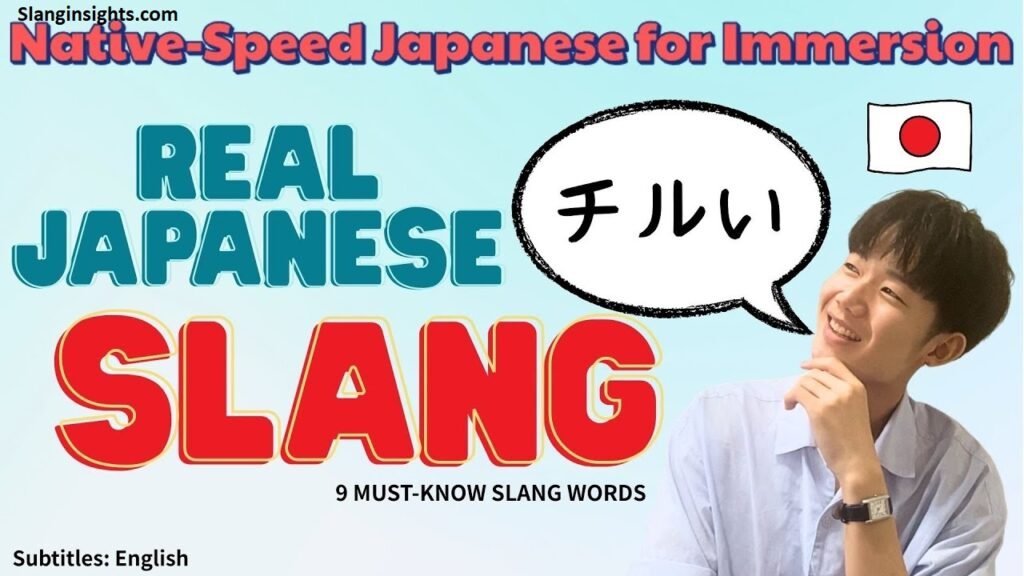
Japanese slang words are informal expressions commonly used in daily conversations, social media, and among younger generations in Japan.
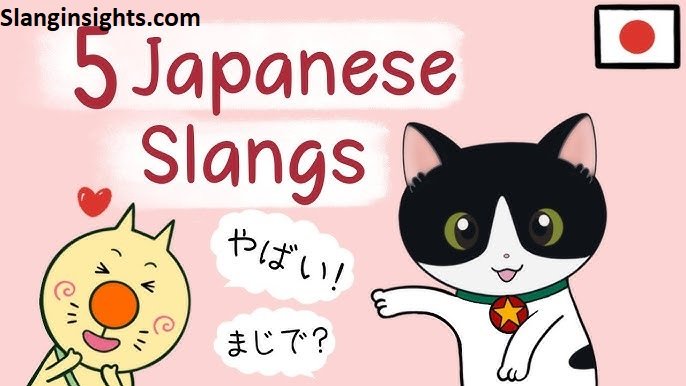
These words add personality and make speech sound more natural and casual. Popular terms include yabai (awesome or terrible), majide (seriously), uzai (annoying), and kawaii (cute).
Anime, manga, and internet culture have helped spread many Japanese slang expressions worldwide. Some slang words are trendy and may change over time, while others have been used for decades.
Learning Japanese slang words can help you understand native speakers better and communicate in a more authentic and relaxed way when speaking Japanese.
Table of Contents
Quick Table
| Japanese Slang | Meaning in English | Example Usage |
|---|---|---|
| Yabai (やばい) | Awesome, terrible, crazy | That movie was yabai! |
| Majide (マジで) | Seriously? | Majide? I can’t believe it! |
| Kawaii (かわいい) | Cute | Your cat is so kawaii! |
| Uzai (うざい) | Annoying | That noise is really uzai. |
| Sugoi (すごい) | Amazing | Your Japanese is sugoi! |
| Ikemen (イケメン) | Handsome guy | He’s an ikemen actor. |
| Dame (ダメ) | No good, useless | That’s dame. |
| Kimoi (キモい) | Creepy, gross | That bug is kimoi. |
| Muri (無理) | Impossible, can’t do it | Waking up at 5 AM is muri. |
| Tensei (天才) | Genius | You’re a tensei! |
| Ossu (オッス) | Hey, what’s up | Ossu, how have you been? |
| Chotto (ちょっと) | A bit, kind of | I’m chotto busy today. |
| Gachi (ガチ) | For real, serious | He’s a gachi gamer. |
| Shindoi (しんどい) | Exhausting, tough | Work has been shindoi lately. |
| Arienai (ありえない) | No way, unbelievable | That’s arienai! |
How I Learned Japanese Slang the Hard Way
A few years back, I texted a Japanese friend “了解です” (ryoukai desu) after she told me she’d be ten minutes late.
Totally fine sentence. Then she replied with just “りょ” and I genuinely stared at my screen for a solid minute trying to figure out if she’d had a typo or sent me some kind of code.
Turns out “りょ” is just “ryoukai” (understood/got it) shrunk down to one syllable, because typing two extra characters is apparently too much effort for Gen Z Japan.
That one tiny exchange taught me more about real, living Japanese than three semesters of textbook study combined.
If you’ve been learning Japanese through apps, anime, or a classroom and then tried to actually talk to a Japanese person your own age, you’ve probably had a similar moment.
The “proper” Japanese you learn and the Japanese people actually use day to day are basically two different languages living in the same body.
I’ve spent the last several years bouncing between language apps, Discord servers full of Japanese gamers, a few short stints living in Osaka, and a lot of painfully awkward conversations.
Here’s what I’ve actually picked up — the real slang, the stuff that gets used, and the mistakes that taught me where the lines are.
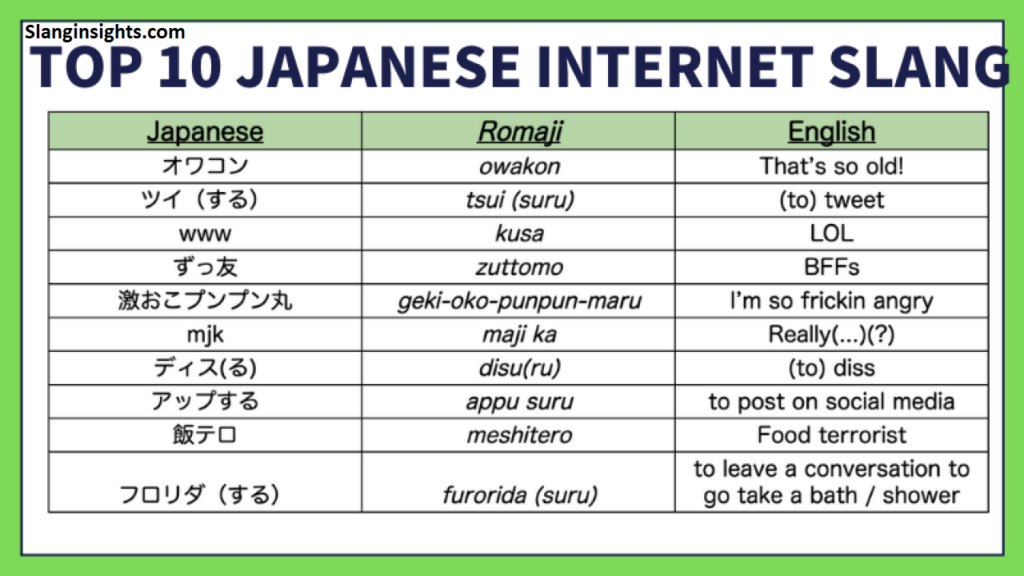
Why textbooks skip this stuff entirely
Most textbooks (Genki, Minna no Nihongo, the JLPT prep books) teach you grammatically correct, fairly neutral Japanese. That makes sense — they’re trying to give you a foundation that won’t get you in trouble.
The problem is that real spoken Japanese, especially among younger people, drops particles, shortens words, and borrows heavily from internet culture in ways no textbook author wants to commit to print because slang changes fast.
I learned this the hard way when I tried using “かしこまりました” (a super formal “understood”) with a friend my own age over LINE, and he just sent back a laughing emoji and said I sounded like his company’s customer service line. Which, fair.
So slang isn’t just decoration — it’s often the difference between sounding like a textbook and sounding like an actual person.
The slang I actually hear and use constantly
Here’s a working list of the words that come up again and again, either in texting, anime, YouTube comment sections, or just hanging out with Japanese friends.
Everyday reactions and feelings
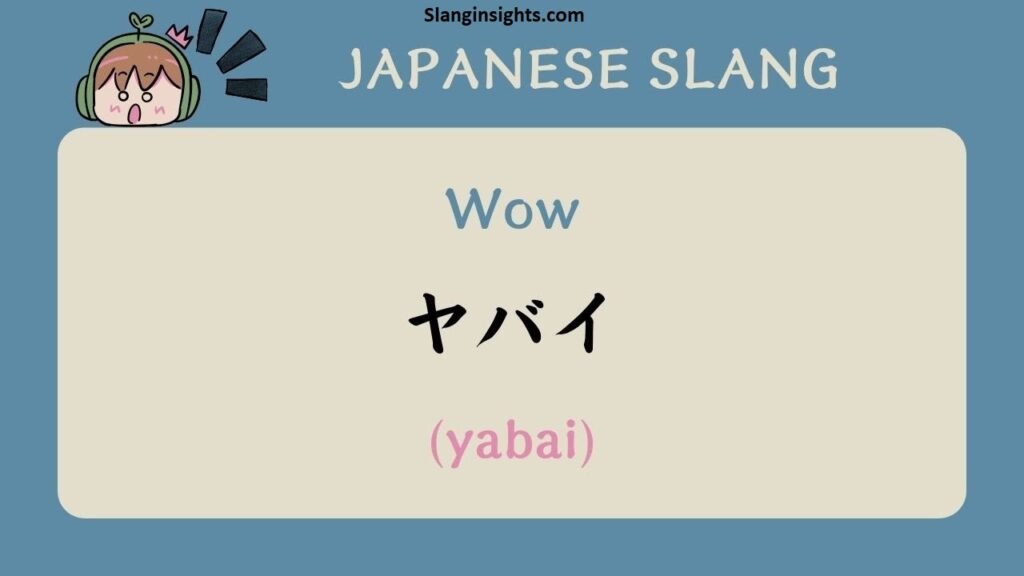
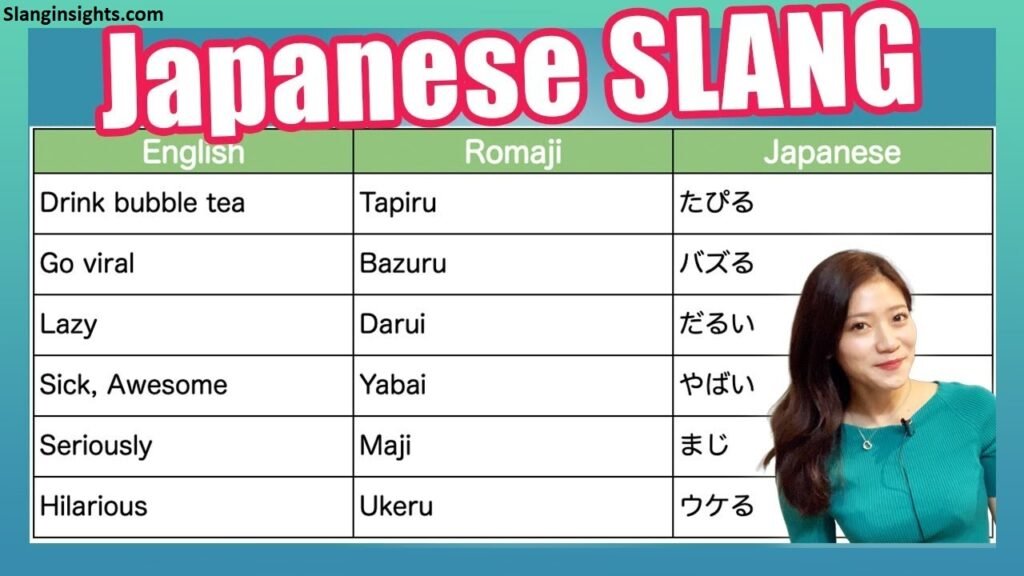
- やばい (yabai) — This is the most flexible word in modern Japanese slang. It can mean “amazing,” “terrible,” “scary,” or “oh no” depending entirely on tone and context. I use it more than any other slang word, honestly.
- まじで (majide) — Means “seriously” or “for real.” Shorten it further to just “まじ” (maji) in texts.
- うける (ukeru) — Means something is funny or hilarious. You’ll see this a lot in YouTube comments under funny clips.
- きもい (kimoi) — Short for 気持ち悪い (kimochi warui), meaning gross or creepy. Use this one carefully — more on that below.
- めんどい (mendoi) — Shortened from 面倒くさい (mendokusai), meaning “what a hassle” or “too much effort.” This is basically the unofficial motto of half my Japanese friends’ group chats.
- ウザい (uzai) — Annoying. Said about a person, a noise, a notification, basically anything irritating you.
Texting and typing shortcuts
- りょ (ryo) — Short for 了解 (ryoukai), meaning “got it.” The single most-used word in Japanese group chats.
- 乙 (otsu) — Short for お疲れ様 (otsukaresama), the standard “good work” phrase. Used casually after someone finishes a stream, a shift, or even just a long conversation.
- ワロタ (warota) — Internet slang meaning “I laughed” — basically the Japanese equivalent of “lol.” You’ll see this constantly on Japanese Twitter/X and on old forum-style boards.
- それな (sorena) — Roughly “exactly” or “I know, right?” Used to agree enthusiastically with what someone just said.
- ガチ (gachi) — Means “seriously” or “for real,” similar to majide but with a slightly more intense, almost competitive-gamer flavor. “ガチで無理” (gachi de muri) means “I genuinely can’t deal with this.”
Words about people and personality
- イケメン (ikemen) — A good-looking guy. You’ll hear this constantly if you watch any Japanese variety show.
- リア充 (riajuu) — Someone who has a fulfilling “real life” (as opposed to spending all their time online). Often used a little sarcastically or jealously.
- オタク (otaku) — You probably already know this one, but it’s worth noting that within Japan it’s used more neutrally as “someone obsessed with a hobby” rather than the slightly negative connotation it sometimes carries overseas.
- ぼっち (bocchi) — Someone who’s alone, often used self-deprecatingly, like “ぼっち飯” (eating lunch alone).
Mild venting words (use with caution)
- だる/だるい (daru/darui) — “Ugh, I can’t be bothered.” Said about chores, work, basically anything tiring.
- しんどい (shindoi) — “This is rough” or “I’m exhausted.” Common in Kansai-influenced speech but used everywhere now.
- きしょい (kishoi) — A rougher, more dismissive version of kimoi. Best avoided unless you really know the social context.
How I actually learn this stuff (the tools and apps that helped)
A few things actually moved the needle for me, beyond just memorizing lists like the one above:
- Watching anime and variety shows without subtitles first, then with them. Variety shows like Gaki no Tsukai are gold for casual speech because the hosts talk over each other constantly in totally natural ways.
- HelloTalk and Tandem. Both apps connect you with native speakers for language exchange. I’d specifically ask my partners, “how would you actually say this to a friend?” instead of just asking for the textbook version.
- Following Japanese accounts on X (Twitter) and just reading replies. This is where I picked up things like ワロタ and それな — real-time, in context, used by actual people having actual reactions.
- Discord servers built around Japanese games or VTubers. These chats move fast, are full of slang, and nobody’s going to correct your grammar — you just absorb it by being around it.
- YouTube channels like “That Japanese Man Yuta” and “Game Gengo.” Both specifically break down slang and explain the nuance behind why a word feels casual, rude, or playful.
- Anki with custom decks. I made a separate slang deck instead of mixing it into my regular vocab deck, because slang needs different memory triggers — usually a specific scenario rather than a clean dictionary definition.
A simple step-by-step if you want to start using slang without sounding weird
Start by just recognizing the words first. Don’t try to use them right away — read them in context (anime, manga, tweets) until the meaning clicks naturally.
Pick one or two words and only use them with people you’re already casual with, ideally close friends or language exchange partners who’ve told you it’s fine to be informal.
Pay attention to who’s saying the word and to whom. A lot of slang shifts depending on whether it’s said between guys, between girls, or mixed groups — Japanese has more gendered speech patterns than English, and slang is no exception.
Never use casual slang with teachers, bosses, clients, or anyone clearly older in a professional context. This sounds obvious, but it’s an easy trap when you’re excited to finally sound “natural.”
When in doubt, ask a native friend directly: “is this rude if I say it to my coworker?” People are almost always happy to explain — way happier than watching you find out the hard way.
Mistakes I made so you don’t have to
I called a coworker’s cooking “ヤバい” once, meaning it in the good “amazing” sense. She heard it as the bad version and looked genuinely hurt for a second before I scrambled to clarify.
Tone and context do a lot of heavy lifting with that word, and I hadn’t earned enough trust yet for it to read as a compliment by default.
I also used “きもい” jokingly about a friend’s drawing, the way you might rib a friend in English. In Japanese, even among friends, that word lands harder than people expect — it’s closer to “disgusting” than a light tease.
I got an awkward silence instead of a laugh.
And early on, I tried sprinkling Kansai-ben slang (picked up from anime characters) into conversations with people from Tokyo, not realizing how distinctly regional it sounded.
It’s a bit like a non-native English speaker suddenly dropping deep Southern US slang into a conversation in London — not wrong exactly, just noticeably out of place.
Where this actually leaves you
Slang isn’t something you can speedrun. It’s less about memorizing a list (even a good one) and more about spending time around real conversations until your ear catches the rhythm of when something casual fits and when it doesn’t.
The textbook gets you understood. The slang is what gets you treated like a person having a real conversation instead of someone reciting vocabulary.
Start small, stay curious about why a word feels the way it feels, and don’t sweat the moments you get it wrong. Every awkward “りょ” confusion I’ve had has stuck with me a lot longer than any flashcard ever did.
FAQ’s
What are Japanese slang words?
Japanese slang words are informal expressions used in casual conversations, texting, social media, and among friends. They often reflect modern trends and youth culture.
What is the most common Japanese slang word?
One of the most common Japanese slang words is yabai (やばい). Depending on the context, it can mean “awesome,” “amazing,” “terrible,” or “dangerous.”
Is it okay for beginners to learn Japanese slang?
Yes. Learning slang can help beginners understand movies, anime, manga, and everyday conversations. However, it’s important to learn standard Japanese alongside slang.
Do Japanese slang words change over time?
Yes. Many slang expressions are influenced by social media and pop culture, so new words appear regularly while older ones may become less common.
Are Japanese slang words used in formal situations?
No. Most Japanese slang is meant for casual settings and should generally be avoided in business meetings, official documents, or conversations with superiors.
Conclusion
Japanese slang words are an exciting part of the language that can make your Japanese sound more natural and help you better understand native speakers.
From popular expressions like yabai, majide, and kawaii to newer internet-inspired phrases, slang reflects modern Japanese culture and the way people communicate in everyday life.
Whether you’re learning Japanese for travel, anime, manga, or simply out of personal interest, becoming familiar with slang can greatly improve your listening and speaking skills.
These expressions are commonly heard among friends, in TV shows, and across social media platforms, making them valuable additions to your vocabulary.
However, it’s important to remember that slang is informal and may not always be appropriate in professional or formal settings.
By balancing standard Japanese with commonly used slang terms, you’ll gain a deeper understanding of the language and its culture.
As trends evolve, new expressions will continue to emerge, making Japanese slang a fascinating and ever-changing aspect of communication.