Viral Basketball Terms Slang Used in Games and Online Chats
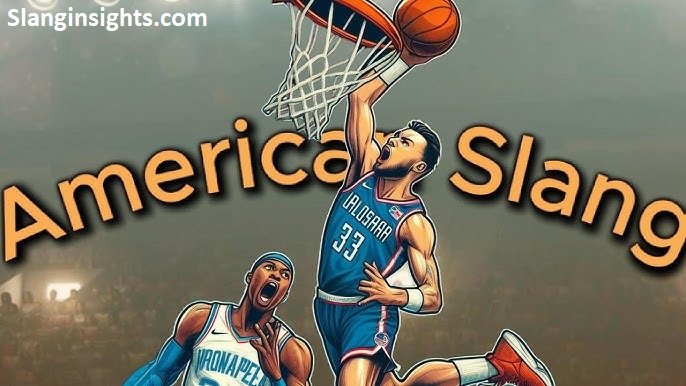
Basketball Terms Slang Basketball slang includes popular court terms used by players and fans to describe actions, plays, and styles.
Words like “and-one” (scoring while being fouled), “posterized” (dunking over a defender), and “ankle breaker” (a move that makes a defender fall) are common.
A “brick” means a missed shot, while a “swish” is a perfect shot without touching the rim. “Dime” refers to an assist, and “crossover” is a quick dribble move to beat defenders.
Players also use “clutch” for performance under pressure and “fast break” for quick scoring after defense. These slang terms make basketball culture fun, expressive, and exciting to follow.
Table of Contents
Quick Table
| Slang Term | Meaning |
|---|---|
| And-One | Scoring while getting fouled |
| Posterized | Dunking over a defender |
| Ankle Breaker | Move that makes defender fall |
| Brick | Very bad/missed shot |
| Swish | Clean shot, no rim |
| Dime | Perfect assist pass |
| Crossover | Quick dribble move to beat defender |
| Clutch | Performing well under pressure |
| Fast Break | Quick attack after defense |
| Buzzer Beater | Shot made as time expires |
What Is basketball terms slang?
The first time I sat courtside at a pickup game with my college friends, I had absolutely no idea what anyone was saying.
Someone called out “and-one,” another guy screamed “no blood, no foul,” and the guy guarding me whispered “you got no handles, bro” after I fumbled the ball out of bounds. I laughed it off, but inside I was completely lost.
That was my introduction to the real language of basketball — not the textbook stuff you read in rule books, but the living, breathing slang that players actually use on the court, in the locker room, and on Twitter at 2am after a playoff game.
Since then, I’ve played in recreational leagues, watched more NBA games than I can count, and spent way too much time on basketball Reddit. So here’s everything I wish someone had explained to me, written the way I actually think about it.
The Basics That Aren’t Actually Basic
Let’s start with the terms people assume everyone knows — but definitely don’t.
Bucket
This just means a made basket. When someone calls a player a “bucket getter,” they mean that person can score consistently. “He’s a bucket” is honestly one of the highest compliments you can give a scorer. You’ll hear this constantly during any serious game.
Handle / Ball-Handling
Your “handle” is your ability to dribble. Good handle means you can control the ball under pressure without losing it. Bad handle? You’re getting stripped every time you go to the basket. When that guy told me I had “no handles,” he wasn’t wrong.
Paint
The painted rectangle under the basket. When someone says “he dominates in the paint,” they mean he’s effective close to the basket — usually talking about big men like centers and power forwards.
Rack
The rack is the rim. “He rattled it off the rack” means the ball bounced off the rim. You’ll also hear “dropped it in the rack” for a made shot near the basket.
Offensive Slang You’ll Hear Every Single Game
Cooking / Getting Cooked
When a player is “cooking,” they’re scoring or playing so well that the defender can’t stop them. You’ll hear “he’s cooking tonight” during a hot shooting streak. On the flip side, if you’re the defender watching someone blow past you, you just got
cooked.
Iso
Short for isolation. This is when one player clears out space for another to go one-on-one against their defender. It’s one of the most debated concepts in basketball — some coaches love it, others hate it because it slows down ball movement.
Poster / Get Posterized
When an offensive player dunks hard over a defender, and the image looks like it belongs on a poster — that’s a poster dunk. The defender “got posterized.” It’s simultaneously awesome to watch and absolutely devastating if you’re the one being dunked on.
Eurostepping
A move where the ball-handler takes a step to one side, then plants and crosses to the other to avoid the shot-blocker. It looks almost dance-like when done right. Harden and Giannis have made this move famous in recent years. In pickup ball, you’ll see it attempted constantly — and executed correctly about 30% of the time.
Transition / In Transition
Running fast breaks — pushing the ball up the court quickly before the defense sets up. “They’re lethal in transition” means a team is dangerous when the game is fast-paced. This is where athletic, fast teams make their money.
Sauce / Saucy
A move with serious style to it. If someone does a behind-the-back pass that shouldn’t have worked but did, that’s saucy. You just know it when you see it.
Defensive Slang Worth Knowing
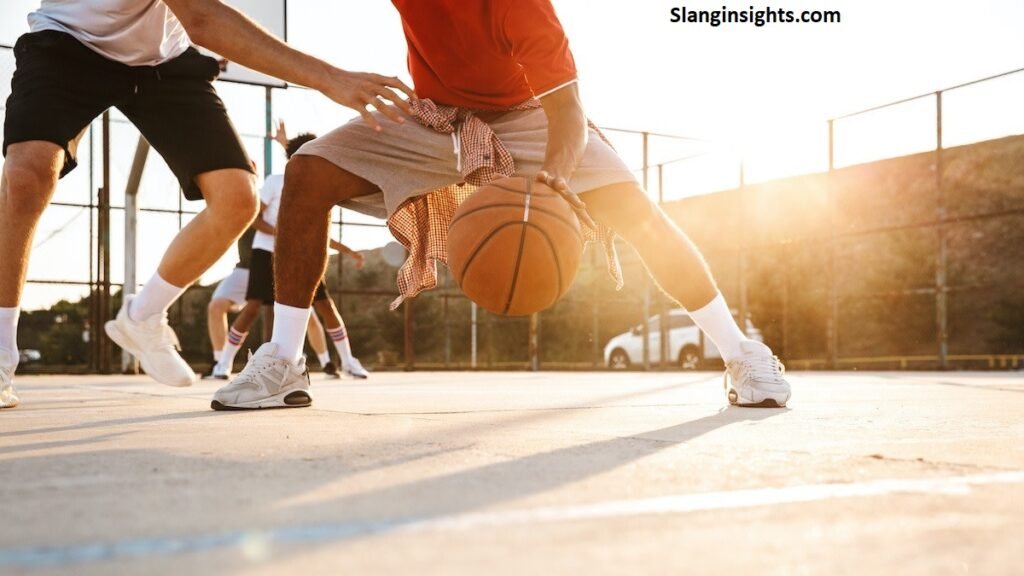
Lock Up / Lockdown
A defender who “locks up” an opponent completely neutralizes them. A “lockdown defender” is someone who can guard the best player on the other team and take them completely out of the game.
Stuffed / Swatted / Blocked Into Next Week
All different ways of saying someone’s shot got blocked. “Stuffed” is clean and clinical. “Swatted” implies it went flying. “Blocked into next week” means it was emphatically, aggressively sent away.
Help Side
When your man doesn’t have the ball, you’re on the “help side” — meaning you’re in position to assist teammates if someone drives to the basket. Not rotating to help side is one of the most common mistakes in recreational basketball. You’ll hear coaches lose their minds over it.
Switching
When two defenders trade who they’re guarding, usually on a screen. “He can’t switch onto guards” is a criticism of a big man who can’t move fast enough laterally to defend smaller, quicker players.
Advanced Slang That Separates the Real Ones
Stretch Four / Five
A “four” is a power forward, a “five” is a center. When either can shoot threes, they’re called a “stretch four” or “stretch five” — they stretch the defense outward, opening up driving lanes. This term transformed how teams build rosters over the last decade.
Three-and-D
A player whose main contributions are shooting threes and playing solid defense. Teams love finding these guys because they’re effective without needing the ball in their hands constantly.
Floor Spacer
A player who opens up the lane just by standing in the corner, threatening to shoot. You don’t need to be an elite scorer to be a great floor spacer — you just need defenses to respect your shot.
DNP
Did Not Play. When you see this next to a player’s name in the box score, they sat out. “DNP – Coach’s Decision” means they weren’t injured — the coach just didn’t play them. This can get political in the NBA and is a whole rabbit hole.
Box Score
The statistical summary of a game — points, rebounds, assists, steals, blocks. When people say someone “doesn’t show up in the box score,” they mean his contributions don’t get counted as stats, but still matter enormously.
Position Slang That Confuses People
Modern basketball has scrambled traditional position labels, which creates all kinds of new vocabulary.
“Big” — Any large player, typically a power forward or center.
“Wing” — A small forward or shooting guard who can guard multiple positions. “He’s a versatile wing” is high praise these days.
“Combo Guard” — A player who can play both point guard and shooting guard equally well. Used to be rare. Now it’s basically standard.
“True Point Guard” — Someone who makes teammates better first, scores second. A real “true PG” makes the whole team click.
The Social Media / Twitter Era Slang
Basketball has developed its own internet language. If you’re following basketball discourse online, here’s what you’re seeing:
GOAT — Greatest Of All Time. The debate never ends. “That was a GOAT performance” means historically great.
His Bag — A player’s collection of moves. “He’s got a bag” means he can score in multiple ways, against any defense.
Mid — Mediocre. If a player gets called “mid,” they’re being dismissed as average. Don’t let it be said about your jumper.
Built Different — Someone uniquely physically or mentally gifted. Used constantly for players with unusual combinations of size and skill.
Glazing — Excessive, almost unreasonable praise for a player. “Stop glazing him” means stop acting like someone is better than they actually are.
Pickup Ball Has Its Own Dictionary
If you’re playing in gyms and parks rather than just watching TV, there’s an additional layer of slang.
“Next” — You call “next” to claim the following game.
“Run it back” — Rematching the same game after you win.
“Check ball” — The way you restart play after a foul or stoppage. Non-negotiable in pickup basketball.
“My bad” — The single most important phrase in pickup basketball. If you mess up, you say “my bad” immediately. Not saying it after a mistake is how pickup games turn into arguments.
Common Mistakes Beginners Make With Basketball Slang
I’ve made most of these, so no judgment.
Using slang out of context. Calling every made shot a “poster” is wrong. A poster dunk requires going up and over a defender.
Confusing “assist” and “hockey assist.” An assist is the pass directly before a made basket. A “hockey assist” — which fans use but isn’t official — is the pass before the assist.
Overusing “clutch.” Clutch specifically means performing under pressure in high-stakes moments, late in a close game. Using it to describe any good play in the first quarter waters it down completely.
Calling everything an “ankle-breaker.” An ankle-breaker is when a ball-handler’s move is so sharp the defender falls or stumbles. It’s specific. It’s not just any good crossover.
FAQ’s
What are basketball slang terms?
They are informal words used by players and fans to describe moves, plays, and situations in basketball.
What does “and-one” mean in basketball slang?
It means a player scores a basket while being fouled and gets an extra free throw.
What is a “brick” in basketball slang?
A “brick” refers to a very bad missed shot that hits the rim or backboard hard.
What does “dime” mean in basketball slang?
A “dime” is a perfect assist pass that leads directly to a score.
What is a “buzzer beater”?
It is a shot made at the exact moment the game clock hits zero.
Conclusion
Basketball slang plays an important role in making the game more exciting, expressive, and fun to follow. These terms are not just random words; they represent real actions, emotions, and moments that happen during a game.
When fans or players say “and-one,” “clutch,” or “posterized,” they are describing highlights that show skill, speed, and intensity on the court.
This special language has grown from street basketball culture and professional leagues like the NBA, spreading all over the world through social media and sports commentary.
Learning basketball slang helps new fans understand the game better and feel more connected to players and teams. It also adds personality to conversations, making discussions about basketball more lively and engaging.
Whether you are watching a street game, a school match, or a professional league, these terms help you understand what is happening in real time.
In short, basketball slang is like a bridge between the game and its fans. It captures energy, creativity, and style in just a few words.
As the sport continues to grow globally, these slang terms will keep evolving, giving basketball its unique voice and culture.