Basketball Slang Terms Every Fan Should Know (2026)
Basketball slang terms add flavor and personality to the game, making it more fun for players and fans alike. A “dime” refers to a perfect assist that leads directly to a basket.
When someone gets embarrassed by a quick crossover, it’s called an “ankle breaker.”
A “swish” describes a shot that goes through the net without touching the rim. Players who dominate the paint area are said to “ball out” or go “beast mode.”
A “brick” is a badly missed shot, while a “buzzer beater” wins the game at the last second. These terms make basketball conversations lively, relatable, and instantly recognizable to true fans of the sport.
Table of Contents
Quick Table
| Slang Term | Meaning/Description |
|---|---|
| Dime | A perfect assist leading directly to a basket |
| Ankle Breaker | A crossover move that embarrasses a defender |
| Swish | A shot that goes in without touching the rim |
| Beast Mode | Playing with dominant, aggressive intensity |
| Brick | A badly missed shot |
| Buzzer Beater | A game-winning shot at the last second |
| Ball Out | To play exceptionally well |
| Airball | A shot that misses everything—rim, net, backboard |
| Posterize | Dunking over a defender so hard it’s “poster-worthy” |
| Handles | A player’s dribbling skills |
| And-One | Scoring a basket while being fouled, plus a free throw |
| Bricklayer | A player who frequently misses shots |
My Journey to Learning Basketball Slang
I still remember standing on the sidelines of a pickup game at my local park, completely lost, when some guy yelled “run the rock!” at me. I froze. I had the ball. I didn’t know what he wanted.
Turns out he just wanted me to bring the ball up the court. That was probably my most embarrassing moment on a basketball court, and I’ve had a few.
That day sent me down a rabbit hole.
I started watching more games with the sound up instead of scrolling my phone, hanging around courts longer after my own runs just to listen, and asking questions that probably made me look like a total rookie.
But it paid off. Now when someone drops slang mid-game, I actually know what’s happening instead of nodding along like an idiot.
If you’re new to basketball, whether you’re playing pickup, watching with friends who talk over the game, or just trying to get into the culture, this stuff matters more than you’d think. Half the fun of basketball is the language around it.
Why Slang Actually Matters (Not Just Fluff)
Here’s the thing. Basketball slang isn’t just for sounding cool. A lot of it describes real actions and situations faster than “proper” terms ever could.
When my buddy Marcus tells me “he’s heating up,” that’s not just hype talk. That’s actual information.
It means the guy has hit two or three shots in a row and defense needs to adjust NOW. If you don’t know that phrase, you might miss the urgency in his voice.
Same goes for watching games on TNT or ESPN. Commentators throw around terms assuming you already get it. Once you learn the vocabulary, watching becomes ten times more enjoyable because you’re not missing half the commentary.
The Terms You’ll Actually Hear on the Court
Let me break down what I picked up, organized by where you’ll actually encounter it.
Scoring and Shooting Talk
Bucket — This just means a made basket. “Nice bucket” is basically “good shot.” Simple, but you’ll hear it constantly.
Splash — When someone hits a three-pointer clean, nothing but net. I use this one a lot because there’s something satisfying about yelling “splash!” when your shot doesn’t even touch the rim.
Heat check — This one confused me for months. It’s when a player who’s already made several shots in a row takes an even tougher, almost reckless shot just to test if they’re still hot. Think Steph Curry pulling up from 30 feet after hitting four threes already.
Brick — The opposite of splash. An ugly missed shot that clanks hard off the rim. I’ve thrown up plenty of bricks in my day, no shame in admitting it.
And-one — You get fouled while making a shot, and you get to shoot one free throw. It’s one of the most satisfying feelings in basketball, honestly.
Deep ball — A three-pointer, especially from way beyond the line.
Defense and Physical Play
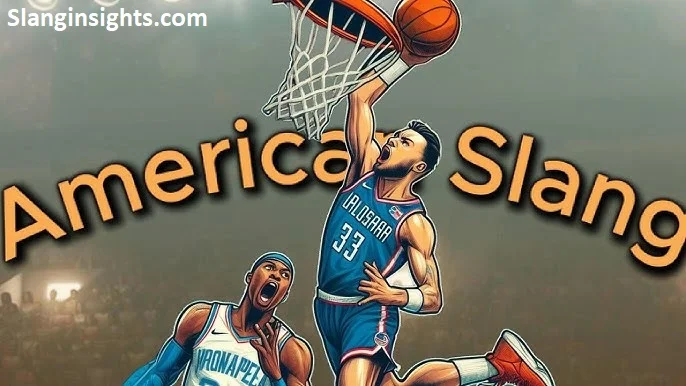
Posterize — When someone dunks over a defender so hard it looks like a poster moment. Brutal to be on the receiving end of this.
Ankle breaker — A crossover or move so quick the defender loses their balance completely. I got hit with one of these during a rec league game and my knee actually hurt from twisting so fast trying to recover.
Lockdown — Describes a defender who’s shutting someone down completely. “He’s on lockdown” means good luck scoring on that guy.
Swat — A clean blocked shot. Very satisfying to do, very embarrassing to receive.
Hack — Intentionally fouling someone, usually to stop the clock or send a weak free throw shooter to the line. This became famous with the whole “Hack-a-Shaq” strategy years back.
Ball Handling and Movement
Run the rock — Bringing the ball up the court (this is what tripped me up originally).
Dime — A perfect assist. If someone sets you up for an easy bucket, that’s a dime.
No-look pass — Exactly what it sounds like. Passing without looking at your target, usually to fake out the defense.
Handles — Someone’s dribbling skill. “He’s got handles” means their ball control is smooth and hard to defend.
Cook — When a player is dominating someone offensively, you’ll hear “he’s cooking him” or “he got cooked.”
Team and Strategy Language
Iso — Short for isolation, when a play is designed around one player going one-on-one against their defender.
Pick and roll — A classic play where one player sets a screen (pick) for the ball handler, then rolls toward the basket for a pass.
Garbage time — The end of a blowout game when the score gap is so wide that the outcome doesn’t matter anymore, and coaches sub in bench players.
Clutch — Performing well under pressure, especially in the final moments of a close game.
Hot hand — Similar to heat check but describes the player themselves rather than the specific shot attempt.
How I Actually Learned This Stuff (Step by Step)
I didn’t memorize a glossary somewhere. Here’s honestly what worked for me.
Step 1: Watch games with commentary, not just highlights. YouTube highlight reels cut out all the talk. Watching full games on platforms like NBA League Pass, or even just regular broadcasts, exposes you to natural commentary where these terms pop up organically.
Step 2: Play pickup games regularly. Nothing teaches you faster than being yelled at mid-game. Local courts, YMCA leagues, whatever you have access to. You’ll pick up terms out of pure necessity to keep up.
Step 3: Follow basketball content on social media. Accounts on Twitter/X and Instagram dedicated to basketball highlights use this slang in captions constantly. I started following a few NBA meme pages and honestly learned more from captions than actual analysis videos.
Step 4: Ask when you don’t understand. This felt awkward at first, ngl. But every single person I asked was happy to explain. Basketball culture is pretty welcoming if you show genuine interest.
Step 5: Use the terms yourself, even if you feel silly. This is what actually locks it in. I started saying “nice dime” after assists during pickup games, and eventually it just became natural instead of forced.
Mistakes I Made Along the Way
I overused slang at first, which honestly made me sound try-hard. There’s a difference between naturally knowing terms and forcing every sentence to sound like a highlight reel.
Don’t be that guy who says “he’s cooking” after literally every single made shot.
I also mixed up terms for a while. I called a blocked shot a “brick” once, which made no sense and got me some confused looks. A brick is a missed shot, not a blocked one. Small mix-up, but it mattered in the moment.
Another thing, regional differences are real. Terms that are common in New York pickup culture might sound completely foreign somewhere else. Don’t assume your local slang translates everywhere.
Real Examples From Actual Games
During Game 7 of a playoff series a few years back, Damian Lillard hit what people called a legendary “heat check” shot from way beyond the arc to basically end a series.
Announcers went nuts because that term perfectly captured what was happening, a player who was already dominating just decided to take an even more absurd shot and it went in.
Or think about any time you’ve watched a player get switched onto a smaller defender and immediately go to work in the post.
That’s when you’ll hear “mismatch” thrown around, and now you’ll actually understand why announcers get excited about it.
FAQ’s
What does “dime” mean in basketball?
A “dime” refers to a perfect assist that sets up a teammate for an easy basket, often praising the passer’s vision and skill.
What is an “ankle breaker” in basketball?
An “ankle breaker” is a crossover or dribble move so quick and deceptive that it makes the defender lose balance or stumble.
Why is a missed shot called a “brick”?
A “brick” describes a shot that misses badly, often hitting the rim or backboard hard, as if it were as heavy and clumsy as a brick.
What does “posterize” mean?
“Posterize” means dunking over a defender so impressively that the moment looks like it belongs on a poster, symbolizing total domination.
What is “beast mode” in basketball?
“Beast mode” describes a player performing at their most aggressive, dominant, and unstoppable level, often during a hot scoring streak.
Conclusion
Basketball slang terms are more than just fun expressions—they capture the energy, skill, and personality of the game.
From playmaking terms like “dime” to highlight-worthy moments like “posterize” and “buzzer beater,” this vocabulary helps fans and players communicate the excitement of basketball in a way that feels authentic and relatable.
Terms like “brick” and “airball” humorously highlight the game’s lows, while “beast mode” and “ball out” celebrate its highs.
Learning basketball slang not only enhances your understanding of the sport but also helps you connect more deeply with other fans, commentators, and players.
Whether you’re watching a casual pickup game or an NBA showdown, knowing these terms lets you follow the action like a true insider.
So next time you hear someone drop a “dime” or throw down a poster dunk, you’ll know exactly what’s happening—and why it’s such a big deal.