Irish Slang Insults 101 How to Get Cheeky Like a True Dubliner
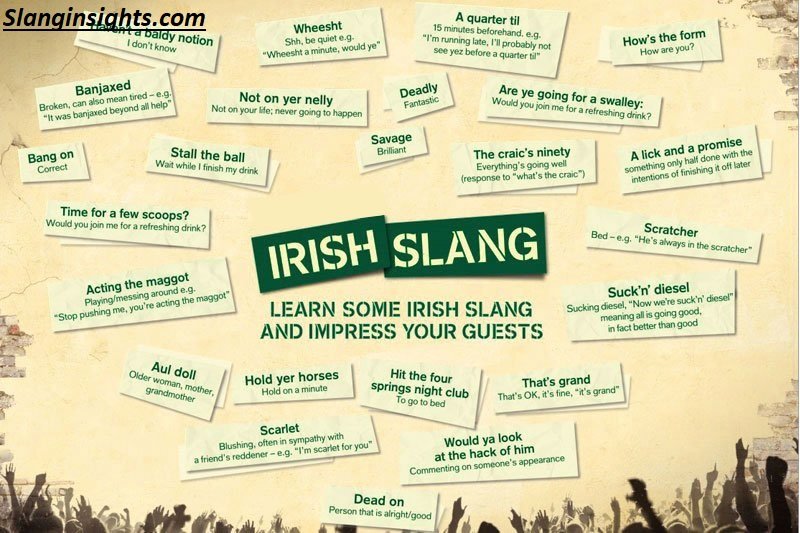
Irish slang insults are known for their sharp wit, colorful expressions, and knack for delivering a jab that somehow still sounds affectionate.
Words like “eejit” (idiot), “gowl” (an obnoxious person), and “gobshite” (someone foolish or annoying) pepper everyday conversation across Ireland, often used between friends as much as adversaries.
What sets Irish insults apart is their playful edge — they’re designed to tease as much as offend, softened by humor and regional accents.
From pubs to playgrounds, these expressions reflect Ireland’s storytelling culture, where a clever put-down is often more valued than a straightforward one. They remain a beloved part of everyday Irish vernacular.
Table of Contents
Quick Table
| Term | Meaning |
|---|---|
| Eejit | An idiot or foolish person (fairly mild, often affectionate) |
| Gowl | An obnoxious, annoying, or unpleasant person |
| Gobshite | Someone foolish, annoying, or full of nonsense |
| Feck off | A softer, less vulgar version of “f*ck off” |
| Langer | An idiot or jerk (mainly used in Cork) |
| Header/Headbanger | Someone who acts crazy or reckless |
| Chancer | A sly, opportunistic person who takes risks or bends the truth |
| Thick | Used to describe someone as stupid |
| Gombeen | A dim-witted or foolish person, sometimes with a hint of “shady” |
| Sap | A weak or gullible person |
My Introduction to Irish Insults
So there I was, three pints deep in a pub in Galway, when the lad next to me turned around, looked me dead in the eye, and called me “a right gobshite.”
I genuinely didn’t know if I should laugh or leave.
Turns out, I should’ve laughed. He was joking. Mostly.
That was about six years ago, back when I moved over from the States for a work contract that turned into a whole relationship, a mortgage, and an unhealthy attachment to Tayto crisps.
And in those six years, I’ve been called more creative names than in my entire life before that. The wild part? Most of them were said with a smile.
If you’re planning a trip to Ireland, dating someone Irish, working with Irish colleagues, or you just fell down a YouTube hole watching Derry Girls clips — you need to understand that Irish insults operate on a completely different logic than what you’re used to.
Getting this wrong can genuinely offend someone. Getting it right can make you instant friends.
Here’s everything I wish someone had explained to me before that pub night.
The Golden Rule Nobody Tells You
In most places, insults are insults. Someone calls you an idiot, they mean it, you’re annoyed, maybe there’s a fight.
In Ireland, an insult is often a compliment wearing a disguise.
This took me embarrassingly long to figure out. My Irish partner’s brother called me “an awful eejit” after I tried to parallel park his car and nearly took out a wheelie bin. I got defensive. Started explaining myself. The whole table went quiet and a bit awkward.
Later I found out — that was banter. He liked me. If he actually thought I was useless, he wouldn’t have bothered talking to me at all.
The lesson: context and tone matter more than the actual words.
Common Irish Slang Insults (And What They Actually Mean)
Let me break down the ones I hear most, based on actual conversations, not textbook Irish.
Gobshite This is the classic. Technically it means someone who’s foolish or full of nonsense. In practice, it’s used constantly — for a mate who did something daft, for a politician on the news, for yourself when you lock your keys in the car (I’ve done this twice).
Severity: Low to medium. Almost always used affectionately among friends.
Eejit Basically “idiot,” but softer, rounder, friendlier. If someone calls you an eejit, they’re probably smiling.
I use this one myself now. My dog is “an absolute eejit” when he eats something he shouldn’t. It’s practically a term of endearment.
Langer Big one in Cork specifically. Means someone who’s acting the fool, being obnoxious, or just being a general nuisance. Outside of Cork it’s understood but used less.
Amadán This is actually Irish (Gaelic), not English slang, but it’s used constantly in everyday English conversation too. Means “fool.” My father-in-law uses this one a lot, usually about referees during hurling matches.
Header or He’s away with the fairies Someone who’s a bit mad, unpredictable, or not thinking straight. Not necessarily insulting — can be said with real fondness about an eccentric relative.
Gowl More Dublin-specific. Stronger than gobshite. Means someone who’s genuinely annoying or acting like a jerk. This one has a bit more bite to it.
Feckin’ eejit / feck off “Feck” is not the same as the other f-word, despite looking similar. It’s softer, almost cartoonish. You’ll hear grandmothers say it on television. Father Ted basically built a career on this word.
Sap or Sap head Someone who’s a bit soft or naive. Not cruel, just a gentle dig.
Mickey Mouse operation Not aimed at a person directly, but used to describe something poorly run or badly organized. My old landlord’s maintenance company was regularly described this way by literally everyone in my apartment building.
Thick This one genuinely means stupid, and depending on tone, can be a real insult rather than banter. Context matters a lot here — “you’re thick” said laughing after a bad decision is fine. Said flatly, it’s not.
Where It Gets Serious
Not everything is banter. There are Irish insults that cross into genuinely offensive territory, especially anything that ties into more serious language or is said with actual malice.
If someone’s tone shifts, if the room goes quiet, if the person saying it isn’t smiling — that’s your signal it’s not a joke anymore. I learned to read this the hard way by misjudging it once at a family gathering and thinking a comment was banter when it clearly wasn’t. Nobody explained it to me directly, but the temperature in the room told me everything.
My rule of thumb now: if I’m not 100% sure whether something is meant as banter, I don’t repeat it myself. I’ll laugh along if it’s clearly a joke, but I don’t start throwing these words around until I actually understand the room and the relationship.
How to Actually Use This Stuff (Without Embarrassing Yourself)
If you want to blend in a bit, or you’re dating into an Irish family, or working with Irish colleagues, here’s what actually worked for me.
Step 1: Listen before you speak. For the first few months, I just absorbed how people used these words. Who said what to whom, and how everyone reacted. This told me way more than any online slang list ever could.
Step 2: Start with the safest ones. “Eejit” is basically bulletproof. It’s soft, common, and almost never taken badly. I’d suggest starting there if you want to test the waters.
Step 3: Match the tone, not just the word. Saying “you gobshite” flatly and seriously lands completely differently than saying it while laughing and shoving someone’s shoulder. The word is maybe 30% of the message. Tone and body language are the rest.
Step 4: Never use it as your opening move with strangers. This is the mistake most tourists make. You hear “feck off ya eejit” used affectionately in a pub and think it’s fine to say to the bartender you just met. It’s not. This language works among people who already have some relationship or rapport.
Step 5: If in doubt, ask. Genuinely, Irish people love explaining this stuff. I’ve had entire pub conversations where someone gladly walked me through the difference between “langer” and “gowl” like it was a linguistics lecture. People appreciate the interest.
Real Example From My Own Life
My father-in-law and I have this running joke now. Every time I mess something up around the house — and there’s been a few, including one memorable incident involving a leaking radiator and a very confused plumber — he calls me “some header altogether.”
The first time, I didn’t know if I’d offended him. Now I know it means I’m basically part of the family. If he stopped saying it, honestly, I’d be more worried.
That’s the thing about Irish insults. The presence of the insult is often the sign of affection. Silence or formality is what actually signals distance.
Mistakes to Avoid
Don’t overuse slang you just learned. Nothing sounds more awkward than someone using five different insults in one conversation because they just watched a video about it. It comes across forced.
Don’t use it in professional settings, even casual Irish workplaces, until you know the culture of that specific office. Some are very relaxed. Others aren’t. I got this wrong once in an early meeting and it landed flat.
Don’t assume every region uses the same words. Cork slang isn’t identical to Dublin slang, which isn’t identical to slang in Galway or up north. If you’re traveling around, expect some variation.
Don’t mistake genuine anger for banter. If someone seems upset, don’t laugh it off assuming it’s a joke. Read the room, not just the vocabulary.
FAQ’s
What is the most common Irish slang insult?
“Eejit” is one of the most widely used Irish slang insults, referring to a foolish or silly person. It’s mild enough to be used affectionately among friends.
Are Irish slang insults meant to be offensive?
Not always. Many Irish insults, like “eejit” or “gowl,” are used playfully between friends and family, though the tone and context can shift their meaning to something more genuinely critical.
What does “langer” mean, and where is it used?
“Langer” is a popular insult primarily used in Cork, referring to someone acting foolishly or being a jerk. It’s one of the most region-specific terms in Irish slang.
Is “feck” the same as a curse word?
“Feck” is considered a softer, less vulgar alternative to a stronger curse word. It’s widely used in everyday Irish conversation, even in polite company or on television.
Why do Irish insults often sound funny instead of harsh?
Irish culture places high value on wit, storytelling, and humor, so insults are often crafted to entertain as much as criticize, softening their sting with clever wordplay.
Conclusion
Irish slang insults offer a fascinating glimpse into the wit, humor, and storytelling tradition that defines Irish culture.
Rather than serving purely as harsh put-downs, many of these terms — like “eejit,” “gowl,” and “langer” — carry a playful charm that softens their bite, making them just as likely to spark laughter as offense.
This unique balance reflects a broader cultural appreciation for clever language and quick banter, where the delivery often matters as much as the words themselves.
Whether you’re planning a trip to Ireland, curious about regional dialects, or simply enjoy colorful language, understanding these insults offers insight into how humor and identity intertwine in everyday Irish speech.
From pub conversations to friendly ribbing among locals, these expressions continue to thrive because they capture something essential about Irish personality:
sharp-tongued, warm-hearted, and never taking things too seriously. Mastering a few of these terms might just help you fit right in during your next visit.