Brainrot Words Meaning, Origins, Popular Examples, and How Internet Slang Shapes Online Culture
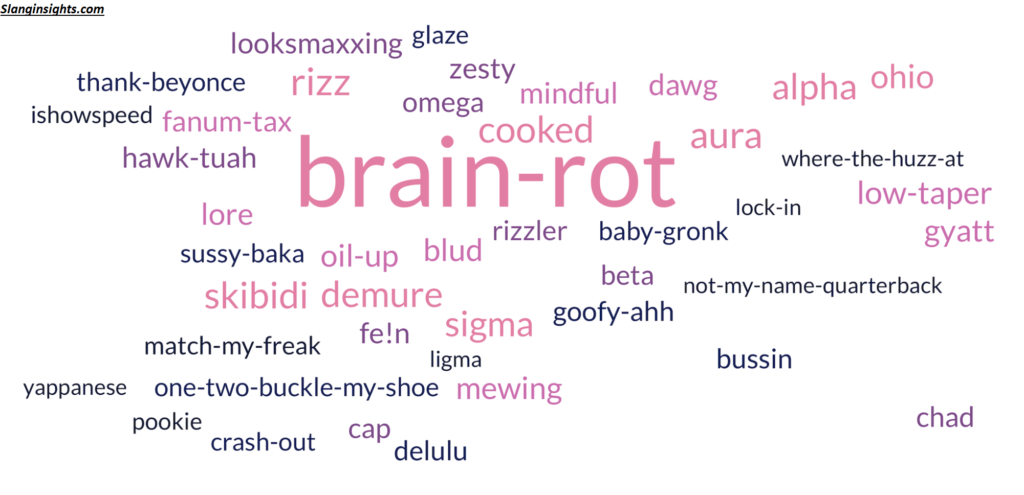
Brainrot words are internet slang terms, memes, or phrases that become so popular online that people start using them constantly in everyday conversations.
The term “brainrot” describes being overly obsessed with online trends, jokes, or content until they “take over your brain.” These words are often funny, exaggerated, and sometimes meaningless outside internet culture.
Popular brainrot words include “rizz,” “skibidi,” “gyatt,” “delulu,” and “sigma.”
They spread quickly through platforms like TikTok, Instagram, and YouTube, especially among younger audiences. Brainrot vocabulary reflects how fast internet culture evolves and influences modern communication.
Table of Contents
Quick Table
| Term | Meaning | Popular Platform |
|---|---|---|
| Rizz | Charisma/flirting skill | TikTok |
| Sigma | Independent personality | YouTube |
| Gyatt | Expression of shock/attraction | TikTok |
| Delulu | Delusional thinking | X/TikTok |
| Skibidi | Meme nonsense phrase | YouTube |
| Cooked | In trouble/exhausted | Discord |
| Aura | Social energy/reputation | TikTok |
| Ohio | Weird/chaotic behavior | TikTok |
| Fanum Tax | Taking someone’s food | Twitch |
| Mewing | Jawline exercise trend | TikTok |
What Are Brainrot Words?
Brainrot words are viral internet slang terms, meme phrases, and repetitive expressions that become deeply embedded in online conversations.
The word “brainrot” describes the feeling of consuming so much internet content that specific jokes, phrases, or trends start taking over your thoughts and vocabulary.
These words often begin as niche jokes in online communities and quickly spread through social media. Over time, they evolve into mainstream language used by younger audiences, especially Gen Z and Gen Alpha.
Brainrot words are usually absurd, exaggerated, or intentionally meaningless outside their original context. That’s part of their appeal—they create a sense of community among people who “get the joke.”
Examples include terms like “rizz” (charisma), “gyatt” (reaction to attractiveness), “sigma” (independent mindset), and “delulu” (delusional in a humorous way).
Unlike traditional slang, brainrot words spread faster because of short-form content and algorithm-driven platforms. A single viral video can turn an unknown phrase into global internet language overnight.
In short, brainrot words are the modern digital dialect of meme culture. They reflect humor, identity, and the constantly changing nature of internet communication.
Why Brainrot Words Matter
Brainrot words matter because they shape how people communicate online. Internet culture moves quickly, and language evolves with it. These words act as social signals, helping people identify with communities and trends.
Using brainrot slang creates belonging. If someone says “that’s peak delulu” or “his rizz is insane,” others who understand immediately connect with the cultural meaning behind it.
For brands, creators, and marketers, understanding brainrot words is important for staying relevant. Social media engagement often depends on speaking the audience’s language naturally.
Brainrot words also influence mainstream culture. Many terms that started as memes now appear in advertising, music, and casual conversations.
They matter in education too. Teachers and parents increasingly encounter internet slang in everyday interactions, making understanding these terms useful for communication.
However, brainrot words also show how fast attention shifts online. What’s trending today may disappear next month.
Their importance lies in their ability to capture cultural moments quickly. They represent humor, irony, identity, and digital social behavior.
Understanding brainrot words helps people navigate modern online spaces, especially platforms dominated by younger users.
They are more than slang—they are cultural markers of internet generations.
Where Brainrot Words Come From
Brainrot words originate from internet communities, gaming culture, meme pages, livestreaming, and short-form video platforms.
Many start on platforms like TikTok, where trends move rapidly through algorithmic recommendations. A phrase used in one viral clip can be repeated millions of times within days.
Gaming communities also create brainrot language. Platforms like Discord and streaming sites like Twitch Interactive are major sources of slang.
Anime fandoms contribute heavily too. Terms like “baka” or “senpai” entered wider internet culture through anime communities.
Meme culture plays a huge role. Absurd humor creates phrases with no logical meaning, but repetition gives them social value.
Livestream personalities and influencers often popularize words by repeating them in content. Their followers adopt the language and spread it further.
Music and rap culture also influence internet slang, introducing phrases into viral edits and trends.
Sometimes brainrot words come from ironic misuse of normal words. For example, “cooked” changed from describing food to describing someone in trouble.
Ultimately, brainrot language comes from digital ecosystems where humor, repetition, and virality combine.
The internet creates language faster than any previous generation.
Most Popular Brainrot Words List
Here are some of the most popular brainrot words dominating internet culture:
Rizz
Means charm or flirting ability.
Sigma
Represents independence or “sigma male” behavior.
Gyatt
An exaggerated reaction to someone attractive.
Skibidi
A nonsense meme phrase from viral video culture.
Delulu
Short for delusional, used jokingly.
Cooked
Means finished, exhausted, or in trouble.
Aura
Social energy, influence, or vibe.
Ohio
Used to describe weird or chaotic situations.
Fanum Tax
Taking food from friends.
Mewing
Jawline-improving technique trend.
NPC
Someone acting robotic or unoriginal.
Sus
Suspicious behavior.
Mid
Average or unimpressive.
Bussin
Very good, usually food.
No Cap
Means truthful.
Bet
Agreement or approval.
W
Winning or positive.
L
Loss or negative.
Based
Authentically opinionated.
Cringe
Embarrassing behavior.
These words spread because they’re short, adaptable, and meme-friendly.
Some last for years, while others disappear quickly.
Their popularity depends on repetition, relatability, and social media momentum.
Categories of Brainrot Words
Brainrot words fall into several categories.
1. Reaction Words
Used to express emotions.
Examples:
- Gyatt
- W
- L
- Cooked
2. Personality Words
Describe people or behavior.
Examples:
- Sigma
- NPC
- Delulu
3. Meme Nonsense
Absurd phrases with little meaning.
Examples:
- Skibidi
- Ohio
4. Relationship Slang
Used in dating or attraction.
Examples:
- Rizz
- Simp
5. Gaming Terms
Originated in gaming communities.
Examples:
- Sus
- Nerfed
- Buffed
6. Status Terms
Describe social ranking.
Examples:
- Aura
- Based
7. Trend-Based Health Terms
Viral self-improvement terms.
Examples:
- Mewing
- Looksmaxxing
Categorizing brainrot words helps decode their function.
Some are emotional shortcuts.
Some are jokes.
Some define identity.
The same word can fit multiple categories depending on context.
That flexibility is part of what makes brainrot language powerful.
It adapts quickly to new trends and social environments.
Understanding categories makes internet slang easier to learn.
How Brainrot Language Spreads
Brainrot language spreads through repetition, algorithms, and social influence.
The biggest driver is short-form content. Platforms like TikTok push viral videos to millions of users quickly.
When creators repeat a phrase, audiences copy it in comments, captions, and videos.
Memes accelerate spread because they make phrases memorable.
Livestreaming helps too. Streamers on Twitch Interactive repeat phrases live, and communities adopt them instantly.
Gaming voice chats are another channel. Fast communication encourages short slang.
Group chats and online communities amplify terms further.
Algorithmic exposure creates rapid adoption. The more engagement a phrase gets, the more it spreads.
Influencers normalize brainrot words by using them casually.
Irony also fuels growth. People use words jokingly, which makes them more shareable.
Music edits, remixes, and reaction videos strengthen repetition.
The cycle looks like this:
Trend starts → goes viral → gets repeated → becomes mainstream → fades or evolves
Some words become permanent slang.
Others disappear quickly.
Brainrot language spreads because internet platforms reward repetition and familiarity.
The faster content moves, the faster language evolves.
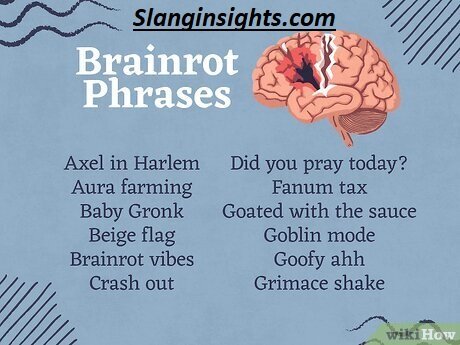
Brainrot Words by Platform
Different platforms create different brainrot vocabularies.
TikTok
The biggest source of brainrot slang.
Popular:
- Rizz
- Gyatt
- Delulu
- Aura
YouTube
Longer meme cycles and viral series.
Popular:
- Skibidi
- Sigma
Discord
Gaming and friend-group slang.
Popular:
- Cooked
- Sus
- NPC
Twitch Interactive
Livestream-origin phrases.
Popular:
- Fanum Tax
- W
- L
X Corp.
Fast-moving joke trends.
Popular:
- Delulu
- Mid
- Based
Reels-based adoption.
Popular:
- Rizz
- Cringe
Each platform has its own culture.
TikTok favors fast slang.
Discord favors insider language.
Twitch creates community-specific terms.
YouTube builds long-lasting meme phrases.
Platform culture affects how brainrot words develop and survive.
Understanding the platform helps understand the slang.
Benefits and Downsides
Brainrot words have both benefits and downsides.
Benefits
Faster communication
A single word can express complex emotions.
Community building
Shared slang creates connection.
Humor
Brainrot language makes conversations more entertaining.
Cultural awareness
Understanding trends helps social participation.
Creativity
Internet slang constantly invents new expressions.
Downsides
Confusion
Older audiences may struggle to understand.
Overuse
Repeated phrases lose meaning.
Communication gaps
Not everyone understands internet references.
Short lifespan
Many terms become outdated quickly.
Professional risks
Using brainrot slang in formal settings can appear unprofessional.
Decision framework:
| Situation | Use Brainrot Words? |
|---|---|
| Friends | Yes |
| Social Media | Yes |
| Work Email | No |
| Presentations | Usually no |
| Marketing to Gen Z | Yes |
The key is context.
Brainrot words are useful socially but not universally appropriate.
Knowing when to use them matters more than knowing the words themselves.
Balance is important.
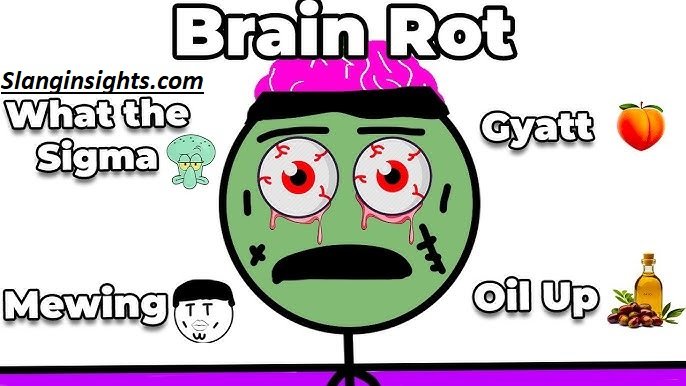
How to Understand Brainrot Slang
Understanding brainrot slang requires context.
Start by observing where the word appears.
Ask:
- Who is using it?
- What is happening?
- Is it serious or ironic?
Context changes meaning.
For example, “cooked” can mean tired, finished, or embarrassed.
Watch trend videos on TikTok.
Read comments.
Follow meme pages.
Join online communities.
Search the word with “meaning” to find explanations.
Use urban slang dictionaries carefully, as meanings can vary.
Look for repeated usage patterns.
Learn by category:
- Reaction words
- Meme words
- Gaming slang
Listen to creators who use slang naturally.
Avoid forcing it into conversations too early.
Internet slang works best when it feels authentic.
Practical method:
- See the word
- Observe context
- Check examples
- Understand tone
- Use carefully
The fastest way to learn is exposure.
Like any language, repetition creates understanding.
Brainrot slang may seem random at first, but patterns appear quickly.
Once you recognize those patterns, internet conversations become easier to understand.
Future of Brainrot Vocabulary
Brainrot vocabulary will continue evolving as internet culture changes.
New platforms will create new slang.
Artificial intelligence content may accelerate meme creation, making trends spread even faster.
Shorter attention spans mean faster slang cycles.
Words may peak and disappear within weeks.
Future trends will likely combine humor, irony, and absurdity even more.
Video-first communication will dominate slang development.
Voice-based communities may create more spoken-first brainrot terms.
Gaming will remain a major source.
Livestreaming will continue shaping real-time language.
Global internet access means slang will become more international.
Different languages will blend into internet vocabulary.
Brands will increasingly adopt brainrot words in marketing.
This creates both opportunity and risk.
If brands use slang too late, it feels outdated.
Future internet slang will be more visual, meme-based, and context-dependent.
The speed of cultural change is increasing.
Brainrot vocabulary reflects that acceleration.
It’s not just random internet language.
It’s a record of digital culture.
The future of brainrot words is constant evolution.
What feels ridiculous today may become normal tomorrow.
That’s how internet language works.
FAQs
What does brainrot mean?
Brainrot means becoming obsessed with internet content to the point where memes and slang affect your thinking.
Is brainrot slang bad?
Not necessarily. It’s part of digital culture but should be used in the right context.
Who uses brainrot words most?
Mostly Gen Z and Gen Alpha internet users.
Where can I learn brainrot slang?
Social media, memes, livestreams, and online communities.
Do brainrot words last long?
Some do, but many fade quickly.
AI Overview Q&A
What are brainrot words?
Viral internet slang terms repeated so often they become part of everyday speech.
Why are brainrot words popular?
Because they spread quickly through memes, videos, and social media.
Where do brainrot words come from?
TikTok, gaming communities, livestreams, and meme culture.
Are brainrot words real language?
Yes. Slang is a legitimate form of evolving language.
Will brainrot words disappear?
Some will, but new ones will always replace them.
Conclusion
Brainrot words are more than random internet slang. They are cultural markers of how digital communication evolves.
They represent humor, identity, and community in online spaces. From “rizz” to “sigma” to “delulu,” these words shape how younger generations express themselves.
Their rapid growth shows how powerful algorithms and social platforms have become in influencing language.
Understanding brainrot words helps you stay connected to internet culture, whether you’re a creator, marketer, parent, teacher, or casual social media user.
The key is context.
Not every word fits every conversation.
Using brainrot slang effectively means understanding tone, audience, and timing.
As platforms evolve, brainrot vocabulary will keep changing.
Some words will disappear.
Others will become permanent parts of mainstream speech.
That cycle is normal.
Language has always evolved—now it simply evolves faster online.
If you want to stay updated, pay attention to trends, memes, and digital communities.
The internet is constantly inventing new ways to communicate.
Brainrot words are one of the clearest examples of that.
Today’s joke could be tomorrow’s everyday vocabulary.