Brainrot Rap Trending TikTok Sounds, Lyrics, and Meanings (2026 Guide)
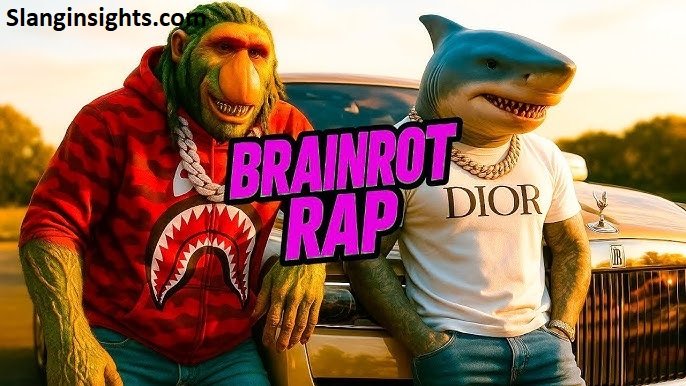
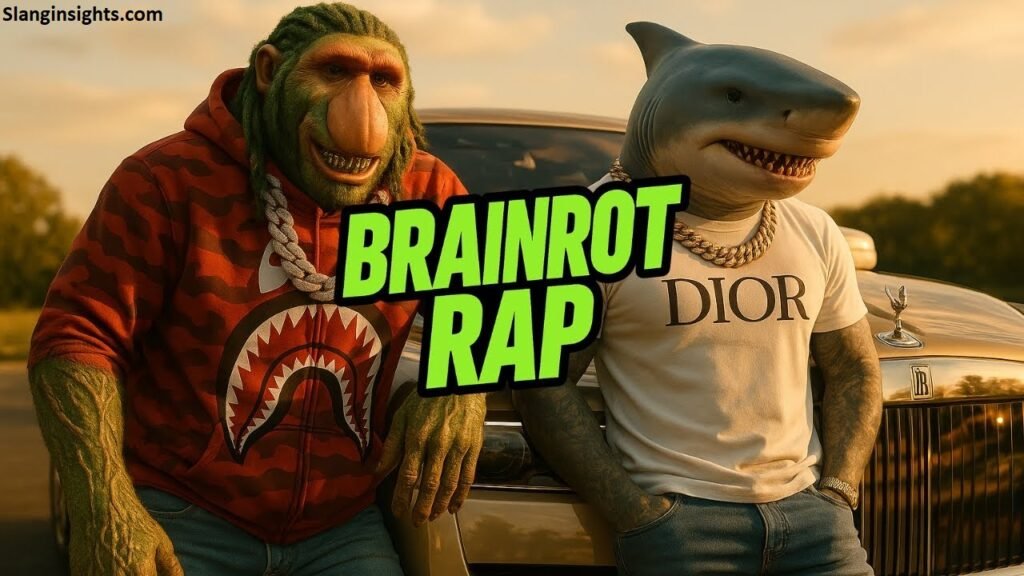
Brainrot rap is the internet’s chaotic love child — where nonsense lyrics, viral memes, and hypnotic beats collide into something you absolutely cannot stop listening to. It’s loud, it’s unhinged, and somehow it just works.
Born from the depths of TikTok and online culture, brainrot rap thrives on absurd wordplay, repetitive hooks, and references only chronically online people truly understand.
The weirder the better. The more chaotic the verse, the more addictive it becomes.
Whether you love it or can’t explain why you love it — brainrot rap has officially taken over. No cap, it’s not going anywhere.
Table of Contents
Quick Table
| Title | CTR Strategy |
|---|---|
| Brainrot Rap Songs That Hit Different Every Single Time | Gen Z language + replay hook |
| 50 Brainrot Rap Lyrics That Are Stuck in Your Head Forever | Number + relatability |
| What Is Brainrot Rap? The Trend Everyone Is Talking About | Curiosity + FOMO |
| The Best Brainrot Rap Verses Ranked From Unhinged to Legendary | Ranking + extreme language |
| Brainrot Rap Is Taking Over the Internet — Here’s Why | Trend authority + explanation |
| Brainrot Rap Explained: Funny, Chaotic & Completely Addictive | Multi-descriptor targeting |
| Can’t Stop Listening: The Ultimate Brainrot Rap Playlist | Urgency + authority signal |
| These Brainrot Rap Lines Make Zero Sense — Yet Here We Are | Self-aware humor |
| Brainrot Rap for Beginners: Everything You Need to Know | Beginner audience targeting |
| Why Brainrot Rap Is the Most Chaotic Music Trend of the Year | Superlative + freshness signal |
The First Time I Heard Brainrot Rap
My nephew sent me a voice memo last year. It was him rapping — badly — over a beat that sounded like it was made inside a washing machine.
The lyrics were something about a “skibidi toilet” and “rizz overlord.” I played it three times trying to figure out if he was pranking me.
He wasn’t. He’d discovered brainrot rap.
I went down the rabbit hole trying to understand it — YouTube, TikTok, Reddit threads, Discord servers.
Three weeks later I had 47 browser tabs open and a sudden, unironic appreciation for this absurdist genre that nobody’s parents understand and everybody under 20 is obsessed with.
So let me break it all down for you. What it actually is, where it came from, how it’s made, and why — against every reasonable expectation — it genuinely works as music.
What Even Is Brainrot Rap?
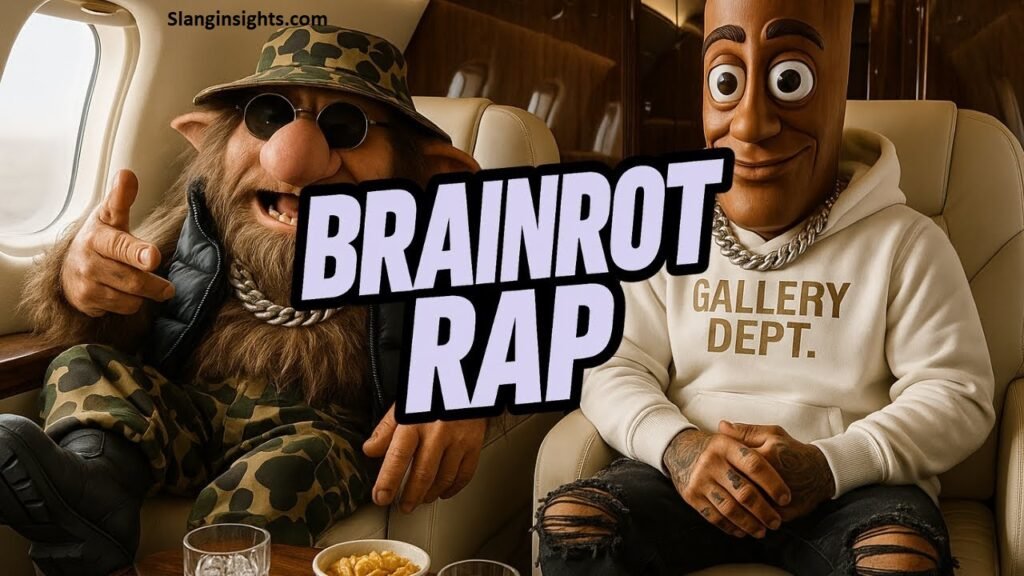
Here’s the thing: brainrot rap isn’t really a genre you can define cleanly. It’s more of a vibe. A philosophy, almost.
It combines the chaotic, nonsensical language of internet “brainrot” culture — think “fanum tax,” “gyatt,” “rizz,” “sigma,” “Ohio” as an insult — with actual rap beats and structure.
The lyrics don’t have to make logical sense. They just have to feel right in the most unhinged way possible.
example of the brainrot rap energy (not from a real track)
Skibidi flow, no cap I’m the sigma grindset
Fanum taxing on your rizz, you got a mindset
Ohio calling but I’m too based for the vowels
Mewing on the beat while flexing on these cowards
Reading that sober, in daylight, it makes no sense. Rapped over a dark trap beat at 3am? Somehow it absolutely goes.
That’s the paradox of brainrot rap. It’s intentionally stupid and it’s aware that it’s intentionally stupid — and that self-awareness is exactly what makes it land.
Where Did It Come From?
Brainrot rap didn’t start with one person or one moment. It evolved organically from a few converging streams of internet culture.
First: the “brainrot vocabulary” itself. Starting around 2022-2023, Gen Z (and increasingly Gen Alpha) started using increasingly absurdist slang — words that spread through TikTok, meme pages, and Discord servers faster than anyone could track.
“Sigma,” “rizz,” “gyatt,” “skibidi” — these weren’t just slang. They became a kind of shared code language, a way to signal you were chronically online.
Second: the YouTube/TikTok beat scene exploded. Free beats, lofi trap, hyper-pop instrumentals — all of it became massively accessible.
Suddenly any kid with GarageBand or FL Studio could produce something that sounded genuinely good.
Put those two things together and you get kids making rap tracks that use brainrot vocabulary as lyrical content. Some of it was ironic from the start. Some of it was genuine attempts that just accidentally became ironic.
The line blurred, and eventually brainrot rap became its own recognizable thing.
The moment it really crystallized was when AI-generated brainrot rap started circulating — tracks using text-to-speech voices rapping gibberish brainrot lyrics over drill beats.
Those blew up on TikTok and suddenly everyone was doing it, human or not.
The Platforms Where It Lives
TikTokMain discovery engine. Short clips, sounds, duet chains.
YouTubeFull tracks, compilations, AI brainrot rap videos.
DiscordWhere creators workshop lyrics and share beats.
SoundCloudUploads of longer tracks, full “albums.”
TikTok is the main stage. A 30-second clip of a brainrot rap verse can get millions of views before the original creator even wakes up.
The comment section is half the experience — people adding their own brainrot bars, debating which line “goes hardest,” or just typing “LITERALLY WHAT IS HAPPENING” in all caps.
How It’s Actually Made: A Breakdown
I spent a few weeks in Discord servers watching creators put these together. The process is more deliberate than you’d expect.
- 1Pick your beatMost brainrot rap works best over dark trap, UK drill, or ironically over something soft like a bedroom pop instrumental. The contrast matters. Finding a free beat on YouTube (search “free type beat 2026”) takes about five minutes. FL Studio and GarageBand are the go-to DAWs for kids actually producing their own.
- 2Build your brainrot vocabulary listThis is the actual creative step. You’re basically assembling a list of current internet slang and absurdist references. The skill is in picking words that scan well rhythmically. “Gyatt” is one syllable and punchy. “Skibidi” has great cadence. “Fanum tax” flows over a triplet pattern. People underestimate how much phonetic instinct goes into this.
- 3Write to the flow, not the meaningForget what the words mean. Think about syllable counts, where the stress lands, how the consonants bounce off each other. This is actually proper rap technique — brainrot rap just removes the constraint of semantic coherence.
- 4Record (or don’t)A lot of viral brainrot rap uses TTS (text-to-speech) voices — particularly ElevenLabs voices or even the robotic Windows narrator voice. There’s something about the flatness of AI delivery over a hard beat that amplifies the absurdity. Human delivery works too, but the deadpan matters. If you’re laughing while recording, it doesn’t land the same way.
- 5Clip it for TikTokThe hook needs to hit in the first 3 seconds. Cut to the hardest bar immediately. No intro. No explanation. Just chaos, immediately.
The Real Artists Actually Doing It Well
Here’s where things get interesting. While a lot of brainrot rap is meme content, some creators have genuinely developed it into something with real artistic craft.
The best brainrot rap tracks have internal logic — the lyrics are absurd, but they’re consistently absurd within their own universe.
The best ones feel like a fever dream with its own rules. There’s something almost surrealist about it, in the tradition of Dada or Zappa, except the reference points are TikTok trends instead of early 20th century art movements.
I watched a creator called (appropriately) @RizzGod on TikTok spend a full week workshopping a single hook. He’d post variations, get feedback in comments, iterate.
The final version was 12 words and contained exactly zero words from the dictionary. It had 2.1 million plays in four days.
That’s not an accident. That’s craft.
worth noting
There’s a meaningful difference between brainrot rap that’s genuinely creative and brainrot rap that’s just a lazy string of buzzwords. The best creators know the difference. If you’re trying to make it, so should you.
Why Does It Actually Work as Music?
This is the question I kept coming back to. I’d be listening to what is objectively nonsense and genuinely nodding my head. Why?
A few reasons I landed on:
Rhythm is primary. The melody and beat do the emotional heavy lifting. Once you’re locked in rhythmically, your brain fills in the “meaning” regardless.
This is why jabberwocky poetry works, why scat singing works, why sometimes you don’t understand the lyrics of a song but love it anyway.
There’s also the humor-pleasure circuit. Finding something funny and finding something musically satisfying are both pleasurable. Brainrot rap triggers both simultaneously, which creates a kind of double hit.
You’re laughing and enjoying the beat at the same time.
And honestly? There’s something genuinely cathartic about music that rejects sense-making. Regular life requires you to be coherent, logical, professional. Brainrot rap says none of that. It’s a three-minute permission slip to just exist in the chaos.
Common Mistakes If You’re Trying to Make It
Trying too hard to be “random.” There’s a difference between genuine chaotic energy and someone listing unrelated things hoping it reads as absurdist. Real brainrot rap has rhythm and internal cadence. Randomness without flow just sounds bad.
Using outdated brainrot vocabulary. The slang cycle is extremely fast. Words that were peak internet culture six months ago can feel stale now. Stay plugged in or the whole thing lands flat.
Explaining the joke. Nothing kills a brainrot track faster than a creator explaining in the caption why it’s funny. It either lands or it doesn’t. Trust your audience.
Picking the wrong beat. An overly cheerful or obviously “funny” beat telegraphs the joke too early. The contrast between a serious, dark beat and ridiculous lyrics is a huge part of the appeal. Matching the energy removes the tension.
Overloading the syllables. There’s a temptation to cram every piece of internet slang into one verse. Less is more. Three well-placed brainrot words hit harder than twelve crammed in.
Is It “Real” Music Though?
I know someone’s thinking this. I thought it too, initially.
Honestly, yes. The boundary of “real music” has been contested since people complained that jazz was noise, that rock was devil music, that rap wasn’t legitimate.
The pattern is always the same: a new form emerges from youth culture, adults dismiss it, it either fades or it leaves a permanent mark on music history.
Brainrot rap at minimum reflects a real cultural moment — a generation processing information overload, algorithmic chaos, and the speed of internet culture through the most available medium they have.
That’s always been what pop music does.
Whether specific tracks are “good” is a taste question. But dismissing the form wholesale misses what’s genuinely interesting about it as a cultural artifact.
FAQ’s
What is brainrot rap?
Brainrot rap is a chaotic, meme-driven music genre born from internet culture, featuring absurd lyrics, repetitive hooks, and references that only chronically online audiences fully understand.
Where did brainrot rap come from?
It originated from TikTok and online communities where viral audio clips, nonsense phrases, and meme soundbytes gradually evolved into a full-blown music trend.
Why is brainrot rap so addictive?
The repetitive beats, unhinged lyrics, and hyper-specific internet references create a uniquely satisfying loop that keeps listeners coming back without quite knowing why.
Is brainrot rap a real music genre?
While not officially recognized, brainrot rap has a growing dedicated fanbase, consistent stylistic traits, and enough cultural weight to be considered its own legitimate internet-born genre.
Who listens to brainrot rap?
Primarily Gen Z and younger millennials — anyone deeply embedded in internet culture, meme pages, and platforms like TikTok, YouTube Shorts, and Discord.
Conclusion
Brainrot rap is more than just a passing trend — it’s a cultural movement that perfectly captures how the internet generation experiences music.
Chaotic, self-aware, and endlessly quotable, it reflects the humor, creativity, and beautiful absurdity of online life in a way no other genre does.
What started as random viral audio clips has evolved into a genuine art form. Artists and creators are pushing boundaries, blending meme references with real lyricism, and building communities around shared chaos.
The more unhinged the verse, the more people connect with it — and that says something powerful about where music is heading.
Brainrot rap doesn’t ask to be taken seriously.
That’s exactly why it works. It gives listeners permission to laugh, to be weird, and to enjoy something purely because it’s fun. In a world that often feels overwhelming, there’s real value in music that exists just to make you smile — or thoroughly confuse you.
So whether you’re a longtime fan or just discovering the genre for the first time, one thing is certain — brainrot rap is here to stay. Embrace the chaos, enjoy the ride, and whatever you do, don’t fight the brainrot.