Millennial Slang Words Popular Phrases, Meanings, and Real-Life Examples
Millennial slang words have shaped the way a whole generation communicates, blending humor, irony, and cultural identity into everyday speech.
Terms like lowkey, slay, and no cap started in online spaces before going mainstream.
Saying something is lit means it’s exciting, while calling someone extra means they’re over the top. GOAT crowns the greatest of all time, and ghosting describes suddenly cutting contact.
Whether you’re feeling basic, living your best life, or just adulting, millennial slang captures real emotions with refreshing, relatable creativity that resonates across generations.
Table of Contents
Quick Table
| Phrase | Meaning | Example | Status |
|---|---|---|---|
| Slay 2000s–now | To do something exceptionally well | “You absolutely slayed that presentation.” | Still used |
| GOAT 2010s–now | Greatest of all time | “Beyoncé is the GOAT, no debate.” | Still used |
| On fleek 2014–2017 | Perfectly done, flawless | “Her brows were on fleek.” | Dated |
| Bae 2013–2018 | Term of endearment for a partner | “Date night with bae 🥂” | Dated |
| FOMO 2013–now | Fear of missing out | “I have serious FOMO about that concert.” | Classic |
| Lit 2015–2020 | Exciting, amazing, or intoxicated | “That party was so lit last night.” | Dated |
| Squad 2014–now | Your close group of friends | “Squad goals, honestly.” | Classic |
| Low-key 2016–now | Secretly, slightly, or understated | “I’m low-key obsessed with this show.” | Still used |
| Extra 2016–now | Over the top, dramatic | “She rented a limo for brunch — so extra.” | Still used |
| Cancel 2017–now | Publicly boycott someone | “They got cancelled after that tweet.” | Classic |
| Adulting 2015–now | Doing grown-up responsibilities | “I paid my taxes. Adulting is hard.” | Classic |
| Ghosting 2015–now | Suddenly cutting off contact | “He just started ghosting me after two dates.” | Still used |
How Millennial Slang Became Everyday Language
It was 2015, and I was sitting in a work meeting when my manager — a perfectly professional woman in her late 40s — looked at a new logo design and said, totally deadpan:
“That’s giving me life.” The entire millennial half of the room silently exchanged glances. Not because she used the phrase wrong. Because she used it exactly right, and none of us expected it.
That’s the thing about millennial slang. It sneaks up on you. You don’t realize it’s woven into every text, every tweet, every casual Friday conversation until suddenly your mom is calling something “extra” and it actually makes sense in context.
I grew up in that weird generation — born in 1990, which puts me squarely in the millennial camp — and I’ve watched our slang evolve from AIM away messages to group chats to viral TikToks.
Some of these words we invented. Some we borrowed. And a few of them have aged about as well as a Vine account.
So let me take you through the actual landscape of millennial slang. Not a dictionary. More like a tour guide who was there.
The Words That Actually Stuck Around
Not all millennial slang was a flash in the pan. Some of it burrowed so deep into the cultural lexicon that your grandparents are using it now without knowing where it came from. These are the survivors.
Slay
/sleɪ/
Still very much alive
To perform exceptionally well, look incredible, or absolutely own a moment. Rooted in Black and queer culture, it went mainstream through early 2010s Tumblr and never really left.
“Did you see her presentation? She slayed that whole room without even looking at her notes.”
Low-key / High-key
/loʊ kiː/ · /haɪ kiː/
Still circulating
Low-key means something you’re quietly admitting, a little sheepish about, or understating. High-key is its loud, zero-shame sibling. Both came out of 2012–2015 Black Twitter and are now completely mainstream.
“I’m low-key obsessed with that new café.” / “I am high-key not ready for this Monday.”
Adulting
Classic millennial
The act of doing responsible grown-up tasks — paying bills, cooking real food, scheduling a dentist appointment — while finding it vaguely shocking that this is now your life.
“Remembered to buy toilet paper before running out.Adulting win.”
Side hustle
Fully mainstream now
Any secondary income stream outside your main job. Millennials practically invented the concept culturally, born from economic necessity post-2008 recession.
“Her side hustle selling vintage clothes on Depop is now making more than her day job.”
“Millennial slang wasn’t invented in a vacuum. Most of it came from Black culture, queer communities, or online spaces that mainstream audiences only discovered years later.”
It’s worth pausing on that point. A lot of the slang millennials popularized wasn’t created by the loudest, most visible millennials. It came from Black Twitter, LGBTQ+ communities, Latinx internet culture, and subcultural Tumblr spaces.
When the mainstream adopted words like “slay,” “tea,” or “fierce,” they were often lagging years behind the communities that invented them. That’s an important context to hold.
The Era-by-Era Breakdown
Millennial slang didn’t arrive all at once. It came in waves — tied directly to whatever platform dominated that moment.
| Era | Platform | Words it gave us |
|---|---|---|
| Early 2000s | AIM, MySpace | lol, brb, idk, omg, ttyl, rofl — the abbreviation era |
| 2008–2012 | Tumblr, early Twitter | feels, ships, fandom, headcanon, GPOY, all the things |
| 2012–2016 | Twitter, Vine, Instagram | slay, on fleek, bae, basic, extra, lit, squad goals |
| 2016–2020 | Memes, group chats | big mood, adulting, lowkey, highkey, no cap (crossing into Gen Z) |
| 2020–now | TikTok overlap | Millennial slang starts merging with Gen Z — the generational handoff |
I had an AIM account at 12. I remember typing “lol” not because I was actually laughing out loud, but because the alternative was saying nothing and that felt cold. That’s where internet slang starts — filling emotional gaps that punctuation can’t cover.
The Ones That Did NOT Age Well
Okay. Honesty time. Some of our slang was genuinely embarrassing in retrospect, and I say this as someone who used every single one of these phrases without irony.
On fleek
/ɒn fliːk/
Please retire this
Meaning perfectly on point, flawless. Originated from a 2014 Vine by Kayla Newman (@Peaches Monroee) about her eyebrows. Peaked in 2015. Was being mocked in 2016.
“Eyebrows on fleek.” That was the peak. We never got higher than that.
YOLO
Fully retired
You Only Live Once. Drake’s 2011 song “The Motto” launched it. By 2013, people were using it unironically to justify bad decisions. By 2014, it was already a punchline.
Bae
Quietly faded
Before Anyone Else, or just a term of endearment for a partner. Peaked around 2014. Quietly retired by most people who used it. Brands ruined it completely by 2016.
Squad goals
/skwɒd ɡoʊlz/
Extremely dated
Used to describe a friend group you aspired to be like — usually celebrities posted together looking effortlessly cool. Taylor Swift’s friend group was called the epicenter of this phrase in 2015. It aged about as well as the concept it was attached to.
“That group of friends on Ins
Frequently Asked Questions
What exactly counts as millennial slang?
Millennial slang refers to informal words and phrases popularized primarily by people born between 1981 and 1996. Much of it originated in Black American vernacular, internet culture, and social media platforms like Twitter, Tumblr, and Vine — then spread into mainstream usage during the 2010s.
Is millennial slang still being used today?
Some terms have fully entered everyday vocabulary — words like “ghosting,” “FOMO,” and “low-key” now appear in mainstream journalism and even dictionaries. Others, like “on fleek” or “bae,” peaked quickly and now feel dated. A few have been adopted and reshaped by Gen Z, sometimes with new or ironic meanings.
How is millennial slang different from Gen Z slang?
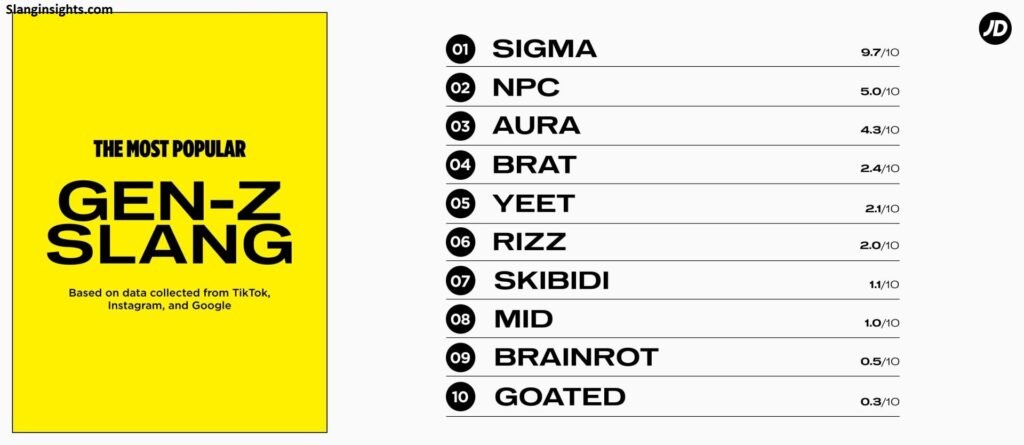
Millennial slang tends to be warmer, more earnest, and rooted in early social media culture. Gen Z slang is often more ironic, absurdist, and TikTok-driven. Some words overlap — like “slay” — but Gen Z frequently reclaims older terms with a new layered or self-aware spin.
Where did most of these words come from originally?
A significant portion of millennial slang has roots in African American Vernacular English (AAVE) and LGBTQ+ ballroom culture. Terms like “slay,” “extra,” and “squad goals” were in use in those communities long before going mainstream — a pattern that raises important conversations about cultural appropriation and credit.
Why does slang expire so quickly?
Once a slang term gets picked up by brands, politicians, or mainstream media, it tends to lose its cool factor fast. Overuse and corporate adoption are the quickest killers of slang — which is why a word can go from cutting-edge to cringe in just a year or two.
Conclusion
Millennial slang is more than a generational quirk — it’s a window into how language evolves in the digital age.
As the first generation to grow up alongside the internet, millennials shaped a vocabulary that was fast, expressive, and deeply social.
Words spread overnight on Twitter, peaked on Vine, and went viral on Tumblr, creating a linguistic landscape unlike any that came before it.
Not all of it survived. Some terms burned bright and faded just as quickly — “on fleek” had its moment and moved on.
But others, like “ghosting,” “adulting,” and “FOMO,” embedded themselves so deeply into everyday conversation that they’ve earned a permanent spot in the dictionary.
These words didn’t just capture how millennials talked — they captured how a whole generation felt: perpetually online, anxious about missing out, navigating adulthood without a clear roadmap.
Today, as Gen Z remixes and reclaims much of this vocabulary with fresh irony, the influence of millennial slang lives on.
Language is always in motion, and millennials — whether they intended to or not — gave it a serious push forward. That’s not just low-key impressive. That’s a whole legacy.