Chopped Meaning Slang Explained: Why Gen Z Says It (2026)
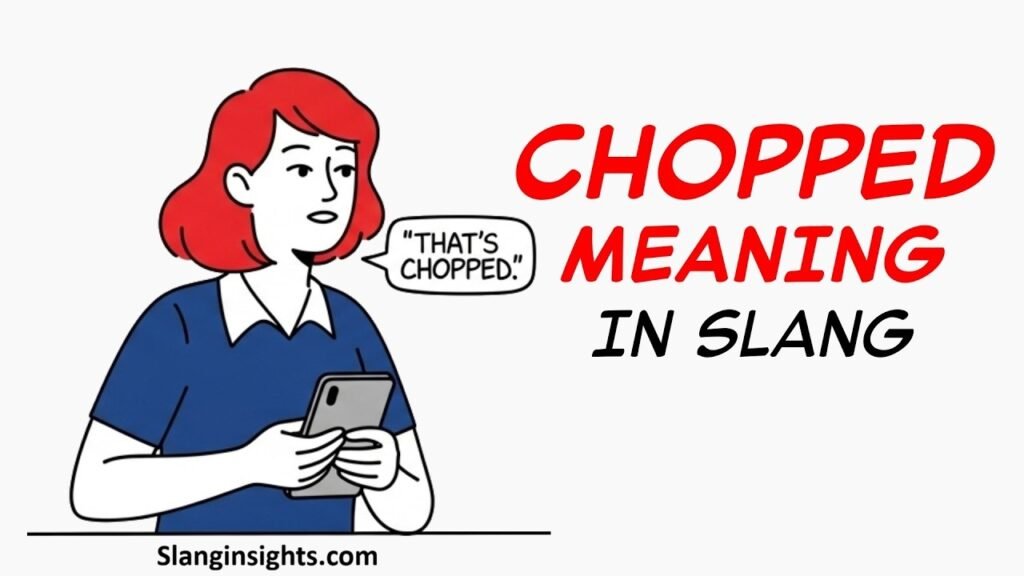
Picture this: You’re scrolling through TikTok, and the comment section is flooded with “bro is chopped 💀” under someone’s selfie. Or maybe your teen comes home from school muttering about how their test was “so chopped.” If you’re confused, you’re not alone.
The term “chopped” has taken over youth culture in 2026, becoming one of the most viral slang terms across social media platforms. Understanding what does chopped mean isn’t just about keeping up with internet slang. It’s about bridging the generation gap and understanding how digital natives communicate today.
We’ll breaks down the Chopped Meaning Slang definition, its origins in AAVE, and why this Gen Z slang term matters in contemporary culture.
Table of Contents
What Does “Chopped” Mean in Slang? (The Quick Answer)
Let’s cut straight to the chase: “chopped” in slang primarily means unattractive, ugly, or undesirable when referring to someone’s physical appearance. It’s a harsh judgment about someone’s looks, essentially saying they don’t meet conventional beauty standards. When someone says “you’re chopped,” they’re delivering a direct insult about your appearance.
However, the chopped meaning slang has evolved beyond just physical descriptions. In 2026, Gen Alpha and Gen Z use it to describe:
- People: Someone who looks unattractive or unkempt
- Situations: Events or circumstances that are annoying, unfair, or disappointing
- Things: Objects, assignments, or experiences that are subpar or frustrating
The term operates on a social hierarchy rating scale in youth culture:
- Fine/Attractive: Top tier, good-looking
- Mid: Average, neither attractive nor unattractive
- Chopped: Bottom tier, unattractive or undesirable
Quick examples:
- “That guy who tried to talk to me was so chopped”
- “This homework assignment is chopped, bro”
- “Her outfit is chopped today”
- “The Wi-Fi at school is chopped”
Chopped in 3 Seconds: It means you’re not looking your best—basically, ugly or unattractive. It’s the opposite of having rizz or sigma energy.
This street slang has become so embedded in online communication that it’s practically unavoidable on TikTok, Instagram, and Snapchat. Understanding this viral slang term is essential for parents, teachers, and anyone trying to decode teen slang in 2026.
Where Did “Chopped” Come From? The Origin Story
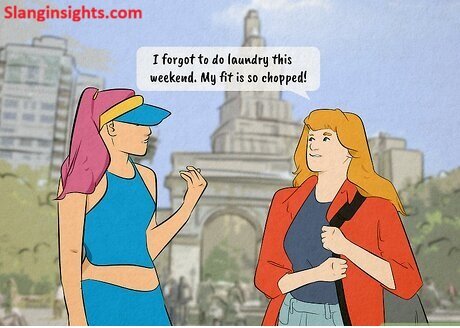
The roots of “chopped” trace back to African American Vernacular English (AAVE), specifically originating in urban communities in New York City and New Jersey. This isn’t a brand-new invention of chronically online Gen Z—it’s actually been part of hip-hop culture and urban slang for decades.
The Timeline of “Chopped”
- 1990s-2000s: The term circulated in NYC neighborhoods and rap music, primarily within Black communities as part of AAVE. It was used locally but hadn’t reached mainstream awareness.
- 2010s: “Chopped” remained regional, occasionally appearing in rap lyrics and street conversations. Older equivalents like “beat” or “busted” were more common nationally.
- 2023-2024: The explosion happened. TikTok became the catalyst that transformed this urban slang into a nationwide phenomenon. The algorithm amplified videos using the term, particularly among Gen Z and Gen Alpha users.
- 2025-2026: Full mainstream adoption. “Chopped” became one of the most recognized internet slang terms, appearing across all social media platforms and entering real-life conversations in schools nationwide.
How TikTok Changed Everything
The viral spread of “chopped” demonstrates how social media language evolves rapidly. Several key moments accelerated its popularity:
- The Chopped Chin Meme: Videos highlighting unflattering chin angles went viral, with creators jokingly calling themselves “chopped” in poor lighting
- Stella Wang’s “Chopped Man Epidemic” Video: A viral TikTok discussing dating standards and the abundance of “chopped men” in dating apps
- Comment Section Culture: Users began spamming “chopped” under celebrity posts, creating memes and viral content
The term became synonymous with being chronically online—if you spent time on TikTok in 2024-2025, you couldn’t escape it. Hip-hop culture’s influence remained present, but the meaning expanded beyond its original AAVE context as it entered mainstream youth culture.
This evolution shows how contemporary slang often originates in marginalized communities before being adopted (and sometimes appropriated) by broader digital native populations. The connection to African American English remains important to acknowledge when discussing the term’s legitimacy and cultural significance.
How Gen Z and Gen Alpha Use “Chopped” in 2026
The beauty of modern slang is its adaptability. “Chopped” functions differently depending on context, platform, and even which generation is using it.
On Social Media (TikTok, Instagram, Snapchat)
Social media platforms have become the primary habitat for “chopped” in its natural environment:
TikTok Usage:
- Comment sections: “Nah bro is chopped 💀” under selfie videos
- Video captions: “POV: realizing you’re chopped after seeing your camera roll”
- Duets and stitches: Reacting to others with “this is chopped behavior”
- Hashtags: #chopped, #choppedcheck, #notchopped
Instagram and Snapchat:
- Story reactions using the term
- Direct message roasts between friends
- Meme accounts dedicated to “chopped” content
- Rating culture: “chopped shyt vs fine shyt” comparisons
The online slang creates a form of digital social hierarchy where appearance-based judgments happen instantly and publicly. Brain rot culture has normalized this type of quick, harsh assessment.
In Real-Life Conversations
While it started as internet slang, “chopped” has fully infiltrated offline youth culture:
Gen Z (born 1997-2012) tends to use it more ironically and self-deprecatingly:
- “I’m so chopped today, didn’t sleep at all”
- Using it to describe bad situations: “That party was chopped”
- More aware of its harsh implications, often used among close friends
Gen Alpha (born 2013-2025) uses it more literally and frequently:
- Direct appearance-based insults in school hallways
- Less filter about using it publicly
- Incorporated into their everyday vocabulary without irony
School Environments: Teachers report hearing “chopped” constantly:
- “This assignment is chopped, Mr. Smith”
- Cafeteria conversations rating classmates
- Dismissing school rules or policies as “chopped”
Philip Lindsay, a high school teacher, noted: “Students use ‘chopped’ for literally everything now. It’s their go-to word for anything they don’t like.”
The “Chopped Man Epidemic”
One of the most viral moments in chopped slang history came from Stella Wang’s TikTok video discussing modern dating culture. She coined the phrase “chopped man epidemic” to describe what she perceived as an abundance of unattractive men on dating apps.
The video sparked massive debate:
- Supporters agreed that beauty standards for men have risen
- Critics called out the superficiality and body-shaming
- Dating discourse exploded around rejection, physical appearance, and what counts as “mid” versus “chopped”
This moment showed how slang definitions can reflect and shape cultural attitudes about relationships, beauty standards, and social dynamics among Millennials, Gen Z, and Gen Alpha.
Real-World Examples with Context:
- TikTok comment: “Respectfully, bro is chopped and his rizz is negative” (harsh appearance critique)
- School hallway: “That test was so chopped, I definitely failed” (situation-based usage)
- Instagram DM: “Why do all the chopped guys think they have aura?” (dating frustration)
- Snapchat story: “Took off my makeup and I’m chopped chopped” (self-deprecating humor)
- Friend group chat: “This weather is chopped, canceled plans” (general complaint)
- Reddit post: “Am I chopped or just mid? Be honest” (seeking validation)
- Discord server: “That game update is chopped, bro” (describing quality)
“Chopped” vs Similar Slang Terms: What’s the Difference?
Youth culture loves creating nuanced terminology. Here’s how “chopped” compares to related slang:
| Term | Meaning | Severity | Primary Generation | Context |
|---|---|---|---|---|
| Chopped | Unattractive; ugly; undesirable | High (harsh insult) | Gen Z, Gen Alpha | Appearance, situations, things |
| Mid | Average; mediocre; neither good nor bad | Medium (mild criticism) | Gen Z | General quality assessment |
| Cooked | Messed up; done for; in trouble | High (situation-dependent) | Gen Z | Situations, mental state |
| Beat/Busted | Ugly; worn out (older slang) | High (harsh insult) | Millennials, older Gen Z | Appearance (outdated) |
| Chuz | Combination of “chopped” + “huzz” (ugly) | Very High (extreme insult) | Gen Alpha | Extreme appearance critique |
| Choppelganger | Someone who looks like a chopped version of someone else | Medium-High (creative insult) | Gen Z | Comparative appearance |
When to Use Each Term
Use “Chopped” when:
- Making a strong negative judgment about appearance
- Describing frustrating situations broadly
- You want maximum impact (it’s harsher than “mid”)
Use “Mid” when:
- Something is just okay, not terrible
- You want to criticize without being too harsh
- Describing quality that’s neither impressive nor awful
Use “Cooked” when:
- Someone is in serious trouble
- Describing mental exhaustion
- A situation has gone badly wrong
Avoid older terms like “beat” or “busted”:
- These give you “unc status” (old person vibes)
- Gen Z and Gen Alpha will know you’re trying too hard
- They’re no longer part of contemporary slang
Severity Ranking (Least to Most Harsh)
- Mid – Gentle criticism
- Cooked – Contextual severity
- Chopped – Strong insult
- Beat/Busted – Dated but harsh
- Chuz – Extreme, newer variation
Understanding these distinctions helps navigate the complex world of modern slang and online communication without accidentally escalating or seeming out of touch.
The Evolution of “Chopped”: From Insult to General Complaint
Language is alive, and “chopped” demonstrates this perfectly. What started as a specific appearance-based insult has morphed into a versatile complaint term in 2026.
Original Meaning: Physical Appearance
Initially, “chopped” had one clear purpose: describing someone as unattractive. It was direct, harsh, and specifically about looks. In AAVE and urban slang contexts, calling someone “chopped” meant they didn’t meet beauty standards—end of story.
New Usage 2025-2026: Universal Disappointment
Gen Z and Gen Alpha have democratized the term, applying it to virtually anything negative:
Situations:
- “The school assembly was so chopped”
- “This rainy weather is chopped”
- “My job interview went chopped”
Things:
- “These headphones are chopped, they keep cutting out”
- “The new album is chopped compared to their last one”
- “This phone case is chopped quality”
Experiences:
- “My weekend was chopped, just stayed home”
- “The concert was chopped, they barely performed”
- “This coffee tastes chopped”
The Philip Lindsay Example
High school teacher Philip Lindsay went viral on social media explaining how his students use “chopped” for everything. In one instance, a student called a homework assignment “chopped” simply because it was challenging. Another said the cafeteria food was “chopped” (which, fair enough, might be accurate).
This evolution shows how slang dictionary entries can’t keep up with real-world usage. What does chopped mean changes almost monthly as digital natives adapt it to new contexts.
How Language Evolves Organically
Linguists call this “semantic broadening”—when a word’s meaning expands beyond its original scope. It happens naturally in youth culture because:
- Efficiency: One versatile word beats learning multiple terms
- In-group signaling: Using slang correctly shows you’re part of the culture
- Creative expression: Adapting terms keeps language fresh
- Viral spread: Social media platforms accelerate evolution
“Chopped” joins terms like “sick” (bad → good), “bad” (bad → good in certain contexts), and “fire” (destructive → excellent) in the pantheon of words that flipped or expanded meaning through youth adoption.
The chronically online nature of Gen Alpha especially drives this. They spend so much time in online communication that internet slang becomes their default vocabulary, both online and offline.
Is “Chopped” Offensive? Understanding the Impact
Let’s be direct: Yes, “chopped” is an insult. Despite how casually it’s thrown around on TikTok slang or in school hallways, it’s fundamentally a negative judgment about someone’s appearance or worth.
The Weight of Words
When directed at a person’s physical appearance, “chopped” can be deeply hurtful:
- Body image issues: Constant exposure to appearance-based insults contributes to poor self-esteem
- Mental health implications: Being called “chopped” repeatedly can lead to anxiety and depression
- Cyberbullying: The term is frequently weaponized in comment sections
- Social hierarchy: It reinforces harmful beauty standards and creates division
Online vs In-Person Impact
Digital spaces amplify the harm:
- Comments are public and permanent
- Pile-on effect when multiple users call someone “chopped”
- Screenshots spread beyond original context
- Anonymity emboldens cruelty
Face-to-face usage can be different:
- Sometimes used playfully between close friends
- Tone and relationship context matter
- Immediate feedback if it hurts
- Can be addressed in the moment
Expert Perspectives
Morgan Ugoagwu, a social media researcher focusing on teen slang and youth culture, advises: “Don’t call anyone ugly. Ever. It doesn’t matter what slang term you use—chopped, mid, beat—it’s all harmful. Words have power, especially during formative years.”
Mental health professionals warn about the normalization of appearance-based insults in Gen Z slang. The casual cruelty masked as humor creates an environment where young people constantly evaluate themselves and others on superficial criteria.
When It’s Playful vs Harmful
Potentially acceptable contexts:
- Close friends with established trust and consent
- Self-deprecating humor (though this can still be unhealthy)
- Describing inanimate objects or situations (not people)
- Both parties clearly joking and comfortable
Clearly harmful contexts:
- Directed at strangers online
- Used to bully or exclude someone
- Said about someone who’s expressed it hurts them
- Part of broader harassment campaign
- Used to reinforce social hierarchies in school
Parent and Educator Perspectives
Teachers and parents increasingly worry about slang definition evolution that normalizes cruelty:
- Desensitization: Kids don’t realize the impact
- Peer pressure: Using harsh terms to fit in
- Digital citizenship: Teaching respectful online communication
- Intervention: When to step in and educate
The brain rot culture of constant scrolling and viral content creates an environment where empathy sometimes takes a backseat to getting likes or going viral.
Related Chopped Slang You Should Know in 2026
The “chopped” family has spawned numerous variations and related terms in contemporary slang:
Choppelganger
Definition: Someone who looks like a “chopped” (ugly) version of someone else, typically a celebrity or influencer.
Example: “He’s giving Henry Cavill choppelganger vibes 💀”
Usage: Common in TikTok comment sections comparing everyday people to famous figures, but in an unflattering way. It’s creative but cruel.
Chopped Shyt vs Fine Shyt
Definition: A binary rating system classifying people (usually women) as either attractive (“fine shyt”) or unattractive (“chopped shyt”).
Example: “She thinks she’s fine shyt but she’s really chopped shyt”
Usage: Prevalent in dating discourse and relationship conversations. Highly problematic as it reduces people to binary appearance categories. Related to the broader culture of rating and ranking on social media platforms.
Chuzz / Chuz
Definition: Combination of “chopped” + “huzz” (another slang term meaning ugly), creating an amplified insult.
Example: “Bro is not just chopped, he’s straight chuzz”
Usage: When “chopped” alone isn’t harsh enough. Popular among Gen Alpha who love combining and remixing slang terms.
Chop Hoe
Definition: An unattractive person, adding gendered insult to appearance-based criticism.
Example: Often used in misogynistic contexts online
Usage: Particularly problematic variation that adds sexism to appearance-shaming. Educators should be especially alert to this term.
Cooked
Definition: Messed up, done for, in trouble, or exhausted. Can describe situations or people’s mental states.
Example: “I’m absolutely cooked after that exam” or “His chances with her are cooked”
Usage: Related to “chopped” but focuses more on situations being ruined rather than appearance. One of the most versatile viral slang terms of 2025-2026.
Aura Farming
Definition: Trying to gain social status, coolness points, or respect (your “aura”) through specific actions.
Example: “He’s just aura farming by talking to the popular kids”
Usage: Contextually related because having negative “aura points” often correlates with being considered “chopped.” Part of the broader sigma, rizz, and social hierarchy language.
Quick Reference Table:
| Term | Meaning | Offensiveness Level |
|---|---|---|
| Choppelganger | Ugly version of someone | High |
| Chopped shyt | Unattractive person | Very High |
| Fine shyt | Attractive person | Medium (objectifying) |
| Chuzz/Chuz | Extremely ugly | Very High |
| Chop hoe | Ugly + sexist insult | Extremely High |
| Cooked | Messed up situation | Low-Medium |
| Aura farming | Seeking social status | Low |
Understanding this ecosystem of related slang helps decode what digital natives are actually saying in their online and offline communication.
How to Respond If Someone Calls You “Chopped”
Being on the receiving end of “chopped” stings. Here’s how to handle it:
Don’t Internalize It
Remember: Someone’s opinion of your appearance doesn’t define your worth. Beauty standards are subjective, culturally constructed, and constantly changing. What’s considered “chopped” in one context might be attractive in another. The chronically online culture that created this term doesn’t represent reality.
Comeback Options (If Appropriate)
If it’s from someone you trust and it’s playful:
- “And yet here you are talking to me 🤷”
- “Good thing personality matters more”
- Self-deprecating humor: “Tell me something I don’t know”
If it’s online harassment:
- Don’t engage (seriously, they want a reaction)
- Block and report
- Screenshot for evidence if it escalates
- Talk to a trusted adult if it continues
If it’s in-person bullying:
- Calmly but firmly: “That’s not cool to say”
- Walk away (removes their audience)
- Tell a teacher or trusted authority
- Document if it becomes a pattern
When to Ignore vs Address
Ignore when:
- It’s clearly bait for attention
- Engaging will make it worse
- The person has no real connection to your life
- It’s a one-time comment from a stranger
Address when:
- It’s affecting your mental health
- It’s part of ongoing harassment
- It’s happening in environments you can’t escape (school, work)
- The person is someone whose relationship you value and want to preserve
Building Confidence Tips
- Curate your social media: Unfollow accounts that make you feel bad
- Limit exposure: Less time on TikTok and Instagram means less comparison
- Find your community: Surround yourself with supportive people
- Remember context: Teen slang is often exaggerated and performative
- Develop other strengths: Your worth isn’t your appearance
Resources for Teens Dealing with Online Negativity
- Crisis Text Line: Text HOME to 741741
- Teen Line: 1-800-852-8336
- StopBullying.gov: Resources and action plans
- School counselors: Trained to help with peer conflicts
- Trusted adults: Parents, relatives, mentors who support you
The impact of appearance-based insults is real, and seeking help isn’t weakness—it’s smart self-care in a world where internet slang can inflict genuine harm.
Why Parents and Teachers Need to Know This Slang
Understanding youth culture vocabulary isn’t just about being the “cool adult”—it’s about safety, connection, and guidance.
Understanding Youth Communication
When you know what “chopped” means, you can:
- Decode conversations: Understand what’s really being said
- Identify problems early: Recognize when slang crosses into bullying
- Bridge generation gaps: Show genuine interest in their world
- Build trust: Teens respect adults who make effort to understand
Teachers report that students are shocked when an adult knows contemporary slang—it immediately changes the dynamic and opens communication channels.
Spotting Cyberbullying
“Chopped” appears frequently in cyberbullying scenarios:
- Comment section pile-ons: Multiple users attacking one person
- Group chats: Coordinated exclusion or harassment
- Meme targeting: Someone becomes the “chopped” example
- Comparative posts: “Chopped shyt vs fine shyt” lists
Being familiar with the term helps identify when a student is being targeted. The slang dictionary might not flag “chopped” as bullying language, but in context, it absolutely can be.
Generation Gap Bridging
Knowing modern slang shows you’re:
- Willing to learn: Respects their culture
- Staying current: Not stuck in your own generation’s language
- Taking them seriously: Their communication matters
However, don’t try too hard—using slang incorrectly gives you “unc status” (old person trying to be young) and loses respect. Instead, ask questions: “I heard someone say ‘chopped’—what does that mean to you?”
How to Talk to Teens About It
Good approaches:
- “I’ve been seeing this word ‘chopped’ online. Can you explain it?”
- “Someone in your class might hear this term—how would you respond?”
- “What’s the difference between joking and being mean when using slang?”
Avoid:
- “Stop using that disgusting language!” (shuts down communication)
- Using it incorrectly yourself (loses credibility)
- Dismissing it as “just kids being kids” (minimizes real harm)
Creating Safe Spaces for Discussion
In classrooms and homes:
- Establish norms: Certain language isn’t acceptable
- Explain impact: Connect words to feelings and consequences
- Model respect: Show how to disagree or critique without insults
- Encourage reporting: Make it safe to call out harmful behavior
Understanding street slang and AAVE origins also creates opportunities to discuss cultural appropriation, language evolution, and respecting communities.
Frequently Asked Questions About Chopped Meaning Slang
Q: What does chopped mean in slang?
“Chopped” primarily means unattractive or ugly when describing appearance, but has evolved to describe annoying situations or poor-quality things in Gen Z and Gen Alpha usage.
Q: Is being called chopped a compliment?
No, “chopped” is definitely an insult meaning someone is unattractive or something is undesirable—never a compliment in any context.
Q: Where did chopped originate?
“Chopped” originated in African American Vernacular English (AAVE) in NYC and New Jersey, existing for decades before TikTok made it mainstream in 2024-2025.
Q: What’s the difference between chopped and mid?
“Mid” means average or mediocre while “chopped” is harsher, meaning ugly or terrible—mid is mild criticism, chopped is a strong insult.
Q: Why is everyone saying chopped in 2026?
TikTok virality, influencer usage, meme culture, and teens’ love of harsh appearance-based judgments made “chopped” explode across social media platforms and real life.
Q: Can chopped be used for things, not just people?
Yes, “chopped” has evolved beyond appearance to describe disappointing situations, poor quality items, or frustrating experiences—”that test was chopped.”
Q: What does choppelganger mean?
A “choppelganger” is someone who resembles an ugly version of someone else, usually a celebrity—it’s a creative but cruel comparison insult.
Q: Is chopped still popular in 2026?
Absolutely—”chopped” remains one of the most used viral slang terms among Gen Z and Gen Alpha across TikTok, Instagram, and everyday conversation.
Conclusion
“Chopped” represents more than just another entry in the slang dictionary—it’s a window into how youth culture communicates, judges, and navigates social hierarchies in 2026. From its AAVE roots in hip-hop culture to its viral explosion on TikTok slang, this term shows how internet slang evolves rapidly through social media platforms. While understanding what does chopped mean helps bridge generation gaps, we must also recognize its potential harm.
As Gen Z and Gen Alpha continue shaping contemporary slang, let’s encourage digital natives toward kinder online communication while respecting the creative language evolution happening before our eyes.