Irish Slang Explained Meanings, Examples & How to Use Them
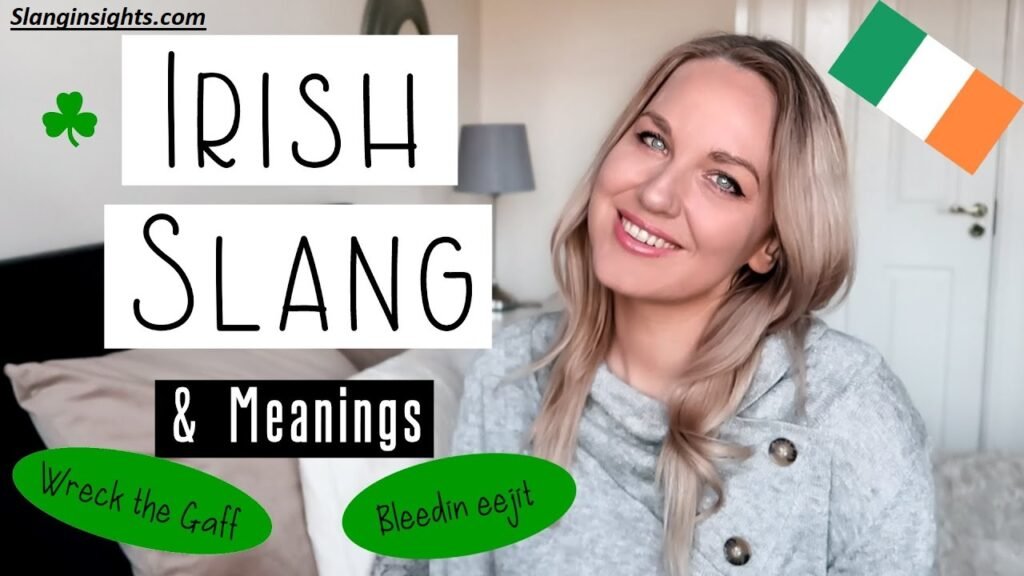
Irish slang is a lively mix of traditional Gaelic influence and modern street language, widely used in everyday conversation across Ireland.
Common words include “craic” (fun or good times), “grand” (fine or okay), “wee” (small), and “gobshite” (a foolish person). Phrases like “What’s the story?” mean “How are you?” rather than asking for news.
Irish slang often sounds friendly and humorous, helping people connect quickly in social settings. It reflects Ireland’s rich culture, love for storytelling, and relaxed communication style.
Learning a few Irish slang terms can make conversations with locals more enjoyable and help you better understand Irish movies, music, and daily life.
Table of Contents
Quick Table
| Slang Word / Phrase | Meaning | Example |
|---|---|---|
| Craic | Fun, news, or good times | “What’s the craic tonight?” |
| Grand | Fine / okay | “I’m grand, thanks!” |
| Eejit | Foolish person | “Don’t mind him, he’s an eejit.” |
| Banjaxed | Broken / exhausted | “My phone is banjaxed.” |
| Gas | Funny | “That story was gas.” |
| Sound | Nice / reliable | “She’s sound for helping.” |
| Yank | American | “A few Yanks in the pub.” |
| Gaff | House | “Come back to my gaff.” |
| Deadly | Excellent | “That match was deadly!” |
| Fair play | Well done | “Fair play to you!” |
What is Irish Slang
Irish slang refers to informal words, phrases, and expressions commonly used in everyday conversation in Ireland. It is deeply rooted in local culture, humor, and history, and it often reflects how Irish people see the world. Irish slang is not the same as the Irish language (Gaeilge).
Instead, it is part of Hiberno‑English, a variety of English shaped by centuries of Irish speech patterns, storytelling traditions, and community life.
One of the most interesting things about Irish slang is how flexible it is. A single word can change meaning depending on tone, context, or even facial expression.
For example, the word “grand” rarely means “luxurious.” In Ireland, it usually means “fine” or “okay.” Similarly, “deadly” does not mean dangerous in casual speech; it often means something is excellent or impressive.
Irish slang is widely used across social situations: chatting with friends, talking in pubs, greeting neighbors, or even casual workplace conversations.
It helps people sound natural and friendly. For visitors, learners, or anyone interested in Irish culture, understanding Irish slang makes conversations easier and more enjoyable.
It also helps avoid confusion, because many Irish phrases do not mean exactly what they seem to mean when translated literally.
Another key feature of Irish slang is humor. Many expressions are playful, exaggerated, or ironic. Irish people often use slang to soften criticism, show friendliness, or add warmth to speech.
Learning Irish slang is not just about vocabulary; it is about understanding tone, timing, and social context.
Most Common Irish Slang Words
Irish slang words are often short, expressive, and memorable. They appear frequently in everyday conversations, media, and social interactions. Below is a breakdown of how common Irish slang words work, what they mean, and how they are used naturally.
Word / Phrase
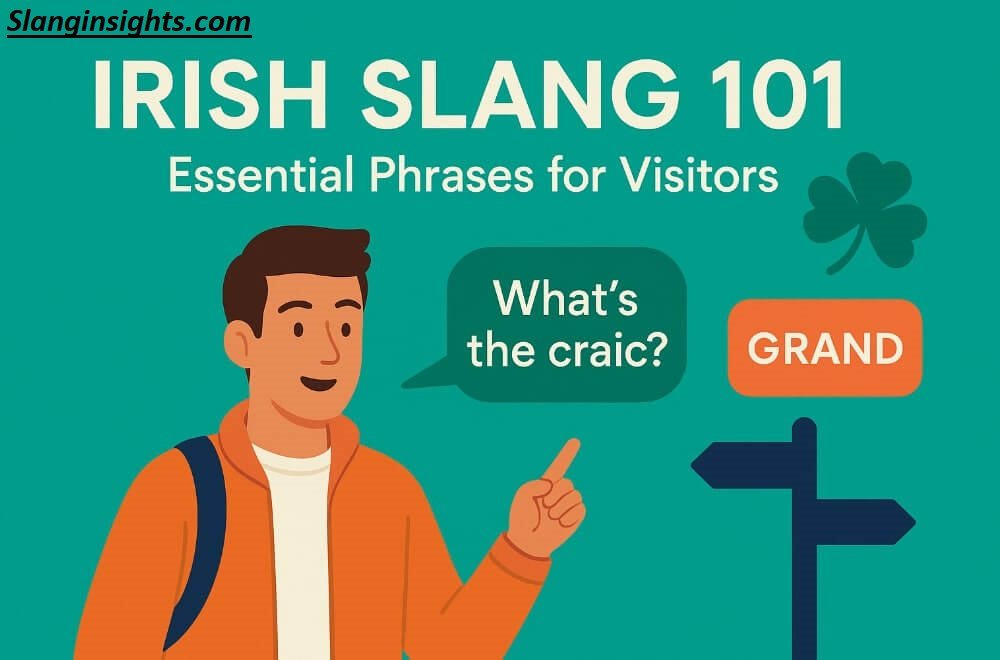
One of the most common Irish slang phrases is “What’s the craic?” This phrase is used as a greeting, similar to “What’s up?” or “How are things?” The word “craic” can also be used on its own to describe fun, entertainment, or news. Another widely used word is “grand,” which almost always means “fine” rather than something impressive. Words like “eejit,” “banjaxed,” and “gas” are also very common in daily speech.
These words are not formal and are usually used in relaxed settings. You will hear them among friends, family, and colleagues. Because they are so common, learning them helps you understand conversations much faster and respond more naturally.
Meaning
Irish slang meanings are often different from standard English meanings. “Craic” means fun or enjoyable conversation. “Eejit” means a silly or foolish person, usually in a light‑hearted way rather than an insult. “Banjaxed” means broken, damaged, or extremely tired. “Gas” means funny or amusing, and “sound” means kind, reliable, or good‑natured.
Understanding these meanings is important because translating them word‑for‑word can be misleading. Irish slang relies heavily on shared cultural understanding, so context matters more than dictionary definitions.
Example Sentence
Examples help make Irish slang clearer. “What’s the craic?” can be used when meeting someone: “Hi! What’s the craic?” If someone helps you, you might say, “You’re sound for that.” After a long day, someone might say, “I’m absolutely banjaxed.” If a joke is funny, you could respond with, “That’s gas!” These examples show how Irish slang fits naturally into everyday conversation.
Slang by Category
Irish slang can be grouped into categories based on where and how it is used. This makes it easier to learn and remember.
Pub Slang
Pub slang is extremely common in Ireland because pubs are central to social life. Words like “craic” are used constantly in pubs to describe the atmosphere. “A round” refers to buying drinks for everyone in your group. “Yer man” or “yer woman” is used to refer to someone whose name you may not know. Pub slang is friendly and informal, and it helps create a relaxed, welcoming environment.
Daily Life Slang
Daily life slang includes words used at home, work, or with friends. “Gaff” means house or home. “Messages” means groceries. “Knackered” or “banjaxed” means very tired. “Grand” is used to say everything is fine. These phrases are heard every day and are essential for understanding normal conversations.
Greetings & Responses
Irish greetings often use slang. “What’s the craic?” is the most famous one. Responses might include “Not much,” “All good,” or “Great craic.” “How’s things?” is another common greeting. Responses are usually relaxed and positive, even if things are not perfect. This reflects the Irish preference for friendly, easygoing conversation.
How to Use Irish Slang (with examples)
Using Irish slang correctly is more about tone and context than perfect grammar. Irish people often use slang to sound friendly, polite, and humorous. When using Irish slang, it is best to start slowly and listen to how others use it.
For example, “grand” is safe and widely accepted. If someone asks how you are, saying “I’m grand” sounds natural. Using “craic” works best in social settings. Asking “What’s the craic?” when meeting friends feels friendly and relaxed. Saying something is “deadly” shows enthusiasm, but it should be used casually, not in serious situations.
Irish slang often softens statements. Instead of saying something directly, slang can make it sound kinder. Calling someone an “eejit” is usually playful, not harsh. However, tone matters. Said with a smile, it is friendly; said angrily, it can be offensive.
Examples in sentences help build confidence. “The party last night was great craic.” “Fair play to you for finishing that project.” “He’s sound, he helped me out.” These examples show how slang fits naturally into everyday English without replacing it completely.
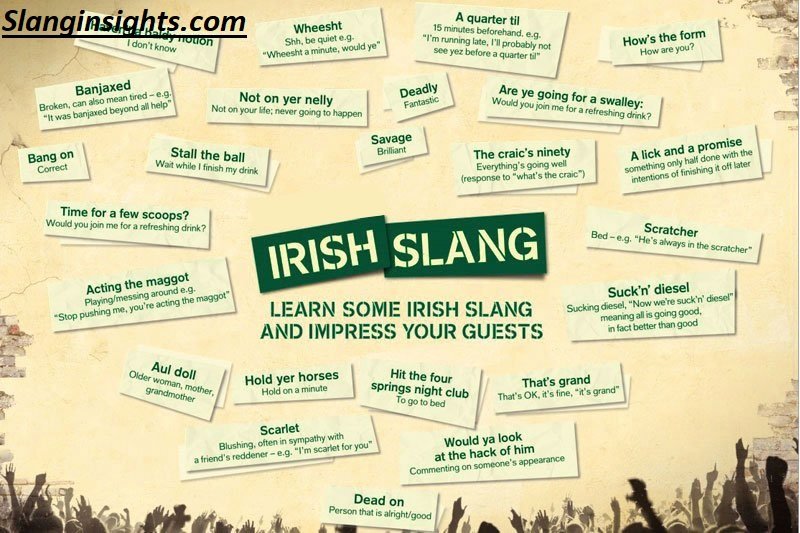
Irish Slang Net Worth
Irish slang is more than just a collection of quirky words and phrases; it’s a vital part of Ireland’s cultural identity.
While the term “net worth” usually applies to money or assets, in this context, it can be interpreted as the cultural and social value of Irish slang—how much it contributes to communication, media, tourism, and even the global perception of Ireland.
Irish slang has permeated music, movies, television shows, and social media, making it a recognizable and influential part of global pop culture.
From “craic” (fun or enjoyable times) to “grand” (fine, okay) and “gobshite” (a foolish or silly person), these words add humor, personality, and warmth to everyday conversation. Beyond casual communication, Irish slang has become a key feature in marketing campaigns, storytelling, and branding, enhancing Ireland’s international cultural footprint.
For example, Irish-themed pubs, TV shows, and movies often rely on authentic slang to appeal to audiences, making it an intangible asset with real-world influence.
Why Irish Slang Holds “Net Worth”
- Cultural Identity: Irish slang reflects the humor, friendliness, and resilience of the Irish people. Phrases like “What’s the story?” or “Sure, it’s grand” showcase a conversational warmth that draws people in. This cultural appeal adds social “value” by fostering connection and recognition worldwide.
- Media and Entertainment: Many global films and shows set in Ireland incorporate Irish slang to add authenticity. Actors like Colin Farrell and Saoirse Ronan use these phrases in dialogue, boosting the linguistic and cultural exposure of these terms. The popularity of Irish slang in media indirectly increases its cultural net worth.
- Tourism and Marketing: Phrases like “craic” and “sláinte” (cheers) are frequently used in tourism campaigns and Irish pubs abroad. Tourists seek an “authentic” Irish experience, which often includes learning a few slang phrases. This economic dimension adds tangible value, linking language to commerce.
- Social Media Influence: Irish slang is frequently shared on social platforms for humor, memes, or relatable content. The virality of these terms contributes to their popularity and cultural currency, indirectly reflecting their global influence.
Popular Irish Slang Terms and Their Cultural “Net Worth”
| Slang Term | Meaning / Use | Cultural Significance (1–10) | Notes |
|---|---|---|---|
| Craic | Fun, entertainment, or good times | 10 | Iconic Irish word often used in tourism ads |
| Grand | Fine, okay, or acceptable | 8 | Used in everyday conversation |
| Gobshite | Foolish or silly person | 7 | Popular in comedy shows and storytelling |
| Wee | Small | 9 | Commonly used, often charming to foreigners |
| What’s the story? | How are you? / What’s up? | 8 | Friendly greeting, widely recognized |
| Sláinte | Cheers! | 10 | Integral to Irish culture and social bonding |
| Eejit | Idiot, fool | 7 | Lighthearted insult used humorously |
| Savage | Impressive or harshly funny | 6 | Modern slang adapted in youth culture |
| Feck | Mild expletive (less offensive than “f***”) | 8 | Used widely in movies and informal speech |
| Deadly | Excellent, amazing | 9 | Increasingly popular among younger generations |
Global Reach and Economic Impact
Although slang doesn’t generate direct monetary revenue, its influence on culture, tourism, and media translates into indirect economic benefits. Irish pubs worldwide use phrases like “craic” and “sláinte” to create an immersive atmosphere, attracting customers and increasing revenue.
Tourism boards leverage these terms to promote Ireland’s charm, resulting in measurable financial gains from travel and cultural experiences. Furthermore, global social media sharing of Irish slang memes contributes to intangible “cultural capital,” helping Ireland maintain a strong soft-power presence internationally.
Pronunciation & Tips
Pronunciation is important when using Irish slang. Some words look unfamiliar but are easy once you hear them. “Craic” is pronounced like “crack,” not “crake.” “Gaff” rhymes with “laugh” in many Irish accents. “Eejit” sounds like “ee‑jit.”
A useful tip is to listen to native speakers through movies, TV shows, podcasts, or conversations. Irish slang is often spoken quickly, so listening helps you catch the rhythm and tone. Another tip is not to overuse slang. Using a few well‑placed phrases sounds more natural than trying to use slang in every sentence.
It is also important to remember that slang can vary by region. Dublin slang words may differ from rural expressions. While most common slang is understood everywhere, pronunciation and frequency can change.
Cultural Context & Origins
Irish slang is closely tied to history and culture. Many expressions come from the Irish language, even though they are now spoken in English. Storytelling, humor, and community life have all shaped how slang developed.
Pubs, family gatherings, and local communities helped spread slang over generations. Because Ireland values conversation and social connection, language became expressive and playful. Irish idioms and fun phrases often reflect resilience, humor, and a relaxed attitude toward life.
Understanding the cultural background helps you appreciate why Irish slang sounds the way it does. It is not just about words; it is about shared experiences, history, and a strong sense of identity.
FAQ – Common Questions About Irish Slang
What does “What’s the craic?” mean?
It means “What’s happening?” or “How are things?”
Is Irish slang the same everywhere?
No, some slang varies by region, especially between cities and rural areas.
Is Irish slang informal?
Yes, it is mostly used in casual conversation.
Can visitors use Irish slang?
Yes, using a little slang is usually appreciated.
Is Irish slang related to the Irish language?
Some expressions are influenced by Irish, but most are English‑based.
Conclusion
Irish slang is a lively, expressive part of everyday communication in Ireland. It reflects humor, friendliness, and cultural identity. Learning Irish slang helps you understand conversations better, connect with people more easily, and enjoy Irish culture on a deeper level.
From famous phrases like “What’s the craic?” to everyday words like “grand” and “sound,” Irish slang adds color and warmth to English. By learning meanings, usage examples, pronunciation tips, and cultural context, you can use these expressions confidently and naturally.
The key to mastering Irish slang is listening, observing, and practicing gently. Start with common phrases, notice how people respond, and enjoy the playful nature of the language. Irish slang is not about perfection; it is about connection, comfort, and a good sense of humor.
Whether you are visiting, studying, or simply curious, understanding Irish slang opens the door to richer conversations and a better appreciation of Irish life. Fair play for learning it, and may you always have great craic along the way.