PSA Meaning Slang Explained for Teens & Adults 2026
PSA meaning slang has evolved significantly from its traditional origins as “Public Service Announcement” to become one of the most versatile acronyms in modern digital communication.
In today’s texting culture, social media landscape, and online conversations, PSA serves multiple purposes—from grabbing attention to sharing important updates, warning friends about potential issues, or simply making playful announcements.
Understanding how PSA functions in slang contexts is essential for anyone navigating contemporary digital communication, whether you’re a teenager trying to decode group chat messages, a parent monitoring your child’s online activity, or an adult wanting to stay current with internet language trends and social media etiquette.
Table of Contents
What Does PSA Mean in Slang?
PSA in slang primarily stands for “Public Service Announcement,” but its usage has expanded far beyond official government warnings or nonprofit campaigns. In modern texting and social media contexts, PSA serves as an attention-grabbing prefix that signals important information is about to be shared.
When someone types “PSA:” before a message, they’re essentially saying “Pay attention to this important information.” The slang usage transforms a formal broadcasting term into casual digital shorthand. This evolution reflects how internet culture repurposes professional terminology for everyday communication.
The beauty of PSA in slang is its versatility. It can be used seriously to share genuine warnings or advice, ironically to mock self-importance, or playfully to announce trivial information with exaggerated significance. Context determines which interpretation applies in any given situation.
The Evolution of PSA from Formal to Slang
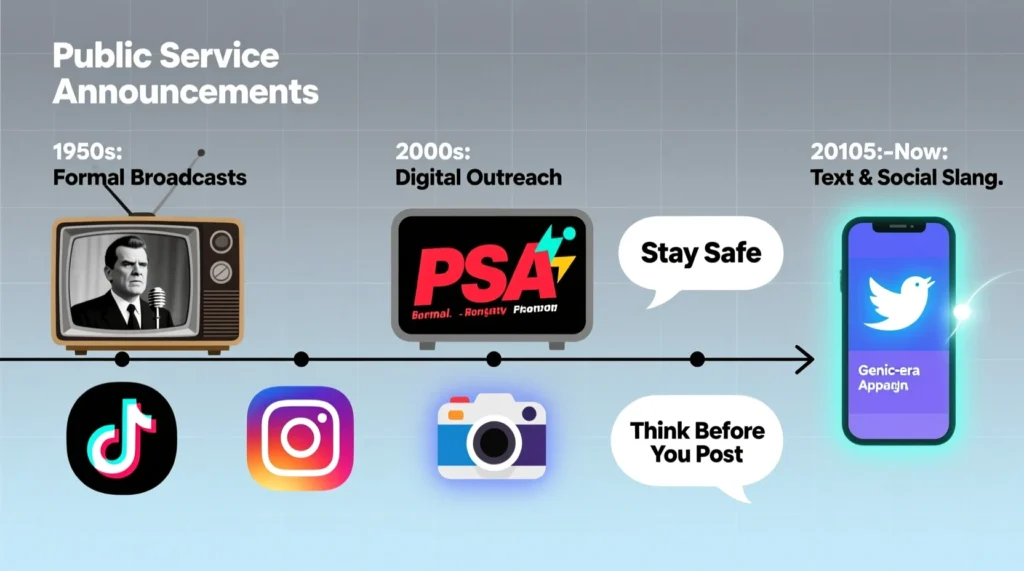
The traditional PSA originated in radio and television broadcasting during the 1940s. Government agencies and nonprofit organizations used PSAs to educate the public about health, safety, and social issues. These professionally produced announcements carried weight and authority.
The transition to slang began with early internet forums and chat rooms in the 1990s and 2000s. Users started mimicking formal announcement structures to add humor or emphasis to their posts. The phrase “PSA:” became a convenient way to signal importance without lengthy explanations.
Social media platforms like Twitter, Facebook, and Instagram accelerated PSA’s transformation into mainstream slang. The character limits on platforms like Twitter made short acronyms particularly valuable. Users discovered that “PSA:” immediately captured attention in crowded feeds filled with competing messages.
Primary PSA Meaning: Public Service Announcement
The most common slang interpretation remains “Public Service Announcement.” This usage stays closest to the original meaning while adapting the tone and formality level. People use it to share genuinely helpful information with their networks.
For example, someone might post “PSA: That new restaurant downtown closes at 8 PM, not 10 PM” or “PSA: There’s construction on Main Street, take the highway instead.” These messages provide useful information to friends or followers who might benefit from knowing.
This straightforward usage works particularly well for practical tips, schedule changes, safety warnings, product recalls, or any information that serves the collective good of a group. The PSA prefix signals that the message isn’t self-promotional but rather intended to help others.
Alternative PSA Meanings in Slang Context
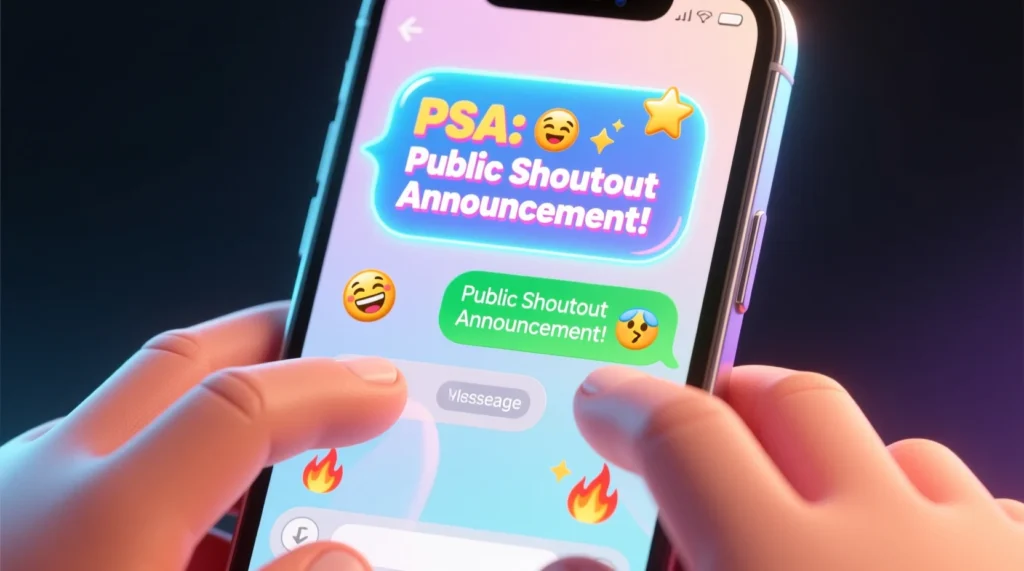
Beyond the standard interpretation, PSA has developed several alternative slang meanings depending on platform and context. “Personal Shoutout Announcement” appears frequently on social media when users want to publicly recognize or thank someone while making it seem more official or important.
“Paying Special Attention” works as a playful variation when highlighting something others might have missed. Someone might say “PSA: Did everyone notice Chris changed his profile picture?” using PSA semi-ironically to draw attention to something relatively trivial.
“Public Shoutout Alert” combines elements of both variations, often used in gaming communities or group chats when someone wants to make an announcement that isn’t quite important enough to warrant serious PSA treatment but deserves more attention than a standard message.
PSA Usage on Different Social Media Platforms
Twitter users employ PSA frequently due to the platform’s fast-paced, news-oriented nature. “PSA:” tweets often precede trending topic commentary, important updates about apps or services, or viral jokes that the poster wants to emphasize. The brevity requirement makes PSA’s three letters particularly economical.
Instagram sees PSA primarily in captions and stories where users share tips, product recommendations, or warnings about scams. Beauty influencers might post “PSA: This foundation oxidizes like crazy” while travel accounts share “PSA: This beach requires reservations now.” The visual nature of Instagram means PSA often accompanies images that illustrate the point.
TikTok users incorporate PSA into video captions and on-screen text overlays. The platform’s younger demographic uses PSA both seriously and ironically, sometimes mocking the tendency to present every opinion as a public service. “PSA: Nobody asked but here’s my take” exemplifies this self-aware usage.
When to Use PSA in Text Messages and Chats
Group chats represent ideal PSA territory when you need to alert multiple people simultaneously about something affecting everyone. “PSA: Meeting moved to 3 PM” or “PSA: Who wants pizza for dinner?” works perfectly in team, family, or friend group contexts.
Direct messaging allows for PSA usage when sharing something you believe the other person genuinely needs to know. However, one-on-one PSAs can come across as preachy or condescending if overused. Reserve them for actually important information rather than every casual update.
Professional messaging platforms like Slack or Microsoft Teams accommodate PSA for legitimate announcements—system updates, policy changes, or urgent notices. However, workplace culture varies significantly. Some organizations embrace casual internet slang while others consider it unprofessional. Read the room before deploying PSA at work.
The Tone Spectrum: Serious to Ironic PSA Usage
Serious PSA usage addresses genuinely important topics that could impact safety, health, or wellbeing. “PSA: Check your carbon monoxide detectors” or “PSA: That email claiming to be from IT is a phishing scam” serve legitimate public service functions. Recipients appreciate these warnings and information shares.
Playful PSA applications treat relatively minor information with exaggerated importance for comedic effect. “PSA: I just discovered you can skip the Spotify ads by restarting the app” or “PSA: The cafeteria is out of chocolate milk” acknowledge the trivial nature while using PSA formatting to add humor.
Ironic or satirical PSA usage mocks self-important announcements or the tendency to present every opinion as essential information. “PSA: My thoughts on this matter are extremely important and everyone needs to hear them immediately” deliberately parodies people who overestimate their message’s significance. This meta-commentary on digital communication patterns has become its own genre.
Common PSA Mistakes and Misuses
Overusing PSA dilutes its impact and can annoy your audience. When every message starts with “PSA:”, nothing feels particularly important anymore. The acronym loses its attention-grabbing function through repetition. Save PSA for information that genuinely warrants special notice rather than routine updates.
Using PSA for personal opinions or preferences misrepresents the public service concept. “PSA: Pineapple doesn’t belong on pizza” isn’t a public service—it’s a subjective food opinion. While such usage might be intended humorously, it can confuse actual important announcements with personal rants.
Inappropriate seriousness level creates awkward mismatches. Using PSA for something genuinely trivial without ironic intent (“PSA: I’m wearing blue socks today”) seems odd and might make others question your judgment. Conversely, using PSA ironically for something actually serious (“PSA: lol forgot to turn off the stove”) demonstrates poor situational awareness.
PSA and Generational Communication Differences
Gen Z users, born roughly 1997-2012, grew up with social media and treat PSA as a flexible, often ironic communication tool. They’re comfortable with the meta-commentary aspect and seamlessly switch between serious and playful PSA usage. For them, PSA represents just one option in a vast acronym vocabulary.
Millennials, born 1981-1996, experienced the internet’s transition from formal to casual. They understand PSA’s traditional meaning but also embrace its slang evolution. Millennials often use PSA semi-seriously—they recognize the informal nature but still employ it primarily for legitimately useful information sharing.
Gen X and Boomers may interpret PSA more literally, expecting genuine public service content when they see the acronym. This generational gap can create confusion when younger users deploy ironic PSA usage that older recipients take at face value. The same message interpreted differently based on age illustrates broader digital communication challenges.
PSA in Professional vs. Personal Contexts
Workplace appropriateness depends heavily on company culture and industry. Tech startups, creative agencies, and casual work environments often embrace internet slang including PSA. These settings view informal communication as fostering approachability and team cohesion. “PSA: Free lunch in the break room” fits perfectly here.
Traditional corporate environments, legal firms, medical practices, and government agencies typically expect more formal communication. Using PSA in these contexts might seem inappropriately casual or unprofessional. Stick with standard announcement language like “Please note” or “Important reminder” for these audiences.
Client-facing communication generally requires avoiding slang entirely. While PSA might work internally, external emails, presentations, or documents should use conventional business language. Reserve PSA for colleagues who share your communication norms rather than clients who might not understand or appreciate the informal approach.
The Psychology Behind PSA Effectiveness
The attention economy of social media means users scroll past hundreds of posts daily. PSA functions as a pattern interrupt—the three capitalized letters stand out visually and signal something different from typical content. This distinction captures eyeballs in crowded feeds.
Authority borrowing represents another psychological factor. Traditional PSAs came from government agencies and nonprofits with legitimate authority. Even casual PSA usage unconsciously invokes that authoritative association. The prefix suggests expertise or at least genuine concern for others’ wellbeing.
Social proof and urgency combine when PSA appears in viral content. Seeing others share PSA-prefixed messages creates a sense that information is widely considered important. The announcement format implies time sensitivity—you should pay attention now rather than later. These psychological triggers drive engagement and information spread.
Regional Variations in PSA Slang Usage
American English speakers embrace PSA enthusiastically across all age groups and regions. The acronym features prominently in American social media, texting, and online communication. Its widespread usage means most Americans recognize and understand PSA in various contexts.
British English speakers use PSA less frequently, sometimes preferring alternatives like “Heads up” or “Please note.” When British users do employ PSA, they often adopt American internet culture influences. The United Kingdom’s own public information campaigns use different terminology, creating less cultural resonance with the PSA acronym.
Australian and New Zealand English speakers fall somewhere between American and British usage patterns. These regions’ heavy social media participation means exposure to American internet slang including PSA. However, local communication styles also influence whether individuals adopt the acronym into their personal vocabulary.
PSA Alternatives and Similar Acronyms
FYI (For Your Information) serves similar functions to PSA but carries a more neutral, less urgent tone. While PSA suggests important information you need to act on, FYI implies useful context you might want to know. “FYI: The store closes early on Sundays” feels less pressing than “PSA: The store closes early on Sundays.”
IMO (In My Opinion) and IMHO (In My Honest/Humble Opinion) prefix subjective statements rather than factual announcements. These acronyms signal that what follows represents personal perspective rather than universally applicable information. They serve different communicative purposes despite similar format.
TL;DR (Too Long; Didn’t Read) summarizes lengthy content for time-pressed readers. While structurally different from PSA, it shares the attention-direction function. Both acronyms help information stand out and guide readers’ focus. However, TL;DR always precedes summaries while PSA works for any important statement.
Cultural Context: Why PSA Became Popular Slang
Meme culture accelerated PSA’s transition from formal terminology to casual slang. Internet humor often involves mock-seriousness—treating trivial matters with exaggerated importance. PSA’s authoritative connotations made it perfect for this ironic treatment. “PSA: I’m going to bed now” became funny precisely because nobody needs a public service announcement about someone’s bedtime.
Information overload in digital environments created demand for attention-signaling mechanisms. With endless content competing for limited attention, users needed ways to mark certain messages as particularly worth noticing. PSA emerged as an effective solution, borrowing legitimacy from traditional public service communications.
The democratization of broadcasting through social media transformed everyone into potential content creators. Regular people could now make “announcements” to their networks just like official organizations. PSA allowed average users to adopt institutional communication styles, blurring boundaries between official and personal messaging.
PSA in Influencer and Creator Content
Influencers leverage PSA to establish authority and credibility with followers. Beauty creators post “PSA: This brand reformulated without announcement” positioning themselves as information sources protecting their audience. The public service framing suggests altruism rather than pure self-promotion.
Content creators use PSA to drive engagement and discussion. Controversial opinions prefixed with PSA often generate more comments and shares because the format implies the creator believes their take matters widely. “PSA: This trend is actually problematic” invites debate more than a simple statement would.
Marketing strategies increasingly incorporate PSA-styled content that technically promotes products while appearing informational. “PSA: This limited edition drops tomorrow” mixes announcement format with commercial intent. Savvy audiences recognize this hybrid approach but often engage anyway because the information remains valuable despite promotional elements.
Gaming Communities and PSA Usage
Gaming platforms like Discord, Reddit, and in-game chats feature heavy PSA usage for coordinating team activities. “PSA: Raid starts in 10 minutes” or “PSA: Server maintenance tonight 8-10 PM” helps organize players efficiently. The format works perfectly for time-sensitive gaming announcements.
Strategy sharing often employs PSA to highlight effective tactics or warn about game changes. “PSA: The new update nerfed this weapon significantly” helps community members adjust their approaches. These information shares build community knowledge and improve collective performance.
Clan or guild management relies on PSA for administrative communications. Leaders post “PSA: Weekly participation requirements updated” to ensure all members receive important policy information. The format’s attention-grabbing nature helps crucial messages stand out from casual chat.
Academic and Educational Settings
Student groups and class chats use PSA frequently for assignment reminders, schedule changes, or exam tips. “PSA: Professor moved office hours to Thursday” or “PSA: That chapter isn’t actually on the test” represents valuable peer-to-peer information sharing that helps everyone succeed.
Study groups benefit from PSA when members discover useful resources or techniques. “PSA: This YouTube channel explains the concepts way better than the textbook” provides genuine value to fellow learners. The public service framing emphasizes collective benefit over individual achievement.
Campus communication increasingly incorporates PSA in official channels as administrators recognize student language preferences. University social media accounts might post “PSA: Library hours extended during finals week” to communicate effectively with their primary audience using familiar terminology.
Mental Health and Support Communities
Online support communities use PSA to share coping strategies, warning signs, or crisis resources. “PSA: If you’re struggling, the crisis hotline is available 24/7” provides crucial information in accessible format. The announcement structure makes vital resources easy to find and share.
Trigger warnings and content warnings sometimes use PSA formatting. “PSA: This thread discusses eating disorders” helps community members make informed decisions about engagement. The prefix signals that the following information matters for personal safety or comfort.
Peer support often flows through PSA-prefixed advice and encouragement. “PSA: It’s okay to not be okay sometimes” or “PSA: Taking a mental health day doesn’t make you weak” normalizes difficult experiences and challenges stigma. The public announcement format reinforces that these messages apply broadly rather than targeting specific individuals.
Political and Social Justice Usage
Activist communities employ PSA extensively for sharing information about protests, voting procedures, or rights education. “PSA: You can register to vote at this link” or “PSA: Know your rights during police interactions” serves genuine public service functions within engaged communities.
Call-out culture sometimes weaponizes PSA format to publicly denounce behavior or opinions. “PSA: This influencer’s apology was completely inadequate” frames criticism as public service rather than personal attack. This usage generates controversy about whether such statements actually serve the public or simply express individual grievances.
Awareness campaigns leverage PSA’s attention-grabbing properties for social causes. “PSA: February is Black History Month” or “PSA: Trans rights are human rights” uses the format to amplify marginalized voices and educate broader audiences. The traditional public service association lends weight to contemporary social justice messaging.
Brand and Corporate PSA Adoption
Companies increasingly use PSA-styled messaging to appear relatable and customer-focused. “PSA: Our website is experiencing technical difficulties” borrows the format to communicate service issues. This approach aims to seem transparent and helpful rather than making excuses.
Marketing campaigns sometimes deploy fake PSA content that technically advertises while appearing informational. “PSA: Studies show you need more coffee” from a coffee brand illustrates this blurred line. These messages walk the edge between entertainment and manipulation.
Crisis communication often employs PSA formatting when brands need to address controversies or recalls. “PSA: If you purchased this product, please return it immediately” combines urgency with public service framing. Whether audiences accept this corporate appropriation of PSA language varies by context and brand trust levels.
The Dark Side: PSA in Misinformation
Conspiracy theories and false information often hide behind PSA formatting to appear more credible. “PSA: The mainstream media isn’t telling you about this” represents common misinformation phrasing. The announcement format falsely implies authoritative knowledge or suppressed truth.
Medical misinformation particularly abuses PSA structure. Unqualified individuals post “PSA: Don’t trust vaccines” or “PSA: This natural remedy cures everything” presenting dangerous falsehoods as public service. The format’s authoritative associations make such messages more persuasive to vulnerable audiences.
Combating PSA-formatted misinformation requires critical thinking and source verification. Just because something uses PSA doesn’t mean it’s accurate or helpful. The slang term’s evolution from trusted institutional messaging to casual internet slang means PSA no longer guarantees reliability or expertise.
Future of PSA Slang
Language evolution suggests PSA will continue adapting to changing communication technologies and platforms. New social media platforms will likely adopt and modify PSA usage based on their unique features and user demographics. The acronym’s flexibility helps it survive across technological shifts.
Generational turnover might eventually retire PSA in favor of new slang terms. Just as previous generation’s acronyms fade when younger users adopt different language, PSA could eventually seem outdated. However, its current strong presence across multiple age groups suggests staying power.
Mainstream integration could transform PSA from slang to standard digital communication. As older generations adopt texting and social media more extensively, they might incorporate PSA into their vocabulary. This normalization process has happened with other internet slang that became conventional language.
PSA in Video Content and Live Streaming
YouTube creators frequently include PSA in video titles and descriptions. “PSA: Don’t Make This Editing Mistake” or “PSA: YouTube Changed the Algorithm Again” attracts clicks by suggesting important information. The format works particularly well for tutorial and educational content.
Live streamers use PSA during broadcasts to make announcements to viewers. “PSA: Stream schedule changing next week” or “PSA: New merchandise dropping tomorrow” keeps audiences informed while maintaining the casual, interactive atmosphere streamers cultivate. Chat participants often respond with acknowledgment or questions.
Short-form video platforms like TikTok incorporate PSA into on-screen text and captions. The brief format matches TikTok’s quick-consumption style, while PSA helps videos stand out in endless scrolling. Creators might overlay “PSA:” on impactful moments to emphasize key information.
Emoji and Symbol Combinations with PSA
Visual enhancement often accompanies PSA in social media posts. Attention-grabbing emojis like 📢 (megaphone), ⚠️ (warning), or 🚨 (siren) frequently precede PSA to increase visibility. “📢 PSA: Important update” creates stronger visual impact than text alone.
Strategic emoji placement can modify PSA’s tone. Playful emojis like 😂 or 🙃 signal ironic PSA usage while serious emojis like 💯 or ❗ indicate genuine importance. This visual tone-setting helps recipients interpret the message’s intent more accurately.
Symbol combinations like “‼️ PSA ‼️” or “🔔 PSA 🔔” frame the announcement with visual bookends that draw attention from both directions. This formatting technique particularly suits platforms like Instagram and Twitter where visual elements significantly impact engagement.
Cross-Platform PSA Etiquette
Each platform’s unique culture influences appropriate PSA usage. What works on Twitter might seem excessive on LinkedIn or inappropriate in professional Slack channels. Understanding platform-specific norms prevents awkward communication mismatches.
Frequency considerations vary by platform. Twitter’s fast-moving timeline tolerates more PSA usage than Facebook’s algorithm-curated feed where excessive PSA posts might annoy friends. Instagram stories allow casual PSA deployment while grid posts typically reserve it for more significant announcements.
Audience awareness remains crucial across all platforms. Public accounts addressing thousands of strangers need different PSA approaches than private accounts sharing with close friends. Adjusting formality, frequency, and tone based on who receives your messages ensures effective communication.
Teaching Kids About PSA Slang
Parents should explain that PSA started as a serious term for important public announcements but evolved into casual internet slang. Teaching the difference between traditional PSAs (serious health and safety information) and slang PSAs (casual attention-grabbers) builds media literacy.
Critical thinking about PSA-prefixed information helps children evaluate message credibility. Not everything labeled PSA deserves attention or action. Encouraging kids to consider the source, verify claims, and recognize ironic usage develops important digital literacy skills.
Appropriate usage guidelines help children communicate effectively. Explaining when PSA works (sharing genuinely helpful information with friends) versus when it doesn’t (every trivial update or unsolicited opinion) prevents annoying peers or misrepresenting message importance.
International PSA Usage Patterns
English-speaking countries dominate PSA slang usage, but the acronym has spread to multilingual internet communities. Non-native English speakers on international platforms often adopt PSA when communicating in English, recognizing it as standard internet terminology.
Translation challenges arise because PSA doesn’t maintain the same recognition when literally translated to other languages. Some communities develop equivalent acronyms in their native languages while others simply use PSA regardless of primary language.
Cultural differences affect how various groups interpret and employ PSA. Some cultures embrace direct, announcement-style communication while others prefer more subtle information sharing. PSA’s boldness might feel natural in some cultural contexts and inappropriately aggressive in others.
PSA and Accessibility Considerations
Screen reader users interact with PSA differently than sighted users. While visual emphasis like capitalization stands out to sighted readers, screen readers announce it as individual letters unless specifically formatted. Inclusive design considers how acronyms function across different access methods.
Cognitive accessibility benefits from PSA’s clarity and directness. People with attention difficulties or cognitive processing differences often appreciate explicit importance markers. PSA’s straightforward “this matters” signal reduces ambiguity that might confuse some users.
Language learners and neurodivergent individuals might struggle with ironic PSA usage where tone contradicts literal meaning. Clear context and occasional explicit tone indicators (“PSA, but actually serious:” vs. “PSA (joking):”) improve accessibility for these populations.
Frequently Asked Questions
What does PSA stand for in texting?
PSA stands for “Public Service Announcement” in texting and social media. It’s used to grab attention before sharing important information, helpful tips, or urgent warnings with friends or followers. The slang usage transforms formal broadcast terminology into casual digital shorthand that signals “pay attention to this message.” While originally serious, PSA now ranges from genuinely important updates to playful or ironic announcements depending on context and tone.
Is PSA only used seriously or can it be funny?
PSA works across the entire tone spectrum from completely serious to highly ironic. Serious usage addresses genuine safety concerns or important updates people need to know. Playful usage treats minor information with exaggerated importance for comedic effect. Ironic usage mocks self-important announcements or people who overestimate their message’s significance. Context, emoji choices, and relationship with your audience determine which interpretation applies in any given situation.
Can I use PSA in professional work messages?
PSA appropriateness in professional settings depends entirely on company culture and industry norms. Casual tech companies and creative agencies often embrace internet slang including PSA for internal communications. Traditional corporate environments, legal firms, and medical practices typically expect more formal language like “Please note” or “Important reminder.” Always avoid PSA in client-facing communications and adjust your usage based on workplace expectations and recipient preferences.
What’s the difference between PSA and FYI?
PSA (Public Service Announcement) suggests important information requiring attention or action, conveying urgency and significance. FYI (For Your Information) offers neutral, optional context you might find useful without implying urgency. “PSA: The office closes early today” means you need to adjust plans, while “FYI: The office closes early on holidays” provides general knowledge for future reference. PSA demands immediate attention whereas FYI supplies helpful background information.
Do older people understand PSA slang?
Understanding varies significantly by individual rather than strict generational lines. Tech-savvy older adults active on social media generally recognize PSA and its slang applications. However, many Gen X and Boomer individuals interpret PSA more literally, expecting genuine public service content when they see the acronym. This generational gap can create confusion when younger users deploy ironic PSA usage that older recipients take seriously, highlighting broader digital communication challenges.
Is PSA appropriate for serious topics like mental health?
Yes, PSA works effectively for serious mental health communications when used thoughtfully. Support communities use PSA to share coping strategies, crisis resources, and trigger warnings. “PSA: If you’re struggling, call this helpline” provides crucial information in accessible format. However, avoid ironic or playful PSA usage for genuinely serious mental health topics, as tone mismatches can seem disrespectful or trivialize important issues requiring sensitive communication.
Conclusion
PSA meaning slang has transformed dramatically from its origins as formal “Public Service Announcement” into a versatile digital communication tool used across generations, platforms, and contexts.
Understanding PSA’s evolution from government messaging to casual internet slang reveals broader patterns in how language adapts to technological change and cultural shifts.
Whether deployed seriously to share genuinely important information, playfully to add humor to mundane updates, or ironically to comment on digital communication itself, PSA remains one of the most recognizable and functional acronyms in contemporary online language.