2024 Slang Words You’ll Actually Need to Know (Real Talk, No Cringe)
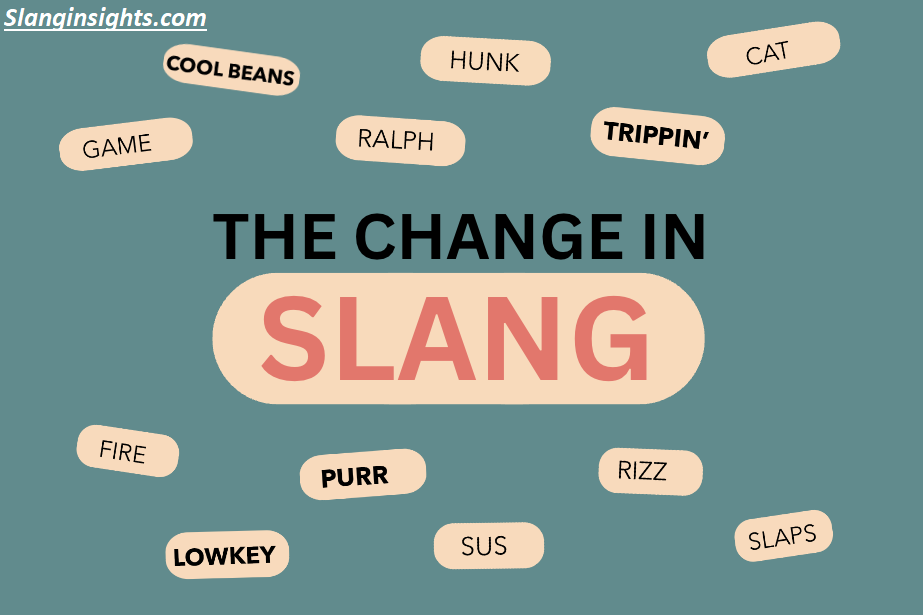
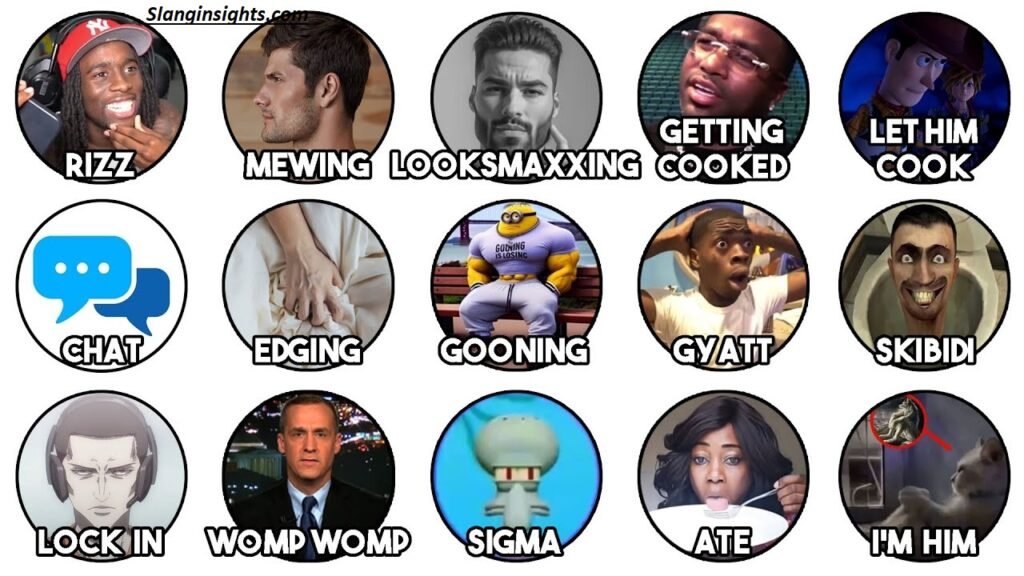
2024 Slang Words internet culture and social media continued to shape the way people talk online and offline. Popular slang words spread quickly through platforms like TikTok, gaming communities, memes, and livestreams.
Many of these expressions are used by Gen Z and younger millennials to describe emotions, trends, relationships, or funny situations in short and catchy ways.
Some of the biggest 2024 slang words include “rizz,” meaning charm or flirting ability, and “delulu,” short for delusional, often used jokingly when someone has unrealistic romantic hopes.
“Mid” describes something average or disappointing, while “ate” means someone did something extremely well. If someone says “she ate and left no crumbs,” they mean the person performed perfectly.
Another trending term is “NPC,” referring to someone acting robotic or predictable, inspired by video games. “Gyatt” became popular in reaction videos and streams as an exaggerated expression of surprise. People also use “bet” to mean “okay” or “agreed,” and “no cap” to say they are being honest.
These slang words constantly evolve, and many become mainstream through viral videos, influencers, and online communities.
Table of Contents
Quick Table
| # | Word | Meaning | Category |
|---|---|---|---|
| 1 | Demure | Modest, understated, not attention-seeking | Vibe |
| 2 | Brat | Unapologetically messy, chaotic, not trying to be likeable | Attitude |
| 3 | Rizz | Natural charisma; ability to attract people effortlessly | Compliment |
| 4 | Delulu | Affectionately delusional; unrealistic but hopeful | Attitude |
| 5 | It’s giving | Radiating a certain energy or vibe | Vibe |
| 6 | NPC | Acting robotically, on autopilot, no independent thought | Internet |
| 7 | Slay | To do something exceptionally well or look incredible | Compliment |
| 8 | Understood the assignment | Delivered exactly what was needed; exceeded expectations | Compliment |
| 9 | Situationship | More than casual, less than official relationship | Relationship |
| 10 | Main character | Living boldly like the protagonist of your own story | Attitude |
Why 2024 Slang Actually Matters (It’s Not What You Think)
Before we get into the words themselves, I want to push back on the lazy take that slang is just young people being weird. Every year’s slang tells you something real about what that generation is worried about, laughing at, or trying to articulate.
2024 slang in particular is soaked in a specific kind of exhausted self-awareness.
Words like delulu (delusional but affectionately so), NPC behavior (acting on autopilot like a video game non-player character), and villain arc (consciously leaning into selfish choices) all point to a generation that’s deeply aware of how people perform identity — online and off.
That’s actually pretty sophisticated! And if you work with Gen Z colleagues, manage young employees, create content, write copy, or just want to understand what’s happening on the internet, this vocabulary is genuinely useful context.
“The best slang doesn’t just sound cool. It fills a gap that regular English left open.”
The Core 2024 Slang Dictionary
I’ve organized these by how they’re actually used, not alphabetically. The ones at the top are the ones you’ll encounter most in the wild.
Demuredeh-MYOOR
Being understated, modest, and not attention-seeking — used ironically and sincerely. Popularized by content creator Jools Lebron’s “very demure, very mindful” TikToks in mid-2024. It spread faster than almost any word this year.
Used like: “I showed up to the interview very demure, very cutthroat.”
BratBRAT
Charli XCX’s summer 2024 album turned this into a whole aesthetic — unapologetically messy, fun, a little chaotic, not caring about being likeable. “Brat summer” became a genuine cultural movement.
Used like: “She’s not having a breakdown, she’s having a brat summer.”
SlaySLAY
To do something exceptionally well or look incredibly good. Technically not new in 2024, but it hit true mainstream saturation this year — including corporate usage, which is when you know slang has fully arrived and probably left.
Used like: “The Q3 report presentation? She absolutely slayed.”
Deluludeh-LOO-loo
Short for “delusional.” But crucially, it’s used with affection — for someone who has unrealistic hopes or expectations, often about a crush or career goal. Sometimes worn as a badge of honor.
Used like: “I think I’m going to get a callback from that audition. Full delulu, manifesting it.”
It’s givingits GIV-ing
Describes the vibe or essence something is radiating. Can be followed by a noun for context, or stand alone. Rooted in Black and queer ball culture, it’s been in circulation for years but went truly mainstream in 2024.
Used like: “This weather is giving mid-November energy in July. Not it.”
NPCN-P-C
Non-Player Character — someone going through motions robotically, without independent thought or personality. Can describe someone in a crowd, a coworker who never thinks creatively, or a lifestyle trap. Also became a literal TikTok trend where creators played NPCs on camera.
Used like: “My 9-to-5 has me fully NPC. Wake up, commute, stare at screen, repeat.”
Main characterMAIN kar-ik-ter
The opposite of NPC. Someone who walks through life like they’re the protagonist of their own movie — confident, a little dramatic, making bold choices. Can be aspirational or mildly self-absorbed depending on context.
Used like: “She walked into that meeting, said her piece, and left. Main character energy, full stop.”
RizzRIZ
Charisma, especially the ability to attract people effortlessly. Oxford’s 2023 word of the year, but reached peak cultural saturation in 2024. Can be used as a noun or verb (“to rizz someone up”). “Unspoken rizz” = attracting people without even trying.
Used like: “He just walked in and somehow got the whole room’s number. The man has unspoken rizz.”
Situationshipsitch-u-AY-shun-ship
A romantic situation that’s more than casual but not quite a defined relationship. Fills a real gap in the English language that “dating” and “together” both fail to cover.
Used like: “We’ve been in a situationship for six months. We go on dates, we’re exclusive, but the word ‘boyfriend’ has never been said.”
Understood the assignmentun-der-STOOD
Delivered exactly what was needed — went above and beyond in meeting expectations. Usually used as praise when someone nailed a look, performance, or task.
Used like: “The costume designer for that film understood the assignment. Every single look.”
Quick note on origins
A lot of these words — “it’s giving,” “slay,” “rizz,” “no cap” — originate in Black American culture and/or LGBTQ+ ballroom culture. Worth knowing, not just for accuracy, but because context changes how you use language. These words have real histories before they became TikTok sounds.
More words to know at a glance
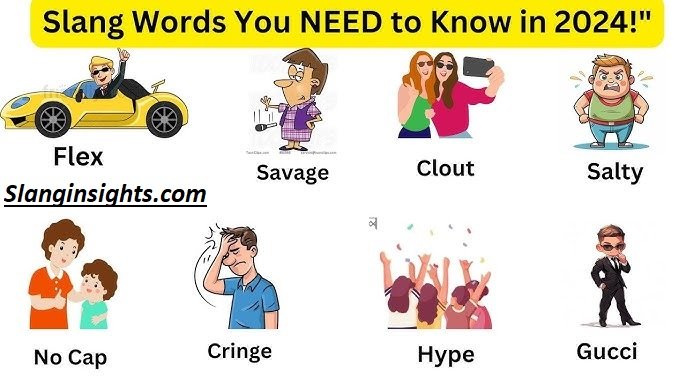
No cap = no lie, for realCap = a lieMid = mediocreEra = phase of lifeLowkey = slightly / quietlyHighkey = obviouslySus = suspiciousBussin = extremely good (usually food)Ate = did amazinglyRent free = living in your headTouch grass = go outsideCaught in 4K = caught red-handed on camera
How to Actually Use These Words Without Sounding Weird
Here’s the thing nobody tells you: knowing what a word means is only half the battle. The other half is understanding the register — when it’s appropriate, what the delivery should feel like, and how forced use is instantly detectable.
I’ve tested this extensively in real conversations. Here’s what I’ve learned about actually incorporating new slang naturally:
- Listen before you speak Spend time on TikTok, Twitter/X comment sections, and Instagram Reels — not to copy, but to see the word in full context. How many times does it get used? What situations? What tone? This passive learning is more valuable than any definition.
- Start with writing, not speech Trying out new slang in a text or caption is far less risky than saying it out loud. You can delete a text. You cannot un-say something in a meeting that fell flat.
- Use it sparingly at first One well-placed piece of slang lands better than five crammed into a paragraph. The goal isn’t to sound like you’re 19. It’s to demonstrate you’re current without performing it.
- Read the room for age range “Rizz” means nothing to your 55-year-old client. “Situationship” might resonate with a 28-year-old coworker. Know your audience. Always.
- Let it die gracefully 2024 slang has a shelf life. Some words will stick around (slay is apparently eternal), others are already tired. Pay attention to when a word stops appearing in new contexts and start phasing it out.
Mistakes That’ll Get You Clocked Immediately
I have made most of these. Consider this a sacrifice so you don’t have to.
Using words past their expiry date. The word “yeet” is technically still around but using it unironically in 2024 is a cry for help. Same with “on fleek.” Check the timestamp on trends before you deploy them.
Mispronouncing or mishyphenating. It’s “no cap,” not “no-cap” or “nocap.” It’s “bussin” not “bussing” (very different implications). Spelling and pronunciation matter more than you’d think in written contexts like Slack and Twitter.
Over-explaining the slang while using it. If you say “that’s giving — you know, like it has the energy of —” you’ve already lost. If you need to explain it, don’t use it. Slang is fluent or it’s cringe.
Using AAVE-rooted slang in formal contexts without awareness. “She ate that presentation” is fine in a casual Slack message to a work friend. It’s strange in a written performance review. Context is everything.
Real cringe alert
The fastest way to lose all credibility with a younger audience: using slang incorrectly and doubling down when corrected. If someone tells you that you’ve misused a word, just acknowledge it and adjust. That’s it. Don’t overexplain or get defensive. The recovery is easy; the defensiveness is what makes it stick.
Treating slang as permanent vocabulary. I watched a brand use “on fleek” in a marketing email in 2022. That word was dead by 2017. Don’t be that brand. Don’t be that person.
Where Each Word Actually Lives
Not all slang travels equally across platforms. This matters if you’re creating content or just trying to communicate with specific audiences.
- TikTok is where most 2024 slang was born or amplified. It moves fastest here. Words rise and fall within weeks. If you’re on TikTok, you’ll catch things before they’re mainstream. The “very demure, very mindful” moment, the NPC trend — these were TikTok-native before they crossed over.
- Twitter/X is where slang gets workshopped and intellectualized. Niche variants live here. It’s also where you’ll find arguments about misuse, appropriation, and origin — which is actually useful context if you care about using language correctly.
- Instagram catches trends about 2-4 weeks behind TikTok. Caption culture there is more polished — slang gets used but with a bit more restraint. “Understood the assignment” is an Instagram caption phrase as much as a TikTok comment.
- Real life / spoken language lags further still, and filters heavily by age and region. “Rizz” is now genuinely spoken by people in their 30s and even some 40s. “Delulu” is still primarily digital. “Situationship” crosses freely between online and offline.
- Slack and workplace chat has its own weird zone where formal slang lives. “Slay” and “understood the assignment” have both made it into professional contexts. “Bussin” and “rizz” largely haven’t. The filter is basically: would this appear in a GIF someone’s grandma might send?
FAQ’s
What does “no cap” mean?
It means “no lie” or “for real.” If someone says “that was the best show ever, no cap,” they’re being completely serious.
What’s the difference between “lowkey” and “highkey”?
Lowkey = quietly or slightly (“I lowkey love this song”). Highkey = obviously or a lot (“I highkey cried at that movie”). Same idea, opposite intensity.
What does “it’s giving” mean?
It describes the vibe or energy something is radiating. “This café is giving cozy Sunday morning” means the place has that exact atmosphere.
Is “slay” still relevant in 2024?
Yes — and it officially crossed into mainstream use this year, including corporate settings. That’s usually when slang peaks and starts fading, so enjoy it while it lasts.
What’s a “situationship”?
A romantic situation that’s more than casual but never gets a label. You’re not just friends, you’re not officially together — you’re stuck in the in-between. The word fills a gap that “dating” never quite covered.
Conclusion
Every word on this list exists because people needed a faster, sharper way to describe something real — a vibe, a feeling, a relationship stage, an internet moment.
You don’t need to use all 100. Even knowing what they mean puts you ahead — in conversations, in content, in understanding the culture around you.
Some of these words will still be here in five years. Others are already fading. That’s the nature of it.
The best move? Stay curious, listen more than you perform, and never — seriously, never — use “on fleek” again.
Here’s the thing I’ve come to genuinely appreciate about tracking slang: it keeps you curious about language.
And being curious about how people actually talk — not how textbooks say they should — makes you a better writer, communicator, and honestly just a more interesting person to talk to.
I still occasionally get it wrong. A few months ago I used “brat” in a caption and spelled out what I meant in parentheses right after it, which apparently is the cardinal sin of slang usage.
My 23-year-old colleague saw it and sent me a single emoji. A red flag. Fair.
But I also got a comment on a piece I wrote that said it felt “very human, not AI” partly because of the way I wrote about online culture — not clinically, not from the outside. That felt good. Worth the occasional fumble.