60s Slang Words Vintage Expressions, Origins, and Meanings You Need to Know
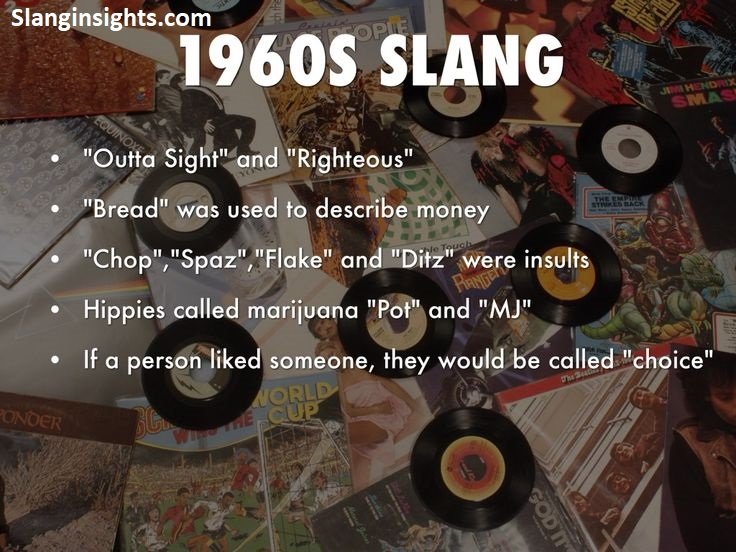
60s slang words included groovy (excellent), far out (amazing), dig (understand), bread (money), cool (fashionable), cat (person), threads (clothes), pad (home), bummer (disappointment), and fuzz (police).
Other common terms were right on, split, boss, hip, beat, crib, square, fink, chick, and gear.
The 1960s introduced many colorful expressions that reflected the culture, music, and lifestyle of the era.These expressions became closely associated with the counterculture movement and rock music scene.
Many 60s slang words remain recognizable today and continue to influence modern English vocabulary and popular culture.
Table of Contents
Quick Table
| Slang Word | Meaning |
|---|---|
| Groovy | Excellent / cool |
| Far out | Amazing / unusual |
| Dig | Understand / like |
| Bread | Money |
| Cool | Stylish / good |
| Cat | Person (guy) |
| Chick | Young woman |
| Threads | Clothes |
| Pad | Home / place to live |
| Bummer | Disappointment |
| Fuzz | Police |
| Right on | I agree / exactly |
| Split | Leave quickly |
| Boss | Great / awesome |
| Hip | Trendy / fashionable |
| Beat | Tired / exhausted |
| Crib | House / home |
| Square | Old-fashioned person |
| Fink | Informer / snitch |
| Gear | Things / clothes |
How I Learned 1960s Slang the Hard Way
Last spring I got roped into writing dialogue for a community theater production set in 1967. Easy job, I figured. I’d just search “60s slang” online and sprinkle a few groovy’s and far out’s into the script. Done.
Opening night, during intermission, a woman in her seventies walked up to me and very politely told me that one of my lines made her wince. A character had said “that’s so rad, man.”
She informed me, with the kind of patience you’d use on a kid who just touched a hot stove, that “rad” wasn’t a thing yet in 1967. That word came out of surf and skate culture closer to the late 70s and early 80s.
I went home a little embarrassed and honestly kind of hooked. I started pulling old newspaper clippings, checking word-usage charts, digging through archived footage, and texting my mom — a teenager in 1965 — every slang term I found, just asking “did you actually say this, or is this internet nonsense?”
Some words checked out. A lot didn’t. This is basically the cheat sheet I wish someone had handed me before opening night.
Why most “60s slang” lists online are wrong
Here’s the thing nobody tells you: most of those listicles are copy-pasted from each other. Nobody’s going back to original sources.
They mash together fifty years like it was one giant decade-shaped blender — words from the buttoned-up early 60s, the psychedelic late 60s, British mod slang, American surfer slang, and Black American vernacular that often got the credit a decade later when it crossed over into the mainstream.
So you end up with lists where “groovy” sits right next to “gnarly,” like the two words came from the same kid’s mouth in the same year. They didn’t.
How I actually checked if a word was real
I’m not a linguist, just a stubborn hobbyist, but here’s the process that actually worked for me. If you’re writing anything set in the 60s — a script, a novel, a school project, even an Instagram caption for a throwback photo — this is worth doing.
Ask someone who was actually there. This sounds obvious, but it’s the single best resource and the one people skip. My mom and grandma corrected more of my “facts” than any website did. If you’ve got an older relative, just ask them what they said as a teenager. Bonus: it’s a genuinely nice conversation to have before that memory is gone for good.
Run the word through Google Books Ngram Viewer. It’s free and it shows you how often a word appeared in published books by year. Type in a slang term and you can literally watch its usage spike or stay flat. “Groovy” climbs hard starting around 1967. “Rad” barely registers until decades later.
Cross-check Green’s Dictionary of Slang. This is the real deal — a proper historical slang dictionary with cited sources and dates, run by a lexicographer named Jonathon Green. If a word’s there with a 1960s citation, it’s legit.
Check Etymonline (the Online Etymology Dictionary). Good for getting a sense of when a word’s modern meaning actually attached itself to it.
Watch period footage instead of period movies. Old British Pathé newsreels on YouTube, archived local news clips, and the Internet Archive have actual unscripted people from the era talking. Movies and shows made later — even great ones like Mad Men — sometimes use slang for flavor that’s slightly off for the exact year they’re depicting, because writers are working from memory or research too.
Be skeptical of AI-generated lists, including mine before I checked. I asked a chatbot for “60s slang” once during this whole rabbit hole, and it handed me a list with at least four words that were clearly 70s or 80s. It’s a good starting point, never a final answer.
The actual glossary — words that hold up
Here’s what survived my fact-checking gauntlet, grouped by how they were used.
Talking about people
- Cat — a cool, with-it person. “He’s a real cool cat.”
- Chick — a young woman. Common at the time, sounds dated now.
- Daddy-O — a casual way to address a guy, more of a holdover from late-50s beatnik talk that lingered into the early 60s.
- Square — someone uncool, out of touch, or overly conventional.
- Fox / foxy — an attractive person.
- The Man — authority figures, the system, anyone in charge.
Feelings and reactions
- Groovy — good, enjoyable. Real, but it really took off in the back half of the decade, not the whole ten years.
- Far out — amazing, hard to believe, mind-blowing.
- Outta sight — excellent, better than expected.
- Bummer — a letdown or disappointment.
- Uptight — tense, repressed, nervous about everything.
- Freak out / wig out — to lose your composure or have an intense reaction.
- Heavy — serious, deep, emotionally weighty.
- Dig it — to understand or genuinely appreciate something. “You dig?”
- Boss — excellent, great. Used a lot by younger teens. “That’s boss.”
- Dynamite / primo — top quality, the best.
Stuff, money, and cars
- Bread / loot — money.
- Threads — clothes.
- Pad — your home or apartment.
- Wheels / ride — a car.
- Cherry — in mint, excellent condition, especially used for cars.
- Shotgun — calling dibs on the front passenger seat.
Talking and hanging out
- Rap — to have a real conversation. Not yet connected to the music genre.
- Bag — your thing, your interest. “That’s not my bag.”
- Make the scene — to show up somewhere and be part of what’s happening.
- Happening — both a noun for an actual event (art “happenings” were a real thing) and an adjective for something exciting.
Leaving
- Split — to leave.
- Cut out — to leave quickly.
Counterculture-adjacent terms (these get mentioned in any honest 60s slang piece, so I’m including them for historical accuracy only)
- Trip — an experience, sometimes referring to a psychedelic drug experience, but also used more loosely for any wild situation.
- Stoned — intoxicated.
- The Establishment — mainstream authority and institutions that the counterculture pushed back against.
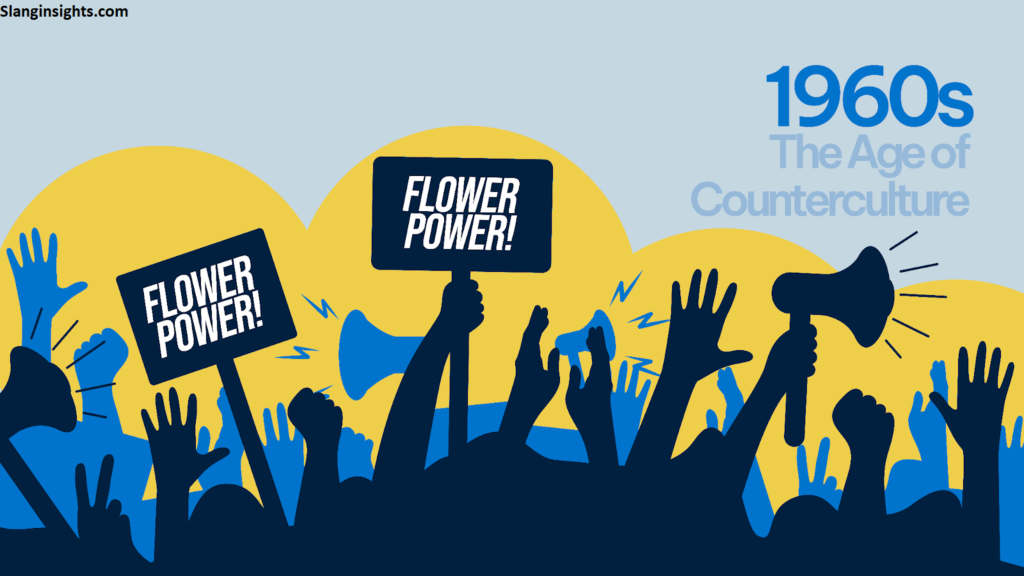
- Flower power / do your own thing — phrases tied to the peace movement and the push for individual freedom.
Mistakes I kept making (so you don’t have to)
Treating the whole decade like one flavor. 1962 and 1969 sound nothing alike. Early 60s slang was closer to 50s leftovers — “neat,” “swell,” “keen.” The groovy, far-out, psychedelic stuff really belongs to about 1966 onward.
Confusing decades entirely. “Rad,” “gnarly,” “tubular,” and “stoked” are 70s and 80s surfer and Valley slang. They get lumped into 60s lists constantly because people associate “beachy slang” with hippies, but the timeline doesn’t match.
Assuming hippie slang was everyone’s slang. Most teenagers in the 60s were not at Woodstock. A suburban high schooler in Ohio and a Haight-Ashbury regular in San Francisco were not talking the same way.
Trusting movies and TV uncritically. Stuff like Austin Powers exaggerates for comedy on purpose, and even well-researched shows take some liberties for clarity or rhythm.
Forgetting where a lot of this language actually came from. A good chunk of 60s slang has roots in Black American vernacular and jazz culture going back further than the decade itself, then got picked up and spread by white mainstream media. Worth knowing if you’re writing anything that touches on the culture seriously, not just for flavor text.
How I actually used this stuff
Once I had a cleaned-up list, I went back and rewrote the play dialogue so younger, more rebellious characters used the late-60s counterculture terms, while an older or more conservative character stuck closer to “swell” and “neat.” It made the script feel more layered instead of everyone sounding like the same cardboard hippie.
I also used the glossary to help my nephew with a school presentation on the 60s — he turned it into a little quiz for his class, and it landed way better than a plain timeline would have.
And honestly, I’ve used a handful of these terms in captions on old family photos I post online, just because it’s a fun way to make a throwback picture feel a little more like a time capsule instead of just a filter.
FAQ’s
What are 60s slang words?
60s slang words are informal expressions used during the 1960s, often linked to youth culture, music, and the counterculture movement.
Why was 60s slang so popular?
It became popular because of rock music, hippie culture, and social change, which encouraged creative and expressive language.
Is 60s slang still used today?
Yes, some words like “cool,” “dig,” and “groovy” are still recognized and sometimes used in modern speech.
What influenced 60s slang?
Music, especially rock and roll, civil rights movements, and youth rebellion strongly influenced the slang of the 1960s.
What does “groovy” mean in 60s slang?
“Groovy” means something very good, enjoyable, or excellent.
Conclusion
The slang of the 1960s reflects one of the most vibrant and transformative decades in modern history.
It was a time when young people began shaping their own identity, and language played a major role in expressing freedom, rebellion, and creativity.
Words like “groovy,” “far out,” and “dig it” were more than just trendy expressions—they represented a cultural shift toward openness and individuality.
Much of 60s slang was influenced by music, especially rock and roll and psychedelic sounds, as well as social movements that challenged traditional norms.
These expressions helped create a sense of belonging among youth and gave them a unique voice that separated them from older generations.
Even today, many 60s slang words are still recognized and occasionally used in pop culture, movies, and casual conversation.
They continue to carry a nostalgic charm and remind us of a revolutionary era in language and lifestyle. Learning these words not only helps us understand history but also shows how language constantly evolves with society.