70s Slang Retro Words, Origins, and Examples You Need to Know
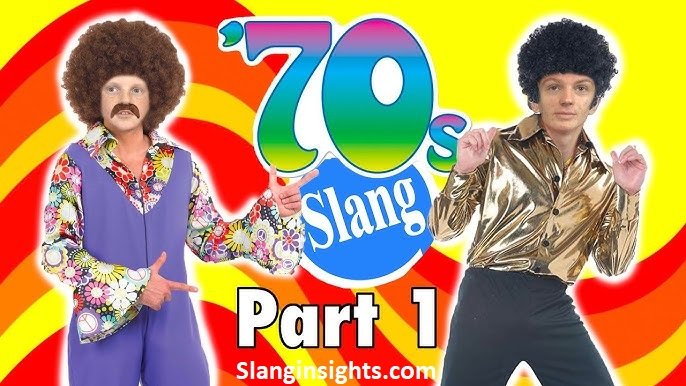
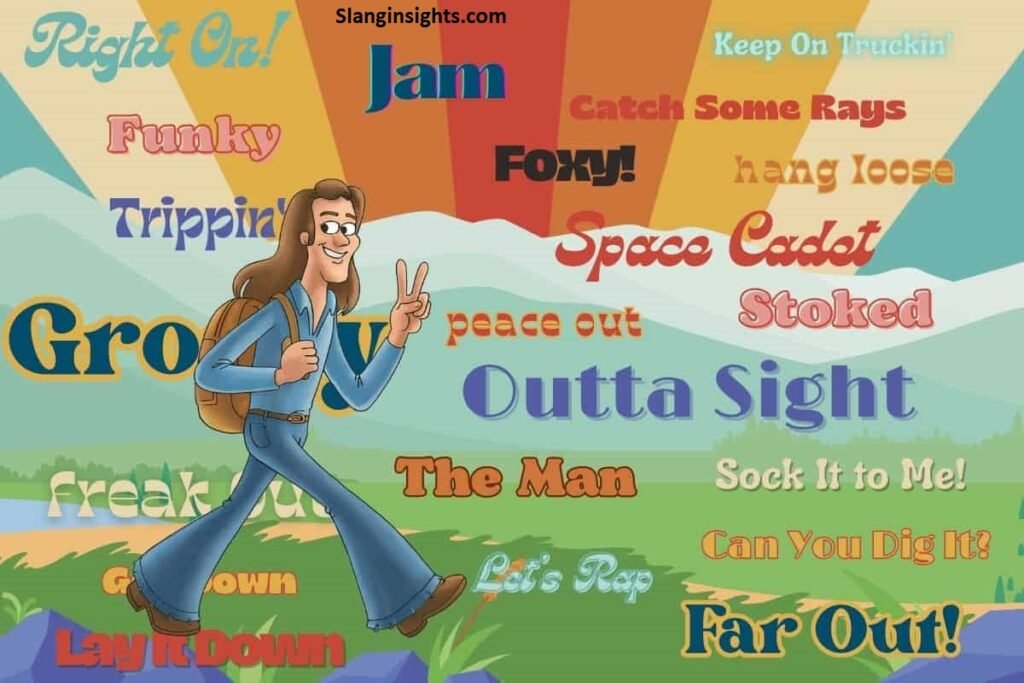
70s Slang Words the 1970s were known for funky music, disco culture, and a colorful style of speech. People used fun and expressive slang like “groovy,” “far out,” “right on,” and “funky” to show excitement or approval.
Words like “dig it” meant to understand or like something, while “boogie” referred to dancing. The phrase “can you dig it?” asked for agreement or understanding.
Other popular terms included “laid back,” “outta sight,” “cool cat,” and “bread” meaning money. 70s slang reflected a relaxed, creative, and free-spirited lifestyle influenced by disco, rock, and youth culture across the decade.
Table of Contents
Quick Table
| 70s Slang Word | Meaning |
|---|---|
| Groovy | Cool or excellent |
| Far Out | Amazing or unbelievable |
| Right On | Strong agreement or approval |
| Funky | Stylish, unique, or cool |
| Dig It | Understand or like something |
| Boogie | Dance |
| Can You Dig It? | Do you understand or agree? |
| Laid Back | Relaxed and easy-going |
| Outta Sight | Fantastic or excellent |
| Cool Cat | Stylish or smooth person |
| Bread | Money |
| Heavy | Serious or intense |
| Spacey | Absent-minded or dreamy |
| Hip | Trendy or fashionable |
| Beat It | Go away or leave |
| Psyched | Excited or thrilled |
| Thread | Clothing or outfit |
| Bummer | Disappointment |
| Catch You on the Flip Side | See you later |
| Hang Loose | Relax and take it easy |
How My Grandmother Introduced Me to 70s Slang
My grandmother used to call everything she liked “groovy.” I grew up thinking it was just her quirky grandma thing — like how she still called the refrigerator an “icebox” and the remote control the “clicker.”
Then one summer I went down a rabbit hole watching old episodes of The Brady Bunch and Happy Days, and it hit me: she wasn’t being quirky. She was just still living in 1974.
That whole experience got me genuinely hooked on 70s slang. I started collecting these words and phrases the way some people collect vintage records — not because they’re old, but because there’s something weirdly alive about them.
Half of them never really left. The other half deserve a comeback.
So here’s the thing: this isn’t some dry glossary. I’ve tested these phrases on real people. I’ve dropped them in conversations just to see what happens.
I’ve watched my coworkers’ faces cycle through confusion, recognition, and then that little light of delight when they realize what I just said. It’s kind of a beautiful experiment.
Why 70s Slang Hits Different
Before I get into the actual words, here’s something worth thinking about: the 1970s were genuinely weird.
Culturally, politically, stylistically — the whole decade was in this pressure cooker of post-60s idealism colliding with Watergate cynicism, disco excess, and the birth of punk. People needed new language for all of that.
Slang has always been the language of people who don’t quite fit the official script. And in the 70s, that was basically everyone under 30.
The slang that came out of that decade reflects a generation that was simultaneously optimistic and totally done with being lied to.
That tension is why a lot of these words still resonate.
The Words Themselves — And What They Actually Mean
“Groovy”
Yeah, let’s start with the obvious one. My grandmother’s favorite.
Most people think “groovy” is pure 60s, but it absolutely carried hard into the 70s. It means something is cool, smooth, pleasing — but with a vibe that’s more chill than exciting. A good playlist is groovy. A perfect Sunday afternoon is groovy. A chaotic house party is not groovy.
I started using it unironically about two years ago. At first people laughed. Now at least three people in my friend group have adopted it. It has a warmth that “cool” just doesn’t carry anymore.
How to use it today: “This coffee shop has such a groovy vibe.” Trust me, it works.
“Foxy”
Meaning attractive, beautiful — specifically with a confidence about it. Not cute. Not pretty. Foxy has swagger built in.
Blame (or credit) Jimi Hendrix for really burning this one into the cultural consciousness, though by the mid-70s it was everywhere. It had a playfulness that other compliments of the era lacked.
I’ll be honest — I don’t use this one much in 2026. But when I do, it always lands with a laugh and a raised eyebrow. It’s one of those words that’s more useful in writing than in actual conversation.
“Bread”
As in money. Cash. The green stuff.
This one came up from jazz slang decades earlier but had a serious 70s moment. “I’m low on bread this week” sounds way more poetic than “I’m broke.”
I actually slipped this into a work email once — referring to budget as “bread” — and my manager thought it was a typo. Lesson learned: context matters with this one.
“Dig It”
To understand something, to appreciate it, to really get it on a deeper level. Not just “I hear you” — more like “I feel this in my bones.”
“Dig” as a word of appreciation goes back to the 40s and 50s, but “dig it?” as a casual check-in for understanding was peak 70s energy.
This one I use fairly regularly. “You dig?” at the end of an explanation sounds old-school in the best way — and weirdly, it communicates something that “you know what I mean?” doesn’t quite capture. There’s a warmth and an invitation in it.
“Far Out”
This might be my personal favorite, and I’ll tell you why.
“Far out” expresses amazement, disbelief, or just general wonder at something. It comes from the idea of going beyond what’s expected — far out into territory nobody’s mapped yet.
I use “far out” when someone tells me something that genuinely blows my mind. My friend told me last year that she’d quit her corporate job to become a beekeeper. My response: “Far out, dude.” She paused, then laughed, then said it was exactly the right reaction.
There’s something about it that’s more spacious than “wow.” Like you’re actually taking a moment to appreciate the scope of what was just shared.
“Bummer”
A disappointment. Something that brings you down. You dropped your ice cream cone — that’s a bummer. Your flight got cancelled — major bummer.
This one actually never left. I’d argue “bummer” is still in active use across generations. But knowing its 70s roots makes it feel intentional rather than accidental when you use it.
“Jive Turkey”
Okay, this one is gold.
A jive turkey is someone who’s full of it. A blowhard. Someone who talks a big game and delivers nothing. It’s dismissive but in a theatrical, almost affectionate way — like you’re too entertained by the nonsense to be actually angry.
I have absolutely called someone a jive turkey to their face. It was during a friendly argument about football. He had just confidently stated something completely wrong and doubled down on it. “Man, you’re such a jive turkey.” He stopped, looked it up, and then — to his credit — burst out laughing.
Use this one. The world needs it.
“Solid”
Meaning great, agreed, reliable. “Solid plan.” “That’s solid.” It’s an affirmation with weight to it — implies something is dependable, not just good in a flashy way.
This one persisted so smoothly into modern usage that most people don’t even think of it as slang anymore. But its 70s connotation had a specific texture: you were calling something trustworthy. That it would hold up.
“Boogie”
To dance, to move fast, to get going. “Let’s boogie” means let’s leave, let’s move, let’s get this thing started — depending on context.
There’s nothing like telling someone “let’s boogie” when you’re trying to get a group of indecisive people out the door. It’s so cheerful and ridiculous that it actually works where “come on, let’s go” has long since failed.
Catch You on the Flip Side”
Translation: see you later. Goodbye. I’ll talk to you when the record flips.
It comes from vinyl records — the A side plays, then you flip it for the B side. It became shorthand for “see you on the other end.”
I use this one as a sign-off in casual emails sometimes. Just to see who’s paying attention. About 30% of people ask about it. The other 70% seem to just accept it, which is also kind of fascinating.
“Truckin'”
Moving along steadily, going through life’s ups and downs. It became iconic partly through the Grateful Dead song of the same name. “Keep on truckin'” was practically a philosophical statement — keep moving, keep going, don’t stop.
It’s encouraging without being aggressive about it. There’s a patience in “keep on truckin'” that you don’t get from “hustle” or “grind.” It acknowledges that the road is long and that’s fine.
“What’s Your Bag?”
What’s your problem? What’s bothering you? What’s your deal?
“Bag” in 70s slang meant your thing, your scene, your issue — like a personal category you carried around. “What’s your bag?” could be curiosity (what are you into?) or confrontational (what’s wrong with you?) depending entirely on delivery.
This one gets laughs and genuinely confuses people under 25. Which is half the fun.
Common Mistakes When Using Vintage Slang
Here’s where I have to be real with you, because I’ve made all of these errors personally.
Overloading it. Using five pieces of 70s slang in one conversation makes you sound like you’re auditioning for a Halloween costume, not having an actual discussion. One or two at a time. Let them land.
Wrong context. “Groovy” works at a coffee shop. It does not work in a board meeting. Know your room.
Forcing it. If it doesn’t come naturally, the word will land flat. The whole point of slang is that it sounds effortless. Practice saying it out loud by yourself before dropping it publicly. Yes, I’m serious. Yes, I’ve done this.
Explaining it immediately. If you say “jive turkey” and then immediately follow it with “that means someone who’s full of it,” you’ve killed it. Let people wonder for a second. Let it breathe.
Why These Words Still Matter
There’s a reason people obsess over language from different eras — the slang of a decade is basically its emotional fingerprint.
The 70s gave us words that were rooted in music, in counterculture, in the physical experience of dancing and moving and existing in bodies rather than just screens.
A lot of modern slang is about speed and irony. “No cap.” “Slaps.” “It’s giving.” These are great — I’m not throwing shade at any of them. But 70s slang often had a warmth and a weight that feels different.
“Dig it” invites you in. “Far out” creates actual wonder. “Keep on truckin'” tells you that the journey itself has value.
Sometimes I think we could use a little more of that.
A Few More Worth Knowing
Before I wrap this up, here are some quickfire 70s terms that deserve honorable mention:
- Funky — unusual in a cool, unconventional way (not smelly, though that usage came later)
- Right on — expression of agreement or affirmation
- Laid back — relaxed, easygoing, cool under pressure
- Hang loose — chill out, don’t stress (came from Hawaiian surf culture)
- Heavy — something serious, deep, or emotionally weighty
- Rap — to have a serious conversation (before it was a music genre)
- Split — to leave (“I’m gonna split”)
- Threads — clothes, your outfit
The Real Experiment
Here’s my honest takeaway after falling down this particular rabbit hole: language is never really dead. It just waits.
My grandmother’s “groovy” wasn’t dated. It was a whole way of seeing the world — one where things could be smooth, warm, and pleasantly surprising all at once. I kind of wish I’d asked her more about it while I had the chance.
But I’ve got her vocabulary now, and I use it deliberately. Not as nostalgia. Not as a bit. But because sometimes the right word for a moment isn’t in this decade — it’s forty or fifty years back, riding the groove of a record someone’s still playing.
FAQ’s
What is 70s slang?
70s slang refers to informal words and phrases that were popular during the 1970s, often influenced by disco, rock music, and youth culture.
What does “groovy” mean?
“Groovy” was a popular 70s slang word meaning something cool, excellent, or enjoyable.
Was 70s slang used in music and movies?
Yes, many 70s slang words appeared in disco songs, rock music, and movies, helping spread them widely across pop culture.
What does “far out” mean?
“Far out” is a 70s expression used to describe something amazing, surprising, or beyond normal expectations.
Is 70s slang still used today?
Some 70s slang words are still used today, especially in nostalgic or humorous contexts, but most are considered retro.
Conclusion
70s slang words capture the vibrant and free-spirited culture of the 1970s. This was a decade filled with disco lights, rock music, and social change, and the language reflected that energy.
Words like “groovy,” “far out,” “dig it,” and “right on” were commonly used to express excitement, agreement, or admiration. These expressions added personality to everyday conversations and became a big part of pop culture.
Many 70s slang terms were influenced by music, movies, and youth movements, making them spread quickly across different communities. The relaxed and creative lifestyle of the decade played a major role in shaping how people communicated.
Even today, 70s slang is remembered with nostalgia and often used in retro themes, media, and entertainment.
While most of these phrases are not common in modern daily speech, they still hold cultural value and bring back memories of a unique era.
Learning 70s slang is a fun way to explore history through language. It shows how words evolve over time and how each generation creates its own style of expression. The 1970s left behind a legacy of groovy and memorable slang that still makes people smile today.