Jewish Slang Words Learn the Meanings, Origins, and Real-Life Uses of Popular Yiddish Terms

Jewish slang words, many of which come from Yiddish and Hebrew, are widely used in everyday conversations and popular culture. Common expressions include mensch (a good person), schlep (to carry or drag something), kvetch (to complain), chutzpah (audacity or boldness), and oy vey (an expression of frustration or surprise).
Other popular terms are bubkes (nothing or very little), meshuga (crazy), nosh (a snack), and mazel tov (congratulations).
These colorful words add humor, warmth, and personality to speech and are recognized far beyond Jewish communities, especially in the United States and other English-speaking countries.
Table of Contents
Quick Table
| Slang Word | Meaning |
|---|---|
| Mensch | A good, honorable person |
| Schlep | To carry or drag something with effort |
| Kvetch | To complain or whine |
| Chutzpah | Boldness or audacity |
| Oy vey | Expression of frustration or shock |
| Bubkes | Nothing, zero, worthless amount |
| Meshuga | Crazy or foolish |
| Nosh | A light snack or eat a little |
| Mazel tov | Congratulations or good luck |
| Shmooze | Casual chat or friendly talk |
The Day I Mispronounced “Chutzpah”
I still cringe a little thinking about the first time I used the word chutzpah out loud.
I’d been seeing it everywhere — in books, in The New York Times, in that one episode of Seinfeld I rewatched three times. I thought I had it figured out.
Then I said it confidently to my coworker Miriam, who is Jewish, and she just blinked at me and said, “Did you just say chootz-PAH?”
I had. Loudly. At a work lunch.
That moment sent me down a rabbit hole of Yiddish and Jewish slang that I honestly never expected to find so fascinating — or so genuinely useful in everyday conversation.
Because here’s the thing nobody tells you: a lot of this language has already crept into everyday English without most people even realizing it. You’ve probably used some of these words without knowing where they came from.

Why Jewish Slang Is Everywhere (And Why That’s a Good Thing)
Jewish slang — specifically Yiddish-origin slang — spread into mainstream American English largely through New York, through Hollywood, through comedy, through literature. Writers like Philip Roth, Saul Bellow, and later comedians like Jerry Seinfeld, Larry David, and Mel Brooks helped bring these words into the cultural bloodstream.
Yiddish itself is a fascinating language — a blend of Hebrew, German, Slavic languages, and Romance languages, spoken by Ashkenazi Jews for centuries across Europe.
When Jewish immigrants came to America in large waves in the late 19th and early 20th centuries, their language came with them, and it mixed into the New York melting pot in ways that still ripple through how Americans speak today.
The result? A vocabulary that’s incredibly expressive, often hilariously precise, and once you start using it, almost impossible to stop.
The Essential Jewish Slang Words You Actually Need to Know
Chutzpah (חוצפה)
Pronounced: KHOOTZ-pah (that “kh” is a throaty sound, like you’re clearing your throat lightly — not a hard “ch” like in “cheese”)
This one gets thrown around a lot, but it’s worth understanding its full weight. Chutzpah means audacity, nerve, boldness — sometimes admirable, sometimes outrageous. The classic example: a man murders his parents and then throws himself on the mercy of the court because he’s an orphan. That’s chutzpah.
In modern usage, it’s usually complimentary. “She had the chutzpah to walk into that boardroom and renegotiate the entire contract.” You’d use it for someone who does something bold that maybe they shouldn’t have — but it worked.
My mistake: saying it like “chootz-PAH” instead of “KHOOTZ-pah.” The guttural “kh” is key. Practice it.
Schmooze
Pronounced: SHMOOZ (rhymes with “booze”)
You’ve definitely heard this one. To schmooze is to make small talk, to network, to chat someone up in a charming and somewhat strategic way. It’s not quite gossip and not quite flirting — it’s that art of working a room, making people feel good, getting on their good side.
“He spent the whole party schmoozing with the investors.”
Every office has a designated schmoozer. You know who they are.
Mensch
Pronounced: MENTSH
A mensch is a genuinely good person. Not just nice — but someone with real integrity, someone you can count on, someone who does the right thing even when nobody’s watching. It’s one of the highest compliments you can give someone.
“He drove his neighbor to chemotherapy every week without being asked. That man is a real mensch.”
If someone calls you a mensch, take it seriously. It means something.
Kvetch
Pronounced: KVETCH (rhymes with “fetch,” but start with a “kv”)
To kvetch is to complain — but in a specific way. Not dramatic, world-ending complaining. More like a persistent, low-grade grumbling. A kvetch is also the person who does this constantly.
“Every morning he comes in and kvetches about the traffic for twenty minutes.”
We all know a kvetch. Some of us are the kvetch. No judgment.
Schmaltz / Schmaltzy
Pronounced: SHMALTZ
Literally, schmaltz means rendered chicken fat — a staple of traditional Jewish cooking. But figuratively, it means excessive sentimentality. Something that’s schmaltzy is overly sappy, tear-jerky in a manipulative way, dripping with emotion.
“That movie ending was so schmaltzy I couldn’t tell if I was touched or just annoyed.”
Shlep
Pronounced: SHLEP
To shlep is to drag, carry, or haul something — usually with some effort and inconvenience involved. You can shlep luggage, shlep kids across town, or shlep yourself somewhere you’d rather not go.
“I can’t believe I shlepped all the way across the city for a meeting that lasted ten minutes.”
It captures a very specific exhausted, put-upon energy that English doesn’t have a single word for. That’s why people keep using it.
Chutzpah’s cousin: Meshuggeneh
Pronounced: meh-SHUG-eh-neh
This means crazy, nuts, absurd. A meshuggeneh person is off their rocker. Something meshuggeneh is wildly irrational.
“You want to quit your job and move to a van? That’s completely meshuggeneh.”
It’s said with a mix of disbelief and affection, usually. Unless it’s said very slowly and quietly — then you’re in trouble.
Oy Vey
Pronounced: OY VAY
You know this one. Oy is an exclamation of exasperation, pain, or dismay. Vey (from the German “weh,” meaning pain) intensifies it. Together: a sigh, a lament, a “oh no,” an “I can’t believe this,” and a “what is happening to my life” all rolled into two syllables.
“Oy vey, I forgot to send that email.”
It’s remarkably versatile. You can say it quietly to yourself or dramatically to a room full of people. Both are correct.
Nosh
Pronounced: NOSH
To nosh is to snack, to nibble, to eat casually between meals. A nosh is also the snack itself.
“We’ve got an hour before dinner — let’s nosh on something light.”
This one has entered mainstream English almost completely. You’ll hear it from people who have no idea it’s Yiddish.
Schlep’s sibling: Schlemiel and Schlimazel
Pronounced: shleh-MEEL / shlih-MAH-zel
These two are famously referenced in the Laverne & Shirley opening credits. A schlemiel is a clumsy, unlucky, habitually inept person. A schlimazel is someone who has terrible luck — persistently, cosmically bad luck.
The old joke: a schlemiel spills his soup. The schlimazel is the one he spills it on.
Schlep’s other sibling: Schmuck
Pronounced: SHMUK
This one is… a bit more colorful in its literal origins (it originally referred to male anatomy), but in everyday usage it means a foolish, stupid, or contemptible person. It’s an insult, but not the nuclear kind. More like “what an idiot.”
“He forgot to book the reservation on our anniversary. What a schmuck.”
Use with appropriate care depending on context.

Kibitz
Pronounced: KIB-itz
To kibitz is to offer unsolicited advice or commentary, especially while someone else is doing something. Classic scenario: someone playing cards while a kibitzer looks over their shoulder and suggests moves.
“Stop kibitzing and let me cook in peace.”
Maven
Pronounced: MAY-ven
A maven is an expert, a connoisseur, someone who knows their stuff deeply. It’s been absorbed so thoroughly into English that Malcolm Gladwell used it as one of his three types of social influencers in The Tipping Point.
“She’s a real wine maven — she can tell you the vineyard from a single sip.”
Shpiel (or Spiel)
Pronounced: SHPEEL
A shpiel is a long, rehearsed-sounding speech or pitch — usually a sales pitch or an explanation that feels slightly too practiced. You know when a salesperson launches into their thing? That’s the shpiel.
“I didn’t even ask, and he launched into his whole shpiel about timeshares.”
Common Mistakes People Make (Including Me)
The guttural “kh” sound. Words like chutzpah, l’chaim, and chanukah start with that throaty sound. English speakers often flatten it to a hard “ch” or a “k.” It’s not a dealbreaker, but if you want to say it right, practice the sound like you’re softly clearing your throat.
Treating these words as jokes. They’re genuinely expressive words from a rich language and culture. Use them because they say something better than the English alternative — not just for laughs.
Overusing them in one go. Dropping six Yiddish words in one sentence starts to feel performative. Use what fits naturally.
Mispronouncing kvetch as “kuh-vetch.” It’s one smooth syllable at the start: kvetch. The “kv” blend exists in German and Yiddish even if it feels weird in English.
Some Lesser-Known Gems Worth Adding to Your Vocabulary
- Bupkis — absolutely nothing, zilch. “I worked all day and got bupkis.”
- Tchotchke (CHOCH-kuh) — a small trinket, knick-knack, cheap decorative object.
- Nudge / Noodge — someone who pesters you persistently.
- Plotz — to faint, collapse, or be overwhelmed with emotion. “I almost plotzed when I saw the price.”
- Tuchus (TOO-khus) — your backside. A fairly polite way to say it.
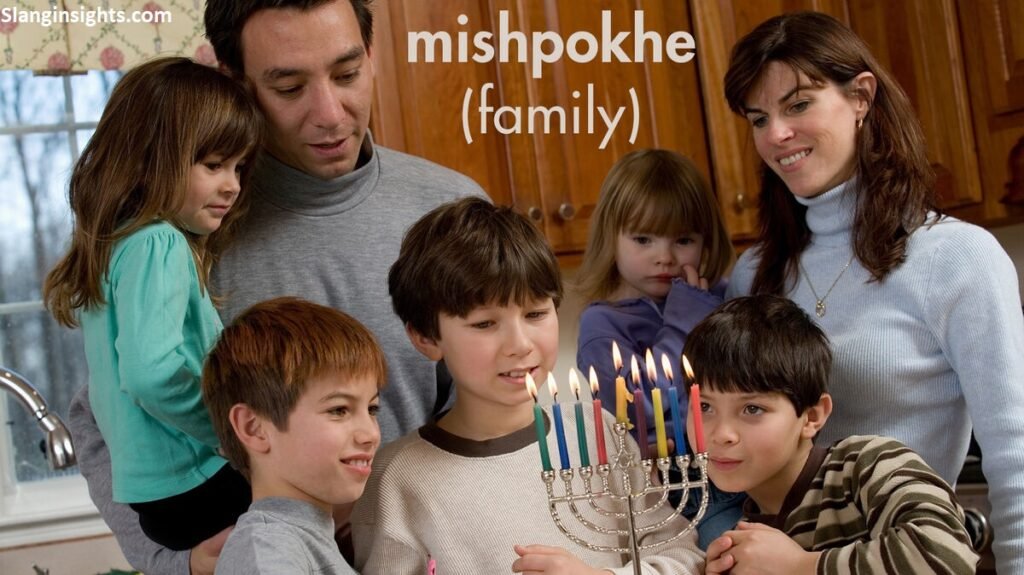
- Mishpucha (mish-POO-khah) — family, extended family, your people.
- Fercockt — messed up, all wrong (more colorful than its cousins, use with care).

Why Learning This Vocabulary Actually Matters
Beyond being fun to say (and they are fun to say), these words fill genuine gaps. English doesn’t have a single word for that particular kind of audacious boldness (chutzpah).
It doesn’t have one word for complaining in that low-grade, chronic, almost comforting way (kvetching). It doesn’t have a word that perfectly captures hauling something inconvenient somewhere (shlepping).
Yiddish is a language that developed among people who needed to be expressive, resilient, and often darkly funny in difficult circumstances.
That background gave it an incredible precision for describing human behavior — especially its more absurd, frustrating, and endearing qualities.
Once you start noticing these words in conversation, in books, in TV shows, in comedy — you’ll be surprised how often they appear. And once you start using them naturally, you’ll wonder how you described certain things before.
Just maybe practice chutzpah a few times before you say it at a work lunch.
FAQ’s
What are Jewish slang words?
Jewish slang words mainly come from Yiddish and Hebrew and are used in informal speech to express emotions, humor, or everyday actions.
Is Yiddish the same as Jewish slang?
Not exactly. Yiddish is a language, while Jewish slang includes Yiddish words commonly used in English conversations.
What is “chutzpah” meaning?
Chutzpah means boldness or extreme confidence, sometimes even a bit of audacity or nerve.
Why do people use Jewish slang words?
People use them because they are expressive, humorous, and often describe feelings or situations in a unique way.
Where are Jewish slang words commonly used?
They are widely used in the United States, especially in comedy, movies, and casual speech.
Conclusion
Jewish slang words have become an important part of modern informal English, especially in entertainment, comedy, and everyday conversation.
Many of these words come from Yiddish, a historical language of Ashkenazi Jews, and have been adopted into broader usage over time.
Words like “mensch,” “kvetch,” “schlep,” and “chutzpah” carry deep cultural meaning while also being easy and fun to use in speech.
These expressions are popular because they are vivid, emotional, and often humorous. Instead of using long explanations, a single slang word can describe a feeling or situation perfectly. For example, “oy vey” quickly expresses frustration, while “mazel tov” shares joy and congratulations.
Today, Jewish slang is widely recognized beyond Jewish communities and is often heard in movies, TV shows, and social media. It adds color and personality to language, making conversations more engaging and expressive.
Learning these words not only helps you understand cultural references but also improves your ability to communicate in a more natural and relatable way.
Overall, Jewish slang words are more than just vocabulary—they are a reflection of culture, history, and humor that continue to influence modern language.