Boston Slang Words The Complete Dictionary of Boston Slang and Local Sayings
Boston slang words are unique expressions commonly used by locals in Massachusetts and throughout New England. These phrases reflect the city’s culture, accent, and history.
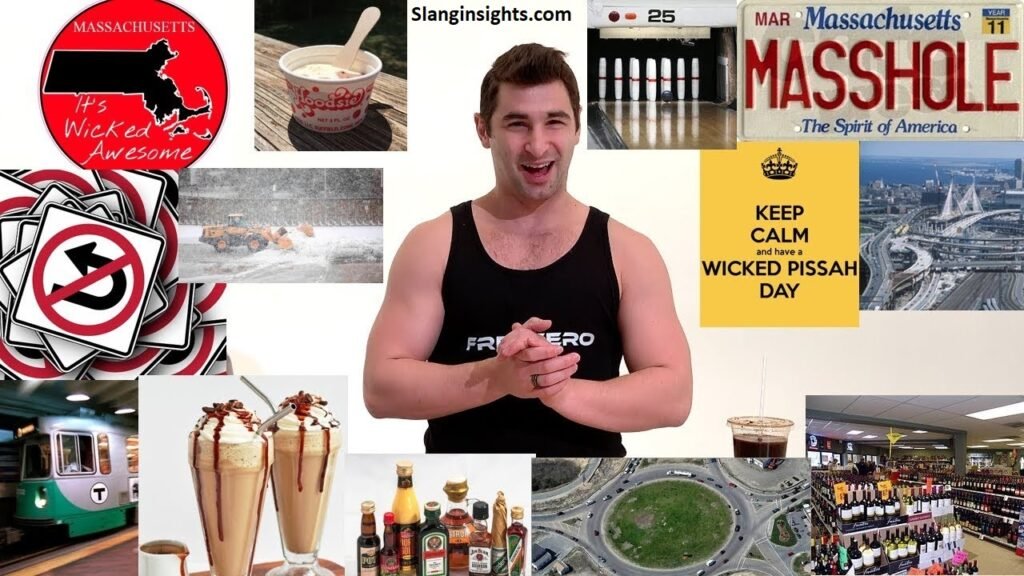
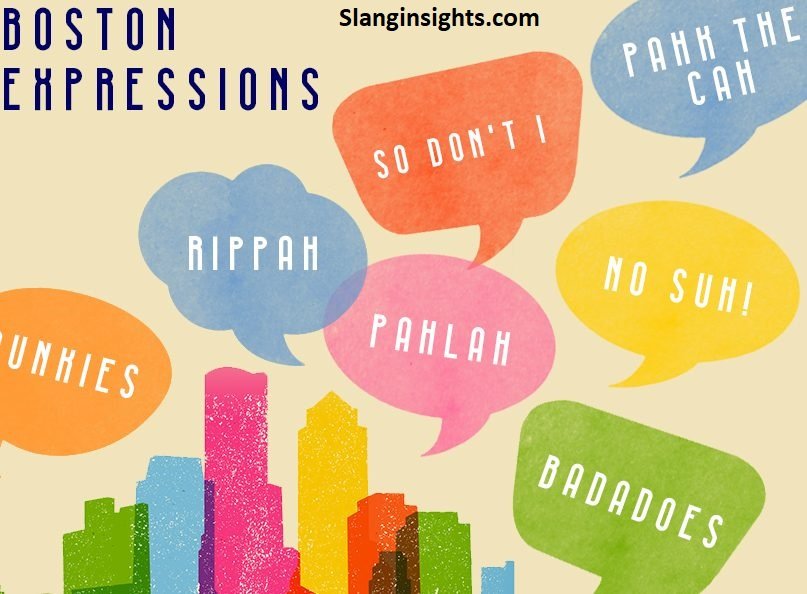
Popular examples include “wicked” (very or extremely), “packie” (liquor store), “bang a U-ey” (make a U-turn), and “the T” (Boston’s subway system). You may also hear “frappe” for a milkshake and “jimmies” for chocolate sprinkles.
Bostonians often drop the letter “R” in pronunciation, giving the accent its distinctive sound. Learning Boston slang words can help visitors understand conversations and experience the city’s culture like a local.
Table of Contents
Quick Table
| Boston Slang Word | Meaning | Example |
|---|---|---|
| Wicked | Very or extremely | That’s wicked cool! |
| Packie | Liquor store | I’m heading to the packie. |
| The T | Boston subway system | Take the T downtown. |
| Bang a U-ey | Make a U-turn | Bang a U-ey at the next light. |
| Frappe | Milkshake | I ordered a chocolate frappe. |
| Jimmies | Chocolate sprinkles | Add jimmies to my ice cream. |
| Southie | South Boston neighborhood | She grew up in Southie. |
| Bubbler | Drinking fountain | There’s a bubbler near the park. |
| Townie | Lifelong local resident | He’s a true townie. |
| Pissa | Awesome or excellent | That game was pissa! |
What Is Boston Slang Words?
The first time someone in Boston told me my idea was “wicked smaht,” I genuinely didn’t know if I’d just been complimented or quietly insulted.
I stood there for a second, smiled, and just said “thanks?” like a confused tourist who’d wandered into a private joke. Turns out it was a compliment. A big one, actually.
That’s basically how my whole first year in Boston went. I’d nod along in conversations, catch maybe 70% of what was being said, and then go home and Google phrases like a detective trying to crack a case.
Ordering coffee, asking for directions, even just small talk with my downstairs neighbor — it all came with its own little language I hadn’t signed up to learn.
If you’re moving to Boston, visiting for a few days, or you just landed on this page because someone texted you “I’m wicked pissah, headed down the Cape this weekend” and you have no idea what that means, you’re in the right spot.
I’m going to walk you through the slang that actually gets used in real life, not just the stuff that ends up on tourist t-shirts.
Why Boston Slang Trips People Up
Here’s the thing nobody tells you: Boston slang isn’t one consistent thing. It changes a bit depending on the neighborhood, the generation, and honestly how close you are to the water.
What your Uber driver from Dorchester says isn’t always what your coworker from Cambridge says.
Also, a lot of guides online list outdated slang that nobody under 50 actually uses anymore.
I made that mistake early on — I tried using “tonic” instead of “soda” at a corner store in Somerville and the guy behind the counter just laughed and said “my grandmother says that.”
Lesson learned: some of this stuff is regional history, not current vocabulary.
So below, I’m separating the words people genuinely still use from the ones that are more “old Boston” flavor text.
The Slang You’ll Actually Hear
These are words and phrases I’ve personally heard used in regular conversation, not just read about somewhere.
Wicked — This one’s the famous one, and it’s still very much alive. It just means “very.” Wicked cold, wicked tired, wicked good. You’ll hear it from teenagers and grandparents alike.
The mistake people make is trying to use it ironically or too often, which immediately gives away that you’re not from here. Locals use it naturally, almost like punctuation.
Regular coffee — This one actually got me in trouble. At Dunkin’ (locals just call it Dunks, by the way), ordering a “regular coffee” doesn’t mean black coffee like it does basically everywhere else in the country.
In Boston, “regular” means cream and sugar. I ordered a regular coffee my first week, expecting plain black coffee, and got handed something closer to a dessert. Now I just say exactly what I want — cream, two sugars, whatever — and skip the regional shorthand entirely.
Packie — Short for “package store,” which is just a liquor store. If a friend says “swing by the packie before the game,” they mean grab beer or wine, not pick up a delivery package. I genuinely thought someone meant FedEx the first time I heard this.
The T — This is the subway/public transit system, run by the MBTA. Nobody calls it the MBTA out loud except in formal writing. People say “take the T” the same way New Yorkers say “take the subway.”
If you’re navigating it, the actual MBTA app or Google Maps both work fine for real-time arrivals, and honestly you’ll need them because the T has its own personality (delays, weird announcements, the works).
Rotary — A traffic circle or roundabout. If someone gives you directions and says “go around the rotary,” they mean the circular intersection, not a literal rotating object.
This one matters if you’re driving, because Boston has a lot of them and they’re famously chaotic. GPS apps will say “roundabout,” but locals will say “rotary” every time.
Masshole — This is the slang term locals use, half-jokingly and half-accurately, to describe an aggressive Massachusetts driver. If you cut someone off on the Pike (that’s the Mass Pike, I-90) and they yell this at you, just know it’s basically a local rite of passage.
Frappe — Pronounced “frap,” not “frah-pay.” If you ask for a frappe in Boston, you’re asking for what most of the country calls a milkshake.
Order a “milkshake” instead, and in some old-school ice cream shops, you might actually get flavored milk with no ice cream in it. I learned this the confusing way at a shop in Quincy.
Spuckie — Mostly heard in and around South Boston, especially in Italian-American neighborhoods. It just means a sub sandwich. Not everyone in the city uses this one, but if you hear it, now you’ll know.
Bang a uey — Means “make a U-turn.” Usually said quickly while someone’s giving you driving directions, so it flies by if you’re not listening for it.
Down the Cape — Going to Cape Cod. Doesn’t matter which direction you’re actually driving; it’s always “down the Cape,” even if you’re technically heading south, east, or sideways depending on where you start.
Storrow’d — This one’s more recent and honestly kind of funny. Storrow Drive has a notoriously low bridge that trucks and U-Hauls keep getting stuck under, despite warning signs everywhere. When that happens, locals say the vehicle got “Storrow’d.” If you’re renting a moving truck in the city, seriously, check the route first. This is one mistake you really don’t want to make in front of a camera, because it always ends up on local news or Reddit.
Wicked pissah — An intensified version of “wicked good,” basically. Means something is excellent or impressive.
Hoodsie — A small individual cup of ice cream, usually the kind with the little wooden spoon. If you grew up here, this word probably has serious nostalgia attached to it.
Pronunciation Landmines (Because Slang Isn’t Just Words)
Honestly, half of sounding local isn’t even about slang words — it’s about not butchering place names. I got corrected more than once on this, so let me save you the embarrassment.
Worcester is pronounced “WUSS-ter,” not “wore-chester.” Gloucester is “GLOSS-ter.” Quincy is “QUIN-zee,” not “QUIN-see.” Peabody is basically said like “PEA-buddy.” Haverhill comes out as “HAY-vrill.”
None of these follow normal spelling logic, and locals will absolutely notice if you say them the “obvious” way.
My advice: before you give anyone directions out loud, or order an Uber to one of these towns, look up the pronunciation once. It takes ten seconds and saves you from that slightly awkward pause where someone politely corrects you mid-sentence.
How to Actually Start Using This Stuff Naturally
If you want to sound like you’ve lived here a while instead of like you just memorized a listicle (no judgment, we’ve all been there), here’s the approach that worked for me:
First, start small. Use “wicked” before you try anything else. It’s the easiest one to slip in naturally, and it won’t sound forced if you use it the way you’d normally use “really” or “very.”
Second, get your coffee order locked down. Knowing the difference between “regular” and actually specifying cream and sugar will instantly make ordering smoother, especially during a busy morning Dunks rush when nobody has patience for confusion.
Third, listen more than you talk for the first few weeks. I noticed slang way faster once I stopped trying to use it myself and just paid attention to how people around me — coworkers, baristas, my landlord — naturally dropped these words into sentences. It clicked a lot faster that way than reading any list, including this one.
Fourth, don’t overdo it. This is the biggest mistake I see from transplants and tourists. If you cram five slang words into one sentence, it reads as try-hard instead of natural. Locals use this stuff sparingly, woven into normal speech, not performed.
Fifth, if you’re genuinely curious about hearing it in context, scroll through r/boston on Reddit for a bit, or watch local news clips about traffic or weather.
You’ll hear “wicked,” “the Pike,” and “rotary” pop up in completely ordinary, unscripted ways.
A Few Real Scenarios to Test Yourself On
Picture this: your friend texts “grabbing a regular at Dunks, want one?” — now you know that’s coffee with cream and sugar, not black coffee.
Or your Lyft driver says “I’ll bang a uey up here, the rotary’s backed up” — now that sentence makes complete sense instead of sounding like a different language.
Or someone mentions their cousin’s truck “got Storrow’d last weekend” — and instead of asking what that even means, you can actually laugh along, because you already know exactly what happened.
FAQ’s About Boston Slang Words
What are Boston slang words?
Boston slang words are informal expressions and phrases commonly used by people in Boston and other parts of Massachusetts. They reflect the area’s culture, history, and unique accent.
What does “wicked” mean in Boston slang?
In Boston slang, “wicked” means very or extremely. For example, “That pizza is wicked good” means the pizza is extremely good.
Why do Bostonians say “packie”?
“Packie” is short for package store, which is what many locals call a liquor store. It is one of the most recognizable Boston expressions.
What is “the T” in Boston?
“The T” refers to Boston’s public transportation system, officially known as the Massachusetts Bay Transportation Authority (MBTA) subway and train network.
Is Boston slang still used today?
Yes. Many Boston slang words are still widely used by locals, although some terms are more common among older generations or in specific neighborhoods.
Conclusion
Boston slang words are a fun and important part of the city’s identity. From popular expressions like “wicked” and “pissa” to everyday terms such as “packie” and “the T,” these words give Boston its distinctive character.
Whether you’re planning a trip to Massachusetts, moving to Boston, or simply curious about regional American English, learning these expressions can help you better understand local conversations and culture.
Many Boston slang terms have been passed down for generations, while others continue to evolve with modern language trends. Some phrases may sound unusual to outsiders, but they are a natural part of daily life for many Bostonians.
Knowing these words can also make movies, TV shows, and sports discussions involving Boston much easier to follow.
By familiarizing yourself with Boston slang words, you’ll gain a deeper appreciation for the city’s traditions and communicate with locals in a more authentic and enjoyable way.