Puerto Rican Slang Common Terms, Meanings, and Real-Life Examples
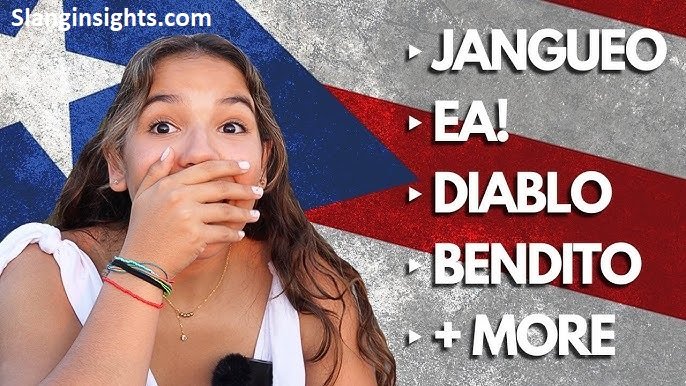
Puerto Rican slang is a colorful and expressive extension of Spanish, shaped by Taíno indigenous roots, African heritage, and modern street culture.
When someone greets you with “¡Wepa!” they are celebrating with pure joy. “Boricua” is a proud term locals use to identify themselves. Calling someone “cabrón” can mean anything from a close friend to an insult depending on tone.
“Janguear” means to hang out, while “brutal” surprisingly means something is amazing. A “chiringuito” is a roadside food shack, and “mano” is short for hermano, meaning brother.
Puerto Rican slang is warmth, pride, and island soul wrapped in every word.
Table of Contents
Quick Table
| Slang Word | Meaning | Example Usage |
|---|---|---|
| Wepa | Expression of joy/excitement | “Wepa, we won!” |
| Boricua | Puerto Rican pride term | “I’m a proud Boricua” |
| Cabrón | Friend or insult (tone-based) | “Que lo que, cabrón?” |
| Janguear | To hang out | “Vamos a janguear tonight” |
| Brutal | Amazing / awesome | “Esa música es brutal” |
| Chiringuito | Roadside food shack | “Let’s eat at the chiringuito” |
| Mano | Brother / close friend | “What’s good, mano?” |
| Broki | Best friend / bro | “That’s my broki right there” |
| Chacho | Wow / expression of surprise | “Chacho, did you see that?” |
| Corillo | Your crew / friend group | “Out with the corillo tonight” |
| Pana | Close friend | “He’s my pana for life” |
| Bicho | Cool / awesome (slang) | “That fit is bicho” |
| Yeyo | Exhausted / tired | “Estoy yeyo after work” |
| Nítido | Clean / sharp / nice | “Tu carro está nítido” |
| Tiraera | Diss / verbal attack | “That song was a tiraera” |
| Chavos | Money | “I need some chavos” |
| Focas | Nonsense / drama | “Don’t bring that focas here” |
| Palante | Forward / keep going | “Siempre palante, never back” |
| Zafacon | Trash can | “Throw it in the zafacon” |
| Quilombo | Mess / chaos | “This place is a quilombo” |
How I Learned Puerto Rican Slang the Hard Way
The first time I sat down at a family cookout in Bayamón, I thought I knew enough Spanish to get by. Four years of high school Spanish, a few trips to Mexico, and a confident attitude. What could go wrong?
A lot. A whole lot.
Within ten minutes, someone told me to pass the food over because they were jangueando, an older cousin called something brutal, and a kid ran through yelling ¡Wepa! at the top of his lungs. I smiled and nodded like I understood every word. I did not understand a single word.
Puerto Rican Spanish — or Boricua Spanish as people call it — is its own living, breathing thing. It borrows from African languages, Taíno (the indigenous people of the island), English, and a street-level creativity that’s impossible to fake.
If you’re planning to visit the island, dating someone Puerto Rican, binge-watching Puerto Rican creators on TikTok, or just trying to keep up with your coworkers, this guide is for you.
I’m not a linguist. I’m just someone who spent enough time around Puerto Rican people, asked enough embarrassing questions, and made enough mistakes to actually learn this stuff.
Start Here: The Absolute Basics
Before anything else, you need to know these. They come up constantly — in text messages, in conversation, in reggaeton lyrics, everywhere.
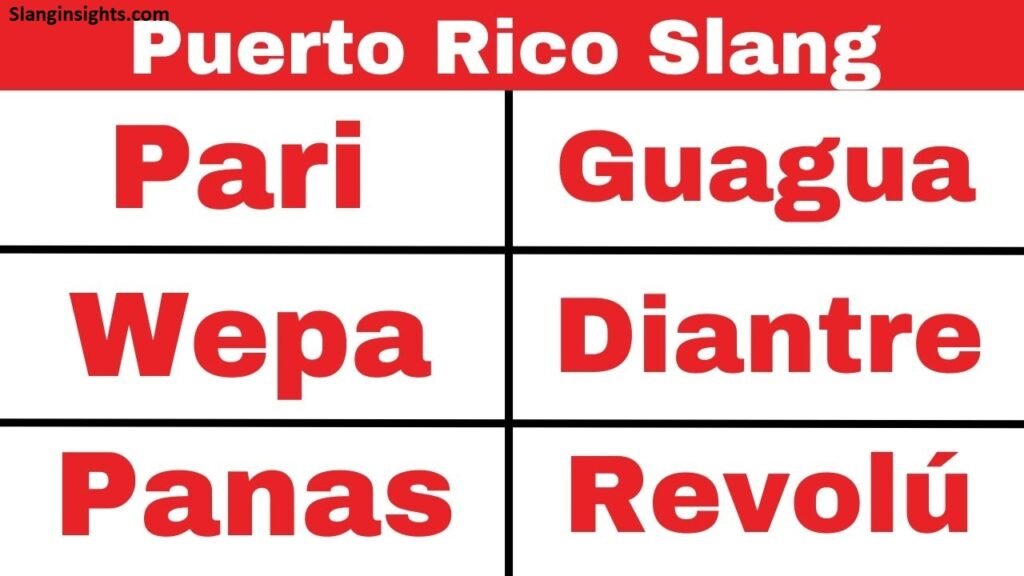
Wepa — This one’s almost impossible to explain without hearing it. It’s excitement, celebration, and approval all rolled into one word. Someone scores a goal? Wepa.
You get a promotion? Wepa. The food comes out perfect? ¡Wepa! Think of it as the Puerto Rican version of “Let’s go!” or “Yes!” but with more soul.
Boricua — This is what Puerto Ricans call themselves. It comes from Borikén, the Taíno name for the island before Spanish colonization.
Using it shows respect and cultural awareness. Don’t confuse it with a compliment you’re giving to someone — it’s an identity word, not a descriptor.
Mano / Mana — Short for hermano (brother) and hermana (sister). It’s used the same way Americans say “bro” or “sis.” You’ll hear it constantly. “Mano, you good?” or “Mana, that was crazy.” Once you start hearing it, you can’t unhear it.
Bregando — Technically it means “dealing with things” or “handling it.” But in practice, when someone asks how you’re doing and you say bregando, it means you’re getting through it — surviving, hustling, managing life. It captures something very real about the Puerto Rican spirit of pushing through.
The Slang That Actually Comes Up in Daily Life
This is where it gets fun. These are the words and phrases you’ll hear at the colmado (corner store), on the street, and in group chats.
Brutal — This one threw me off completely. In regular Spanish, it means what you’d expect: brutal, harsh, severe. But in Puerto Rico? It means something is amazing. Like legitimately excellent. If someone says your food is brutal, take it as the highest compliment. “Esa música está brutal” means the music is fire.
Jangueando — This is “hanging out” but with a Puerto Rican accent. It comes straight from the English word “hanging.” You’re not doing anything in particular — you’re just jangueando. “¿Qué haces?” “Nada, jangueando.” Simple as that.
Chévere — One of the most widely known Caribbean Spanish words, and Puerto Ricans use it constantly. It means something is cool, great, or fine. “Todo chévere” = everything’s good. It’s smooth, positive, and works in almost any casual situation.
Corillo — Your crew, your squad, your group of friends. “Salimos con el corillo esta noche” means you’re going out with the gang tonight. It has a warm, community feel to it.
Plena / Pana — Pana is your close friend, your buddy. “Es mi pana” means they’re a real one, someone you trust. Don’t confuse it with plena, which is a traditional Puerto Rican musical genre — though both words will come up if you’re spending real time around Boricuas.
Birra — Beer. Simple. If someone offers you a birra at the cookout, say yes.
Chavos — Money. Not from Spain or Mexico — this is distinctly Puerto Rican. “No tengo chavos” means you’re broke. “Tiene chavos” means someone’s got money. Very useful phrase for everyday situations.
Nítido — Clean, sharp, or excellent. If someone calls your outfit nítido, you dressed well. It can describe anything done with style or precision.
The Words That Sound Innocent But Aren’t (Learn From My Mistakes)
Bicho — In most Spanish-speaking countries, this just means “bug” or “critter.” In Puerto Rico, it’s a very explicit body-part word. Do NOT walk up to someone and casually mention the bicho you saw outside.
I learned this one the hard way when I tried to complain about an insect in the kitchen. The silence followed by laughter told me everything.
Papaya — Again, completely harmless fruit in most places. In Puerto Rico, same situation as above. Puerto Ricans use lechosa for the fruit. If you want papaya, ask for lechosa. Trust me.
Cabrón — This one lives in a gray zone. It can be a very offensive insult or a term of deep affection between close friends, depending entirely on tone and context. Don’t use it until you really understand the relationship and the moment. I’ve seen tourists try to use it after hearing it between friends and it did not go well.
Expressions That Hit Different
Beyond single words, Puerto Rican Spanish is full of phrases that carry entire emotions.
“¿Qué es la que hay?” — This is one of the most common greetings you’ll hear. Literally it translates to something like “What is the thing that there is?” but it just means “What’s up?” or “What’s going on?” Respond with bregando and you’ll fit right in.
“Fuera de aquí” — Literally “get out of here,” but it’s used the same way Americans say “No way!” or “Stop it!” when something is unbelievable. If someone tells you wild news and you say fuera de aquí, you’re expressing disbelief, not telling them to leave.
“Esto está en llamas” — “This is on fire.” And yes, it means it’s absolutely amazing, not that something is burning. Used for parties, food, performances — anything that’s at its peak.
“Relajate” — Chill out, relax, calm down. Sometimes said affectionately, sometimes as a warning. Tone matters enormously here.
“Diablo” — This is a wild multipurpose word. It can express shock, frustration, admiration, or disbelief. Think of it as the Puerto Rican “damn” or “oh my God.” You’ll hear it constantly.
How to Actually Pick This Up (Beyond Memorizing a List)
Reading a list of slang words is useful, but it won’t make you sound natural. Here’s what actually worked for me:
Watch Puerto Rican content on YouTube and TikTok. Search for Puerto Rican comedians, vloggers, and creators. Bad Bunny interviews are a gold mine. You’ll start hearing the rhythm and cadence of how words get used in real sentences, not just as definitions.
Use the Duolingo Spanish course as a base, then supplement. Duolingo won’t teach you wepa or chavos, but it gives you the grammar foundation so the slang makes sense structurally. After that, informal exposure does the rest.
Don’t be afraid to ask. In my experience, Puerto Rican people genuinely love when someone shows curiosity about their culture and language. If you hear a word you don’t know and you ask about it respectfully, most people will explain it with enthusiasm.
Listen to the music. Bad Bunny, Ozuna, Anuel AA, and older acts like Tego Calderón — the lyrics are packed with slang used in authentic context. Look up the lyrics, look up the words you don’t know, and let it sink in over time.
Accept that you’ll mess up. You’re going to use something in the wrong context. You’re going to mispronounce something. People will laugh — usually with you, not at you. That’s how language actually gets learned.
A Few Common Mistakes Outsiders Make
Beyond the bicho/papaya situation, there are a few other things worth knowing.
Dropping the “s” sound mid-word is standard Puerto Rican pronunciation, not sloppy Spanish. “Estás” becomes “etá.” “Nosotros” becomes “nohotro.” It’s part of the dialect’s phonetic identity. Don’t try to over-correct it or comment on it.
Assuming all Caribbean Spanish is the same will get you into confusing conversations. Dominican slang and Cuban slang have overlap but are distinct. Puerto Rican slang has its own specific vocabulary and feel.
Don’t assume something you learned from a Dominican friend automatically applies.
Also — and this matters — code-switching between English and Spanish (Spanglish) is completely normal and intentional in Puerto Rican culture, not a sign that someone doesn’t know one language or the other. It’s a fluid identity marker.
“I went to the mall and it was brutal, mano” is a perfectly valid sentence.
The Feeling Behind the Words
The thing I’ve come to appreciate most about Puerto Rican slang isn’t any individual word. It’s the energy underneath all of it. There’s a warmth, a loudness, a resilience that shows up in the language.
Words like bregando and wepa aren’t random — they reflect something real about how people on the island and in the diaspora move through the world.
When someone calls you pana, they mean it. When they say the food is brutal, they’re giving you something. When the whole room shouts Wepa at once, you feel it.
Language is never just words. It’s a window into how a culture understands itself. And Puerto Rican Spanish is one of the most expressive, joyful, and genuinely alive versions of the language I’ve ever encountered.
Even if you only remember five words from this article — wepa, chévere, bregando, pana, and lechosa (not papaya) — you’re already ahead of where I was at that first cookout in Bayamón.

FAQ’s
What is Puerto Rican slang called?
Puerto Rican slang is often referred to as “Boricua slang” or “Spanglish,” a unique blend of Spanish, English, Taíno indigenous words, and African influences that make it distinct from other Spanish dialects.
Where did Puerto Rican slang come from?
It developed from a rich mix of Taíno native language, African slave culture, Spanish colonization, and heavy American English influence, creating a one-of-a-kind linguistic identity unique to the island.
Is Puerto Rican slang the same as regular Spanish?
No. Puerto Rican slang differs significantly from standard Spanish. Many words are completely invented, borrowed from English, or carry entirely different meanings than their traditional Spanish counterparts.
Did Bad Bunny popularize Puerto Rican slang?
Absolutely. Bad Bunny brought global attention to Puerto Rican slang through his music, making words like “broki,” “wepa,” and “boricua” recognizable to millions of fans worldwide.
Is Puerto Rican slang still evolving?
Yes. Puerto Rican slang is constantly growing and changing, with new expressions emerging from the island’s youth, reggaeton music scene, and social media culture every single year.
Conclusion
Puerto Rican slang is far more than a casual way of speaking — it is a powerful declaration of cultural identity, resilience, and island pride.
Born from centuries of blended influences including Taíno indigenous roots, African heritage, Spanish colonization, and American cultural exchange, the slang of Puerto Rico tells the story of a people who have always found strength and joy in their own unique voice.
What makes Puerto Rican slang truly remarkable is how it transcends borders.
From the streets of San Juan to the neighborhoods of New York City, expressions like “wepa,” “palante,” and “broki” carry the warmth and spirit of the Boricua community wherever they travel.
These words are not just language — they are a cultural handshake, an instant connection between people who share the same roots.
As reggaeton and Latin trap continue to dominate global music charts, Puerto Rican slang is reaching audiences that could never have imagined it a generation ago.
Artists like Bad Bunny, Daddy Yankee, and Ozuna have turned everyday island expressions into worldwide phenomena.
Whether you are learning Spanish, visiting the island, or simply curious about one of the richest street languages in the world, Puerto Rican slang offers a colorful, joyful, and deeply human window into the soul of la isla del encanto.