Words for Cool Slang Modern Expressions with Meanings and Examples
Words for Cool Slang Some of the coolest slang words are the ones used to describe people and their reactions.
A genuinely good person is called solid, real, or a true G. Someone hilarious is deadass funny or an absolute clown — depending on whether it is a compliment or a dig.
When a person overreacts to something minor, they are being pressed or showing big mad energy. A clever comeback or clapback gets called sharp or straight-up savage.
If someone surprises you with how good they are at something, they are lowkey talented or a total sleeper.
People who always bring positive energy to the room are called the plug for good vibes, while those who drain energy are labeled energy vampires or just plain mid.
When a group of friends is especially tight-knit and fun, the whole dynamic is called core — as in, friendship goals that feel like a coming-of-age movie.
And when someone makes you laugh so hard you cannot breathe, the only reaction is a simple dead.
Table of Contents
Quick Table
| Slang Word | Meaning | Still Used Today |
|---|---|---|
| Fire | Excellent, amazing | Yes |
| Lit | Exciting, amazing | Yes |
| Slaps | Sounds really good | Yes |
| Bussin | Extremely good, usually food | Yes |
| Vibe | A feeling or atmosphere | Yes |
| Hits different | Feels uniquely special | Yes |
| Slay | Execute something perfectly | Yes |
| No cap | No lie, for real | Yes |
The Message That Made Me Rethink Modern Slang
I still remember the first time I used the word “lowkey” in a work Slack message and my manager replied with, “What does that mean?” That was my wake-up call. Slang had officially split the room — and I was standing right in the middle, trying to speak two languages at once.
That moment got me genuinely curious. Not just about what the words meant, but why they spread so fast, where they actually come from, and how some terms stick for decades while others vanish in three weeks like a bad TikTok trend.
If you’ve been feeling like everyone around you is speaking a dialect you missed the memo on — this one’s for you.
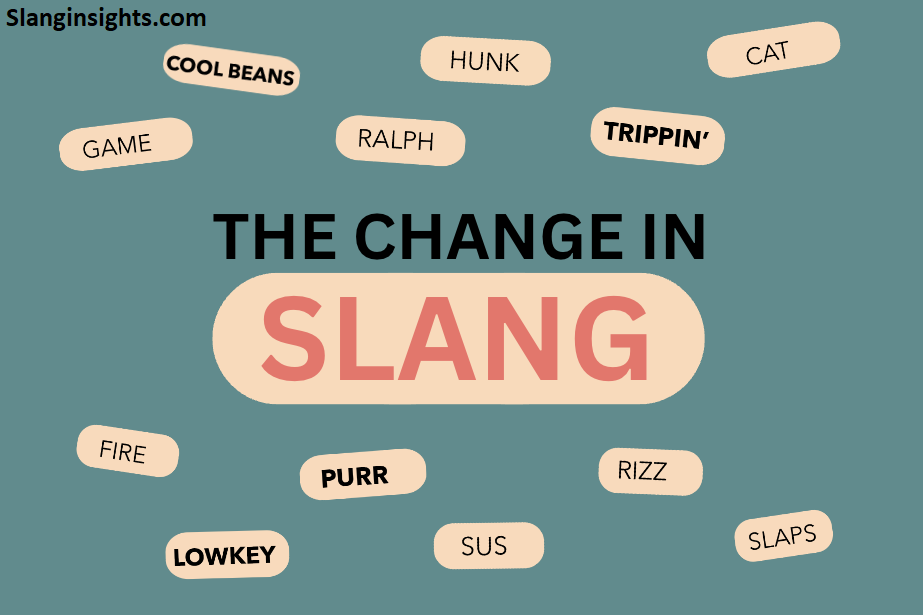
Why Slang Moves Faster Than Ever Now
Back when I was in high school, slang spread through neighborhoods, music albums, and word of mouth. It took months for a phrase to travel from one city to another. Now?
A single viral tweet or a 15-second video can launch a word into global circulation overnight.
Platforms like TikTok, X (Twitter), Reddit, and Discord are basically slang factories at this point.
A creator in Atlanta posts something, it gets remixed by someone in London, turns into a meme format in Tokyo, and by Friday your coworker is saying it in a meeting like they invented it.
That speed makes it hard to keep up — but it also makes it kind of exciting, honestly.
The Core Vocabulary: Words That Actually Stuck
Let’s get into the actual words. I’m not going to dump a dictionary on you. Instead, here are the terms that genuinely showed up in my daily life — online, in conversation, in group chats — with context on how they’re actually used.
No Cap
This one means “no lie” or “I’m being completely honest.” The opposite — “cap” — means you’re lying or exaggerating. So “no cap, that was the best pizza I’ve ever eaten” is as sincere as it gets. I use this one. My 60-year-old uncle now uses it ironically, which is both wholesome and a sign it’s entered mainstream territory.
Slay
Originally rooted deep in drag and LGBTQ+ ballroom culture, “slay” means you absolutely nailed something. Killed it. Looked incredible, performed flawlessly, or handled a situation with style. “She slayed that presentation” is now completely normal to say — and somehow it still feels fresh.
It’s Giving…
This is one of my personal favorites for how flexible it is. “It’s giving corporate chic.” “It’s giving main character energy.” You’re describing the vibe or impression something projects.
It came out of Black queer culture and spread everywhere fast. The beauty is you can finish that sentence with literally anything.
Lowkey / Highkey
Lowkey = subtly, quietly, kind of. “I lowkey love that show.” Highkey = obviously, a lot, not hiding it. “I highkey cried during that movie.” These two have been in circulation for a while but they genuinely haven’t worn out their welcome yet. I still reach for them without even thinking about it.
Mid
Short and brutal. If something is “mid,” it’s mediocre. Average. Not terrible, not great. Just mid. “That burger was mid.” It’s the perfect word for things that don’t deserve a full roast but don’t deserve praise either. Gamers popularized this one and it escaped into the wild pretty fast.
6. Rent Free
When something is “living rent free in your head,” it means you can’t stop thinking about it. Usually something annoying, cringe-worthy, or weirdly compelling. “That jingle from that ad is living rent free in my head and I hate it.”
Understood the Assignment
When someone fully delivers exactly what was needed — style, energy, execution — they “understood the assignment.” The reverse, “didn’t understand the assignment,” is the polite way of saying someone completely missed the mark. I’ve seen this one in corporate emails at this point, which means it’s officially crossed over.
Rizz
This blew up hard. Rizz is essentially charisma — specifically the kind that makes people fall for you. Someone with rizz can walk into a room and just work it without trying too hard. Derived from “charisma,” possibly from streamer Kai Cenat’s community. Oxford chose it as Word of the Year 2023, which was a moment.
NPC
Comes from gaming — Non-Playable Character, basically a background character with no real depth or agency. Calling someone an NPC means they’re acting robotically, following the crowd without thinking, or just existing in the background. There was a whole NPC streaming trend where creators acted like game NPCs and it was simultaneously bizarre and hilarious.
Delulu
Short for “delusional,” but used affectionately. “Being delulu” usually means having wildly unrealistic expectations — but owning it anyway. “I know manifesting a promotion by Friday is delulu but I’m going for it.” It’s self-aware absurdism and people love it.
Era
“I’m in my healing era.” “She’s in her villain era.” Borrowed from Taylor Swift’s cultural footprint, being in an “era” means you’re fully committing to a particular phase, vibe, or version of yourself. It’s a surprisingly useful framework for talking about personal change.
Snatched
When something looks incredible — usually referring to an outfit, a body, or a look. “Her outfit is snatched.” Also comes from ballroom/drag culture. Very visual, very affirming.
Ate (and Left No Crumbs)
When you completely nail something — a performance, a look, a response — you “ate.” And if it was truly flawless, “you ate and left no crumbs.” Nothing left to criticize. Not a trace. This one genuinely makes people smile when used right.
Bussin
Food is the primary domain here. If something is “bussin,” it’s absolutely delicious. “This jollof rice is bussin, no cap.” AAVE-rooted (African American Vernacular English), like a lot of the most expressive and enduring slang.
IYKYK
“If You Know, You Know.” An invitation to a shared experience that only certain people will get. It’s the coded wink at an inside joke. Used when referencing something niche, underground, or community-specific where outsiders just won’t get it.
The Ones That Came and Went (Lessons Learned
I made the mistake of using “on fleek” in 2019. That word had a shelf life of about 18 months and I missed the expiry date by three years. Don’t be me.
Slang that fades fast usually has a few things in common: it was tied to one specific moment or meme, it felt forced when brands picked it up too early, or it just got overused and went from cool to cringe almost overnight.
“Yeet,” “savage,” “lit,” “I can’t even,” and “bae” — all of them had their moment. Some are still used ironically. Most have been retired to the pop culture museum.
The lesson? Use new slang naturally and don’t cling to it when the energy shifts. You’ll feel it when a word starts dying — there’s a distinct awkwardness that creeps in when you say it.
How to Actually Use Slang Without Sounding Forced
Here’s the part nobody tells you: using slang badly is worse than not using it at all. If you shoehorn it in when it doesn’t fit, people notice. Here’s how to do it right:
Listen before you speak. Spend time in the spaces where the slang lives — relevant subreddits, TikTok comments, Discord servers, Twitter threads. Get a feel for how the word actually lands in context before you try it yourself.
Context matters more than the word. “Slay” hitting in the right moment feels great. “Slay” dropped awkwardly into a serious conversation feels tragic. The vibe has to match.
Age and relationship factor in. Using slang with close friends feels natural. Deploying it in a job interview or a client email? Read the room very carefully first.
Don’t explain it. If you’re saying “no cap, that was a great meeting” and someone looks confused, don’t launch into a definition. That breaks the energy entirely. Either let it land or drop it next time.
Let it evolve naturally. You don’t have to chase every new word. Find the ones that genuinely fit your personality and communication style, and those will feel authentic when you use them.
Where to Stay Current
If you want to track slang in real time, a few spots are genuinely useful:
Urban Dictionary — still the go-to reference for definitions, though entries vary wildly in quality. Read multiple definitions for context.
Know Your Meme — excellent for understanding the full backstory and origin of where a word or phrase came from.
TikTok’s For You Page — honestly the most accurate real-time pulse on what’s bubbling up. Just scroll and absorb.
Reddit’s r/BlackPeopleTwitter, r/teenagers, r/gaming — different communities, different slang ecosystems. Good cross-section.
Genius.com — for music-derived slang, the annotations are genuinely educational on where words and phrases come from.
One Thing Worth Saying
A lot of the most vibrant, creative, and lasting slang comes from Black communities, LGBTQ+ communities, and youth subcultures that have historically been marginalized. “Slay,” “ate,” “bussin,” “snatched,” “rizz,” “it’s giving” — the roots matter.
There’s nothing wrong with using this language. Language is meant to travel and evolve. But being aware of where it comes from — and not erasing that context when it goes mainstream — is just respectful.
It’s worth knowing the history when you’re borrowing from someone else’s creative tradition.
FAQ’s
What are words for cool slang?
Words for cool slang are informal expressions used to describe something impressive, stylish, or admirable. They come from hip-hop culture, internet language, Gen Z trends, and everyday street talk. Examples include “fire,” “lit,” “slay,” and “vibe” — words that carry way more energy than their dictionary definitions suggest.
Where do cool slang words come from?
Most cool slang words originate from African American Vernacular English (AAVE), hip-hop and rap culture, social media platforms like TikTok and Twitter, and youth communities online. From there, they spread into mainstream conversation and eventually become part of everyday language worldwide.
What are the most popular cool slang words right now?
Some of the most widely used cool slang words today include “slay,” “bussin,” “no cap,” “hits different,” “vibe,” and “fire.” These terms dominate social media, music, and casual conversation across all age groups in 2025.
Are cool slang words appropriate for all ages?
Most cool slang words are completely appropriate for all ages. They are simply fun, expressive alternatives to everyday language. However, some slang carries cultural weight and context, so understanding where a word comes from before using it is always a good idea.
Do cool slang words change over time?
Absolutely. Slang evolves faster than almost any other part of language. Words that were considered the peak of cool five years ago can sound dated today, while brand new expressions pop up constantly through social media trends, viral moments, and popular music.
Conclusion
Cool slang words are more than just trendy expressions — they are living proof that language is always evolving, always breathing, and always reflecting the culture around it.
From the hip-hop influenced streets of the 1990s to the TikTok-driven trends of today, the words we use to describe what is cool have always told a bigger story about who we are, what we value, and how we connect with each other.
What makes cool slang so powerful is its ability to say so much with so little. A single word like “fire” or “vibe” can communicate an entire feeling that a full sentence could never quite capture.
These words carry energy, attitude, and personality — and that is exactly why people are drawn to them generation after generation.
Whether you are a writer looking to add authenticity to your content, a parent trying to understand what your teenager is saying, or simply someone who loves language and the way it shifts over time, knowing your cool slang is genuinely useful.
It keeps you connected, relevant, and in tune with the world around you.
The coolest thing about cool slang? It never really goes out of style — it just transforms, reinvents itself, and comes back fresher than ever. And honestly, that is pretty fire.