2000s Slang Words The Best Throwback Expressions You Still Hear Today
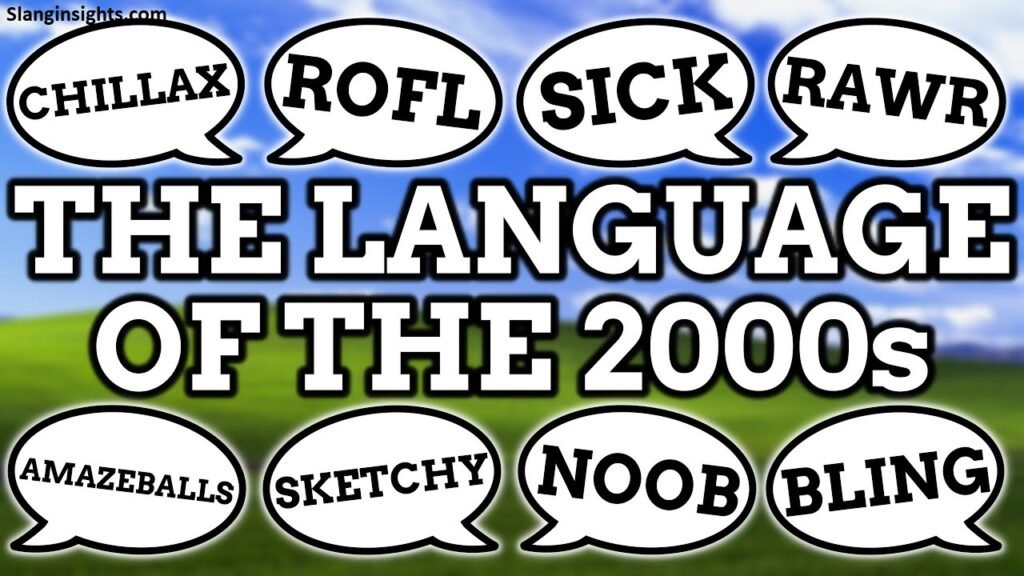
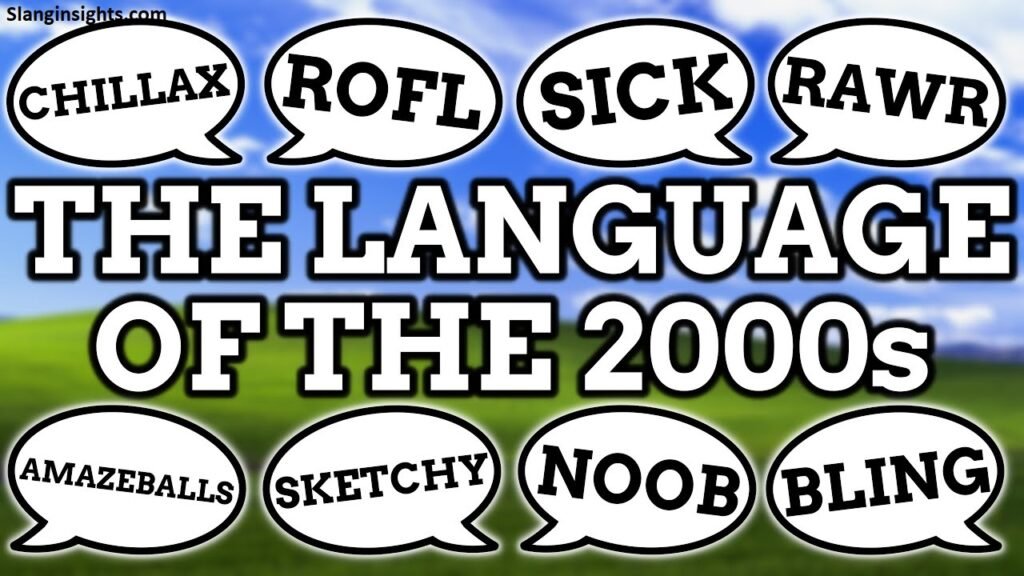
2000s Slang Words gave birth to an entirely new internet vocabulary. When something was hilarious, it was lol — but if it was truly legendary, it was rofl or even lmao.
Sharing your real feelings online meant posting something emo, and anyone obsessed with a band was a total stan. If someone posted something embarrassing, their whole timeline would say that’s so random.
People who were addicted to MySpace were called scene kids, and anyone trying to look deep was being artsy-fartsy. When something surprised you online, the reaction was simply OMG.
Texting shortcuts like BRB, GTG, and IDK ruled every AIM conversation, and ending a chat with TTYL felt perfectly normal.
If your profile picture was good, it was your avi, and if it was too edited, you were being thirsty for likes — which in 2000s terms meant you were just doing the absolute most.
Table of Contents
Quick Table
| Slang Word | Meaning | Era Popularity |
|---|---|---|
| Swagger | Confident, stylish attitude | Peak 2005–2010 |
| Da bomb | Amazing, the best | Early 2000s |
| Bling bling | Flashy jewelry / wealth | 2000–2005 |
| Crunk | Hyped up, wild energy | 2003–2007 |
| Homie | Close friend | Throughout 2000s |
| Boo | Romantic partner | Throughout 2000s |
| Fo’ sho | For sure, definitely | 2000–2006 |
| Tight | Cool, excellent | Early 2000s |
The Day I Found My Old 2000s Slang Notebook
I was cleaning out an old bedroom closet last summer when I found a dusty spiral notebook from middle school — the kind with a holographic cover and gel pen doodles all over it.
And written inside, in my absolute best loopy handwriting, was a note to my best friend that said something like:
“OMG that was SO random, I was literally dying!! That party was da bomb, no cap fr fr lolz”
Except it wasn’t “no cap fr fr” — that’s 2020s talk. What I actually wrote was more like:
“OMG that was SO random lol, I was totally buggin!! That party was da bomb, totes for real!!”
And I just sat there on the floor, surrounded by old Bratz doll packaging and a crusty bottle of Bath & Body Works body spray, laughing until I cried. Because honestly? The slang we used in the 2000s was something else entirely.
If you grew up in that era — roughly 2000 to 2009 — you know what I’m talking about.
This was the golden age of AIM away messages, flip phones with T9 texting, and MySpace Top 8 drama. And the language that went along with it? Absolutely unhinged in the best possible way.
Let’s take a proper trip back.
The AIM Era Gave Us Everything
Before Instagram, before TikTok, before group chats on iPhones — there was AIM. AOL Instant Messenger was basically the social media platform of the early 2000s, and it shaped how an entire generation communicated.
You’d come home from school, log on with that iconic dial-up screech, and immediately start typing in shorthand that would confuse anyone over 30 at the time.
“brb” — Be right back. Simple. Clean. Still used today.
“g2g” — Got to go. Usually sent right before your mom yelled at you to come eat dinner.
“a/s/l” — Age/Sex/Location. If you know, you know. The original profile bio.
“lmao” and “rofl” — Because “lol” wasn’t always enough. Sometimes something was so funny you were allegedly rolling on the floor.
“ttyl” — Talk to you later. The polite way to end a conversation. We were weirdly formal about goodbyes considering we’d be back online in 20 minutes.
These weren’t just abbreviations — they were a whole culture. Your AIM away message was basically your personal brand. Mine usually featured misquoted Simple Plan lyrics and passive-aggressive hints nobody understood except my three closest friends.
The Words We Actually Said Out Loud
Here’s where it gets really good. Because the 2000s weren’t just about typing shorthand — we were also saying genuinely strange things with complete confidence in person.
“That’s so fetch” — Thanks almost entirely to Mean Girls (2004), this was briefly attempted as slang before the movie itself declared it would never happen. Which somehow made everyone want to say it more.
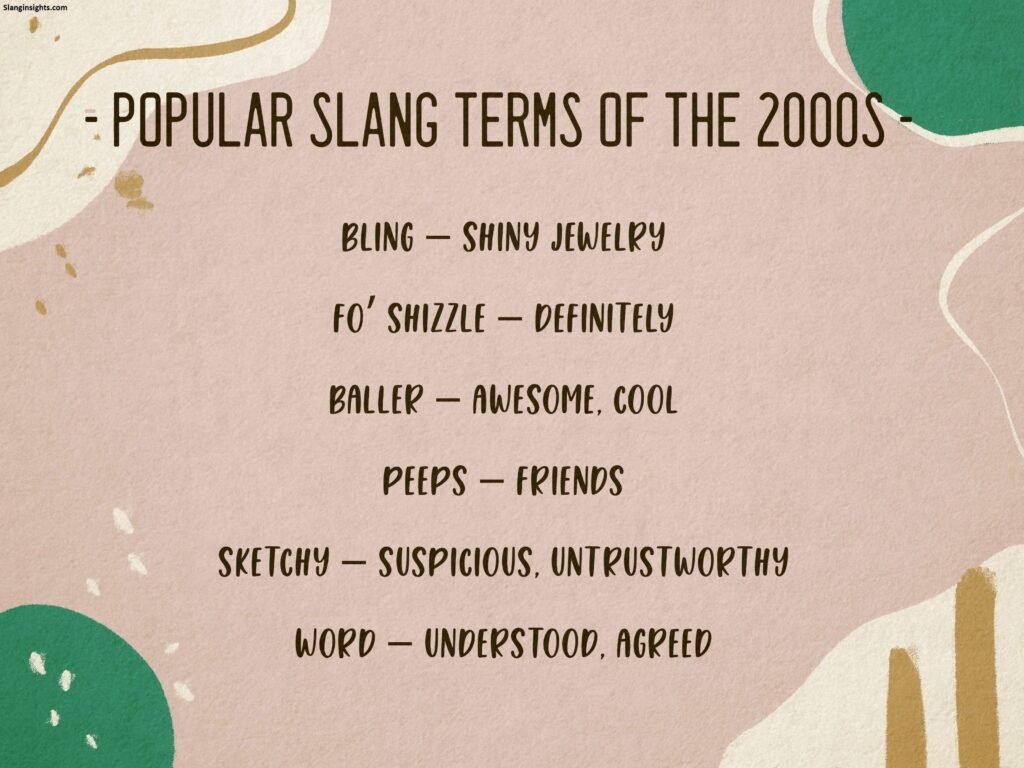
“Fo shizzle” — Snoop Dogg made this happen. We were suburban kids saying “fo shizzle my nizzle” in lunch lines with zero self-awareness. Absolute cinema.
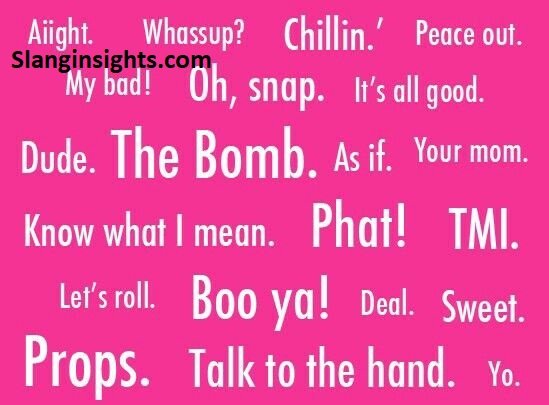
“Talk to the hand” — The ultimate dismissal. You’d physically hold your hand up toward someone’s face. It felt so powerful at the time.
“Whatever” (with the W hand gesture) — You’d form a W with your fingers. You’d say it with complete deadpan energy. Nobody questioned this.
“Bling bling” — Jewelry. Flashy stuff. Also the name of a Lil Wayne-affiliated record label. We used this word constantly.
“Crunk” — A mix of “crazy” and “drunk,” popularized by Lil Jon. It also just meant exciting or energetic. “This party is about to get crunk” was a sentence adults heard and did not understand.
“Da bomb” — Something so good it’s explosive. The highest compliment. “That pizza was da bomb dot com” was the extended version for when you really needed to emphasize.
“Bootylicious” — Beyoncé literally put this in a song in 2001. It entered the dictionary. We used it unironically.
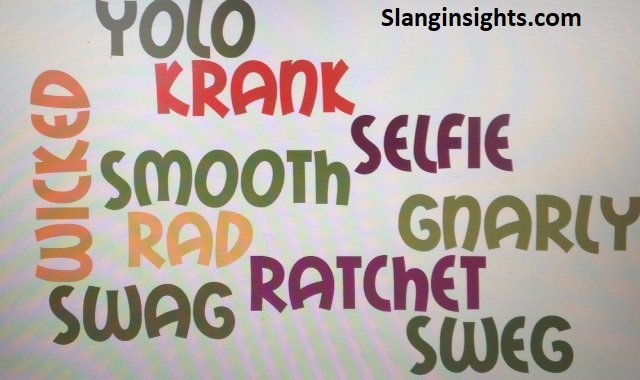
The Ones That Really Defined the Decade
Some 2000s slang was so specific to that era that hearing it now feels like time travel.
“Chillax” — Chill + relax, mashed together. “Dude, just chillax.” Still one of the most beautiful portmanteaus of our time, honestly.
“Emo” — Originally referred to emotional punk rock music (think My Chemical Romance, Fall Out Boy), but quickly became a full identity. “That’s so emo” covered everything from black eyeliner to writing sad poetry in your journal.
“Scene” — Related to emo but with more color. Scene kids had choppy hair dyed bright colors and listened to bands with names like “Bring Me the Horizon.” They were considered edgier than emo kids, which was apparently a competition people cared about.
“Noob” / “Newb” — Someone new to something, especially gaming. Early internet gaming culture gave us this gem. Xbox 360 kids used it constantly in Halo lobbies.
“Pwned” — Dominated someone completely, especially in gaming. Supposedly originated from a typo of “owned.” Pronounced “poned.” Nobody agreed on the pronunciation. Nobody ever will.
“Epic fail” — When something went spectacularly wrong. There were entire websites, YouTube compilations, and even a book called Epic Fail that cataloged these moments. Stumble upon one of those old YouTube videos and you’ll lose two hours.
“FTW” — For the win. The opposite of fail. “Pizza for breakfast FTW.”
“Owned” — See pwned. But more for real life situations. “You just got owned.” Said with great satisfaction.
The Ones That Were Definitely Borrowed (But We Made Our Own)
A lot of early 2000s slang had roots in Black culture, hip-hop, and LGBTQ+ communities long before suburban teens ran with it. It’s worth acknowledging that.
“Bling” came from hip-hop. “Crunk” came from Southern rap. “No homo” emerged as a phrase in this era too — a clunky, often homophobic add-on that was everywhere for a few years before people started calling it out.
And then there was “That’s hot” — which Paris Hilton absolutely weaponized into a personal brand. She said it so often it became inseparable from her identity, and then every middle schooler in America was saying it about their lunch tray.
Cultural context matters. A lot of what we normalized in 2000s slang is worth reflecting on now.
The Text Message Slang We Typed With Our Thumbs (On a Number Pad)
If you had a flip phone before touchscreens took over, you remember T9 texting. You’d hit the “2” key once for A, twice for B, three times for C. It was an athletic event.
So we shortened everything.
“ngl” — Not gonna lie. Still widely used.
“ily” — I love you. Sent with less gravity than it deserved, probably.
“omg” — Oh my god. The cornerstone of 2000s digital communication.
“jk” — Just kidding. Essential for when you said something mean and needed an immediate exit.
“nm” — Not much. Standard response to “wyd” before “wyd” even existed. We said “what r u up to” and the answer was always “nm u?”
“lylas / lylab” — Love you like a sister / Love you like a brother. People wrote these in yearbooks. Pure chaotic affection.
Common Mistakes People Make About 2000s Slang
Here’s the thing — not all of this was from the same moment. People lump the whole decade together, but early 2000s slang (2000–2004) was very different from late 2000s slang (2006–2009).
“Da bomb” is early 2000s. By 2008, saying that made you sound like your dad trying to be cool.
“Lol” started sincere and became ironic by around 2007–2008. There’s a whole essay to be written about when “lol” stopped meaning laughing and started meaning “I acknowledge your message with mild amusement at best.”
Also: people often credit the wrong sources. “That’s hot” didn’t start with Paris — she popularized it. “Bling” was already established in hip-hop before mainstream media picked it up. Knowing the origin matters.
Words That Quietly Survived (You Probably Still Use Them)
Not everything from the 2000s died. Some of it shapeshifted into modern language so smoothly you forgot where it came from.
- “Lol” — Obviously. It’s practically punctuation now.
- “OMG” — Fully mainstream. Your grandmother says this.
- “Brb” — Still in active use across all platforms.
- “Noob” — Still used in gaming communities worldwide.
- “Epic” — Evolved from “epic fail” into a general intensifier. A bit overused but hanging in there.
And “cringe” — which existed in the 2000s but exploded into the 2010s and 2020s as its own genre of content.
Why This Era of Slang Still Hits Different
There’s something genuinely nostalgic about 2000s slang — not just because it’s funny to look back on, but because it captures a specific moment in time when the internet was young and weird and so were we.
We were figuring out how to communicate across screens for the first time. We were making up grammar rules on the fly. We were typing with our thumbs on physical buttons. We were writing away messages that were secretly directed at our crushes.
And the slang we created? It was completely, gloriously ours.
So next time someone does something impressive, consider whispering “da bomb” under your breath. Not ironically. Not as a joke.
Just because it’s true, and you were there, and some things deserve a comeback.
FAQ’s
What are 2000s slang words?
2000s slang words are informal expressions and phrases that became popular during the 2000s decade, heavily influenced by hip-hop culture, reality TV, early internet, and youth pop culture. Words like “bling bling,” “swagger,” and “crunk” defined the era’s unique language.
Are any 2000s slang words still used today?
Yes! Many 2000s slang words like “lowkey,” “stan,” “bae,” and “GOAT” are still widely used today. Some have even evolved in meaning, proving that good slang never truly dies — it just gets recycled by new generations.
Where did 2000s slang come from?
Most 2000s slang originated from hip-hop and R&B music, African American Vernacular English (AAVE), early internet chat rooms, AIM messaging, and popular TV shows and movies of the era.
What was the most popular slang word of the 2000s?
“Swagger” is widely considered one of the most iconic slang words of the 2000s, largely popularized by hip-hop artists and later adopted by mainstream pop culture worldwide.
Why do people still search for 2000s slang words?
Nostalgia is a powerful force. People love revisiting the language of their youth, and 2000s slang brings back memories of flip phones, MySpace, and early YouTube — a simpler, more carefree time.
Conclusion
The 2000s were a golden era for slang, producing some of the most colorful, creative, and downright fun expressions the English language has ever seen.
From the hip-hop-influenced streets to the glowing screens of early internet chat rooms, this decade gave the world a vocabulary that was bold, expressive, and impossible to ignore.
Words like “swagger,” “bling bling,” and “crunk” didn’t just describe attitudes — they captured an entire cultural movement that was loud, proud, and unapologetically itself.
What makes 2000s slang so fascinating is how deeply it reflected the times.
The rise of reality TV, the explosion of hip-hop into mainstream culture, the birth of social media, and the era of flip phones and AIM all fed directly into the language young people used every day.
Slang was no longer just street talk — it was everywhere, from schoolyards to music videos to the front pages of entertainment magazines.
Even today, many of these words live on, quietly woven into everyday conversation. “GOAT,” “stan,” “lowkey,” and “bae” have all survived the test of time, proof that great slang sticks around.
Whether you lived through the 2000s or are simply exploring the era, these words offer a vivid, entertaining snapshot of a decade that truly had its own voice.