10 Basketball Slang Terms That Prove Hoops Has Its Own Language
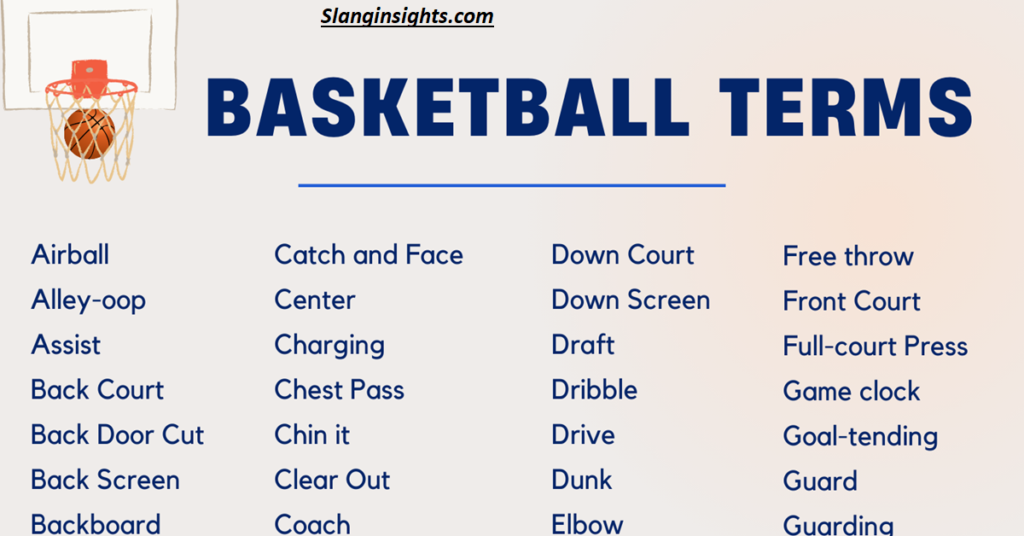
Basketball slang is packed with colorful terms that capture the energy, skill, and swagger of the game.
Players and fans use words like “dime” for a perfect assist, “swish” for a shot that hits nothing but net, and “brick” for a badly missed shot.
Terms like “and-one,” “posterize,” and “handles” describe standout plays and moves that separate great players from average ones.
Whether it’s trash talk on the playground or commentary during an NBA game, this slang reflects basketball’s fast-paced, competitive culture.
Learning these terms helps fans and players alike better understand and enjoy the game’s unique vocabulary.
Quick Table
| Slang Term | Meaning |
|---|---|
| Dime | A perfect assist that leads directly to a basket |
| Swish | A shot that goes in without touching the rim |
| Brick | A badly missed shot |
| And-One | Scoring a basket while being fouled, plus a free throw |
| Posterize | Dunking over a defender so hard it looks like a poster |
| Handles | A player’s dribbling skill and ball control |
| Trey | A three-point shot |
| Airball | A shot that completely misses the rim and net |
| Boards | Rebounds |
| Buzzer Beater | A shot made right as the game clock hits zero |
My First Experience With Basketball Slang
I still remember the first time I sat courtside at a rec league game with my buddy Marcus, who’s played pickup ball since he was twelve.
Someone hit a ridiculous step-back three and Marcus just yelled “THAT’S A BUCKET, HE’S HEATED RIGHT NOW!” I nodded along like I understood, but internally I was thinking… heated? Like angry? Why is scoring making him angry?
Turns out I had a lot to learn. And honestly, if you’ve ever watched a game with friends or scrolled basketball Twitter (X, whatever we’re calling it now) and felt completely lost by the terminology flying around, you’re not alone.
Basketball has its own language, and it changes faster than sneaker releases.
I’ve spent the last few years actually playing pickup ball at my local gym, watching hundreds of NBA games, and embarrassing myself in group chats by using slang wrong. So let me save you that embarrassment.
Why Basketball Slang Even Matters
Look, you don’t NEED to know this stuff to enjoy basketball. But if you’re trying to talk hoops with friends, comment on Instagram highlights, or just not feel like an outsider at a sports bar, knowing the lingo genuinely changes your experience.
Plus, a lot of these terms show up in commentary now. Guys like Stephen A. Smith and even the announcers on ESPN and TNT throw around slang mid-broadcast like everyone should already know it.
The Terms That Actually Get Used All the Time
“Bucket” / “He’s a Bucket”
This one confused me for weeks. A “bucket” just means a made shot. But when someone says a player “is a bucket,” they mean that person can score easily, almost effortlessly. Like Devin Booker — that man is a bucket.
“Heated” / “He’s Cooking”
Back to Marcus’s comment. When a player is “heated,” it means they’re on a scoring streak, they can’t miss, everything they throw up is going in. “Cooking” means basically the same thing. If someone’s cooking, defenses usually just have to wait it out.
I learned this the hard way when I told my friend “you got heated last game” after he scored like 4 points total. He looked at me like I had two heads. Turns out you need an actual hot streak, not just “did okay.”
“Handles”
This refers to dribbling skills. “That guy has handles” means his ball control is nasty — crossovers, hesitations, in-and-outs, the whole package. Kyrie Irving is the gold standard people reference for elite handles.
“Splash” / “Wet”
Both describe a shot, usually a three, going in cleanly with no rim contact — nothing but net. “He splashed that” or “that shot was wet” mean the same thing. I use “splash” way more than “wet” because saying “wet” out loud in a group chat with people I don’t know well felt weirdly awkward the first time.
“Posterized” / “Got Cooked”
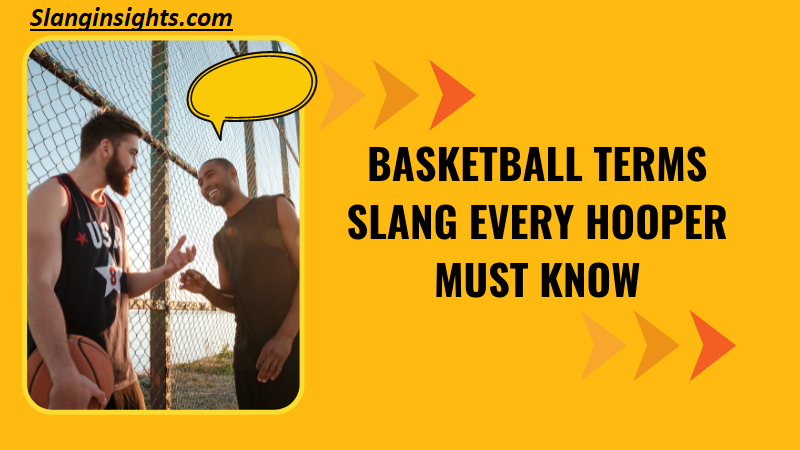
This one’s brutal but hilarious to witness in real life. Getting “posterized” means someone dunked on you so hard it looks like it belongs on a poster. I watched this happen live at a college game — the crowd literally gasped before erupting. The guy who got dunked on just stood there for a solid five seconds processing what happened.
“Got cooked” is similar but broader — it just means you got embarrassed, whether by a dunk, a crossover, or getting torched on defense all game.
“And-One”
This means scoring while getting fouled, and then also getting the free throw. Super common term, used constantly in pickup games. If you play rec league basketball like I do, you’ll hear “AND ONE!” screamed at least five times a session, half the time by the guy who definitely wasn’t fouled.
“Ball Don’t Lie”
This is an old-school phrase (Rasheed Wallace made it famous) used when a player gets called for a foul they didn’t commit, and then immediately misses the resulting free throw — like basketball karma corrected itself instantly.
“Chef Curry” / “Cooking with Gas”
Basically another way to say someone is scoring at will, usually referencing Steph Curry specifically because of how effortless his shooting looks.
“Layup Line Stuff”
Used sarcastically to describe when someone misses an extremely easy shot, the kind you’d practice in warmup layup lines. If you brick a wide-open dunk or an uncontested layup, expect your friends to clown you with this one.
“Coast to Coast”
When a player grabs a defensive rebound and dribbles the entire length of the court themselves to score, without passing. LeBron James does this constantly, and it’s genuinely one of the more exciting plays to watch live.
“Green Light”
This means a player has full permission from their coach or team to shoot whenever they want, no questions asked. In pickup basketball, we joke about “giving someone the green light” when they’re clearly the best shooter on the squad that day.
“Boards”
Simply means rebounds. “He’s grabbing boards all game” — nothing fancy here, just shorthand.
“Dime”
An assist, particularly a really good one that sets up an easy score. “That was a dime” is basically a compliment to the passer, not the scorer.
A Quick Story on How I Learned These the Hard Way
When I first started playing pickup at my gym, I called every made shot a “bucket,” every assist a “dime,” and every dunk a “poster,” regardless of context. Older guys at the gym would laugh and correct me constantly. One dude, must’ve been in his 40s, straight up said “you don’t gotta narrate the game bro, just play.”
That stuck with me. The lesson? Slang is best used naturally, in reaction to something impressive, not forced into every sentence like you’re trying to prove you know terms.
Step-by-Step: How to Actually Sound Natural Using This Slang
If you genuinely want to sound like you know what you’re talking about (without overdoing it), here’s what worked for me:
Step 1: Watch games with sound on, especially local broadcasts or NBA League Pass with commentary. Announcers use slang naturally and you pick it up through repetition.
Step 2: Follow basketball accounts on social media — House of Highlights, Bleacher Report, and even player accounts. The comment sections are basically slang dictionaries.
Step 3: Use terms only when they fit. Don’t force “he’s heated” into a conversation about a guy who scored six points in a blowout loss.
Step 4: Play pickup ball if you can. Nothing teaches slang faster than getting dunked on and hearing “OOOOH, HE GOT POSTERIZED” from six different directions at once.
Step 5: Don’t be afraid to ask. Genuinely, most basketball fans love explaining terms. I’ve never had someone get annoyed when I asked what a phrase meant mid-game.
Common Mistakes People Make With Basketball Slang
- Using “heated” for a single good shot instead of an actual streak.
- Calling every dunk a “poster” — it only counts if it’s genuinely embarrassing for the defender, not just a regular dunk.
- Overusing slang in every single sentence, which honestly comes off try-hard instead of natural.
- Mixing up “dime” and “assist” — technically all dimes are assists, but not all assists are dimes. A basic, unspectacular pass that leads to a score isn’t really a “dime.”
- Saying “ball don’t lie” incorrectly — this only applies to that specific foul-call-then-miss scenario, not just general bad luck in a game.
FAQ’s
What does “dime” mean in basketball?
A “dime” refers to a perfect assist — a pass so precise that it directly leads to an easy basket for a teammate. The term is often used to praise a player’s court vision and passing skills, especially point guards known for setting up their teammates.
What is a “brick” in basketball?
A “brick” is slang for a badly missed shot, usually one that clanks hard off the rim or backboard without any chance of going in. It’s often used jokingly among players and fans to describe an especially rough attempt at the basket.
What does “posterize” mean?
“Posterize” describes a dunk so powerful and dominant over a defender that it looks like it belongs on a poster. It’s one of the most exciting and highlight-worthy plays in basketball, often causing crowds to erupt.
What is an “and-one”?
An “and-one” happens when a player scores a basket while being fouled, earning an additional free throw. It’s a high-energy moment that combines skill and physicality, often sparking excitement from both players and fans.
What does “handles” mean in basketball slang?
“Handles” refers to a player’s dribbling ability and ball control. Players with “good handles” can dribble confidently under pressure, change direction quickly, and avoid turnovers, making them harder for defenders to guard.
Conclusion
Basketball slang adds color, personality, and excitement to the game, giving fans and players a shared language that goes beyond the basics.
Terms like “dime,” “swish,” and “posterize” capture standout moments, while words like “brick” and “airball” highlight the game’s occasional missteps in a lighthearted way.
This vocabulary reflects basketball’s fast-paced, competitive spirit and its deep roots in playground culture, where creativity and confidence are just as valued as raw skill.
Understanding basketball slang helps fans follow commentary more easily, enjoy games on a deeper level, and even talk the talk if they hit the court themselves.
Whether you’re watching a buzzer beater or debating who has the best handles, knowing these terms makes the experience more engaging and fun.
It’s more than just words — it’s part of the culture that connects players and fans across generations. So next time you watch a game, listen for this slang, and you’ll find yourself understanding basketball like a true insider.