Chav Slang Words Common British Expressions with Real-Life Examples

Chav slang words are informal expressions commonly associated with British street culture and everyday conversations in the UK.
These words are often used by young people and can vary by region. Popular examples include “bruv” (brother or friend), “innit” (isn’t it), “peng” (attractive or excellent), “bare” (a lot), and “wagwan” (what’s going on).
Other common terms include “mate,” “skint,” “gobsmacked,” “cheeky,” and “blud.” Understanding chav slang can help you follow British TV shows, social media trends, and casual conversations.
While some terms are humorous, others may be considered rude depending on the context.
Table of Contents
Quick Table
| Chav Slang Word | Meaning | Example |
|---|---|---|
| Bruv | Brother or close friend | “Alright, bruv?” |
| Innit | Isn’t it? / Right? | “Nice weather, innit?” |
| Peng | Attractive or excellent | “That outfit is peng!” |
| Bare | A lot / Many | “There were bare people there.” |
| Wagwan | What’s going on? | “Wagwan, mate?” |
| Blud | Friend or brother | “Thanks, blud.” |
| Skint | Having no money | “I’m skint until payday.” |
| Cheeky | Playful or slightly rude | “He’s being cheeky.” |
| Mate | Friend | “See you later, mate.” |
| Gobsmacked | Very surprised | “I was gobsmacked by the news.” |
The Day I Realized I Didn’t Understand British Street Slang
I still remember the first time I truly felt like an outsider in my own country.
I’d just moved from a quiet village in Yorkshire down to a rougher part of Coventry for uni accommodation.
Within my first week on campus, a group of lads in tracksuits walked past me in the corridor and one of them nodded and said, “Safe, blud. You bare lost, yeah?”
I just stood there. Blinking.
I had no idea what had just happened. Was he being friendly? Threatening? Asking for directions? Turned out he was just saying “Hey mate, you look a bit lost.
“ But I didn’t know that then, and my confused face probably made me look like a proper div.
That experience sparked a genuine fascination with chav slang — the kind of British street language that never makes it into textbooks but is absolutely everywhere once you start paying attention to it.
Whether you’re trying to understand song lyrics, navigate a new neighbourhood, write believable British characters, or just not embarrass yourself the way I did — this guide’s for you.
What Even Is “Chav Slang”?
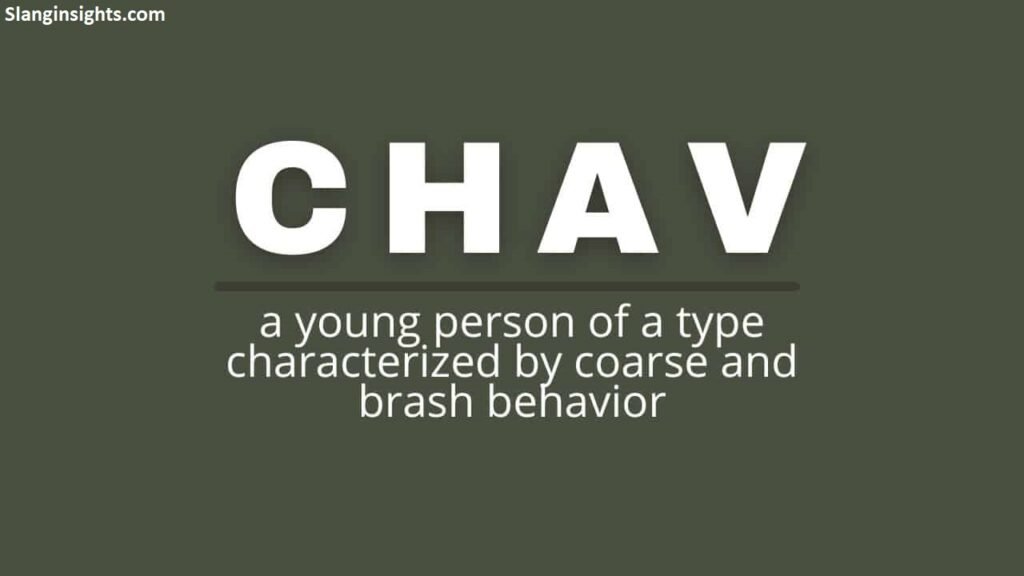
Before I get into the words themselves, let me clear something up — because “chav” is a bit of a loaded term.
In modern British culture, “chav” broadly refers to a working-class youth subculture associated with brands like Adidas and Nike, council estates, and a very specific way of speaking.
The word itself is debated in terms of origin — some say it’s Romany for “boy” or “youth,” others trace it elsewhere — but whatever the etymology, the slang that’s grown out of this culture is genuinely rich, creative, and constantly evolving.
It blends Multicultural London English (MLE), Jamaican Patois influences, old Cockney rhyming slang, and pure British wit. It’s not “wrong” English — it’s a dialect with its own rules and rhythms.
The Core Vocabulary: Words You’ll Hear Constantly
Let me walk you through the terms that come up most regularly, with the kind of real context I wish someone had given me.
Innit
Probably the most famous one. Short for “isn’t it,” but used as a universal tag question — like “right?” or “yeah?” at the end of a sentence.
“That film was well good, innit.”
It doesn’t always literally mean “isn’t it.” It’s more of a verbal full stop, a way of checking in or emphasising a point.
Bare
This one trips people up. “Bare” doesn’t mean naked here — it means a lot of or very.
“There’s bare people at this party.”
“That was bare funny.”
Once you get this one, you’ll start noticing it everywhere.
Safe
Could mean several things depending on tone, but usually it’s a greeting or a sign of approval.
“Safe, mate” — means “hello” or “thanks.”
“That’s well safe” — means “that’s great.”
It can also literally mean something is not dodgy: “Is that guy safe?” = “Can we trust him?”
Blud / Bruv / Fam
These are terms of address — the equivalent of “mate” or “bro.” They’re used between friends and can feel quite affectionate.
“Calm down, bruv.”
“Nah fam, I’m not having that.”
You might also hear “cuz” (short for cousin, but used for anyone close).
Mandem
Your group of friends. Your crew. Your lot.
“I’m rolling with the mandem tonight.”
Wasteman / Butters
“Wasteman” is an insult — someone useless, lazy, or disrespectful.
“Butters” means ugly (comes from “butt ugly”).
“Don’t listen to him, he’s a proper wasteman.”
“That jacket is butters, mate.”
Peng
One of my favourite words to come out of this dialect. It means attractive, good-looking, or excellent quality.
“She’s peng.”
“That burger was peng.”
High praise. Use it liberally.
Nang
Brilliant, excellent, top-tier.
“That tune is nang.”
You’ll sometimes hear “banging” used similarly — “that’s banging” — which is more widely understood across the UK.
Sket / Roadman
“Sket” is a pretty harsh insult directed at women — best to know what it means so you understand when it’s being used, but don’t throw it around casually.
“Roadman” is a noun describing someone who lives the street lifestyle — spending time on the roads, involved in the culture. It’s sometimes self-descriptive, sometimes used critically.
Dead / Peak
Both used to express that something is bad or unfortunate.
“Ah, that’s dead.”
“That’s peak, man.”
“Peak” has become particularly widespread — even people who’d never identify with chav culture use it now.
Beef
A conflict or ongoing dispute between individuals or groups.
“Those two lot got bare beef.”
Gassed / Hyped
Excited, full of energy, maybe a bit over-the-top about something.
“He’s well gassed about that new trainers drop.”
Chirpsing
Flirting. Trying to get someone’s attention romantically.
“He was chirpsing her all night.”
Merked
Beaten, embarrassed, or destroyed — in a fight, a game, or an argument.
“He got merked in that rap battle.”
Phrases, Not Just Words
Single words are one thing, but chav slang really comes alive in full phrases. Here are some that confused me when I first heard them.
“On road” — living the street lifestyle, or simply “out and about”
“You get me?” — “Do you understand what I’m saying?” A constant check-in mid-speech.
“That’s long” — that’s tedious, that’s too much effort, that’s annoying.
“Allow it” — “forget it,” “let it go,” “stop doing that.” Completely context-dependent.
“Calm / Calm it” — relax, chill out. Not angry — soothing.
“He caught feelings” — he developed romantic feelings (usually used to mock someone for it).
“Shimmy / Do a shimmy” — leave quickly, make a move, exit a situation.
Mistakes People Make (And I’ve Made Too)
Here are a few traps worth knowing about.
Using slang in the wrong setting.
I once heard a teacher try to use “peng” in a classroom to seem relatable. The cringe was physical. These words have context — they work between peers, not when someone’s clearly performing.
Mispronouncing “mandem.”
It’s MAN-dem, not man-DEM. Simple, but the stress matters.
Assuming it’s all from London.
Chav slang exists across the UK — Birmingham’s Brummie estates, Manchester, Leeds, Bristol — each has local variations. “Proper” and “well” as intensifiers are more Northern, for instance (“that’s proper good” vs London’s “that’s bare good”).
Treating it as static.
This dialect moves fast. Words cycle in and out. “Chilling” replaced “jamming,” “peng” replaced “fit” in some circles, and by the time you read this, something new might’ve taken over. If you want to stay current, spend time on UK TikTok — I’m serious, it’s a real-time glossary.

Why This Slang Actually Matters
I know some people roll their eyes at this stuff. “It’s just kids talking rubbish,” they say.
But that’s genuinely not true. Sociolinguists at places like UCL have studied Multicultural London English seriously, because it represents something real: communities creating language, asserting identity, and building culture in real time.
When a word like “peng” moves from South London estates to being used by teenagers in rural Scotland within five years — that’s language doing what language does. Spreading, evolving, connecting people.
Understanding chav slang also helps you engage more honestly with UK music. Grime, drill, UK rap — these genres are inseparable from this vocabulary.
If you’re listening to artists like Stormzy, Dave, Headie One, or Central Cee and not getting half the lyrics, this is the missing piece.
Where to Learn More (Without Embarrassing Yourself First)
A few genuinely useful places to pick this up naturally:
- UK TikTok and YouTube shorts — the comments sections alone are a goldmine
- Grime and UK drill playlists — search Spotify for “UK Rap 2024” and just listen
- Shows like Top Boy, Skins, or People Just Do Nothing — brilliant for hearing this in dialogue
- Urban Dictionary — not always accurate but gives you a starting point; always cross-reference
- Reddit’s r/CasualUK — real people using real British slang in context

FAQ’s About Chav Slang Words
What are Chav slang words?
Chav slang words are informal expressions associated with British street culture. They are commonly used in casual conversations, especially among young people in the UK.
Is “chav” considered an offensive term?
Yes, some people consider “chav” to be a derogatory term because it stereotypes certain groups. It should be used carefully and with awareness of its social context.
What are some common Chav slang words?
Popular examples include bruv, innit, peng, bare, wagwan, and blud. These words are widely heard in British media and everyday speech.
Are Chav slang words used throughout the UK?
Many of these expressions are recognized across the UK, but usage can vary depending on the region and local culture.
Why should I learn Chav slang words?
Learning these terms can help you better understand British TV shows, music, social media, and informal conversations with native speakers.
Conclusion
Chav slang words are an interesting part of modern British culture and reflect the creativity and diversity of everyday language in the UK.
From common expressions like “bruv” and “innit” to more recent terms such as “peng” and “wagwan,” these words have become popular through music, television, and social media.
Understanding their meanings can make it easier to follow conversations and appreciate British humor and pop culture.
However, it is important to remember that the term “chav” itself can carry negative stereotypes, and not everyone uses or identifies with it. Therefore, using these expressions respectfully and understanding their context is essential.
Whether you are learning English, planning to visit the UK, or simply curious about British slang, familiarizing yourself with these words can provide valuable insights into modern British communication.
As language constantly evolves, slang terms may change over time, making them a fascinating aspect of culture and everyday life.