Crank Meaning in Slang Definition, Uses & Examples (2026)
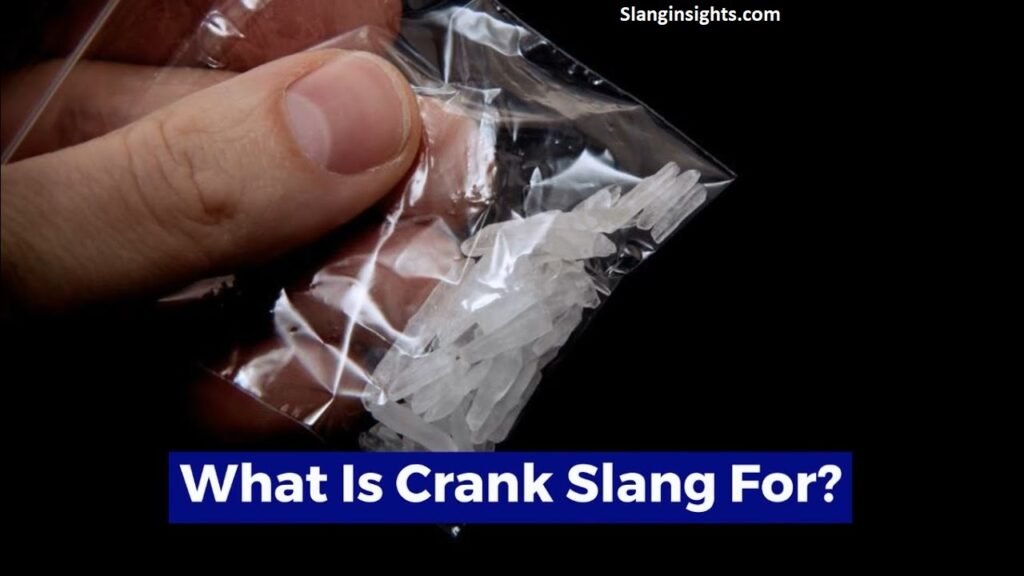
Crank Meaning in Slang, the word “crank” can have different meanings depending on context. In many street or urban settings, “crank” often refers to methamphetamine, a powerful illegal stimulant drug.
However, in general informal use, it can also mean to start, turn, or operate something forcefully, like “crank up the music” or “crank the engine.” In older slang, “crank” was sometimes used to describe an angry or eccentric person.
Today, its most common slang meaning is linked to drug culture, but context is very important because the word can change meaning completely depending on how and where it is used in conversation.
Table of Contents
Quick Table
| Context | Meaning | Example |
|---|---|---|
| Drug slang | Methamphetamine (illegal stimulant) | “He got caught with crank.” |
| Everyday slang | To start or operate something forcefully | “Crank up the music.” |
| Informal speech | To turn or rotate something | “Crank the engine.” |
| Old slang | An angry or odd person | “Don’t mind him, he’s a crank.” |
What Is crank slang meaning?
So there I was, sitting in a group chat with some friends, when one of them dropped the message: “Bro that guy is a total crank.” Someone else replied, “Yeah he was cranking on that project all night though.”
And a third person jumped in saying, “Did you hear what he said? That was straight crank.”
Same word. Three completely different meanings. Nobody in the chat missed a beat — because if you’ve spent enough time around people who actually talk like real humans, context carries everything.
But if you’re newer to the slang landscape, “crank” can genuinely throw you off.
Let me break it all down the way I wish someone had explained it to me.
First, Forget the Dictionary
If you go to Merriam-Webster right now and look up “crank,” you’ll find definitions about mechanical handles, engine starters, and eccentric people.
That’s the formal, traditional use. And honestly? It’s not wrong. But it’s also not what your friend means when they text you “he’s cranking rn lol.”
Slang lives and breathes through context, culture, and community. “Crank” is a great example of a word that started with one lane and slowly expanded into five.
Let’s go through each meaning, because mixing them up can lead to some seriously awkward conversations.
A “Crank” Is an Odd, Grumpy, or Difficult Person
This is the oldest slang use of the word and honestly the one that’s been around long enough that your parents probably know it too.
When someone calls another person “a crank,” they typically mean someone who’s irritable, overly critical, or just hard to deal with. Think of the neighbor who complains about your lawn at 8 AM on a Saturday. That guy? Total crank.
I first really heard this version at a summer job in my early 20s. My manager pulled me aside after a particularly rough client interaction and said, “Don’t take it personally — he’s been a crank since day one.”
I nodded like I understood, but I had to Google it later. (Nobody warns you about the slang gap between generations.)
The tone here is mildly insulting but usually not too harsh. It’s more exasperated than cruel. “He’s a crank” says this person is difficult and probably annoying without going nuclear on them.
“Cranking” Means Working Hard or Going Fast
This one exploded in usage over the last decade, especially in gaming, fitness, and productivity spaces.
“Cranking” on something means putting in serious effort or moving at high speed. You’ll hear it in sentences like:
- “She was cranking through those reports all afternoon.”
- “He’s cranking at the gym every single morning.”
- “We need to start cranking if we want to hit that deadline.”
I use this version constantly when I’m in sprint mode at work. There’s something about saying “I’ve been cranking on this” that just communicates intensity without sounding dramatic.
It implies momentum — like you’ve got a handle turning and you’re not stopping.
Gamers picked this up heavily too. If someone says a player is “cranking 90s” in Fortnite, that means they’re building defensive structures at lightning speed.
The image of a crank being turned rapidly maps perfectly to that kind of repetitive, skilled, fast action.

“Crank” as Slang for Methamphetamine
This one you need to know because it changes the entire weight of a sentence.
In drug culture — and this usage has been around since at least the 1970s in the US — “crank” is a street term for methamphetamine.
It’s not a new term, but it still circulates widely enough that you’ll encounter it in news articles, crime dramas, and unfortunately, real conversations.
The origin story is interesting: the name reportedly comes from the old method of smuggling meth in the crankcases of motorcycles. Whether that’s fully accurate or just legend is debated, but either way, the association stuck.
If someone in certain contexts says “he’s on crank” or “that’s crank,” they might not be talking about work ethic or personality. They’re talking about drugs.
This is one of those moments where misreading the room can be genuinely awkward at best, dangerous at worst.
I learned this the hard way during a true crime podcast binge phase where I kept hearing the term and assuming it just meant the person was erratic. It means something very specific in those contexts.
“Crank” as Slang for Something Low Quality or Fake
This usage is less universal but shows up enough to mention. In some regional and online communities, calling something “crank” means it’s junk, fake, or of terrible quality.
“That’s crank” = “That’s garbage / That’s not real / That’s low-effort.”
You might see this in reviews, comment sections, or among friends critiquing something. “Bro, this app is straight crank” means the app is bad. Simple as that.
I’ve noticed this usage more often in UK-adjacent online spaces and certain gaming communities, but it’s spreading. If someone says your work is “crank,” they are not complimenting you.
“Crank” as an Adjective for Weird or Eccentric
Going back a bit to overlap with Meaning #1, but with a twist — “crank” used as an adjective (not a noun) can just mean strange or off-kilter in a more neutral way.
“That dude has some crank ideas” might mean his ideas are weird, but not necessarily bad. It’s a softer shade than “he’s a crank” (the grumpy noun version).
Historically this showed up a lot in “crank theories” or “crank calls” — the prank telephone calls we used to prank each other with before caller ID ruined everything. In that case, “crank call” means a call made in bad faith, usually with fake or absurd intent.
How to Tell Which “Crank” Someone Means
Here’s the practical cheat sheet I’ve developed over years of navigating slang:
Pay attention to verb vs. noun vs. adjective:
- “He’s a crank” → grumpy/difficult person
- “She’s cranking” → working hard or moving fast
- “That’s crank” → low quality, fake, or bad
- “Crank theories” → eccentric or fringe ideas
Look at the setting:
- Workplace chat? Probably hard work or difficult person.
- Gaming community? Almost certainly speed/efficiency.
- Conversations about substances, crime, or addiction? Drug reference.
- Someone dissing a product or piece of content? Low quality.
Age and region of the speaker matters: Older speakers tend to use “crank” for grumpy people. Younger internet-native speakers lean into the work-hard or low-quality meanings. Regional slang from rural America, particularly the Midwest and South, often still carries the drug connotation heavily.

Mistakes I’ve Made (So You Don’t Have To)
Once, in a work Slack channel, I wrote “he’s been cranking all weekend” about a colleague who knocked out a massive project.
My manager — who grew up in the ’80s in a very different context — responded with genuine concern asking if everything was okay. I had to clarify that I meant he was working hard, not using drugs.
Another time, someone in a Discord server I was in said a new game release was “total crank” and I thought they were complimenting its unusual style.
I jumped in agreeing, not realizing the whole thread was a roast session. They were dunking on it. I was not.
Context. Always context.
Why Slang Like “Crank” Matters
If you run a blog, YouTube channel, podcast, or social media account — especially one targeting younger audiences or subcultural communities — understanding words like “crank” actually matters for your content strategy.
Misusing slang in captions or scripts can tank your credibility fast. Audiences notice immediately. It’s the equivalent of a brand trying to say “on fleek” in 2024. It signals that you’re performing relatability rather than actually having it.
On the flip side, using the right version of a word like “crank” correctly and naturally builds genuine connection. It signals cultural fluency.
The Bigger Picture: Why English Slang Is Like This
“Crank” isn’t unique in having five lives. Words like “sick,” “dead,” “fire,” “ghost,” and “cap” all carry multiple slang meanings that depend entirely on who’s saying it and where.
English slang evolves through subcultures — music communities, regional dialects, online platforms, generational gaps — and then bleeds into the mainstream.
By the time a word hits a mainstream media think-piece, it’s often already shifting meaning in the communities that coined it.
The best way to stay fluent? Be curious. Ask when you’re unsure. And don’t be afraid to look things up. Nobody is born knowing what “crank” means in all its forms. We all Googled something at some point.
FAQ’s
What does “crank” mean in modern slang?
It usually refers to methamphetamine in drug slang, though meaning depends on context.
Is “crank” always a bad word?
No. It can also mean to turn, start, or operate something forcefully, like music or engines.
Where is “crank” commonly used as drug slang?
It is mostly used in street language and informal discussions about drugs.
What is the everyday use of “crank”?
People say “crank up” to mean increasing volume, speed, or energy.
Can “crank” describe a person?
Yes, in old slang it could describe someone eccentric or easily annoyed.
Conclusion
The slang word “crank” is a versatile term with multiple meanings depending on the context in which it is used. In modern street slang, it is most commonly associated with methamphetamine, a powerful illegal stimulant.
This meaning is important to understand because it often appears in discussions related to drug culture and law enforcement.
However, “crank” is not always negative or drug-related. In everyday language, it is widely used in a completely harmless way, such as “crank up the music” or “crank the engine,” meaning to increase volume or start something with force.
Historically, the word has also been used to describe an eccentric, strange, or easily annoyed person, though this usage is less common today. The meaning of “crank” really depends on tone, setting, and conversation context.
This is why understanding slang terms is important, especially in digital communication where words can have multiple interpretations.
Overall, “crank” is a great example of how English slang evolves and carries different meanings across cultures and situations.