Dawg Meaning Slang What Does It Really Mean & How to Use It
Dawg Meaning Slang In slang, “dawg” means friend, bro, or buddy. It’s a casual, friendly way of addressing someone, similar to saying “dude” or “man.”
The term originally came from African American Vernacular English (AAVE) and was popularized by hip-hop culture in the 1990s and early 2000s
You’ll commonly see it in texting, gaming chats, TikTok captions, and Instagram — anywhere the tone is casual and friendly.
“Yo dawg, you coming tonight?” — means “Hey friend, are you coming tonight?”
Avoid using “dawg” in professional or formal settings — it’s strictly a casual term.
Simply put, calling someone your dawg means you trust and respect them.
Table of Contents
Quick Table
| Category | Details |
|---|---|
| Word | Dawg |
| Meaning | Friend, Buddy, Bro |
| Origin | AAVE & Hip-Hop Culture |
| Era | 1990s – Present |
| Tone | Casual & Friendly |
| Used By | Gen Z, Millennials |
| Platforms | TikTok, Texting, Gaming |
| Similar Words | Bro, Dude, Homie, Pal |
| Example | “Yo dawg, what’s up?” |
| Avoid Using | Formal / Professional Settings |
What Is Dawg Meaning Slang?
I still remember the first time someone called me “dawg” and I had absolutely no idea what to do with that.
I was maybe 13, hanging out with some older kids from the neighborhood, and one of them turned to me mid-conversation and wen
“Nah, dawg, you gotta hear this beat.” I nodded like I understood everything. I did not understand anything. Was it an insult? A term of endearment? Were we just… friends now?
That moment stuck with me because it’s such a perfect example of how slang works — it carries massive social weight, but nobody actually sits you down and explains it. You’re just expected to absorb it through osmosis and fake it until you make it.
So let’s actually break this one down properly, because “dawg” is one of those words that sounds simple but has a lot more going on beneath the surface.
What Does “Dawg” Actually Mean?
At its most basic level, dawg is slang for a close friend, buddy, or homie. It’s the kind of word you use with someone you’re genuinely comfortable with — not a stranger, not your boss, not usually someone you just met.
It’s a term that signals familiarity and a certain kind of casual affection.
Think of it as the street-smart cousin of words like “bro,” “dude,” or “mate” (depending on where you’re from). But dawg carries its own distinct flavor.
It’s warmer than “dude,” more loyal-sounding than “bro,” and it’s got deep roots in hip-hop and African American Vernacular English (AAVE) that give it a cultural weight those other words don’t quite have.
The word itself is just a phonetic respelling of “dog” — and yes, the original use of “dog” in this context goes back decades in Black American culture, where it meant a loyal companion, someone ride-or-die, almost like the loyalty of an actual dog. Over time, “dawg” became the more stylized, written form you see in rap lyrics, text messages, and social media.
The Cultural Roots of “Dawg”
You can’t talk about this word without talking about hip-hop.
By the late 80s and through the 90s, words like “dog” and “dawg” were showing up constantly in rap music and urban culture.
Artists from Snoop Dogg (the name itself is a nod to this whole culture) to Jay-Z to DMX used variations of the word to establish camaraderie, talk to their crew, and address listeners.
Snoop Dogg, in particular, practically made “dogg” a part of his brand identity.
His whole persona was built around that West Coast rap language, and “dawg” filtered out into mainstream culture through his music, TV appearances, and cultural presence throughout the 90s and 2000s.
By the time the internet came around and platforms like AIM, MySpace, and later Twitter became popular, “dawg” had already crossed cultural lines. Kids everywhere — not just in urban America — were using it in casual conversation.
And then came Randy Jackson.
If you watched American Idol during its peak years (2002 onward), you heard Randy Jackson say “dawg” probably 400 times per episode.
“That was hot, dawg.” “I don’t know about that one, dawg.” That show introduced the word to millions of suburban households and turned it into something almost universally recognizable, even if not everyone used it themselves.
How “Dawg” Gets Used in Real Life
Here’s where it gets interesting, because the word functions differently depending on context. Let me walk you through how I’ve actually seen it used.
As a term of address: The most common use. You’re talking to your friend and you just drop “dawg” in naturally. “Yo dawg, you watching the game tonight?” or “Come on, dawg, don’t do that.” It’s a filler that reinforces the relationship — kind of like saying “man” or “bro” mid-sentence.
To express disbelief: “Dawg… did he really just say that?” When you stretch the word out or put it at the beginning of a sentence like that, it signals surprise, shock, or secondhand embarrassment. It’s almost the spoken equivalent of the emoji.
As emotional punctuation: “I’ve been awake since 4am, dawg. I can’t do this anymore.” Here it’s almost like venting to a close friend, even if you’re just posting on Twitter. The word creates an intimacy — it pulls whoever’s reading into your world like they’re your people.
In the “Yo Dawg” meme: If you were on the internet around 2008-2012, you know. The “Yo Dawg” meme (featuring Xzibit from the show Pimp My Ride) became massive and basically introduced the word to a whole new generation via recursive humor.
Even people who’d never use “dawg” in conversation knew the meme. It’s one of those internet moments that permanently cemented a word’s place in digital culture.
Who Uses “Dawg” Today?
Honestly? A pretty wide range of people, but it still carries cultural context you should be aware of.
You’ll hear it most naturally from:
- People who grew up in hip-hop culture or have deep roots in it
- Gen Millennials and older Gen Z who absorbed it through early internet and music
- Sports culture — locker rooms, pickup games, sports Twitter
- People who just genuinely picked it up through years of immersion
You’ll see it used more ironically by:
- Younger Gen Z and Gen Alpha who use it in a self-aware, meme-y way
- People who grew up watching American Idol reruns or old YouTube content
- Anyone doing a Randy Jackson impression (it never gets old)
The ironic use is actually a sign the word has hit a certain cultural saturation point — when people start using something with a knowing wink, it means it’s both everywhere and starting to feel a little dated to the original crowd.
That’s not a death sentence for “dawg” — plenty of slang cycles back into genuine use — but it does mean context matters a lot.
When NOT to Use “Dawg” (Mistakes People Make)
This is probably the most useful part of this article, especially if you’re someone who didn’t grow up with this word but wants to use it naturally.
Don’t force it. If “dawg” doesn’t come naturally to you, it’s going to sound weird when you say it. People can tell when a word is being performed rather than lived. The goal isn’t to impersonate a culture — it’s to communicate genuinely.
Don’t overuse it. Even people who naturally say “dawg” don’t pepper every single sentence with it. If you’re dropping it four times in one paragraph, it starts to sound like a parody.
Know your audience. Using “dawg” in a professional setting, with someone significantly older than you, or in a context where casual language is inappropriate is a fast way to undercut your credibility. The word lives in casual, familiar spaces.
Respect the roots. This is a word with real cultural heritage. It comes from Black American vernacular and hip-hop culture. Using it is one thing; claiming it as your own invention or being dismissive of where it comes from is another. A little awareness goes a long way.
“Dawg” vs. Similar Slang — What’s the Difference?
People sometimes ask how “dawg” compares to similar words. Here’s a quick breakdown:
The Word in Texts, Social Media, and Online Spaces
If you spend any time on Twitter/X, Reddit, or Snapchat, you’ll see “dawg” constantly — often in lowercase, often paired with the emoji or used to set up a relatable situation.
“Dawg I just realized I have a presentation in an hour that I forgot about”
In this context, it’s almost like addressing an invisible friend. You’re not calling anyone “dawg” specifically — it’s more of a tone-setter, a way of saying “okay friends, gather around, you’re not going to believe this.”
This is actually a fascinating evolution of the word. It started as a direct address to a specific person and has evolved into an almost diary-like opener that signals you’re about to be real with people.
FAQ’s
What does dawg mean in slang?
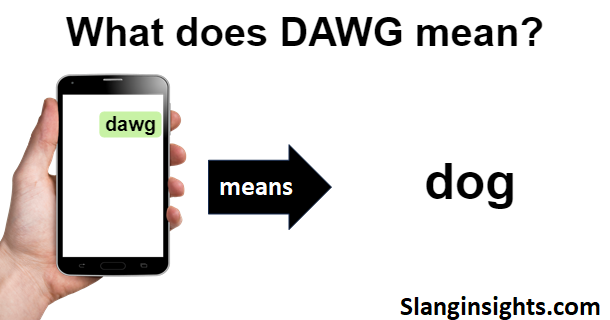
Dawg is a slang term for friend, buddy, or bro. It’s a casual and friendly way to address someone you’re close with, similar to saying “dude” or “homie.”
Where did the slang word dawg come from?
Dawg originated from African American Vernacular English (AAVE) and became widely popular through hip-hop culture in the 1990s and early 2000s.
Is dawg a disrespectful word?
No, dawg is generally not disrespectful. It’s a friendly and playful term. However, using it in formal or professional settings may come across as unprofessional.
Can a girl call someone dawg?
Yes, absolutely. When a girl calls someone dawg, it typically means she sees them as a close friend she’s comfortable and relaxed around.
Is dawg still used today?
Yes, dawg is still widely used today — especially in texting, gaming chats, TikTok comments, and casual everyday conversations among Gen Z and Millennials.
Conclusion
Slang words like dawg show how language grows and changes with culture and generations. What started as a simple dialectal spelling of “dog” transformed into one of the most recognizable friendly terms in modern English.
At its core, calling someone your dawg means you see them as a trusted friend — someone you’re loyal to and comfortable around. It carries a sense of brotherhood, camaraderie, and genuine connection without sounding overly emotional or formal.
From hip-hop lyrics in the 1990s to today’s TikTok comments and group chats, dawg has proven itself to be more than just a passing trend. It has cemented its place in everyday casual language across generations and platforms.
Whether you’re gaming with friends, texting your crew, or scrolling through social media, you’ll likely come across this word regularly. Now that you fully understand the dawg meaning slang, you can use it confidently and naturally in the right settings.
Just remember — keep it casual, keep it friendly, and always read the room. Dawg is a word built on respect and loyalty, and using it the right way only strengthens the bond between friends. So next time someone calls you dawg, take it as a compliment — it means they consider you one of their own.