Puerto Rican Slang Bad Words Common Expressions, Origins, and Meanings (2026 Guide)
Puerto Rican slang bad words are colorful expressions commonly heard in casual conversations, music, and social settings. These terms often carry strong meanings and should be used carefully, as some can be offensive.
Popular examples include “cabrón” (jerk or fool), “puñeta” (an exclamation similar to “damn”), and “pendejo” (idiot or fool).
The meaning and intensity of these words can vary depending on tone, context, and the relationship between speakers.
While some friends may use certain expressions jokingly, they are generally inappropriate in formal situations.
Understanding Puerto Rican slang helps learners better appreciate the island’s culture and everyday language.
Table of Contents
Quick Table
| Puerto Rican Slang Bad Word | Meaning in English | Usage Level |
|---|---|---|
| Pendejo | Fool, idiot | Offensive |
| Cabrón | Jerk, bastard | Strong |
| Puñeta | Damn, damn it | Vulgar |
| Bicho | Penis; insult | Vulgar |
| Mamabicho | Sucker, idiot | Very Offensive |
| Huelebicho | Strong insult | Very Offensive |
| Cabrona | Female form of “cabrón” | Strong |
| Come Mierda | Arrogant person | Offensive |
My First Encounter with Puerto Rican Slang
The first time I visited Puerto Rico, I thought my Spanish was solid. Four years of high school classes, a semester abroad in Mexico, hours of Duolingo streaks.
I walked into a colmado in Santurce feeling completely confident — and left feeling like I’d landed on a different planet.
Not because people were rude. Quite the opposite. The warmth was immediate and real. But the language?
The speed, the slang, the words flying between friends — I caught maybe 40% of it. And some of what I caught made me realize I was completely unprepared.
That trip sent me down a rabbit hole of Puerto Rican Spanish that I genuinely haven’t found the bottom of yet.
And if you’re here because you’re about to spend time with boricua friends, family, or coworkers — or you just heard a word in a Bad Bunny song that made you pause — this is the guide I wish I’d had.
Why Puerto Rican Spanish Hits Different
Before we get into the juicy stuff, context matters here. Puerto Rican Spanish isn’t just “Spanish with some slang.
” It’s a full linguistic identity shaped by Taíno roots, African influences, decades of U.S. presence, and an island culture that takes enormous pride in its own creative expression.
The swear words, the colorful insults, the playful jabs between friends — none of it exists in a vacuum. And understanding the culture behind the words is honestly what makes them make sense.
The Words You’ll Actually Hear (The Unfiltered Ones)
Let’s not dance around it. Here are the terms that tend to catch outsiders completely off guard.
Coño
If you’ve been around any Caribbean Spanish speakers at all, you’ve heard this one.
Technically explicit in meaning, but in Puerto Rico it functions more like an all-purpose exclamation — surprise, frustration, admiration, pain. Stubbing your toe? Coño. Seeing a beautiful sunset? Also coño, just with different energy.
The lesson here: don’t flinch every time you hear it. Among friends, it’s completely casual. But you probably shouldn’t be the outsider who starts dropping it in every sentence on day one.
Carajo
Another one that’s technically an insult but gets used widely as an exclamation. Think of the F-word in English — offensive in formal settings, completely normal among friends. It often appears in phrases like “al carajo” (basically “to hell with it”) or as a standalone burst of emotion. Context is everything.
Maldito/a
Literally “damned” or “accursed,” but used far more casually than that sounds. You’ll hear it attached to objects, situations, and people. “Esta maldita computadora” (this damned computer) is just frustration at technology. Don’t overthink it.
Hostia / Mierda
These run the usual spectrum — strong language that lands differently depending on the setting, the people, and how it’s delivered. Mierda (shit) is probably the most universally understood across Spanish dialects. Hostia hits more in some regional varieties than others.
The Slang That’s Not Exactly “Bad” But Will Confuse You
This is the category that actually tripped me up more than the actual bad words, because I didn’t even know I was hearing slang. I thought I was just failing at Spanish.
Broki
Pure boricua. Comes from the English word “brother” filtered through Puerto Rican phonetics. Your close friend is your broki. You’ll hear it constantly among young people.
Tato / Tato Tato
This means something like “okay” or “it’s all good.” You’ll end a phone call and hear “tato, bye” and wonder if you missed something. You didn’t. Everything’s fine.
Bicho
Here’s where it gets interesting. Bicho literally means “bug” or “insect” in most Spanish-speaking countries. In Puerto Rico, it’s slang for male genitalia. Casually. Frequently. If you’re visiting from the Dominican Republic and say your kid is afraid of bugs, the conversation might go sideways fast. True story someone told me.
Nítido
Means “sharp” or “clear” technically, but colloquially it means things are going well or something is cool. “Todo nítido” — everything’s good.
Corillo
Your group. Your crew. Your people. “Eso lo hago con mi corillo” means you’re doing something with your squad.
Chavos / Chavo
Money, in Puerto Rico. Comes from a really long historical story involving Spanish currency. If someone says they don’t have chavos, they’re broke. Very commonly used, totally harmless, but wildly confusing if you’re used to Mexican Spanish where chavo just means a kid.
The Insults That Aren’t Really Insults (Among Friends)
Puerto Rican ribbing culture is real. Close friends will call each other things that sound alarming to outsiders but are pure affection.
Loco / Loca
Used constantly as a term of address. “Eh, loco, qué pasó?” — basically “hey man, what’s up?” Nobody is calling anyone crazy. It’s like “dude” or “bro” in English.
Pendejo / Pendeja
Technically means someone who is stupid or foolish. In close friend groups, it gets thrown around almost affectionately — still rough language, but among the right people, it’s more of a running joke. Don’t use this one until you really know the room.
Cabrón / Cabrona
One of those words that can range from a serious insult to playful depending entirely on tone and relationship. A stranger calling you this on the street is very different from your best friend saying it when you beat them in dominoes.
What Gets People Into Trouble: Real Mistakes to Avoid
I’ve seen tourists make these errors, and I’ve made one or two myself.
Mistake 1: Laughing along without knowing what was said. People will sometimes test you to see if you actually understand. Laughing at something you didn’t understand can land badly if it turns out they were asking a real question, or worse, if the joke was at someone’s expense.
Mistake 2: Trying to deploy heavy slang too fast. The fastest way to seem performative or even offensive is to go too hard on the slang when you’re clearly an outsider. Boricuas appreciate genuine effort and genuine curiosity. They don’t appreciate someone cosplaying as local.
Mistake 3: Assuming Mexican/Spanish Spanish applies. Seriously, the bicho situation alone should make this clear. Puerto Rican Spanish has enough unique vocabulary and enough regional false cognates that assuming all Spanish works the same way will get you into weird moments.
Mistake 4: Getting offended by the volume. Puerto Rican conversations among family and friends can sound like arguments to the untrained ear. They’re not. That’s enthusiasm. Matching the energy, leaning in, being present — that’s what people notice.
Learning Resources That Actually Help
If you want to go deeper than this article, a few things genuinely helped me:
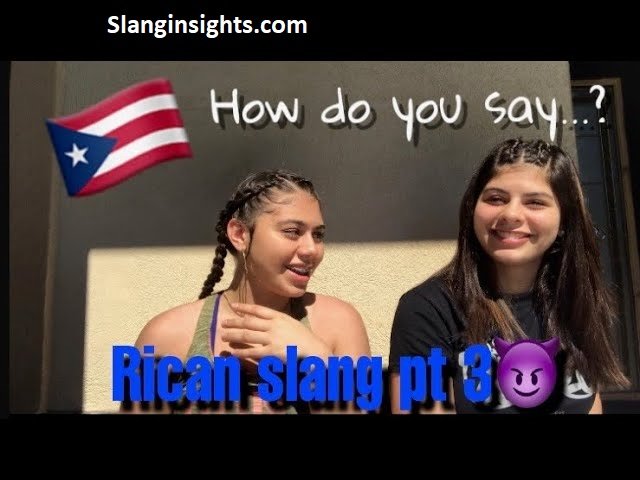
YouTube: Searching “Puerto Rican slang explained” turns up native speakers who break things down with real examples and genuine humor. These are infinitely better than any textbook.
Bad Bunny, Ozuna, and Anuel AA lyrics with translations: Seriously. Pull up genius.com or any lyrics site with translations. You’ll learn vocabulary in context, which is how it actually sticks.
Talking to people: This is the one that feels obvious but people skip. If you’re in contact with Puerto Ricans — colleagues, neighbors, family by marriage — just ask. Most people genuinely love explaining their slang and cultural quirks to someone who’s actually curious.
r/Puerto_Rico on Reddit: The community there is helpful for specific questions and often gets into nuanced discussions about language and culture.
The Real Point Nobody Says Out Loud
Here’s what I’ve come to understand after years of being fascinated by this language and culture: the colorful vocabulary, including all the words that would make your grandmother flinch, isn’t about vulgarity. It’s about expressiveness.
Puerto Rican Spanish is one of the most rhythmically alive dialects on earth. It has Taíno words that never made it anywhere else.
It took English words and made them something completely new. It turned explicit language into poetry, into comedy, into affection.
When someone calls you broki or drops a casual coño mid-sentence without breaking eye contact, they’re not being rude. They’re being real with you.
And in a culture where authenticity and warmth are at the core of how people connect, that’s actually a really good sign.
One Last Thing
If you’re visiting the island or spending time in Puerto Rican communities in cities like New York, Orlando, or Chicago — go in curious, not trying to perform.
Ask questions when you don’t understand something. Laugh at yourself when you get something wrong (and you will get something wrong).
The language will come. And the friendships you build while figuring it out? Those tend to be the best ones.
FAQ’s
What are Puerto Rican slang bad words?
Puerto Rican slang bad words are informal and often offensive expressions used in everyday speech. Their meanings can vary depending on tone, context, and the relationship between speakers.
Is “cabrón” always an insult in Puerto Rico?
Not necessarily. While “cabrón” can mean “jerk” or “bastard,” close friends may use it jokingly or casually. However, it can still be considered offensive in many situations.
What does “puñeta” mean?
“Puñeta” is a common Puerto Rican exclamation similar to “damn” or “damn it.” It is considered vulgar and is best avoided in formal settings.
Are Puerto Rican bad words used in music and movies?
Yes. Many Puerto Rican slang expressions appear in reggaeton songs, television shows, and movies, which has helped spread these terms beyond the island.
Should visitors use Puerto Rican slang bad words?
Visitors should understand these words but use them with caution. Since many are offensive, using them incorrectly could lead to misunderstandings or offend others.
Conclusion
Puerto Rican slang bad words are a unique part of the island’s culture and everyday language.
These expressions often appear in casual conversations, music, and entertainment, giving outsiders a glimpse into the vibrant and expressive nature of Puerto Rican Spanish.
Words such as “cabrón,” “pendejo,” and “puñeta” are widely recognized, but their meanings and levels of offensiveness can change depending on the tone and context in which they are used.
Understanding these terms can help language learners, travelers, and fans of Puerto Rican culture better interpret conversations and popular media.
However, it is important to remember that many of these words are considered vulgar or insulting. Using them without understanding the cultural context may lead to awkward situations or offend native speakers.
Learning Puerto Rican slang does not mean you need to use these expressions yourself. Instead, knowing their meanings can improve your understanding of the language and help you communicate more effectively.
By approaching Puerto Rican slang with respect and awareness, you can appreciate the richness and personality that make Puerto Rican Spanish so distinctive.