Slang for Amazing 30 Cool Ways to Say It Like You Mean It
Slang for amazing has evolved dramatically across generations, giving us countless colorful ways to express excitement and approval.
From the timeless “awesome” and “cool” to more modern picks like “fire,” “lit,” and “sick,” these words capture just how impressive something is without sounding repetitive.
Gen Z favorites like “slaps,” “bussin’,” and “no cap, that’s amazing” bring fresh energy to everyday conversation, while older classics like “groovy,” “rad,” and “far out” still hold nostalgic charm.
Whether you’re texting a friend, writing captions, or just want to sound more expressive, slang for amazing adds personality, humor, and flair to how we talk.
Table of Contents
Quick Table
| Slang Word/Phrase | Meaning/Vibe |
|---|---|
| Fire | Extremely good or impressive |
| Lit | Exciting, amazing, or fun |
| Sick | Awesome or impressive (often used for skills) |
| Bussin’ | Really good, especially for food |
| Slaps | Something (usually music) that’s really good |
| No cap | For real, genuinely amazing |
| Rad | Cool or excellent (retro slang) |
| Groovy | Wonderful or stylish (retro slang) |
| Epic | Grand, impressive, or unforgettable |
| Goated | The greatest of all time |
| Dope | Really cool or awesome |
| Iconic | Memorable and impressive |
The Zoom Call That Sent Me Down a Slang Rabbit Hole
Last year I was in a Zoom call with my marketing team, reviewing a campaign concept our creative director had pitched. I got excited and typed in the chat: “ngl this is bussin’.”
Silence. Then my boss, who’s about 55, typed back: “Is that… good?”
That’s when I realized something. Half the room had no clue what I meant, and the other half were quietly laughing at me for using a word usually reserved for describing really good fried chicken.
That moment sent me down a rabbit hole — I ended up spending months just tracking how “amazing” gets said differently depending on who you’re talking to, where you’re scrolling, and what generation you belong to.
If you’ve ever felt lost reading comments like “this fit is fire” or “bro that’s so mid” and wondered what people actually mean, this one’s for you.
Why “Amazing” Isn’t Just “Amazing” Anymore
Here’s the thing nobody tells you: slang for “amazing” isn’t one word, it’s basically a whole dialect that shifts every couple of years. What sounded fresh on TikTok in 2021 (“no cap, this slaps”) already sounds dated to a 16-year-old in 2026.
I learned this the hard way running a small social media consulting gig on the side. I’d write captions using slang I picked up from Twitter (now X), post them for a client’s Gen Z audience, and get comments like “who let the intern cook.”
Turns out I was using words that peaked two years earlier. Slang has an expiration date, and if you don’t check it, you end up sounding like a dad trying to be cool at a birthday party.
So let’s actually break this down properly — what’s current, what’s dying out, and how to use this stuff without embarrassing yourself.
The Words People Actually Use Right Now
“Fire”
Still going strong. If something is really good — a song, an outfit, a meal — people say it’s “fire.” Simple, safe, works across most age groups under 40.
Example: “That new burger spot is fire, you gotta try it.”
“Bussin'”
Originally used almost exclusively for food, now it’s crept into general use. I made the mistake of using it for a business idea (see my intro), and it landed weird because older folks specifically associate it with food. If you’re not sure of your audience, keep “bussin'” in the kitchen.
“No Cap”
This means “no lie” or “for real.” So saying something is “amazing, no cap” is basically emphasizing that you’re not exaggerating. It pairs well with other slang rather than standing alone as the “amazing” word itself.
“Slaps”
Mostly for music, but it’s expanded. “This playlist slaps” means the music is genuinely good. I’ve also heard it used for food and even a well-designed app interface — “the new UI slaps.”
“It’s Giving…”
This one confused me for months. “It’s giving main character energy” or just “this is giving” (trailing off) means something has a certain vibe that’s impressive or on point. It’s less “amazing” and more “this has the energy of amazing.”
“Goated”
Comes from G.O.A.T. — Greatest Of All Time. When something or someone is “goated,” it means they’re the best in their category. I hear this constantly in gaming Discord servers and sports comment sections.
“Elite”
Simple, no explanation needed, but gained new life in Gen Z slang as a stand-alone compliment. “That was an elite move” or just “elite.”
“Chef’s Kiss”
Borrowed from that little finger-kiss gesture chefs do in cartoons. Used when something is executed perfectly. “The ending of that show was chef’s kiss.”
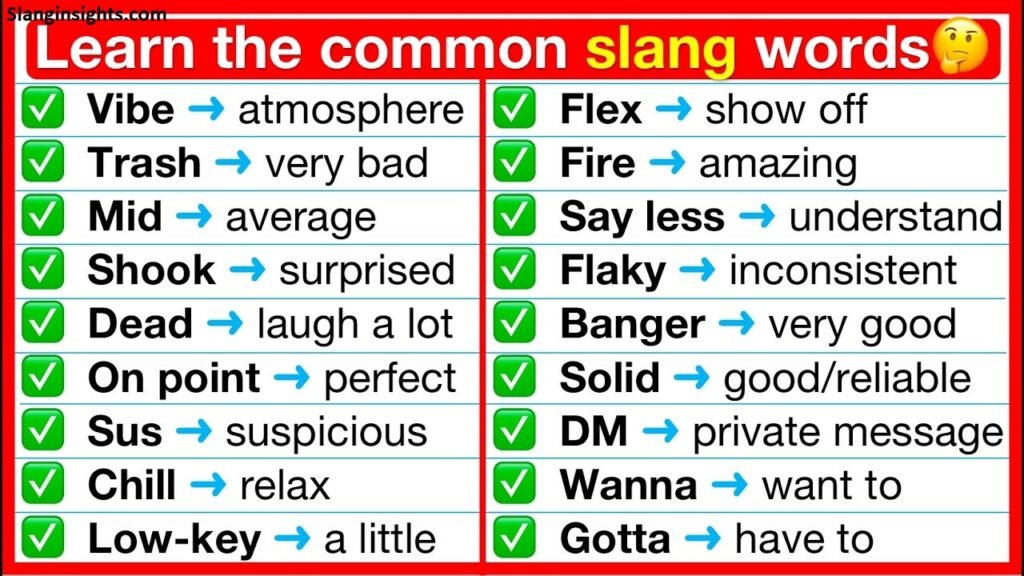
Words That Are Fading Out (Use With Caution)
Through trial and error — mostly error — I’ve noticed these are on their way out or already considered “cringe” by younger users:
- “Lit” — Once everywhere, now mostly used ironically or by people trying to sound younger than they are.
- “Dope” — Still understood by basically everyone, but feels more millennial than Gen Z at this point.
- “Sick” (as in awesome, not ill) — Same boat as “dope.” Still fine in casual conversation, just not trendy anymore.
- “On Fleek” — If you use this in 2026, people will assume you time-traveled from 2015.
I actually tested this on my own Instagram Close Friends story. I posted “this trip was on fleek” as a joke and got three separate friends replying with laughing emojis and one asking if I was okay.
How I Actually Learn New Slang (Without Feeling Old)
I’m not a teenager, and I don’t pretend to be one. But part of my job involves writing content that resonates with younger audiences, so here’s my actual process:
I scroll TikTok comments, not just videos. The captions and hashtags matter less than the comment section. That’s where real, current slang shows up in context — how people are actually using a word, not just where it originated.
I use Urban Dictionary as a starting point, not gospel. It’s useful for definitions, but entries can be old, wrong, or a joke someone submitted at 2 AM. I always cross-check with recent usage on X or TikTok before trusting it.
I watch how it’s used in a sentence, not just the definition. Context is everything. “Bussin'” used for food hits different than “bussin'” used for a business pitch. Same word, different vibe, different result (as I painfully learned).
I ask actual younger people. I have a cousin who’s 17. Genuinely one of my best resources. I’ll send her a screenshot and just ask, “is this still a thing or is this dead now?” She’s brutally honest, which is exactly what I need.
I don’t force it. This is the biggest lesson. If a word doesn’t come naturally, don’t use it. Forced slang is way more obvious and cringeworthy than just writing normally. Sometimes “this is really good” hits better than a forced “this slaps fr fr.”
Common Mistakes People Make With Slang
- Using it in professional settings without reading the room. My Zoom chat story is proof enough.
- Mixing eras. Combining “on fleek” with “no cap” in the same sentence is like wearing bell bottoms with platform sneakers — technically clothes, but not a cohesive outfit.
- Overusing it. One “fire” in a caption lands. Five slang words crammed into one sentence just reads like you’re trying too hard.
- Assuming slang means the same thing everywhere. Region matters. UK slang for “amazing” (like “peng” or “mint”) doesn’t always translate the same way in the US, and vice versa.
- Not checking your audience’s age range. If you run a business page and your audience skews 35+, slang can come off as inauthentic rather than relatable.
Real Example: What Worked For My Client
One brand I worked with sells skincare products aimed at college students. Early on, we tested captions with heavy slang (“this serum is straight up bussin'”) and engagement was actually lower than expected — it felt try-hard.
What worked better was lighter, more natural language with just one well-placed slang word: “Okay this serum is kind of elite though.” One word. Not forced. Engagement went up noticeably, and comments were way more positive.
The lesson? A single well-chosen word for “amazing” does more than a sentence stuffed with five different slang terms.
FAQ’s
What’s the most popular slang word for amazing right now?
“Fire” and “bussin'” are among the most widely used slang terms today, especially among Gen Z, often used to describe anything from food to music to overall vibes.
What does “no cap” mean when describing something amazing?
“No cap” means “no lie” or “for real,” so saying something is “no cap amazing” emphasizes genuine excitement without exaggeration.
Is “lit” still used as slang for amazing?
Yes, “lit” remains popular for describing something exciting, fun, or impressive, whether it’s a party, an event, or even good news.
What are some old-school slang words for amazing?
Classic slang like “rad,” “groovy,” and “far out” originated in the 60s-80s and are still used today, often with a nostalgic or ironic tone.
Why do people use slang instead of just saying “amazing”?
Slang adds personality, humor, and cultural flavor to conversations, making expressions feel more relatable, current, and fun compared to standard vocabulary.
Conclusion
Slang for amazing shows just how creative and expressive language can be, constantly evolving to match the energy of each generation.
From timeless favorites like “awesome” and “cool” to trendy terms like “fire,” “bussin’,” and “no cap,” these words help people communicate excitement in ways that feel fresh, fun, and authentic.
Whether you’re chatting with friends, writing social media captions, or just want to switch up your vocabulary, slang for amazing gives you plenty of options to express genuine enthusiasm.
What makes this evolving lexicon so fascinating is how it blends humor, culture, and identity. Older slang like “groovy” and “rad” still carries nostalgic charm, while newer additions like “goated” and “slaps” reflect today’s fast-moving digital culture.
No matter which words you choose, using slang for amazing helps conversations feel more lively, relatable, and true to the moment.