1920s Slang The Best Roaring Twenties Phrases Still Remembered Today
1920s slang reflects the lively, rebellious spirit of the Roaring Twenties, a time shaped by jazz music, speakeasies, and cultural change.
Popular expressions included “bee’s knees” (something excellent), “cat’s pajamas” (someone stylish or impressive), and “giggle water” (alcohol).
People who enjoyed parties were called “party animals,” while a “flapper” described a fashionable, independent young woman. Criminal slang from Prohibition included “bootlegger” for illegal alcohol sellers and “speakeasy” for hidden bars.
Other fun terms were “dapper” for well-dressed men and “swell” for something great. These words captured the humor, energy, and changing social attitudes of the Jazz Age.v
Table of Contents
Quick Table
| Slang Term | Meaning |
|---|---|
| Bee’s Knees | Something excellent or outstanding |
| Cat’s Pajamas | Someone or something stylish or amazing |
| Giggle Water | Alcohol |
| Speakeasy | Illegal hidden bar during Prohibition |
| Bootlegger | Person who illegally sells alcohol |
| Flapper | Fashionable, independent young woman |
| Dapper | Neatly dressed and stylish man |
| Swell | Great or excellent |
| Party Animal | Someone who loves parties and nightlife |
| The Real McCoy | Genuine or authentic thing |
How I Fell Down the 1920s Slang Rabbit Hole
My cousin played the word “bees” and jokingly said, “That’s the bee’s knees, right there.” I laughed, but then I caught myself wondering — where did that phrase even come from? Why knees? Why bees specifically?
One Google search turned into three hours. I ended up deep in old newspaper archives, digitized jazz-era magazines, and a surprisingly lively Reddit thread about Prohibition-era lingo.
By the time I surfaced, I’d filled two pages of notes and my wife was giving me the kind of look that means “please stop.”
But here’s the thing: 1920s slang is genuinely fascinating. It’s not just cute old-timey words.
It’s a window into an entire cultural moment — speakeasies, jazz music, flappers, economic boom, and a generation of young people who were done with the stuffiness of the Victorian era and making up their own language to prove it.
So let me take you through what I found. Some of these you’ve definitely heard. A lot of them, I promise, you haven’t.
Why 1920s Slang Hits Different
Before we get into the actual words, it’s worth understanding why this era produced such a rich vocabulary.
The 1920s were basically the first time in American history that youth culture became its own thing. Before that, young people just kind of… copied adults.
But after World War I, there was this massive collective exhale. People wanted to have fun.
They wanted to push back against Prohibition (which banned alcohol in 1920). They wanted to dance to jazz music and stay out late and generally drive their parents insane.
Language was part of the rebellion. Using slang that your parents didn’t understand was a power move. It was the 1920s equivalent of using memes that only people under 25 get.
The Heavy Hitters — Slang You’ve Probably Heard (But Didn’t Know Was That Old)
The bee’s knees — Already mentioned this one, but it means something outstanding or excellent. Nobody’s 100% sure why bees’ knees specifically. One theory is it’s just a nonsense rhyme that caught on. Another is that bees collect pollen in little sacs on their knees, making those knees genuinely valuable. Either way, it worked.
The cat’s pajamas — Same vibe as bee’s knees. Means something is the best of the best. There’s a whole family of these “the [animal]’s [clothing/body part]” phrases from this era. The cat’s meow. The eel’s ankles. The snake’s hips. People in the ’20s were clearly having a great time.
Baloney — Still in use today! Means nonsense or lies. You’ll still hear someone say “that’s a load of baloney” and not think twice about it.
Fly — Here’s one that surprised me. We think of “fly” meaning cool or stylish as a ’90s hip-hop word, but it actually goes back to the 1920s slang scene. Language is cyclical like that.
Hooey — Nonsense. Similar to baloney but with a slightly different flavor. Hooey sounds sillier. Baloney sounds more dismissive.
The Really Good Ones — Slang That Deserves a Comeback
This is where it gets fun. These words genuinely didn’t make it through the decades, and that’s a shame, because some of them are perfect.
Bimbo — Here’s a genuinely surprising one. In the 1920s, “bimbo” meant a tough guy or a thug. A bimbo was someone you didn’t want to mess with. It wasn’t a gendered insult at all. The meaning shifted dramatically over the following decades, but if you read a 1920s crime novel and see “bimbo,” picture a gangster, not what the word means today.
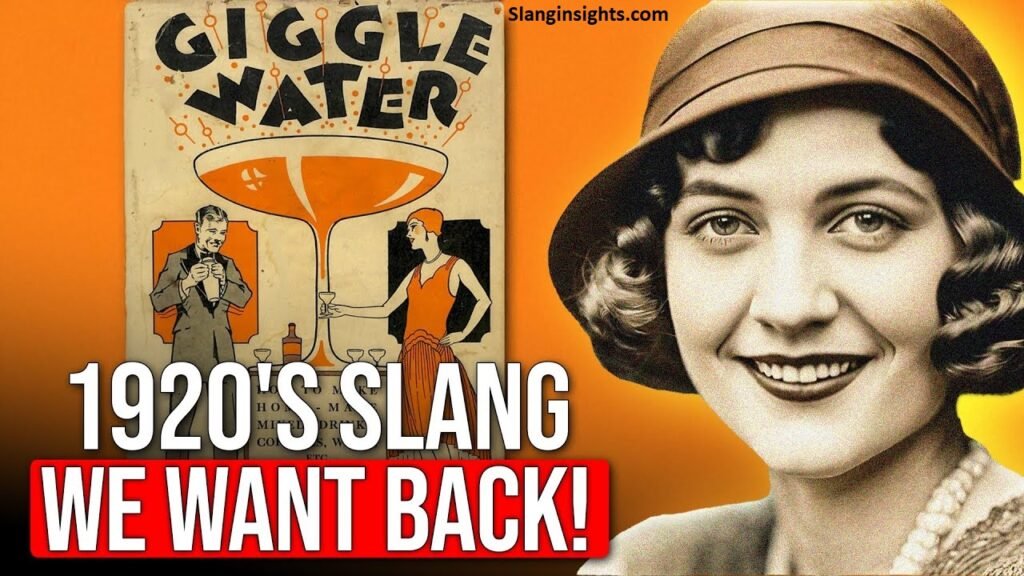
Giggle water — Alcohol. Specifically the illegal kind you’d find at a speakeasy. I genuinely cannot think of a better word for alcohol than giggle water. It’s accurate. It’s fun to say. I’ve started using it ironically and people love it.
Darb — Something or someone considered excellent or wonderful. “She’s a real darb” was a high compliment. Nobody knows where this one came from. It just appeared in the ’20s and then slowly faded away.
Drugstore cowboy — A man who hangs around public places trying to pick up women. It’s surprisingly specific. The “drugstore” part comes from the soda fountains at pharmacies, which were essentially the 1920s version of a coffee shop where people hung out. A drugstore cowboy was all swagger, no substance.
Ossified — Drunk. As in, your brain has turned to bone. Again, strangely accurate? If you’ve ever been properly ossified you understand the metaphor.
Dewdropper — A young man who sleeps all day and stays out all night. A layabout. A good-for-nothing. This one has serious potential for a comeback. “My roommate is such a dewdropper” is a sentence I will be using going forward.
Quiff — A promiscuous woman (in 1920s usage). Though interestingly, in British English “quiff” just means a hairstyle. Language does what it wants.
Upstage — To act snobbishly or show someone up. We still use “upstage” but mostly in theater contexts. In the ’20s it was more general — anyone being uppity could be described as upstaging.
Zozzled — Another word for drunk. The 1920s had an almost alarming number of words for being drunk. Given Prohibition, this tracks.
Bluenose — A killjoy or moralist. Someone who disapproved of fun. The Prohibitionists would have been classic bluenoses. This one I find really useful because we absolutely still have bluenoses in 2024, we just don’t have a perfect one-word way to call them out.
Speakeasy Vocabulary: The Language of the Underground
Prohibition created its own whole subcategory of slang, because when you’re doing something illegal, you develop code words.
Speakeasy — The actual name for illegal bars. The theory behind the name is that you had to “speak easy” (quietly) when ordering or asking for the place, to avoid tipping off authorities. It worked well enough that the word outlasted Prohibition by about a century.
Jake — Fine or okay. “Everything’s jake” meant everything is good. But “jake” was also short for Jamaican ginger, a patent medicine sold legally during Prohibition with a very high alcohol content. People drank it to get around the booze ban. So when someone asked if you were jake, there was some ambiguity about whether they were asking how you were doing or whether you’d been drinking.
Wet and Dry — Political positions on Prohibition. A “wet” wanted to repeal it. A “dry” supported it. These terms were everywhere in political discourse of the era.
Hooch — Illegal alcohol, specifically cheap or low-quality stuff. Still in common use. This one actually predates the ’20s — it comes from a Tlingit (Native Alaskan) word for a type of alcoholic drink — but it became hugely popular during Prohibition.
Blind pig — Another name for an illegal bar. The story goes that proprietors would charge admission to see a “blind pig” (a non-existent attraction) and then offer free drinks. The fee skirted the law. Whether this actually happened or is just a good story, I genuinely can’t confirm, but I choose to believe it.
Flapper Slang: The Women Who Changed Everything
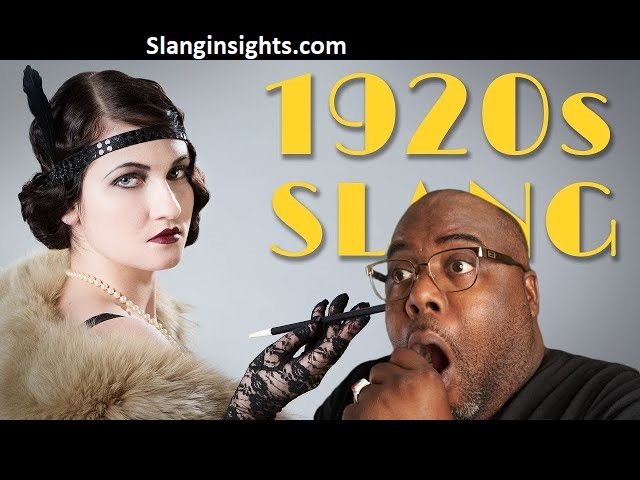
The flappers — young women who cut their hair short, wore shorter dresses, danced to jazz, and generally refused to behave the way society told them to — had their own vocabulary.
Flapper — The term itself is interesting. One origin story says it referred to young birds flapping their wings before they could fly. Another says it came from the flapping of unbuckled galoshes (boots), which was a flapper fashion thing. Take your pick.
Balled up — Confused or mistaken. Nothing off-color here — if you were balled up, you’d made an error or gotten mixed up. Useful.
Cake-eater — A man who courted women but wasn’t considered particularly masculine or admirable. A bit of a dandy. Flappers used this dismissively.
Sheba — An attractive, alluring woman. Came from the biblical Queen of Sheba. Her male equivalent was a sheik — from Rudolph Valentino’s famous role in the 1921 film “The Sheik.” If a woman called you a sheik, you were doing well.
Necker — Someone who liked to kiss or make out in cars. Cars were relatively new and provided privacy, so “necking” in parked cars was a whole scandalous thing. Flappers were the generation who really pioneered this, apparently.
Handcuff — An engagement ring. The bitterness in this term is palpable and I respect it.
Words That Meant Something Totally Different
This is where you have to be careful if you’re reading old literature. Some words had meanings in the ’20s that are completely different from their modern usage.
Gay — Simply meant happy or carefree. The modern meaning didn’t enter mainstream vocabulary until much later. If a 1920s character is described as feeling “gay,” they’re just in good spirits.
Pill — An unpleasant or tiresome person. Not medication. “He’s such a pill” was an insult meaning they were boring or annoying.
Carrying a torch — Being in love with someone who doesn’t return your feelings. We still kind of use this one, though it’s becoming rarer.
Cheaters — Eyeglasses. If someone in a ’20s story accuses a character of wearing cheaters, they’re not calling them a fraud — they’re just describing their glasses.
Common Mistakes When Using Old Slang (Yes, I Made These)
If you’re going to start dropping 1920s slang into conversation — and I highly recommend doing this at your next gathering — there are a few things to watch out for.
First, don’t use words that have shifted to offensive meanings without knowing the original context. Language evolves. Some words that were neutral or even positive in the ’20s carry very different weight now.
Do a quick check before confidently deploying anything in front of a crowd.
Second, don’t mix eras. Victorian slang is not 1920s slang. 1940s slang is not 1920s slang. “23 skidoo” (which means to get away quickly) is actually Edwardian, not really a ’20s phrase despite often being lumped in.
If you’re going for authenticity, the details matter.
Third, watch the context. Some of this slang comes loaded with class and race dynamics. The jazz scene where a lot of this language originated was Black American culture, and much of the slang was borrowed (often without credit) by white flappers and socialites. That context is worth being aware of.
How to Actually Learn This Stuff
If you want to go deeper — and you will, it’s addictive — here are the places that actually helped me:
The Online Etymology Dictionary (etymonline.com) is incredible for tracing when words first appeared. I spent way too long on this site.
For the social context, Only Yesterday by Frederick Lewis Allen is a contemporary account of the 1920s written in 1931. It reads like journalism and captures the feel of the era better than most history books.
Google Books Ngram Viewer lets you track when specific words appeared in print. Seeing “ossified” spike in the 1920s and then gradually fade is weirdly satisfying.
The digitized archives at Chronicling America (a Library of Congress project) give you access to actual newspapers from the era. Reading an authentic 1920s news story full of period slang is something else entirely.
FAQ’s
What is 1920s slang?
1920s slang refers to informal words and phrases used during the Roaring Twenties, especially influenced by jazz culture, Prohibition, and social change.
Why was 1920s slang so popular?
It became popular because of jazz music, youth culture, and speakeasies, where people created fun, secretive language.
What does “bee’s knees” mean?
It means something excellent, outstanding, or highly impressive.
What is a “speakeasy”?
A speakeasy was a hidden or illegal bar that sold alcohol during Prohibition in the United States.
Who were flappers?
Flappers were young, modern women in the 1920s known for their bold fashion, independence, and lively lifestyle.
Conclusion
The slang of the 1920s captures the energy, rebellion, and transformation of a decade often called the Roaring Twenties. This was a period marked by jazz music, economic growth, and changing social values, especially among young people.
As society shifted away from strict Victorian norms, new words and phrases emerged to express freedom, humor, and modern attitudes.
Terms like “bee’s knees,” “cat’s pajamas,” and “swell” reflected a playful way of speaking that matched the excitement of the era.
At the same time, Prohibition influenced a darker side of slang, introducing words like “speakeasy” and “bootlegger,” which described illegal alcohol trade and secret nightlife.
These expressions give us insight into how people adapted creatively to restrictions while still enjoying social life.
1920s slang is more than just old-fashioned language—it is a cultural snapshot of a dynamic time in history. It shows how language evolves with society and how people use words to reflect identity, trends, and emotions.
Even today, many of these phrases remain recognizable, reminding us of the Jazz Age’s lasting influence on modern culture, entertainment, and informal speech.