1920s Slang The Complete Dictionary of Roaring Twenties Slang (2026 Guide)
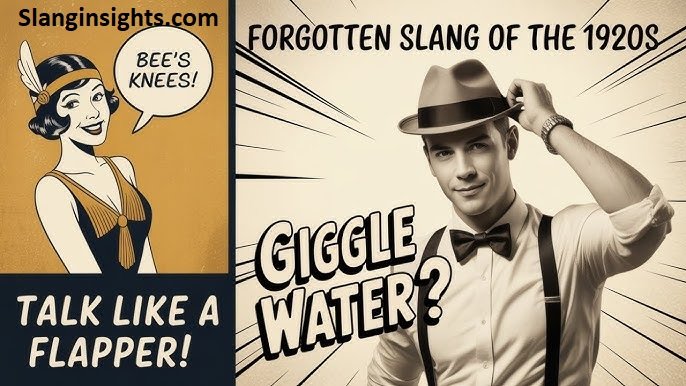
1920s Slang, often called the Roaring Twenties, gave rise to many colorful slang terms that reflected the era’s lively culture and love of jazz.
Popular expressions included “bee’s knees” for something excellent, “cat’s meow” for a stylish person, and “giggle water” for alcohol. People used “doll” to refer to an attractive woman and “big cheese” for an important person.
A “cake-eater” was someone who lived a luxurious lifestyle, while “cheaters” meant eyeglasses. These fun and creative phrases captured the spirit of the Jazz Age and continue to fascinate language lovers today.
Table of Contents
Quick Table
| 1920s Slang | Meaning |
|---|---|
| Bee’s Knees | Something excellent or outstanding |
| Cat’s Meow | A stylish or impressive person or thing |
| Giggle Water | Alcohol or alcoholic drinks |
| Doll | An attractive woman |
| Big Cheese | An important or influential person |
| Cake-Eater | Someone who enjoys a luxurious lifestyle |
| Cheaters | Eyeglasses |
| Jake | Fine, okay, or satisfactory |
| Hotsy-Totsy | Perfect or wonderful |
| Flat Tire | A boring or dull person |
| Applesauce | Nonsense or foolish talk |
| Sheik | A charming or attractive man |
| Joint | A place or establishment |
| Bluenose | A person who is overly strict or moral |
| Ragamuffin | A poorly dressed or untidy person |
The Book That Sparked My Fascination With 1920s Slang
I never expected a dusty paperback novel from a thrift store to send me down a two-hour rabbit hole at midnight.
It was one of those random weekend finds — a worn copy of a 1920s crime thriller, the kind with a cracked spine and yellowed pages that smell like someone’s attic. I sat down to read a few pages and immediately hit a wall.
“The dame was the bee’s knees.” “Don’t be such a dewdropper.” “That cat’s got the bees in his bonnet.”
What on earth was any of that?
I’d grown up thinking I knew vintage slang — mainly from old black-and-white movies and Great Gatsby adaptations. But actually sitting with authentic 1920s dialogue was a completely different experience.
These weren’t just quirky phrases. They were a whole second language. And once I started digging, I genuinely couldn’t stop.
So if you’ve ever stumbled across 1920s slang and felt completely lost — or if you’re a writer, history nerd, theater kid, or just someone who finds old language fascinating — this guide is for you.
Why 1920s Slang Still Hits Different
The 1920s were wild in a very specific way. Prohibition had just kicked in, jazz was exploding, flappers were rewriting what it meant to be a young woman, and there was this electric sense that everything old was being replaced by something new and dangerous.
Language followed suit.
People weren’t just making up cute phrases. They were creating code. Speakeasy regulars needed ways to talk about bootleg liquor without getting caught.
Young people wanted to talk around their parents. Jazz musicians built an entire insider vocabulary that helped define the culture.
That’s what makes this slang so rich. It came from real life, real rebellion, and real creativity — not from marketing campaigns or internet memes.
The Big List: 1920s Slang Words and What They Actually Mean
Let me walk you through the good stuff, organized in a way that actually makes sense. I’ve grouped these loosely by theme so they’re easier to absorb.
Compliments and Insults (The Fun Ones)
The bee’s knees — This is probably the most famous one, and it means something or someone is absolutely excellent or the best. “That new jazz band is the bee’s knees.”
Nobody is entirely sure why knees and bees got paired together, but the 1920s also gave us “the cat’s meow,” “the cat’s pajamas,” and “the snake’s hips” — all meaning roughly the same thing.
There was apparently a whole genre of animal-body-part compliments that decade.
Ritzy — Fancy, elegant, high-class. Comes directly from the Ritz hotels, which were synonymous with luxury. You’d say someone was “acting ritzy” if they were putting on airs.
Swanky — Similar to ritzy. A swanky joint was a classy establishment. Still works perfectly in modern English, honestly.
Bluenose — Someone who is overly moralistic, prudish, or self-righteous. A real party pooper who disapproves of fun. Very useful word that we inexplicably stopped using.
Dewdropper — A young man who sleeps all day and does nothing useful. Essentially the 1920s version of calling someone a deadbeat. “Her brother’s a real dewdropper — hasn’t had a job in months.”
Bimbo — Here’s one that has completely changed meaning. In the 1920s, “bimbo” actually referred to a tough, aggressive man. Not a woman at all. The gender flip happened gradually through the 1920s and 30s. Context matters a lot when you’re reading period fiction.
Dumb Dora — A foolish or silly woman. Used as both a noun and as a kind of dismissive description.
Four-flusher — Someone who pretends to be something they’re not; a liar or a fraud. Comes from poker terminology — a four-flush is a losing hand of four cards of the same suit that looks like it could become a flush. Fantastic word that deserves a comeback.
For People and Personalities
Sheik — A romantically attractive man, popularized by Rudolph Valentino’s films. If you called a guy a sheik, you meant he was a smooth, dashing type. The female equivalent was sheba.
Flapper — Everyone knows this one loosely, but the specifics matter. A flapper was a young woman who embraced the new 1920s lifestyle: short hair, short skirts, dancing, drinking, and flouting conventional expectations for women. The word itself may come from the image of a young bird flapping its wings — not yet fully airborne.
Daddy — Not a family term here. In 1920s slang, a “daddy” was an older man who paid attention (and money) to a younger woman. Basically the same usage as today’s “sugar daddy,” just without the sugar.
Joe — Just a regular, average man. “He’s just a regular joe.” This one actually survived and is still completely understandable today.
Oliver Twist — A skilled dancer. Because Charles Dickens’ Oliver Twist was known for being in places he wasn’t supposed to be and moving quickly — or maybe just because it rhymed cleverly with “wrist.” The exact etymology is fuzzy, but the usage is clear.
Party, Drinking, and Good Times
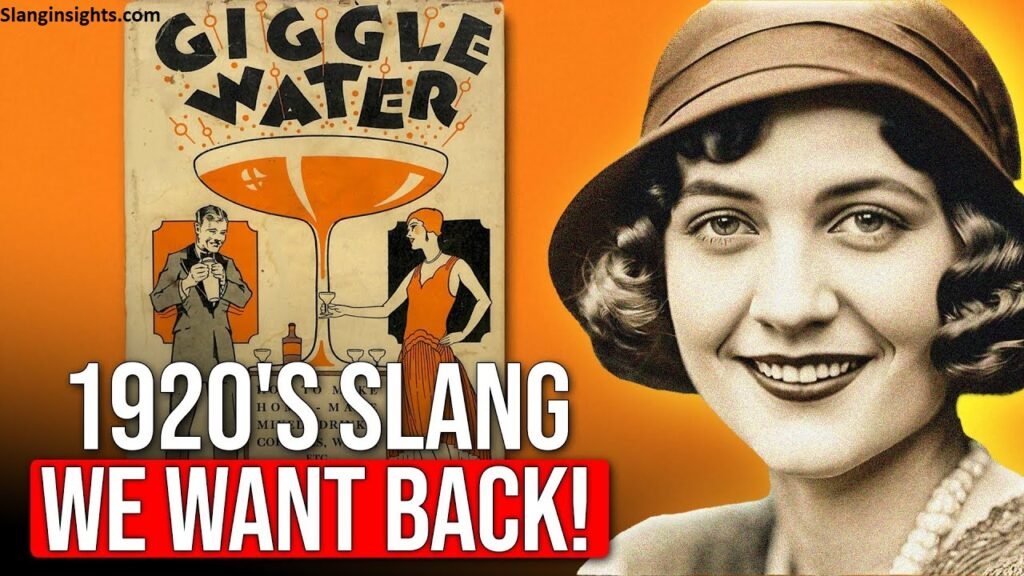
Giggle water — Alcohol. Specifically the kind you drank at a speakeasy. Delightful term. “We found a place where the giggle water flows all night.”
Hooch — Bootleg or low-quality liquor. This one actually predates the 1920s — it came from a Native Alaskan word — but the Prohibition era made it mainstream.
Speakeasy — You probably know this one, but it’s worth noting the origin: you had to speak quietly and carefully when asking about or entering these illegal bars. You spoke easy. “Easy” here means “cautiously.” Keep your voice down; the cops might be listening.
Jake — Fine, okay, everything is in order. “Is everything jake?” This word had a second meaning during Prohibition — “jake” also referred to a ginger extract people drank for the alcohol content when liquor was unavailable. Some of it was contaminated and caused permanent nerve damage, leading to a condition called “jake leg.” Heavy word with a dark history.
Ossified — Drunk. One of many, many 1920s terms for intoxication, which include “blotto,” “canned,” “fried,” “lit,” “oiled,” “pie-eyed,” “plastered,” and “stinko.” People in the 1920s had a remarkable dedication to creative vocabulary for being drunk.
On the lam — Fleeing from the law. Gangster culture contributed a lot to 1920s slang, and this one has completely survived into modern English.
Copacetic — Everything is satisfactory and fine. Origin is genuinely disputed — some trace it to African American Vernacular English, others to various other sources. It was popularized in the 1920s and is still used today, usually with a slightly retro feel.
Love, Flirting, and Relationships
Spoon — To make out or engage in romantic behavior. “They were spooning on the porch all evening.” If someone called you a “spoony,” you were hopelessly romantic and perhaps a bit soft about it.
Neck — To kiss passionately. The 1920s were surprisingly direct about this particular one.
Torch — To carry a torch for someone meant to be in love with them, especially unrequitedly. “She’s carrying a torch for him but he doesn’t even know she exists.”
Petting — Not the animal kind. In 1920s language, “petting” referred to various forms of physical affection. “Petting parties” were gatherings where young people paired off and, well, petted. This scandalized older generations and made it into newspaper editorials constantly.
Lined up — To have a date arranged. “Are you lined up for Saturday night?”
Dismissals and Brush-Offs
Banana oil — Nonsense, flattery you don’t believe, sweet talk that’s clearly insincere. “Don’t feed me that banana oil.”
Applesauce — Similar to banana oil. Flattery or nonsense. “That’s all applesauce and you know it.”
Baloney — This one survived in perfect form. Nonsense. “What a load of baloney.”
Horsefeathers — Another nonsense word, popularized partly by the Marx Brothers. Polite way of calling something ridiculous. “Horsefeathers! That never happened.”
Take a powder — To leave quickly, often to avoid something unpleasant. “When the cops showed up, he took a powder.”
Twenty-three skidoo — One of the most famous 1920s (actually slightly earlier) slang phrases. Means “get out of here” or “scram.” The exact origin is debated, but some trace it to New York City’s Flatiron Building on 23rd Street, where wind would blow up women’s skirts and men would gather to watch — and police would shoo them away.
Money and the Hustle
Bread — Money. This is actually much older slang that was common in the 1920s. Still used today in hip-hop and casual speech.
Cabbage — Also money. Green like a cabbage, apparently.
Dough — Money again. This one has fully survived into modern language.
Mazuma — Money, from Yiddish. New York’s large Jewish immigrant population contributed significantly to 1920s slang. Mazuma never quite made it to the mainstream modern vocabulary, but it’s a great word.
Bleed — To extort someone or take money from them repeatedly. “He’s been bleeding that poor widow dry for years.”
Words That Surprised Me Most
A few of these genuinely threw me off when I first encountered them in old texts:
Sap — A fool, someone easily taken advantage of. “Don’t be a sap.” Still used occasionally today.
Hard-boiled — Tough, unsentimental, experienced. This one became a whole genre descriptor — “hard-boiled detective fiction.” Think Sam Spade, Philip Marlowe.
Bunk — Nonsense or lies. Short for “bunkum,” which came from a county in North Carolina whose congressman made pointless speeches in the 1800s. Language history is genuinely wild.
Dame — A woman. Technically neutral, but often used to describe a woman who could handle herself, especially in crime fiction.
Grifter — A con artist or swindler. This word is completely alive and well today, particularly after the show Succession and endless political commentary.
How I Actually Use This Now
Once I fell into this rabbit hole, I started doing a few things that made the whole experience richer:
First, I kept a running note on my phone. Every time I hit a new piece of 1920s slang in a book, movie, or podcast, I added it with a brief definition. It’s become a weird little personal dictionary that I genuinely enjoy.
Second, I started paying more attention to old films.
Watching Pre-Code Hollywood movies from the late 1920s and early 1930s — things like “The Public Enemy” or early Joan Crawford films — with fresh ears for the slang is a completely different experience.
You catch layers you’d miss before.
Third, if you’re a writer doing historical fiction set in this period, please do not just sprinkle in “the bee’s knees” and call it done. The texture of the era comes from using the right slang in the right context.
A working-class man in Chicago wouldn’t talk the same way as a flapper in New York. Regional and social class differences mattered enormously.
Common Mistakes People Make With 1920s Slang
The biggest one: using it too heavily. Reading a story or script where every single line is packed with period slang quickly becomes exhausting and actually harder to understand.
Real period dialogue used slang the same way we use slang today — casually, not constantly.
The second mistake: assuming all 1920s slang is light and fun. A lot of it came from criminal underworld culture, racial segregation, and real social tension. Understanding where these words came from matters for understanding what the 1920s actually were.
Third: confusing 1920s with 1930s or 1940s slang.
They’re different decades with different cultural moments. “Hep cat” is more 1930s-40s jazz culture. The 1920s have their own specific flavor tied to Prohibition, the Jazz Age, and the post-WWI boom.
The Real Takeaway
What struck me most about all this is how alive and purposeful this slang was.
These weren’t arbitrary quirky phrases — they were a generation inventing language in real time to describe a world that was changing faster than anyone had expected.
The flappers who called stuffy types “bluenoses” were doing something genuinely radical. The musicians who built jazz vocabulary were creating something new in America.
The gangsters and grifters and working people who needed to talk in code around law enforcement were solving real problems with creative language.
That thrift store novel cost me $2. The language education it accidentally gave me has been worth considerably more.
Next time you watch a 1920s period piece or pick up a vintage crime novel, try going in with some of this vocabulary in your back pocket. The whole era snaps into focus in a way it simply doesn’t without it.
FAQ’s
What is 1920s slang?
1920s slang refers to the informal words and phrases commonly used during the Roaring Twenties. These expressions reflected the era’s lively culture, jazz music, and changing social attitudes.
What does “bee’s knees” mean?
“Bee’s knees” was a popular 1920s expression used to describe something outstanding, excellent, or highly impressive.
Why was slang so popular in the 1920s?
Slang became popular because the 1920s were a time of cultural change and entertainment. Young people embraced new music, fashion, and lifestyles, creating colorful expressions that spread quickly.
Are any 1920s slang words still used today?
Yes. Terms like “big cheese,” “joint,” and phrases such as “the cat’s meow” are still recognized and occasionally used in modern conversations.
What was “giggle water” in the 1920s?
“Giggle water” was a humorous term for alcoholic beverages. It became especially popular during the Prohibition era when alcohol was illegal in the United States.
Conclusion
The slang of the 1920s offers a fascinating glimpse into one of the most exciting decades in modern history.
Known as the Roaring Twenties, this era was marked by jazz music, changing fashion, and a spirit of fun and rebellion. The colorful language people used reflected these social changes and added personality to everyday conversations.
Expressions such as “bee’s knees,” “cat’s meow,” and “giggle water” showcased the creativity and humor of the time.
Many of these terms were inspired by the entertainment industry, nightlife, and the unique culture that emerged after World War I.
Although some phrases have faded with time, others remain familiar and are still used in movies, books, and casual speech.
Learning about 1920s slang is more than just discovering old-fashioned words. It provides insight into how language evolves and how each generation creates its own way of communicating.
Whether you’re interested in history, writing, or simply expanding your vocabulary, exploring these classic expressions is both entertaining and educational.
The colorful slang of the Jazz Age continues to capture the imagination of people around the world.