Michigan Slang Guide Talk Like a True Michigander in (2026)
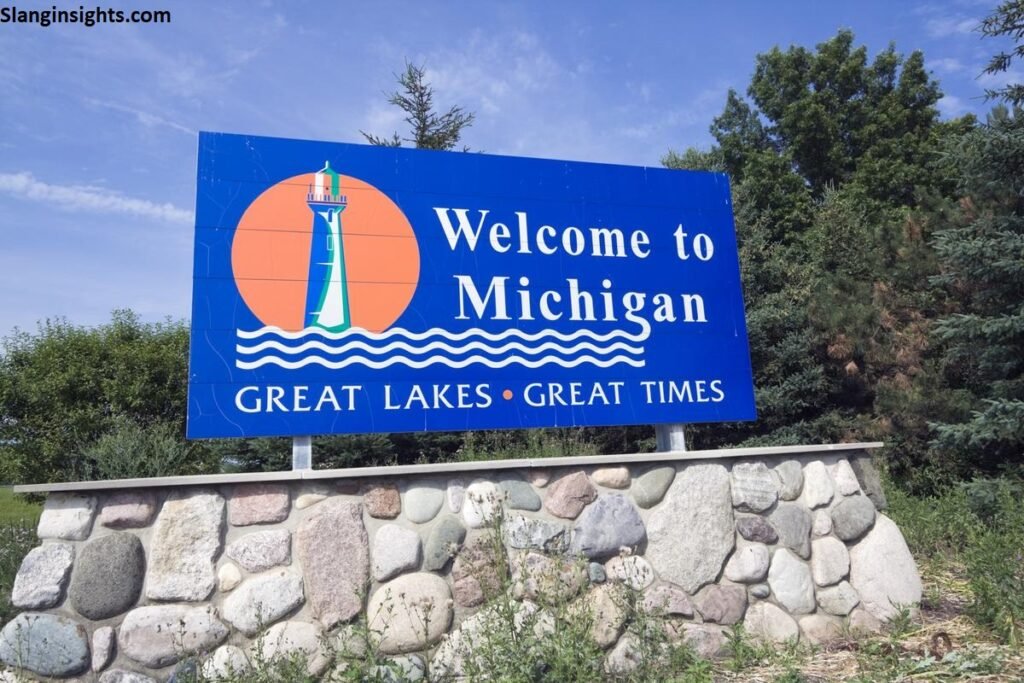
Michigan slang is a mix of unique words and phrases shaped by the state’s culture and geography.
One of the most famous terms is “pop,” which Michiganders use instead of soda.
People from the Upper Peninsula are called “Yoopers,” while those from the Lower Peninsula may refer to themselves as “Trolls” (living below the bridge).
Locals often say “Up North” when talking about northern Michigan vacation areas. You might also hear “the Mitten,” referring to Michigan’s hand-shaped Lower Peninsula.
These slang terms reflect local pride, outdoor lifestyle, and regional identity, making Michigan’s way of speaking both fun and distinctive.
Table of Contents
Quick Table
| Slang Term | Meaning |
|---|---|
| Pop | Soft drink (soda) |
| Yooper | Person from Upper Peninsula Michigan |
| Troll | Person from Lower Peninsula (below the bridge) |
| The Mitten | Nickname for Michigan’s Lower Peninsula |
| Up North | Northern Michigan vacation areas |
| Coney | Hot dog with chili, onions, mustard |
| Party store | Small convenience store that sells snacks & drinks |
| The Bridge | Mackinac Bridge connecting the peninsulas |
| Lake effect | Heavy snowfall caused by nearby Great Lakes |
| Fudgie | Tourist who visits northern Michigan (often Mackinac Island) |
What Is michigan slang?
The first time someone told me to “meet them by the party store,” I stood there genuinely confused for about thirty seconds.
A party store? Like, a store where you plan parties? Like balloons and streamers?
Nope. It’s a convenience store. A gas station mini-mart. A place to grab a Vernors and a bag of Better Made chips.
That’s just what people call it in Michigan, and if you’re not from there, you will absolutely make a fool of yourself before you figure it out.
I’ve spent a good chunk of time in Michigan — road trips through the UP, time in Detroit, hanging around Grand Rapids, visiting family friends in the Thumb.
And every single time I go back, I pick up something new. The slang there is genuinely its own world, a mix of Midwest practicality, Great Lakes culture, Detroit pride, and a little something that just doesn’t exist anywhere else.
So here’s a real breakdown of Michigan slang — not the dictionary version, but the “oh that’s what they meant” version.
The Classics You’ll Hear Everywhere
“The D”
Detroit. Just Detroit. You don’t need to say the whole word if you’re from Michigan. “You going to the D this weekend?” means are you heading into Detroit. It carries a certain pride with it — people from Michigan have a complicated, deep, fiercely loyal relationship with that city.
“Yooper” vs. “Troll”
This one floored me the first time. Michigan has two peninsulas separated by the Mackinac Bridge (locals call it “the Bridge” or “the Mac”).
People who live in the Upper Peninsula are called Yoopers — from “U.P.-ers.” And here’s the kicker: they call everyone who lives below the bridge Trolls. Because they live under the bridge.
It’s said with affection. Mostly. Yoopers are fiercely proud of living up there, and they have their own whole dialect that bleeds into Wisconsin and Minnesota.
They say things like “eh” a lot, and “dontcha know,” and they genuinely say “yah” instead of “yeah.” It’s charming as anything.
“Party Store”
Already mentioned this one, but it bears repeating because it will catch you off guard. In Michigan, a party store is not a celebration supply shop. It’s a corner store, a bodega, a 7-Eleven type place. You go to the party store to grab beer, snacks, lottery tickets, and a slushy.
The name supposedly comes from the fact that these stores were originally the main places to buy booze for parties, and the name just… stuck.
Food and Drink Slang (This Is a Whole Thing)
Michigan takes its local food culture seriously, and the slang around it reflects that.
“Coney”
Not an island. A specific type of hot dog — a beef hot dog in a steamed bun, topped with chili (no beans), mustard, and onions.
And in Michigan, there’s a whole war about whether American Coney Island or Lafayette Coney Island (both in Detroit, literally next door to each other) makes the better one.
Don’t wade into that debate unless you want a forty-five minute conversation.
“Pasty” (pronounced PASS-tee, not PASTE-ee)
This one matters if you’re heading into the UP. A pasty is a hand-held meat-and-potato pie that Cornish miners brought over in the 1800s. It became the UP’s signature food.
Locals are extremely serious about the correct pronunciation. Say it wrong and you’ll get a look.
“Faygo”
Not just a soda. A Detroit soda. Faygo is a local pop brand (more on “pop” in a second) that’s been made in Detroit since 1907.
It’s beloved partly because it’s cheap, partly because it’s been there forever, and partly because Insane Clown Posse made it famous outside of Michigan. When a Michigander mentions Faygo, there’s usually a little hometown pride in their voice.
“Pop”
This is the big Midwest one. You don’t call it “soda” in Michigan. You call it pop.
Ask for a “soda” and people will know you’re not from around here. Some places in the country say “Coke” for all soft drinks — in Michigan, it’s just pop. “Grab me a pop” is a perfectly normal sentence.
Directional Slang (Seriously Unique to Michigan)
Here’s one that blows people’s minds.
The Hand Map
Michigan is shaped like a mitten. Michiganders know this and have fully leaned into it. When someone from Michigan wants to show you where they’re from, they hold up their right hand and point to a spot on their palm.
“I’m from here” — points to the middle of the palm. “We went up here for the summer” — points near the pinky.
It’s the most natural thing in the world to them. To outsiders, it looks like someone is doing a strange palm-reading gesture. Once you know about it, you’ll never forget it.
“Up North”
This is less a specific place and more a concept. “Going up north” in Michigan means getting out of the city or suburbs and heading to a lakeside cabin, a small town, or just the woods. It’s a vibe as much as a direction.
If a Michigander says they’re going “up north” for the weekend, they mean they’re unplugging, probably sitting on a dock, and definitely eating pasties or grilling brats.
“The Thumb”
The northeastern part of Michigan’s mitten — the part that sticks up like a thumb. It’s an actual region with actual towns, and people refer to it casually like it’s as obvious as saying “.”
Detroit-Specific Slang
Detroit has its own whole vocabulary that’s partially blended into general Michigan speech and partially its own thing.
“Jit”
A young kid, usually used affectionately. “Little jit” means a small child or a young person still finding their footing. It’s warm when used by someone who genuinely likes the kid.
“Skoden”
A Detroit/Michigan pronunciation of “let’s go then” — compressed into one word: skoden. You’ll also see it as a rallying cry on social media. It picked up national momentum partly because Indigenous communities in the Great Lakes region also use it, and it became a symbol of pride.
“Gnarly” and “Hard”
In Detroit slang, “hard” means cool, impressive, or serious. “That fit is hard” means your outfit looks great. “Gnarly” is similar — something can be gnarly-good or gnarly-bad depending on context. It’s not super different from how these words get used elsewhere, but the Detroit delivery adds something to it.
“On the Lodge” / “On the Davison”
These are references to Detroit freeways — Lodge Freeway and the Davison. Michiganders call freeways “the [number]” — “take the 94” or “get on the 75.” If someone’s “on the Lodge,” they’re in traffic, which in Detroit can mean you’re going to be late.
General Michigan Phrases That Sound Weird at First
“That’s so Michigan”
Said when something is quintessentially Midwestern in the best possible way — like someone bringing a hotdish to a potluck, or stopping to help a stranger with a flat tire without being asked, or a summer thunderstorm rolling across Lake Michigan. It’s a compliment.
“Eh” and “Ope”
The Great Lakes version of conversational filler. “Ope” in particular is a reflexive apology-sound when you bump into someone or realize you made a small mistake.
“Ope, sorry!” is something you’ll hear constantly in Michigan and Wisconsin. It sounds like a tiny, soft exclamation. It’s endearing.
“Wooder” / Regional Accent Note
Michigan doesn’t have one accent — the UP sounds different from Detroit, which sounds different from Grand Rapids. But there’s a Northern Cities Vowel Shift that affects Michigan, Wisconsin, Illinois, and that whole Great Lakes corridor.
It makes certain vowels sound shifted compared to “standard” American English. Some people from Michigan sound like they’re saying “worsh” for wash or have a distinctive short-a sound. It varies wildly by area, but you’ll notice it.
Mistakes I Made (So You Don’t Have To)
I once asked someone in a small Michigan town if there was a “convenience store nearby.” Got a blank look. Said “party store” and suddenly had three recommendations and a full conversation.
I called someone a Troll as a joke early on without knowing the full context. Fortunately, the person was from Grand Rapids and found it funny — but I genuinely didn’t know it was A Thing. Learn the Yooper/Troll divide before you use it.
I also said “soda” approximately nine thousand times before I trained myself out of it. Every time I did, I got a small, gentle correction. “Pop,” they’d say. “We call it pop.”
Why Michigan Slang Actually Matters
Language is how people carry their identity.
When someone says “party store” or “skoden” or holds up their hand to show you where they’re from, they’re doing something bigger than just communicating — they’re signaling belonging.
They’re using shorthand that says I’m from here, this is my place.
Michigan has had a rough couple of decades economically, especially Detroit. But the pride in the place, the loyalty to it, shows up in the language.
People don’t abandon “the D” or “Yooper” or “pop” when they move away. They keep using them. It’s a way of carrying home with you.
If you’re visiting Michigan, moving there, or just have a friend from there who keeps saying things that confuse you — this guide should help. And honestly? Lean into it.
Ask what things mean. Michiganders love talking about Michigan. It’ll get you further than any phrase book ever could.
FAQ’s
What is the most common Michigan slang word?
The most common Michigan slang word is “pop,” which means soda. It is widely used across the state instead of “soda” or “soft drink.”
Why do Michiganders say “Yooper”?
“Yooper” refers to people who live in the Upper Peninsula (U.P.) of Michigan. The name comes from “U.P.-er.”
What does “The Mitten” mean in Michigan slang?
“The Mitten” is a nickname for Michigan’s Lower Peninsula because its shape resembles a mitten.
What does “Up North” mean in Michigan?
“Up North” refers to northern Michigan, a popular area for vacations, cabins, lakes, and outdoor activities.
What is a “Fudgie” in Michigan slang?
A “Fudgie” is a tourist, especially someone visiting places like Mackinac Island, known for buying fudge.
Conclusion
Michigan slang reflects the state’s strong regional identity, cultural diversity, and connection to nature.
From everyday words like “pop” instead of soda to unique regional labels such as “Yooper” and “Troll,” these expressions help Michiganders express pride in where they come from.
The state’s geography also plays a big role in shaping language, with references like “The Mitten” for the Lower Peninsula and “Up North” for vacation destinations filled with lakes and forests.
Even common places take on local flavor, such as “party store” for convenience shops or “Coney” for a Michigan-style hot dog.
These terms are not just slang—they represent lifestyle, tradition, and community. Visitors often find Michigan slang both confusing and charming at first, but quickly pick it up when spending time with locals.
Overall, Michigan slang adds personality to everyday conversations and helps strengthen the bond between people and place, making communication in the state truly unique and memorable.