Australian Slang Insults Funny, Harsh, and Surprisingly Friendly

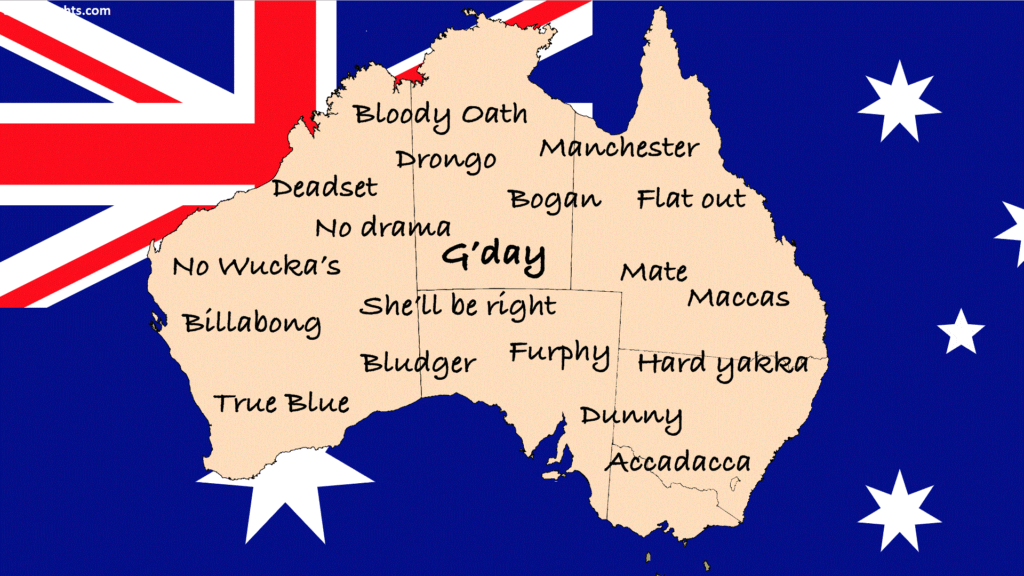
Australian slang insults are a big part of everyday Aussie banter, often sounding harsher than they really are. Words like “drongo,” “bogan,” “galah,” and “legend (sarcastic use)” are commonly thrown around in jokes between friends.
In Australia, insults are often used playfully rather than to offend, and tone matters more than the words themselves. Calling someone a “drongo” usually means they did something silly, not that they are truly stupid.
However, with strangers, these terms can still be taken badly. Aussie slang reflects a laid-back, humorous culture where teasing is normal, but respect still matters in the right context.
Table of Contents
Quick Table
| Slang Insult | Meaning | Usage Context | Tone |
|---|---|---|---|
| Drongo | Foolish or silly person | Friends / casual banter | Playful |
| Bogan | Unrefined or unsophisticated person | Informal/social jokes | Can be offensive |
| Galah | Silly or annoying person | Friendly teasing | Light |
| Muppet | Clumsy or foolish person | Everyday slang | Mild |
| Legend (sarcastic) | Someone acting silly | Joking with friends | Mixed |
| Ripper (sarcastic) | Not actually great | Irony / humor | Playful |
| Dodgy | Untrustworthy or suspicious | General description | Neutral-negative |
| Dill | Foolish person | Casual conversation | Light |
| Wally | Silly or clueless person | Friendly insult | Mild |
| Goose | Foolish but harmless person | Banter among mates | Playful |
What Is Australian Slang Insults?
I still remember the first time an Australian called me a “drongo” with a massive grin on his face.
I was backpacking through Melbourne, sitting at a hostel bar, and I’d just knocked a full pint of beer off the table trying to show off some card trick.
My new Aussie mate, Dave from Brisbane, looked at me, shook his head slowly, and said, “Mate, you are an absolute drongo.”
Then he laughed, bought me another beer, and we became friends for the rest of the trip.
That’s the thing about Australian slang insults that nobody really warns you about before you get there — half the time they’re not insults at all. They’re terms of endearment. They’re how Australians tell you that you belong.
But get the context wrong? You’ll either offend someone badly or look like a completely clueless tourist. Been there too.
The Culture Behind the Insult
Before diving into the words themselves, you have to understand why Australians insult each other as a love language.
Australia has this deeply ingrained cultural thing called “tall poppy syndrome” — the idea that nobody should take themselves too seriously. If someone starts acting a bit too full of themselves, their mates will gleefully cut them down to size. It’s not malicious. It’s almost protective.
When an Aussie calls you a “bogan” or a “drongo,” they’re usually doing one of two things:
- Including you in the group (you’re one of us, we’re all idiots here)
- Gently — or not-so-gently — telling you to stop being a try-hard
But there’s a third scenario — they actually ARE insulting you. The difference is all in the delivery. After a few weeks in Australia, you start picking it up. The tone, the smirk, whether there’s a hand on your shoulder.
The Classic Aussie Insults You’ll Actually Hear
Drongo
This is probably the most iconic one. A drongo is basically a fool — someone who does something dumb or embarrassing.
Originally it was the name of a racehorse in the 1920s that was famously terrible, never winning a single race despite running 37 times. The name just stuck.
“You drove four hours and forgot your wallet? You absolute drongo.”
Almost always affectionate between mates. If a stranger says it without smiling, that’s a different story.
Bogan
A bogan is roughly the Australian equivalent of a redneck — unsophisticated, maybe wearing a flanno (flannel shirt), probably driving a beaten-up ute.
Here’s the twist though: many Australians now wear “bogan” like a badge of honour. There are bogan-themed bars, bogan pride t-shirts, entire comedy acts built around it.
Calling someone a bogan can be a genuine put-down or a celebration of being unapologetically working-class.
Context, always context.
Galah
A galah is a type of cockatoo — a loud, colourful, screeching bird that’s basically everywhere in Australia and known for not being very bright. Calling someone a galah means they’re being loud and foolish.
“Stop being such a galah” is what you’d hear from an older Aussie who wants you to settle down.
Muppet
Borrowed from British slang but fully adopted in Australia. A muppet is just someone acting like an idiot. Relatively mild, often used at work when someone does something completely preventable. “The new bloke left the server running all weekend. Total muppet.”
Dag
Technically a “dag” is the clump of wool and unpleasant material stuck around a sheep’s backside. The original meaning is genuinely grim. But somewhere along the way it evolved into meaning someone who’s a bit dorky or awkward — in an endearing way. Being called a dag now means you’re charmingly nerdy. Parents call their kids dags. It’s almost sweet.
Ratbag
A loveable troublemaker. Cheeky, sneaky, probably up to no good — but you can’t quite bring yourself to be properly angry at them. “He convinced us to go night swimming in the harbour. Absolute ratbag.”
Nuff-Nuff
Someone who’s a bit clueless or just not quite keeping up with the room. Safe, mild, and strangely affectionate.
Dipstick / Dingbat
Both in the general “fool” category. Roughly PG-rated, good for expressing mild frustration without being harsh.
The Ones to Use Carefully
Bludger
A bludger is someone lazy — who won’t pull their weight or always takes from others without contributing. Between mates it’s light (“stop bludging and come help move the couch”). But call your boss a bludger and that lands very differently.
Grub
A grub is someone dirty, dishonest, or morally off. This moves away from playful territory into an actual insult. You’ll hear it muttered at dodgy behaviour — “what an absolute grub move” — rather than thrown at a friend for doing something silly.
Mongrel
Fascinating because it can swing both ways so dramatically. A mongrel in its negative form is someone nasty and cruel. But “he’s a tough mongrel” can be a genuine compliment about toughness and resilience. Get it wrong and it stings. Get it right and you’ve just given someone real respect.
How to Actually Use These Without Embarrassing Yourself
I made some real mistakes early on. Here’s what I learned:
Don’t use them on someone you just met — unless they use one on you first. Australians use insult-as-affection with people they’re comfortable with. Let them set the tone first, then follow their lead.
The delivery matters more than the word. A grinning “you drongo” with a slap on the back is completely different from a flat, deadpan version. One is a warm embrace in word form. The other is telling you that you’ve actually annoyed them.
Watch for reciprocation. If they give it back to you, you’re in. Aussie banter is a two-way street. If they go quiet, recalibrate.
These land differently across generations. Older Australians might use “dag” or “galah” more naturally. Younger Australians in cities tend to gravitate toward “muppet” or go straight to more colourful vocabulary. Pay attention to who you’re talking to.
Regional differences are real. What’s normal in Queensland can feel different in Melbourne’s inner suburbs. Rural Australians often have vocabulary that city Australians don’t use in the same way. Don’t assume one region covers the whole country.
The Insults That Became Identities
One thing that genuinely surprised me: Australians have an incredible ability to reclaim insults and wear them with pride.
“Bogan” is the clearest example. There’s now bogan fashion, bogan humour, bogan playlists.
What was once a sneering class-based put-down has become something a lot of people self-identify with — because it represents a kind of unpretentious, no-nonsense Australian-ness that many people are genuinely proud of.
“Dag” went through the same transformation. Being a dag is now almost charming — the awkward kid who grows up to be the funniest person in the room.
There’s something refreshing about a culture that turns insults into identities rather than wounds.
Common Mistakes People Make
Taking it personally when you shouldn’t. A group of Australian blokes insulting each other constantly at a BBQ are having the time of their lives. If you wince every time someone says “you dopey drongo,” you’ll seem confused and probably confuse them.
Using stronger insults too early. The stronger the slang, the more established the friendship needs to be. “Ratbag” is fine early on. Some of the others need real history behind them.
Getting the spelling wrong online. It’s “bogan,” not “bogon.” “Drongo,” not “drongoe.” Australians will spot that immediately. Yes, they will judge you a little.
Assuming all Australians talk this way all the time. A Sydney financial lawyer probably doesn’t call their colleagues drongos in meetings. Outside the office? Completely fair game.
What This All Actually Tells You About Australian Culture
After enough time around Australians, you start to realise the insult-as-affection thing isn’t just a quirk — it’s a whole philosophy.
It’s anti-pretension. It’s anti-hierarchy. It keeps everyone equal because nobody’s too good to be called a drongo when they do something silly — not the boss, not the prime minister, not your best mate who just graduated from law school.
It’s also, in a weird way, deeply welcoming. The moment an Australian feels comfortable enough to insult you, you’re in. You’re not a tourist or an outsider anymore. You’re just another drongo at the bar.
And honestly? That feels pretty good.
So next time someone calls you a galah or a drongo with that familiar lopsided grin — take it as the compliment it probably is. Grin back. Give them something in return if you’ve got it.
And try not to knock your beer over this time.
FAQ’s
What are Australian slang insults?
Australian slang insults are casual, often humorous words used to tease someone, such as “drongo,” “galah,” or “bogan.” They are frequently used in friendly banter.
Are Australian slang insults offensive?
It depends on context and tone. Among friends, they are usually playful, but with strangers, they can sound rude or disrespectful.
What does “drongo” mean in Australia?
“Drongo” means a silly or foolish person. It is commonly used in a light-hearted, joking way.
Why do Australians use insulting slang?
It reflects Aussie culture of humor, sarcasm, and informal communication where teasing is often a sign of friendliness.
Can these insults be compliments?
Sometimes yes. In Australia, tone matters a lot, and even an insult can sound friendly depending on how it is said.
Conclusion
Australian slang insults are a unique part of the country’s language and culture, blending humor, sarcasm, and friendliness in a way that often confuses outsiders.
Words like “drongo,” “galah,” “muppet,” and “bogan” may sound harsh at first, but in many situations they are used playfully between friends rather than as serious insults.
Understanding this cultural context is important because tone and relationship between speakers matter more than the actual words used.
In Australian everyday conversation, teasing is often a way to bond. Calling a mate a “goose” or “dill” might actually show closeness rather than disrespect.
However, these terms are not always safe to use with strangers, as they can easily be misunderstood or taken offensively if the tone is wrong.
Overall, Australian slang insults reflect the laid-back, humorous nature of Aussie communication. They show how language can be flexible, expressive, and even affectionate in disguise.
Learning these expressions helps visitors and learners better understand Australian culture, avoid misunderstandings, and enjoy the playful side of Aussie English.