Cap Slang Explained What It Actually Means and How People Really Use It
Cap Slang If you have ever heard someone say “no cap” or call out another person for “capping,” you may have wondered what it actually means.
In modern slang, the word “cap” means a lie or something that is not true. When someone says “no cap,” they are emphasizing that they are being completely honest and serious.
On the flip side, if someone is “capping,” it means they are lying or exaggerating the truth.
This popular slang term originated in African American Vernacular English and exploded into mainstream culture through social media platforms like TikTok, Twitter, and Instagram.
Today, “cap” and “no cap” are used by millions of young people worldwide as a fun, expressive, and widely understood way to question or confirm the truth in everyday conversations.
I’ll be real with you — the first time someone texted me “no cap” in a group chat, I genuinely thought they were talking about a hat.
I replied asking what hat, and the entire conversation went sideways into a ten-minute explanation that made me feel like I’d time-traveled from 2005.
That was my introduction to cap slang, and if you’re here, I’m guessing you’ve had your own version of that moment.
Table of Contents
Quick Table
| Term | Meaning | Example |
|---|---|---|
| Cap | A lie or exaggeration | “That story is total cap” |
| No Cap | Honestly / I am not lying | “This is the best day ever, no cap” |
| Capping | Actively lying or exaggerating | “He is definitely capping right now” |
| Big Cap | A very obvious or huge lie | “Saying you ran 10 miles is big cap” |
| No Capper | Someone who always tells the truth | “Trust him, he is a no capper” |
| Cap Check | Calling someone out for lying | “Cap check — did that really happen?” |
| Stay Capping | Continuously lying over time | “She stay capping about everything” |
| Dead Cap | An undeniable and absolute lie | “That excuse is dead cap, we all know it” |
What Is Cap Slang Mean?
If you have ever heard someone say “no cap” or call out another person for “capping,” you may have wondered what it actually means. In modern slang, the word “cap” means a lie or something that is not true.
When someone says “no cap,” they are emphasizing that they are being completely honest and serious. On the flip side, if someone is “capping,” it means they are lying or exaggerating the truth.
This popular slang term originated in African American Vernacular English and exploded into mainstream culture through social media platforms like TikTok, Twitter, and Instagram.
Today, “cap” and “no cap” are used by millions of young people worldwide as a fun, expressive, and widely understood way to question or confirm the truth in everyday conversations.
So What Does “Cap” Actually Mean?
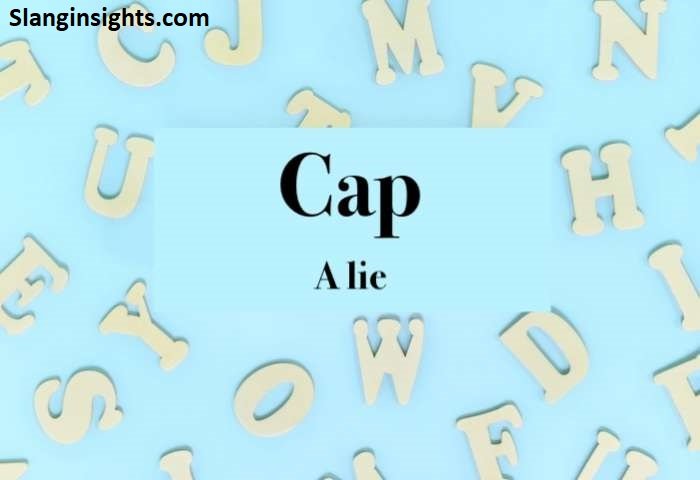
At its core, cap = lie. That’s it.
When someone says “you’re capping,” they’re calling you out for lying or exaggerating. And “no cap” means “I’m being completely serious — no lie.”
It sounds simple, but once you start hearing it everywhere — on TikTok, in YouTube comment sections, in text messages, in real-life conversations at school or work — you realize it carries a lot of emotional weight depending on context.
It can be playful teasing, genuine disbelief, or a confident declaration all at once.
Where Did “Cap” Come From?
This isn’t a brand-new Gen Z invention from nowhere. The use of “cap” to mean lying or fronting goes back to African American Vernacular English (AAVE) — it’s been used in Black communities, particularly in hip-hop culture, for decades.
Some trace it back as far as the 1900s, where “capping” meant to brag or boast in an exaggerated, dishonest way.
What changed recently is the mainstream exposure. Artists like Young Thug, Gunna, and NBA YoungBoy were using “cap” and “no cap” in their music around 2017–2018.
Then social media did what it always does — it took a regional/cultural expression and launched it globally within a couple of years. By 2019–2020, “no cap” was everywhere, and by 2021, your dad was probably using it wrong at the dinner table.
The Full Cap Vocabulary — More Than Just “No Cap”
Here’s where it gets more interesting. “Cap” is a whole ecosystem of related phrases. Once you know the base meaning, the variations make sense quickly.
No Cap
“I actually got front-row tickets to the concert, no cap.”
This is the most common one. It’s added to the end (or sometimes the beginning) of a sentence to emphasize you’re being genuine. Think of it like saying “I swear” or “for real.” People use it to make sure what they’re saying lands with weight.
Cap (standalone)
“You got front-row tickets? Cap.”
Used as a one-word response when you simply don’t believe someone. It’s the verbal equivalent of hitting them with a side-eye emoji. Short, sharp, dismissive.
Capping
“He’s totally capping — he never talked to her.”
The verb form. Someone who’s actively lying or exaggerating is “capping.” You’ll hear this in storytelling contexts, usually when someone’s recounting a situation and calling out another person’s dishonesty.
Big Cap
“That’s big cap, bro. You did not finish the whole thing.”
A supercharged version. Not just a lie — a BIG lie. Used when someone’s claim is so far-fetched that regular “cap” doesn’t cover it. It’s the difference between a fib and full-on fiction.
Caught in 4K / Caught Capping
“He said he was sick, then someone saw him at the mall. Caught capping.”
When someone is exposed mid-lie, they got “caught capping.” The “caught in 4K” part (sometimes used alongside) means they were caught in crystal-clear, undeniable detail — like a 4K resolution video where there’s no room to dispute what you’re seeing.
Cap Emoji
Yes, the baseball cap emoji is now standalone slang. If someone posts something unbelievable and the reply is just that IS the response. No words needed. It’s elegant, honestly.
Real-Life Situations Where You’ll Hear This
Theory is one thing. Seeing how it plays out naturally is what makes it click. Here are some real scenarios:
The Brag That Didn’t Land
Your friend says they stayed up studying all night for the exam. But you saw them watching Netflix at midnight. You text back: “Bro you were watching Stranger Things at 12am. Cap.”
The Sincere Moment
You’re telling someone about a difficult experience you had and you want them to know you’re not exaggerating: “I genuinely had no food in the house for two days, no cap.”
TikTok Comment Section
Someone posts a video claiming they made $5,000 in a weekend doing something suspicious. Comment section and “This is so cap it hurts.”
Scenario 4: Real Talk Between Friends
“No cap, that was the best burger I’ve ever had. I’m not even saying that to be nice.”
See how it functions differently each time? Sometimes it’s accusatory, sometimes it’s reassuring, sometimes it’s just a vibe.
Mistakes People Make When Using Cap Slang
I’ve watched people try to adopt this slang and fumble it in ways that are almost poetic. Let me save you from the most common ones.
Using “cap” when you mean “fact”
Heard someone say “that’s cap” thinking it meant “that’s a fact.” It means the opposite. If you want to affirm something is true, you want “no cap” — not “cap.” Cap = lie, remember.
Overusing it
Adding “no cap” to every single sentence kills its impact. It’s punctuation for emphasis — use it when it actually matters, or it starts sounding like a nervous tic. People notice.
Saying it in the wrong tone
Cap slang is casual. Saying “no cap” in a formal or stiff way makes it land weird. It works in loose, natural conversation — not in presentations or professional emails (yes, someone tried this, no, it didn’t go well).
Confusing “capping” with “cap”
“He’s cap” isn’t quite right. “He’s capping” is. The noun vs verb distinction matters when you’re using it in a sentence structure rather than as a standalone.
Cap Slang Across Platforms — Where You’ll See It Most
TikTok: Probably the heartbeat of cap slang right now. Comment sections on viral videos, reaction videos, and “story time” content are flooded with it. The cap emoji is a reflex at this point.
Twitter/X: Used in quote-tweets to call out public statements. Politicians, celebrities, brands — if they post something suspect, the replies come fast.
Instagram: Mostly in comments on lifestyle or flex posts. Someone showing off a new car or vacation? People will test whether it’s cap.
YouTube: Comment sections under challenge videos, reaction content, or anything where someone makes a bold claim.
In Person: Younger people (mostly teens and people in their 20s) use it naturally in conversation. Older folks trying it tend to pause half a second before saying it — that tells you everything.
Why This Slang Stuck Around
Most slang fizzles out. “On fleek” had its moment and vanished. “Fleek” is basically archaeology now. But cap slang has shown staying power, and I think there’s a reason.
It’s functional. “Cap” fills a real conversational need — the ability to quickly and casually signal truth or dishonesty. It’s short, punchy, and adaptable (noun, verb, emoji, modifier — it does everything).
And because it carries cultural weight through its AAVE roots and hip-hop connections, it’s tied to something genuine, not manufactured marketing.
That said, like all slang that crosses over into mainstream use, it can lose nuance in the hands of people disconnected from its origins. Understanding where it came from is part of respecting the culture that created it.
Is It Okay for You to Use It?
Honest take? Context matters more than anything. If you’re using it naturally among friends who use it, it flows. If you’re forcing it into a conversation just to sound current, people clock that instantly — and ironically, that itself is kind of cap. Nobody likes posturing.
If you’re in a professional setting, school assignment, or formal context — skip it. These are casual, conversation-layer words. They live in texts, comment sections, and casual chats.
And if you’re using slang rooted in AAVE culture, a little awareness goes a long way. Use it because it’s genuinely part of your everyday vernacular, not as a costume you put on when you want to seem cool.
FAQ’s
What does cap mean in slang?
In modern slang, cap means a lie or something that is not true. When someone accuses another person of capping, they are essentially calling them out for being dishonest, exaggerating, or fabricating a story.
Where did the slang word cap come from?
Cap slang originated in African American Vernacular English and has been used in urban communities for decades. It gained massive mainstream popularity through social media platforms like TikTok, Instagram, and Twitter among younger generations.
What is the difference between cap and no cap?
Cap means someone is lying or exaggerating, while no cap means the opposite — the person is being completely honest and sincere. No cap is often added at the end of a statement to emphasize that every word being said is the absolute truth.
Is cap slang appropriate for all ages?
Cap slang is generally harmless and widely used among teenagers and young adults. However, it is considered informal language and is best suited for casual conversations rather than professional or formal settings.
Is cap slang still popular today?
Yes, cap and no cap remain extremely popular slang terms worldwide. They are regularly used in everyday conversations, social media posts, music lyrics, and even in mainstream television and entertainment.
Conclusion
Cap slang is a perfect example of how language continuously evolves and adapts to reflect the culture, creativity, and communication styles of each new generation.
What began as a term deeply rooted in African American Vernacular English has grown into one of the most widely recognized and frequently used slang expressions across the entire globe today.
Whether you hear it in a casual conversation between friends, see it in the comments section of a viral social media post, or catch it in the lyrics of a popular song, cap and no cap have firmly cemented their place in modern everyday language.
Understanding slang like this is important because it helps bridge generational gaps, fosters better communication, and allows people to connect more authentically with the world around them.
Language is living, breathing, and constantly changing, and slang is one of the most exciting and expressive parts of that evolution.
The next time someone tells you something unbelievable and you are not quite sure whether to believe them, you now have the perfect word ready — just call out the cap and watch their reaction.
No cap, understanding modern slang makes conversations more fun, more relatable, and a whole lot more interesting for everyone involved.