Brain Rot Words Are Taking Over And I’m Here For It
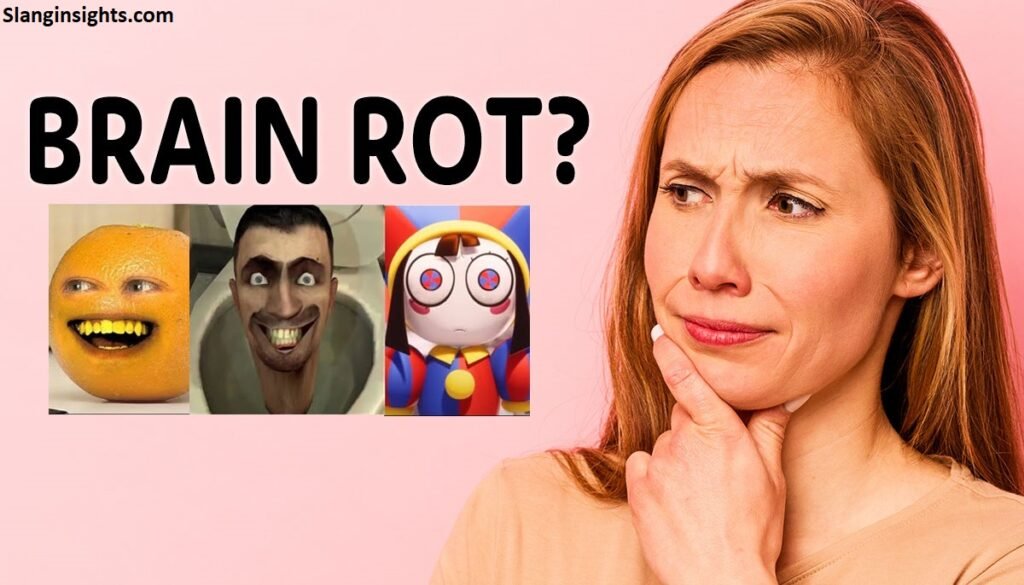
Brain rot words are internet slang terms and phrases that dominate online culture, particularly among Generation Z and Generation Alpha.
Born from social media platforms like TikTok, Twitter, and Discord, these expressions spread rapidly through memes, videos, and everyday digital conversation.
Popular examples include “rizz,” “slay,” “no cap,” “bussin,” “sigma,” “gyatt,” and “skibidi.”
While older generations often find them confusing or nonsensical, brain rot words carry genuine social meaning — signaling belonging, humor, and cultural awareness within online communities.
Critics argue they deteriorate language quality, while supporters see them as natural, creative linguistic evolution. Love them or hate them, brain rot words are everywhere.
Table of Contents
Quick Table
| # | Word / phrase | Meaning | Example usage | Category |
|---|---|---|---|---|
| 1 | Rizz | Natural charm or ability to attract others | “He walked in and instantly had rizz.” | Personality |
| 2 | No cap | Telling the truth, not lying | “That was the best food I’ve ever had, no cap.” | Reaction |
| 3 | Bussin | Extremely good, usually about food | “These fries are bussin fr.” | Approval |
| 4 | Slay | To perform or look exceptionally well | “She walked out in that outfit and slayed.” | Approval |
| 5 | Sigma | A lone, independent, highly successful person | “He doesn’t follow trends — total sigma move.” | Identity |
| 6 | Gyatt | Exclamation of shock or attraction | “Gyatt, did you see that?” | Reaction |
| 7 | Skibidi | Nonsense term from viral TikTok content | “That video was so skibidi.” | Viral |
| 8 | Delulu | Delusional, often used humorously about unrealistic hopes | “She thinks he likes her back — she’s so delulu.” | Personality |
| 9 | It’s giving | Describes the vibe or energy something gives off | “This outfit is giving main character energy.” | Reaction |
| 10 | NPC | Someone acting robotic or without independent thought | “He just agreed with everything — total NPC.” | Identity |
What Is Brain Rot Words?
Brain rot words are internet slang terms and phrases that dominate online culture, particularly among Generation Z and Generation Alpha.
Born from social media platforms like TikTok, Twitter, and Discord, these expressions spread rapidly through memes, videos, and everyday digital conversation.
Popular examples include “rizz,” “slay,” “no cap,” “bussin,” “sigma,” “gyatt,” and “skibidi.”
While older generations often find them confusing or nonsensical, brain rot words carry genuine social meaning — signaling belonging, humor, and cultural awareness within online communities.
Critics argue they deteriorate language quality, while supporters see them as natural, creative linguistic evolution. Love them or hate them, brain rot words are everywhere.
What “Brain Rot” Actually Means Here
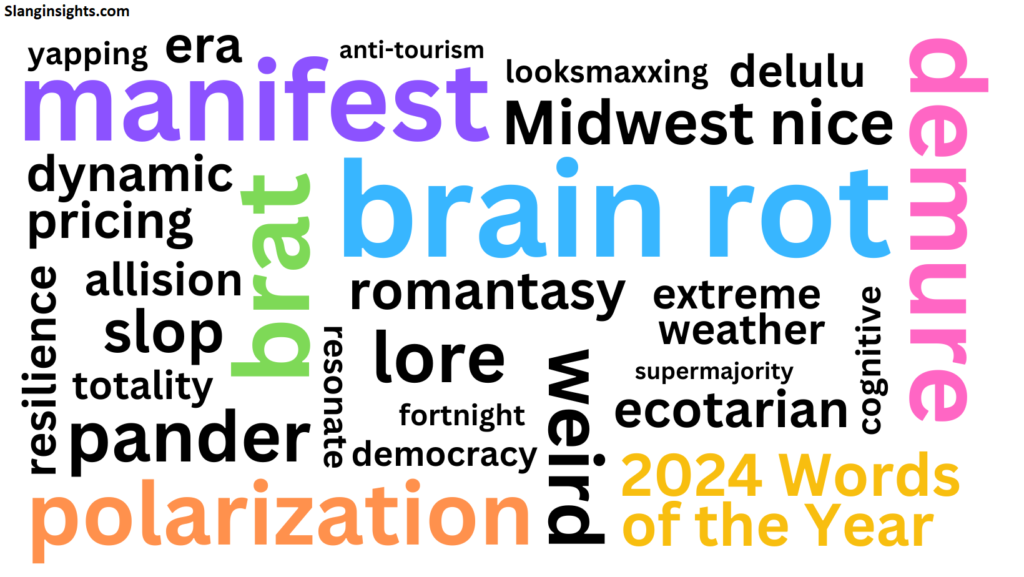
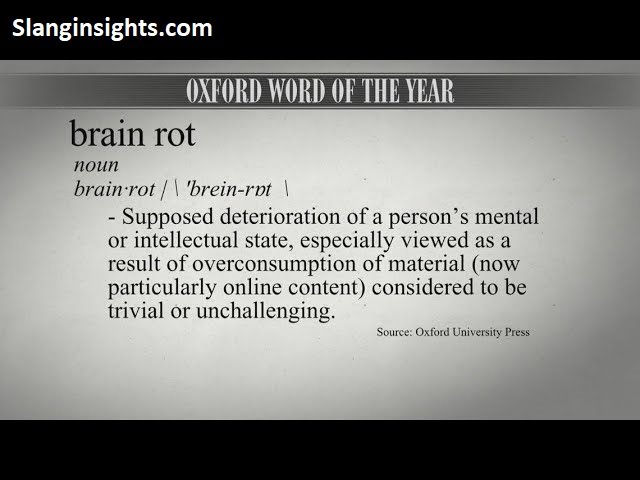
Oxford named “brain rot” its word of the year for 2024, defining it as the deterioration of mental or intellectual state from consuming too much low-quality online content.
But the internet — true to form — immediately reclaimed it. Now “brain rot” is used almost affectionately, as a badge of honor for the chaotic, absurdist vocabulary that emerges from endless hours of short-form video.
“Brain rot words aren’t a sign of language dying. They’re a sign of language doing exactly what it’s always done — evolving at the speed of its users.”
Think of it like this: every generation has had its slang.
The 50s had “cool cat” and “dig it.” The 90s gave us “whatever” and “all that.” Gen Z and Gen Alpha just happen to be creating slang at internet speed, with a global audience instantly amplifying it.
The words spread faster, mutate faster, and die faster too.
The Brain Rot Dictionary — Your Real Glossary
Before we go further, let me break down the actual words. Not dictionary definitions — real explanations of how people actually use them.
Rizz
Natural charisma or the ability to attract someone effortlessly. “He pulled without saying a word — pure rizz.”
No cap
Truthfully, no lie. Used to emphasize you’re being serious. “That pizza was the best I’ve ever had, no cap.”
Bussin
Extremely good, usually about food. Originally AAVE slang that went massively mainstream.
Skibidi
Originated from a surreal YouTube animated series. Now used as an all-purpose modifier — mostly nonsense, that’s the point.
Delulu
Short for delusional. Used ironically to describe someone (or yourself) with wildly unrealistic expectations. “My delulu era is thriving.”
Slay
To perform exceptionally well or look amazing. “She absolutely slayed that presentation.”
Understood the assignment
Someone perfectly executed what was expected — or more. Often used as a compliment in pop culture commentary.
It’s giving
It evokes or resembles something. “That outfit is giving main character energy.”
Ate
Did something flawlessly. “She ate that performance and left no crumbs.”
NPC
From gaming — a Non-Playable Character. Used to describe someone who seems robotic, goes through motions, or lacks independent thought.
Lowkey / Highkey
Lowkey = kind of, secretly. Highkey = very much, openly. “Lowkey obsessed with this show” vs “Highkey losing my mind.”
Rent-free
Living rent-free in someone’s head means they’re constantly thinking about something without wanting to. “That song is living rent-free in my brain.”
How These Words Actually Spread
I used to think this stuff just popped up randomly. Turns out there’s a pretty consistent pattern to how a brain rot word goes viral.
Origin
Usually starts in a niche community: Black Twitter, LGBTQ+ spaces, a specific gaming subreddit, or an obscure meme format. The word already has meaning there.
TikTok Amplification
Someone uses it in a viral TikTok. The algorithm pushes it to millions of people who have zero context about where it came from.
Adoption & Mutation
The broader internet picks it up, sometimes keeping the original meaning, sometimes completely mangling it. “Bussin” originally had very specific AAVE roots; it now appears in breakfast cereal ads.
Mainstream Moment
News outlets write explainers. Teachers use it awkwardly in class. Your aunt uses it in a Facebook comment. That’s the death knell.
Death or Ossification
Either the word gets abandoned (too cringe, too mainstream) or it genuinely enters everyday language. “Cool” went through this same cycle — around a century ago.
The Mistakes People Make With This Stuff
I’ve made all of these. Painfully.
- Using words out of context just because you saw them online. Saying “bussin” about a mediocre plate of supermarket pasta doesn’t land the same way.
- Forcing it into professional settings when nobody around you uses it. “This quarterly report is absolutely slaying” is not the flex you think it is.
- Using words without knowing where they came from. A lot of this vocabulary originates in Black American culture or LGBTQ+ communities — using it thoughtlessly is at minimum lazy, and at worst disrespectful.
- Pronouncing “delulu” like “dee-LOO-loo” when everyone around you says “duh-LOO-loo.” These things are phonetic — pay attention to how people actually say them.
- Treating it as a code to impress younger people. They will immediately clock that you’re trying too hard. Authenticity is the entire point.
Why This Actually Matters (Stay With Me)
Language has always evolved. Shakespeare made up hundreds of words we still use today. Jazz musicians gave us “cool.” Surfers gave us “gnarly.” Teen slang from the 1980s gave us “like” as a verbal filler.
Brain rot words are the same process — they’re just moving faster because social media compresses decades of linguistic drift into months.
The interesting part? Many of these words fill genuine gaps. There’s no better single word than “rizz” for that effortless, natural charm. “Delulu” captures a very specific kind of ironic self-aware wishful thinking that takes a paragraph to explain otherwise.
Linguists actually love watching this happen. Language isn’t decaying — it’s doing what it always does, reflecting the culture and values of the people using it.
The fact that “NPC” crossed from gaming into general vocabulary is genuinely fascinating. It says something about how people think about authenticity and conformity right now.
That said — there are real conversations worth having about credit and origin. “Slay,” “bussin,” “no cap,” “it’s giving” — these words come from specific cultural communities.
When they get sanitized for mass commercial use, something is often lost, and the people who created them rarely get the recognition. That’s worth sitting with.
A Few Tips If You Want to Actually Use These Naturally
- Listen before you speak. Spend time actually consuming the content where these words live. Understand tone and context first.
- Start with the less commitment-heavy ones — “lowkey” and “no cap” slot into sentences easily without sounding forced.
- Pay attention to who’s around you. Brain rot vocabulary lands in the right crowd. In other contexts, plain English works better.
- Read about where specific words came from. Even five minutes of research makes you a more thoughtful user of the language.
- Accept that by the time a word becomes an explainer article, it’s already on its way out. The newest slang is always somewhere you haven’t looked yet.
What Happens Next
Honestly? The cycle continues. Some of these words will fade completely — “skibidi” probably has a short shelf life in its current form. Others will quietly become part of everyday English.
“Lowkey” already feels completely normal. “Rizz” got named Oxford’s word of the year for 2023. That’s not nothing.
The next wave of brain rot vocabulary is already forming somewhere — probably in a Discord server or on a platform that doesn’t exist yet. It’ll be bizarre. It’ll make no sense to anyone over 30 at first. And then, slowly, it’ll make perfect sense.
FAQ’s
What are brain rot words?
Brain rot words are internet slang terms and phrases that spread rapidly through social media platforms like TikTok, Twitter, and Discord. They are most commonly used by Generation Z and Generation Alpha to express reactions, describe personalities, and signal cultural belonging within online communities. The term “brain rot” humorously suggests that consuming too much internet content leads to speaking in these exaggerated, nonsensical phrases.
Where do brain rot words come from?
Most brain rot words originate from TikTok videos, gaming culture, memes, and viral internet moments. Some terms evolve from African American Vernacular English, others from gaming communities, and many from completely random viral content that somehow captures the internet’s collective imagination. Once a word gains traction on TikTok, it spreads to other platforms within days.
Why do young people use brain rot words?
Brain rot words serve as a social currency among younger generations. Using the right slang signals that you are culturally aware, plugged into online trends, and part of a shared community. They also add humor, expressiveness, and personality to everyday conversation in ways that standard language sometimes cannot capture.
Are brain rot words ruining the English language?
This is genuinely debated among linguists and educators. Critics argue that heavy slang use reduces vocabulary range and communication clarity. However, many linguists view brain rot words as a natural and creative evolution of language, noting that every generation introduces its own slang that eventually shapes mainstream vocabulary. Words like “cool” and “awesome” were once considered informal slang too.
How long do brain rot words last?
Most brain rot words have a very short lifespan. Because they spread so fast online, they also fall out of fashion quickly — sometimes within weeks or months. A word that feels fresh and funny in January can feel outdated and cringe-worthy by summer. Only a handful of slang terms, like “slay” and “no cap,” have shown genuine staying power in everyday language.
Conclusion
Brain rot words are more than just silly internet slang — they are a living, breathing reflection of how language evolves in the digital age.
Every generation has developed its own vocabulary to express identity, humor, and belonging, and Generation Z and Generation Alpha are no different. What sets brain rot words apart is the extraordinary speed at which they emerge, spread, and sometimes disappear.
Platforms like TikTok have become the new birthplace of language, producing terms that travel from a single viral video to global everyday conversation within days.
Words like “rizz,” “delulu,” “no cap,” and “skibidi” carry real cultural meaning for millions of young people, even if older generations find them baffling or amusing.
Understanding brain rot words is not about memorizing the latest slang to appear relevant. It is about recognizing that language has always been shaped by the communities and technologies of its time.
The internet is simply the newest and fastest engine driving that change.
Whether you find brain rot words hilarious, exhausting, or genuinely fascinating, one thing is certain — they are not going away anytime soon. Language lives where people connect, and right now, people connect online.
Embrace the rizz, stay curious, and keep up — no cap.