The Slang Terms of 2024 Explained by someone who learned the hard way
The Slang Terms of 2024 the year 2024 delivered a fresh wave of slang that swept across social media, classrooms, and everyday conversations.
Terms like “demure” took over after a viral trend encouraged people to embrace quiet confidence and modesty.
“Brat” became a cultural identity, associated with bold, unapologetic self-expression. “Delulu” described someone lost in unrealistic fantasies, while “rizz” continued its reign as the go-to word for natural charm and charisma.
It happened at a birthday dinner. My cousin, who’s 19, looked at a plate of loaded nachos and said “this is absolutely bussin, no cap.” I laughed along. I had no idea what she said. I nodded like I did.
That night I went down a rabbit hole — TikTok comment sections, Reddit threads, YouTube reaction videos — and spent about two hours just trying to understand how people were talking to each other online in 2024.
Table of Contents
Quick Table
| Slang Term | Meaning | Example Usage |
|---|---|---|
| Demure | Quiet, modest, and well-mannered | “She was so demure at the interview.” |
| Brat | Bold, unapologetic, confident attitude | “That outfit is so brat.” |
| Delulu | Delusional, lost in unrealistic fantasy | “She thinks he likes her — totally delulu.” |
| Rizz | Natural charm or ability to attract others | “He has serious rizz.” |
| NPC | Someone acting robotically or without thought | “Stop being an NPC and think for yourself.” |
| Understood the Assignment | Delivered exactly what was needed | “That performance? She understood the assignment.” |
| Ate | Did something exceptionally well | “She ate that performance up.” |
| Slay | To perform or look impressively | “You slayed that presentation.” |
| It’s Giving | Describes the vibe something gives off | “That outfit? It’s giving royalty.” |
| No Cap | No lie, speaking the truth | “That was the best meal, no cap.” |
The Slang Terms of 2024
The year 2024 delivered a fresh wave of slang that swept across social media, classrooms, and everyday conversations. Terms like “demure” took over after a viral trend encouraged people to embrace quiet confidence and modesty.
“Brat” became a cultural identity, associated with bold, unapologetic self-expression. “Delulu” described someone lost in unrealistic fantasies, while “rizz” continued its reign as the go-to word for natural charm and charisma.
“Understood the assignment“ praised anyone who delivered exactly what was needed. “NPC” labeled people acting robotically or without independent thought.
These terms captured 2024’s humor, identity, and internet-driven culture perfectly.
The 2024 slang glossary — actually explained
These are the terms I kept running into everywhere from Twitter/X to TikTok to group chats. I’ve tried to explain them the way a real person would — not the way a textbook would.
Rizz Hot
noun / verb
Natural charm or the ability to attract someone effortlessly. Think charisma, but cooler. You can also “rizz someone up” — meaning to flirt with or impress them.
“He walked in and immediately started rizzing her up without even trying.”
Delulu Hot
adjective
Short f
noun / adjective
From video games — a “non-playable character” who just follows a script. Online it means someone who seems to have no original thoughts, just repeating whatever everyone else does.
“That guy just agrees with everything. Total NPC energy.”
Ate (and left no crumbs)
verb phrase
You did something so perfectly that there’s nothing left to critique. It’s pure admiration — nailing a performance, outfit, or moment so completely that you “ate it up.”
“Her speech? She ate and left absolutely no crumbs.”
Understood the assignment Hot
phrase
Someone completely nailed what was expected of them in a given moment — dress code, vibe, performance. Can also be used sarcastically.
“The whole cast dressed in all-black for the funeral scene. They understood the assignment.”
It’s giving…
phrase
Describes the vibe or energy something is putting out. Usually followed by a noun or aesthetic. Can be positive (“it’s giving royalty”) or shady (“it’s giving budget”).
“That outfit? It’s giving old Hollywood glamour.”
Slay Old but still here
verb / exclamation
To perform or present yourself brilliantly. Has been around for a while but saw a huge comeback in 2023–2024, especially thanks to Beyoncé and pop culture moments.
“She walked in and just slayed the entire presentation.”
Lowkey / Highkey
adverb
Lowkey = quietly, somewhat, or secretly. Highkey = very much, openly, without apology. You can use them to soften or amplify how strongly you feel about something.
“I’m lowkey obsessed with that show.” / “I highkey cried at that ending.”
Rent free
adverb phrase
When something (a thought, a person, a song) keeps occupying your mind without you choosing it. It “lives in your head rent free.”
“That song has been living in my head rent free for three days.”
Situationship Hot
noun
A romantic “relationship” that’s never officially defined — more than friends, less than a couple. Somewhere in the in-between, and usually a bit emotionally messy.
“We’re not together but we’re not not together. It’s a situationship.”
Main character energy
noun phrase
Acting like you’re the protagonist of your own movie — confidently, boldly, like everything happening around you is part of your story.
“She walked into the room and immediately had main character energy.”
Brain rot New
noun
The mental fatigue and foggy feeling you get from too much mindless internet content — doom scrolling, random TikToks, absurd memes. Also used to describe the content itself.
“I’ve been watching short videos for four hours. Pure brain rot.”
How these words actually spread
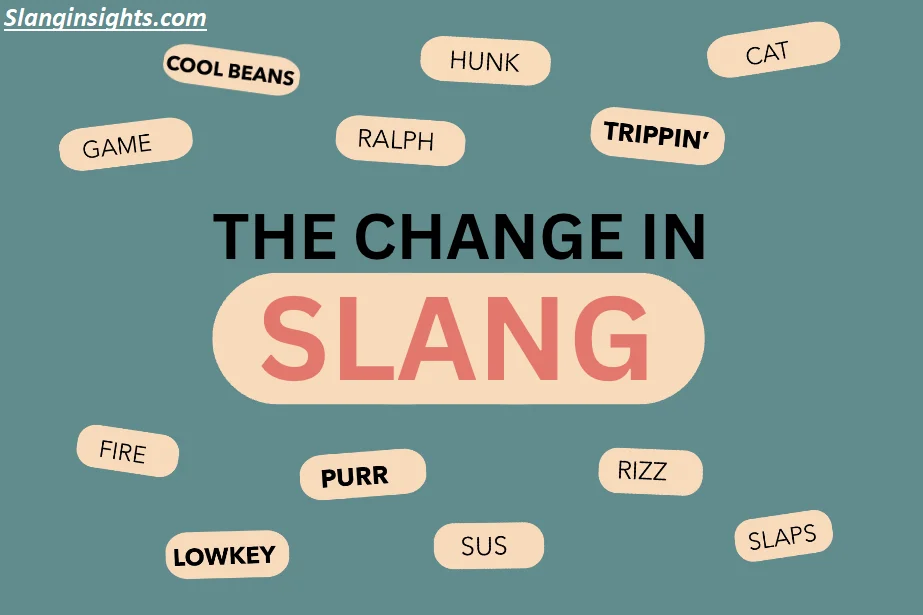
Most of 2024’s slang came from three places: Black American vernacular (which has always been the engine of internet culture), gaming communities on Twitch and Discord, and TikTok’s algorithm doing what it does — taking a niche phrase and blasting it to 200 million people in 48 hours.
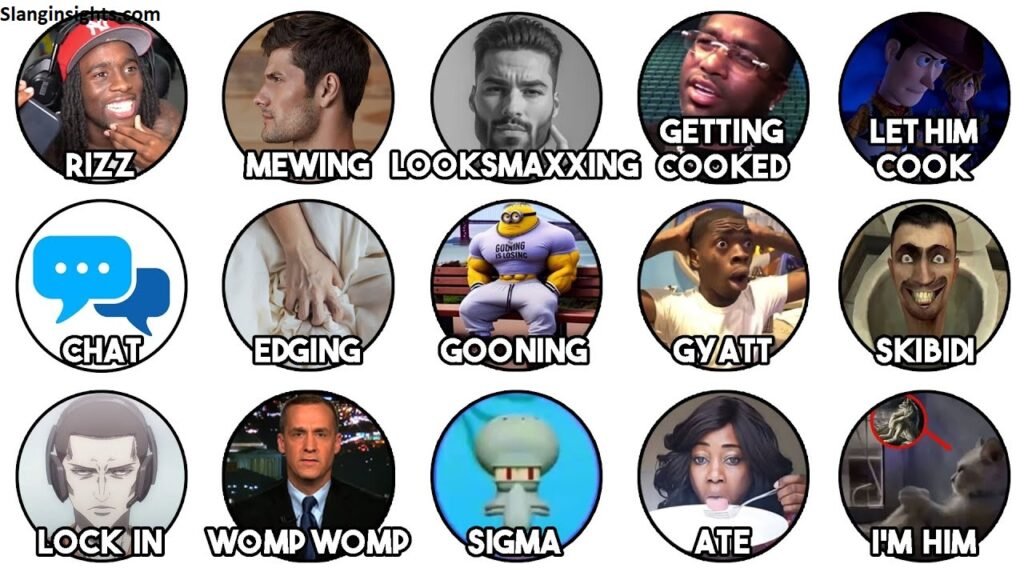
“Rizz,” for example, started in small Twitch streams. “NPC” came directly from gaming. “Delulu” traces back to K-pop fan communities years before it went mainstream. By the time a word hits morning TV hosts trying to use it awkwardly, it’s already half-dead.
The fastest way to kill a slang term is for a brand to tweet it. Once a corporation uses it, the coolness evaporates almost immediately.
The cycle is short now. A word can go from niche community language to everyone’s mouth to cringe territory in under six months. That’s actually faster than it was even three years ago, and it’s partly why keeping up feels exhausting.
Mistakes people make using new slang
I’ve made most of these. Learn from my embarrassment.
Common slang mistakes
- Using it too late. If you heard it from a news article, it’s probably already passé. The shelf life is brutal. By the time mainstream media explains “rizz,” the 19-year-old crowd has already moved on.
- Forcing it into the wrong context. Slang has vibes. Using “ate and left no crumbs” to describe your quarterly sales report in a work email is not it.
- Mispronouncing or misusing “no cap.” “No cap” means “no lie / I’m serious.” It does NOT mean “no problem.” I heard someone use it that way. I cringed internally and said nothing.
- Using AAVE slang without understanding its roots. A lot of this language comes from Black communities. Using it casually without acknowledging where it came from is something worth reflecting on — especially in professional or public settings.
- Overusing the same term until it dies faster. If you start saying “it’s giving” in every sentence, you’re not cool — you’re the brand tweeting the meme three weeks too late.
How to keep up without looking desperate
Honestly? You don’t need to use every new word. Understanding them is way more valuable than performing them. Here’s what actually helps:
What actually works
- Spend 20 minutes a week on TikTok’s For You page without trying to create anything. Just observe. Read the comments. That’s where language lives and evolves in real time.
- Use Urban Dictionary cautiously. It’s useful for definitions but the examples are often written by people who don’t actually use the word in real life. Cross-reference with actual TikTok or Twitter usage.
- Listen before you use. Hear a word used naturally in context at least 3–5 times before you try it yourself. This alone saves enormous amounts of embarrassment.
- Know your audience. Using “brain rot” with your peers in a casual group chat? Fine. Using it in a cover letter? Please don’t.
The goal isn’t to speak fluent Gen Z. The goal is to not be caught completely off-guard when someone says something and everyone else nods along.
FAQ’s
Where do most slang terms originate?
Most modern slang terms originate from Black culture, LGBTQ+ communities, and social media platforms like TikTok, Instagram, and Twitter, before spreading into mainstream everyday conversation.
How quickly does slang go out of style?
Very quickly. Many slang terms peak within months and fade just as fast. Words that survive longer usually get absorbed into casual everyday language permanently.
Is it appropriate to use 2024 slang in professional settings?
Generally no. Slang is best kept for casual conversations. Using it in professional or formal environments can appear unprofessional or create misunderstandings among different age groups.
Why do older generations struggle to understand new slang?
Language evolves rapidly through digital culture and youth communities. Older generations who are less active on social media platforms naturally miss the context and trends that give slang its meaning.
Can slang terms make it into the dictionary?
Absolutely. Words like “selfie,” “ghosting,” and “rizz” have already earned official dictionary recognition, proving that popular slang can eventually become a permanent part of formal language.
Conclusion
Slang has always been a living, breathing reflection of the culture and generation that creates it.
The terms that defined 2024 tell a fascinating story about how people communicated, expressed themselves, and connected with one another in an increasingly digital and fast-moving world.
From the quiet confidence of “demure” to the bold energy of “brat,” each term carried its own personality and captured a distinct mood of the times.
What makes 2024 slang particularly interesting is how rapidly it spread across the globe through short-form video content, memes, and viral moments.
A single TikTok video could launch a word into everyday conversation within hours, giving slang an unprecedented speed and reach never seen in previous generations.
These terms also reflect deeper cultural conversations around identity, confidence, authenticity, and self-expression.
Words like “rizz,” “slay,” and “understood the assignment” celebrate skill, charm, and effort in a way that feels fresh and affirming to younger audiences.
While many of these terms will fade as new ones emerge, some will undoubtedly stick around and find their way into dictionaries and everyday speech permanently.
Language has always evolved, and slang is simply its most energetic and creative form.
Whether you embraced every term or scratched your head in confusion, 2024 slang was impossible to ignore — and that, honestly, is exactly the point.