Filipino Slang Words The Complete Dictionary of Filipino Slang and Everyday Phrases

Filipino slang words are widely used in everyday conversations, especially among young people and online communities.
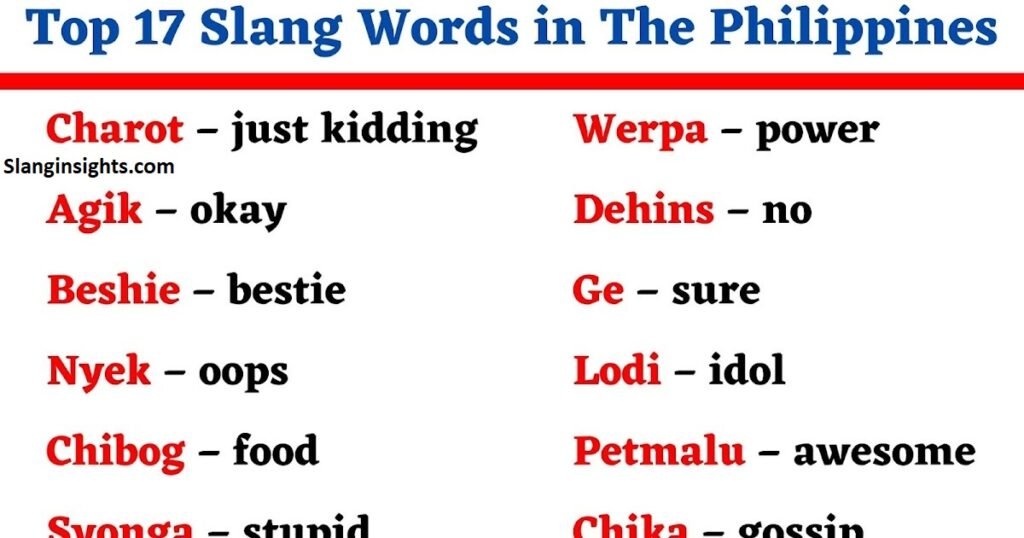
Some popular examples include lodi (idol), petmalu (awesome), werpa (power), chika (gossip), jowa (boyfriend or girlfriend), kilig (romantic excitement), beshie (best friend), charot (just kidding), awit (expression of pain or frustration), deins (no), g (ready or game), tol (bro), mars (friend), paps (buddy), tropa (group of friends), walwal (party hard), landi (flirting), harot (playful flirting), hugot (deep emotional expression), banat (pickup line), seenzone (ignored message), ghosting (sudden disappearance), tambay (hanging out), petiks (relaxed), arat (let’s go), tara (come on), chibog (food time), gutom (hungry), busog (full), and keri lang (it’s okay or manageable).
These slang terms reflect Filipino humor, creativity, and modern youth culture in both casual speech and social media interactions.
Table of Contents
Quick Table
| Slang Word | Meaning |
|---|---|
| Lodi | Idol |
| Petmalu | Awesome / cool |
| Werpa | Power / strength |
| Chika | Gossip / talk |
| Jowa | Boyfriend / girlfriend |
| Kilig | Romantic excitement |
| Beshie | Best friend |
| Charot | Just kidding |
How I Learned Filipino Slang the Hard Way
My first week living with a Filipino family in Manila, I thought I was doing great with the language. I’d practiced basic Tagalog phrases, downloaded Duolingo, even watched a few Filipino teleseryes.
Then my host sister looked at me after I helped carry groceries and said, “Ang bait mo naman, grabe!”
I smiled, nodded, and quietly Googled it under the table.
That was my crash course in something no language app actually teaches you — Filipino slang. The living, breathing, ever-evolving version of the language that actual Filipinos use every single day.
Not the textbook Tagalog. Not the formal Filipino they teach in schools. The real stuff.
And honestly? Learning Filipino slang was the moment I went from “tourist” to someone Filipinos actually wanted to hang out with.
Why Filipino Slang Hits Different
Here’s the thing about Filipino slang — it’s not just vocabulary. It’s culture compressed into words. It reflects how Filipinos think, joke, love, and survive.
It mixes Tagalog, English, Spanish, and even regional languages into something beautifully chaotic that linguists literally call Taglish.
Walk into any Manila coffee shop, scroll through Filipino Twitter (now X), or binge Filipino YouTube — you’ll hear slang flying everywhere. And if you don’t know what people are saying, you’ll miss half the joke.
So let me break it down the way I wish someone had done for me.
The Everyday Staples You’ll Hear Within 10 Minutes
“Bes” / “Besh” / “Beshie”
This is basically “best friend,” shortened and softened. Filipinos love their friends deeply, and they love giving them affectionate nicknames even more. You’ll see this one everywhere — text messages, Instagram captions, TikTok comment sections.
“Bes, tulungan mo naman ako!” — “Bestie, help me out!”
Don’t be surprised if someone you just met calls you besh. It’s not weird. It’s warm.
“Lodi”
This one confused me so much the first time I heard it. Someone was describing a coworker as their lodi and I thought it was a name.
It’s not. It’s idol — spelled backwards. Filipinos took the Filipino-English word idol (meaning someone you admire or look up to) and reversed it. The result is lodi, which sounds cooler, sounds uniquely Filipino, and somehow caught on like wildfire around 2018–2019.
“Si ganap na lodi!” — basically calling someone an absolute legend.
“Petmalu”
Another reversed slang word. Petmalu comes from malupet, which itself is a slang version of malupit, meaning “fierce,” “badass,” or “amazing.” Yes, it went through two rounds of transformation.
Filipino slang really does operate on a different level.
You’ll hear this used as a pure compliment: “Ang petmalu ng performance niya!” — “Her performance was incredible!”
“Charot”
This is probably the most useful word in this entire article. Charot (sometimes written charot charot) means “just kidding” or “I’m joking.” It comes from gay lingo — specifically from the LGBTQ+ community in the Philippines, which has had an enormous influence on Filipino slang.
“Ayaw ko na sa ‘yo — charot!” — “I don’t like you anymore — just kidding!”
Use this one and Filipinos will light up. It signals that you’ve actually been paying attention to how they actually talk.
“Werpa”
Power — reversed and respelled. Filipinos will do this to English words too, not just Filipino ones. Werpa means strength, power, energy, or motivation.
You’ll see it a lot as encouragement: “Werpa ka diyan!” — “You’ve got this! Stay strong!”
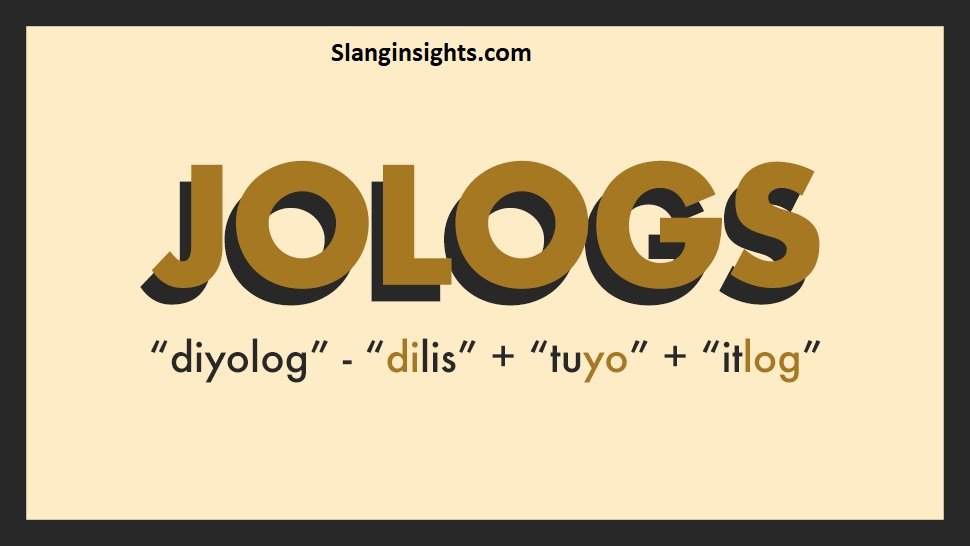
The Slang That Shows How Filipinos Actually Feel
One thing I didn’t expect is how much Filipino slang is emotionally specific. There are words that capture feelings that English honestly struggles to name cleanly.
“Gigil”
This one isn’t new slang, but it’s so distinctly Filipino that it deserves a spot. Gigil is the overwhelming urge to squeeze or pinch something because it’s so unbearably cute. You know that feeling when you see a puppy or a chubby baby and your hands just want?
That’s gigil. And Filipinos have a word for it. English doesn’t. (The internet briefly tried to claim it, but Filipinos had it first.)
“Kilig”
That giddy, heart-fluttering feeling you get when something romantic happens — a sweet text, an unexpected compliment, a lingering look. Kilig is exactly that. It’s joy mixed with butterflies mixed with wanting to tell your best friend immediately.
“Nakakakilig yung ginawa niya!” — “What he did gave me butterflies!”
Filipino romance language is built around this word.
“Naiiyak na ko”
Okay, this one’s Tagalog more than slang, but it shows up constantly in comment sections under emotional videos: “Naiiyak na ko.” — “I’m already crying.”
Filipinos are genuinely emotional people. They’re not ashamed of it. Slang that expresses feeling openly is everywhere in the language.
The Gen Z Filipino Slang (For When You’re Online)
Filipino Gen Z has its own layer of slang that lives mostly on social media — TikTok comments, Twitter threads, Facebook group posts. If you’re spending time in Filipino digital spaces, you need these.
“Sana all”
Short for sana lahat — “I hope everyone [has this].” It’s usually said in a bittersweet, half-joking way when you see something nice that you don’t have yourself.
Someone posts a photo of their anniversary trip: “Sana all.” Someone’s boyfriend cooked them dinner: “Sana all.”
It became so popular it transcended the internet and entered everyday conversation.
“Grabe”
Not exactly new slang, but its current usage is. Grabe literally means “grave” or “serious,” but it’s evolved into a versatile intensifier — like “wow,” “oh my god,” “seriously?”, and “unbelievable” all in one.
“Grabe naman siya!” could mean she’s amazing, she’s terrible, or she’s just… a lot. Context is everything.

“No choice”
This is English, but Filipinos use it in a very specific, very Filipino way. It means you have no option but to do something — often with a resigned, self-aware humor attached to it.
“Ayaw ko pumasok bukas pero no choice.” — “I don’t want to go to work tomorrow but I have no choice.”
There’s something very honest about this one.
“Malanding” / “Maarte”
Malanding is a playful (sometimes not-so-playful) word for a flirtatious person. Maarte means someone who is picky, fussy, dramatic, or extra — think “high maintenance.” Both get thrown around constantly in banter.
“Ang maarte mo naman!” — “You’re being so extra right now!”
Filipino Gay Lingo (Bekimon) — The Secret Layer of Everything
Here’s something most outsiders don’t fully appreciate: a massive portion of modern Filipino slang comes from Bekimon — the language of the Filipino gay community, particularly in Metro Manila. Words like charot, chika, keri, and many others entered mainstream Filipino because of this community’s influence on media, comedy, beauty, and pop culture.
“Chika” — gossip or to talk/share news. “Ano ang chika?” = “What’s the tea?”
“Keri” — from “carry.” It means “okay,” “manageable,” “I can handle it.” “Keri lang!” — “It’s fine, I’ve got it.”
“Shookt” — shocked. “Shookt ako diyan!” — “I am genuinely shook by that!”
“Werpa” — already covered above, but yes, gay lingo origin.
If you’re watching Filipino content and wondering why the funniest people seem to have their own language within a language — this is it.
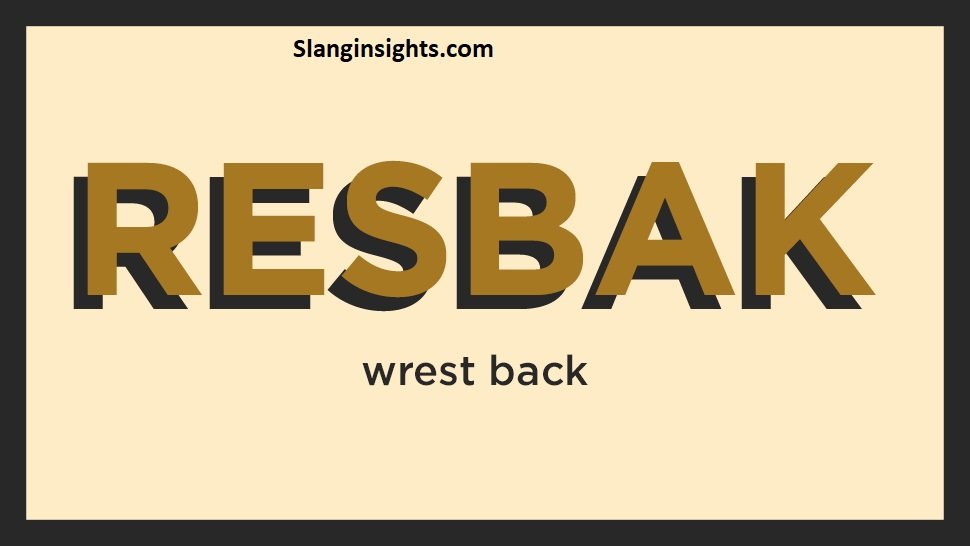
Mistakes I Made (So You Don’t Have To)
Using slang too formally. I once dropped petmalu in what I thought was casual conversation and apparently said it in a very stiff, textbook way. My Filipino friend laughed not at the word but at the delivery. Slang has rhythm and energy. Let it be loose.
Assuming slang is universal across regions. Filipino slang in Manila is different from what you’d hear in Cebu (Bisaya speakers have their own slang entirely), in Davao, or in Iloilo. Bekimon is mostly Metro Manila. If you travel around the Philippines, expect completely different expressions.
Overusing reversed words. I went through a phase where I kept reversing random Filipino words trying to make them sound like slang. It does not work that way. Not every word has a reversed version in use. Don’t try to invent them mid-conversation.
Mispronouncing “grabe.” It’s GRAB-eh, two syllables. Not “grave” like English. I said it the English way for an entire week before someone gently corrected me.
How to Actually Learn Filipino Slang That Sticks
The best resources aren’t apps or textbooks. Here’s what actually worked for me:
Filipino TikTok and YouTube — search Filipino comedy skits, reaction videos, and vlogs. The comment sections alone are a slang education.
Twitter/X Filipino community — extremely active, extremely slang-heavy. Even just lurking teaches you a lot.
Filipino teleseryes on Netflix — Huwag Kang Mangamba, First Lady, and others are full of natural dialogue. Turn on Filipino subtitles if available.
Talk to actual Filipinos — obvious, but nothing beats getting gently corrected in real time. Filipinos are generally patient and thrilled when outsiders try to learn their language.
iTranslate or Google Translate — for on-the-spot lookups. Not always accurate with slang, but helpful as a starting point.
FAQ’s
What are Filipino slang words?
Filipino slang words are informal expressions used in everyday speech, especially by young people, to make conversations more casual, fun, and expressive.
Why do Filipinos use slang words?
They are used to show humor, emotion, creativity, and stronger connection in conversations, especially on social media and among friends.
Are Filipino slang words only in Tagalog?
Most are based on Tagalog, but many also come from English, internet culture, and mixed languages like “Taglish.”
Can foreigners use Filipino slang words?
Yes, foreigners can use them in casual settings, but it’s important to understand meanings and context first.
Are slang words used in formal writing?
No, slang words are generally not used in formal writing or professional communication.
Conclusion
Filipino slang words are an important part of modern communication in the Philippines, reflecting the creativity, humor, and cultural identity of its people.
These expressions make conversations more lively and relatable, especially among friends, family, and online communities.
Words like lodi, petmalu, werpa, and chika show how Filipinos creatively transform language to express admiration, excitement, or casual talk in a fun and unique way.
Over time, Filipino slang has evolved through social media, pop culture, and everyday interactions, blending Tagalog, English, and internet trends.
This mix has created a dynamic and ever-changing set of expressions that continue to grow with younger generations.
While slang is mainly used in informal settings, it plays a big role in strengthening social bonds and making communication more engaging.
Understanding Filipino slang not only helps in learning the language but also gives deeper insight into Filipino culture and mindset. It shows how language can be flexible, playful, and full of personality.
Whether you are a learner, traveler, or simply curious, knowing these slang words can help you connect better with locals and enjoy more natural conversations in the Philippines.