Funny Italian Slang Words Viral, Weird, and Hilarious Phrases (2026 Guide)
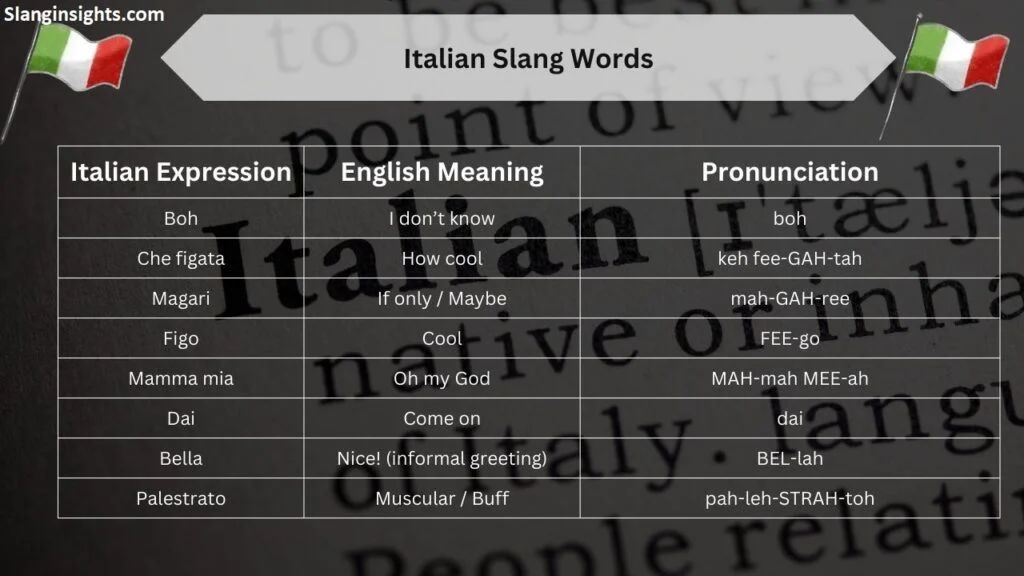
Funny Italian Slang Words is full of colorful expressions that can sound funny to English speakers. Native Italians often use these informal words in everyday conversations with friends and family.
Popular examples include Boh (I have no idea), Figo (cool), Cavolo (a mild way to say “damn”), Che palle! (how annoying!), and Mamma mia! (an expression of surprise).
Other humorous slang terms include Rosicare (to be jealous), Fare il furbo (to act smart), and Mangiare come un maiale (to eat like a pig).
Learning funny Italian slang words helps you understand local culture and makes conversations sound more natural and entertaining.
Table of Contents
Quick Table
| Italian Slang | Meaning in English | Example Use |
|---|---|---|
| Boh | I have no idea | Boh, non lo so. |
| Figo | Cool, awesome | Che figo! |
| Cavolo | Darn, damn | Cavolo, ho dimenticato! |
| Che palle! | How annoying! | Che palle, piove ancora! |
| Mamma mia! | Oh my goodness! | Mamma mia, che sorpresa! |
| Rosicare | To be jealous | Sta rosicando. |
| Fare il furbo | To act clever/sneaky | Non fare il furbo! |
| Mangiare come un maiale | To eat like a pig | Ha mangiato come un maiale. |
| Dai! | Come on! | Dai, sbrigati! |
| Magari | I wish! / Maybe | Magari fosse vero! |
The Day I Realized Textbook Italian Wasn’t Enough
I spent four months on Duolingo before my first trip to Bologna. Owl streak intact, “fluent” badge sitting smugly on my profile, grammar drills done. I genuinely thought I was ready.
Then my landlord handed me the keys, looked at my three suitcases, and said, “Dai, fai con calma, mica scappa nessuno.”
I understood every individual word. I had zero idea what he meant. Was someone running away? Was I supposed to be in a hurry? I just smiled, nodded, and dragged my bags inside like a confused tourist who’d peaked too early.
That sentence basically means “relax, take your time, nobody’s running off” — it’s just a chill way of telling someone not to stress.
And that was the moment I realized textbook Italian and real, everyday Italian are basically two different languages living in the same house.
Why apps skip the good stuff
Duolingo, Babbel, even most classroom courses teach you how to order a coffee and ask for directions to the train station. Totally useful. Also totally useless the second a real Italian opens their mouth and starts talking like an actual human instead of a phrasebook.
Slang is where the personality of a language lives. It’s how people actually joke around, complain about traffic, tease their friends, or react when something goes wrong.
Skip it, and you’ll understand grammar perfectly while still feeling lost in every group chat, every bar conversation, every WhatsApp voice note your Italian friends send you.
So after a few years of living here, getting laughed at more than once, and slowly building a mental glossary, here’s what I wish someone had handed me on day one.
The slang Italians actually use (not what’s in your textbook)
Boh — Said with a shrug, lips pushed forward, eyebrows up. It means “I dunno,” “no idea,” “couldn’t tell you.” This single sound carries more emotional range than entire English sentences. Ask anyone in Italy where the nearest pharmacy is on a Sunday and you will hear this word.
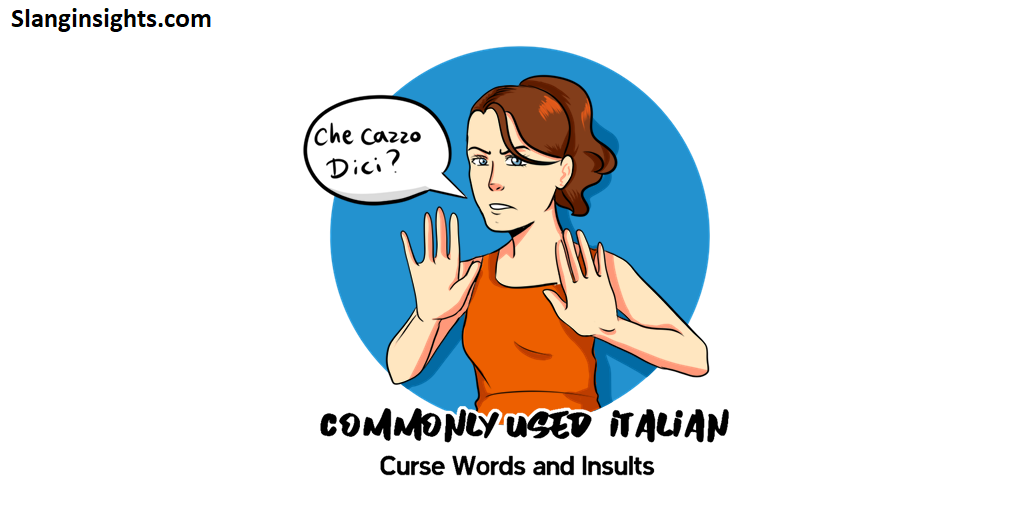
Che palle — Literally “what balls,” but it just means “how annoying” or “what a drag.” Stuck in traffic, waiting forever for a bus, dealing with paperwork at the post office — this phrase fits all of it.
Non mi rompere le scatole — “Don’t break my boxes.” It means stop bothering me, quit nagging. My downstairs neighbor uses this on her teenage son at least twice a day, usually through an open window.
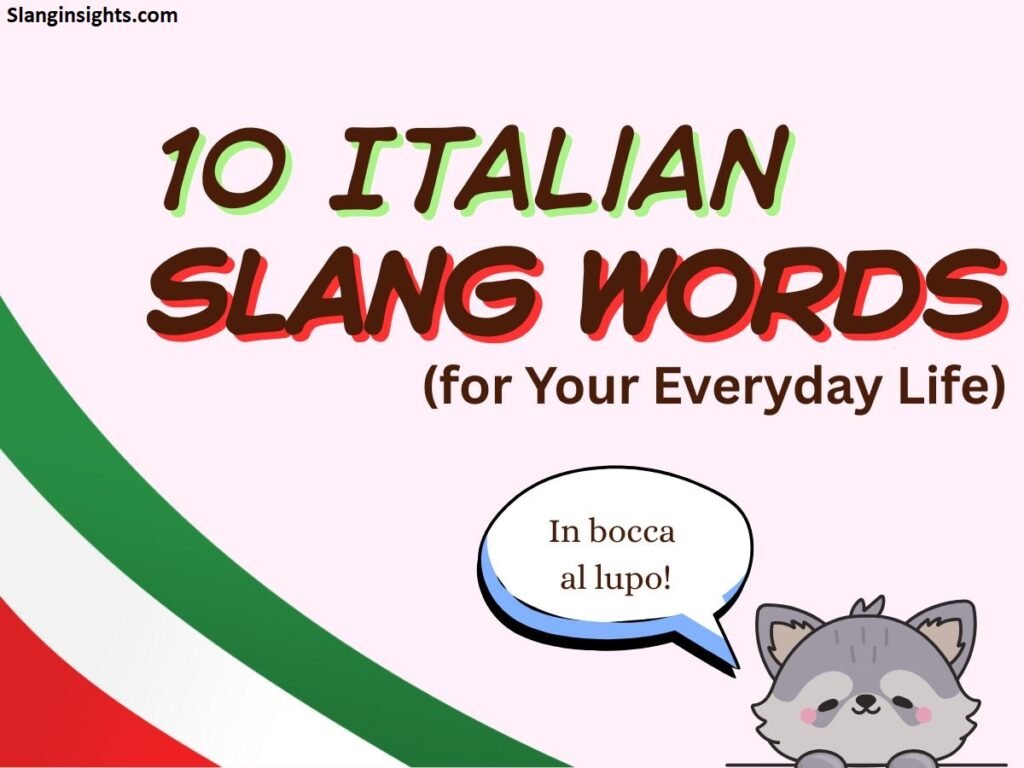
In bocca al lupo — “In the mouth of the wolf.” This is how Italians say good luck before an exam, a job interview, anything important. The correct response isn’t “thanks” — it’s “crepi il lupo,” meaning “may the wolf die.”
Saying “grazie” instead is considered bad luck, and yes, people will gently correct you for it.
Sei fuori come un balcone — “You’re as out as a balcony.” A playful way of telling someone they’re being ridiculous or a little crazy. Usually said with affection, not as an insult.
Hai voluto la bicicletta? E adesso pedala — “You wanted the bike? Now pedal.” This is the Italian version of “you made your bed, now lie in it.” My coworker said this to me after I volunteered for an extra project and then complained about the deadline. Fair enough, honestly.
Menare il can per l’aia — “To lead the dog around the threshing floor.” A wonderfully specific way of saying someone’s beating around the bush instead of just getting to the point.
Fare il filo a qualcuno — “To thread someone.” It means to flirt with or pursue someone romantically, usually with persistence. You’ll hear this from grandmothers gossiping about a granddaughter’s new admirer.
Acqua in bocca — “Water in your mouth.” Basically “keep this a secret,” “don’t say a word.” Said right after someone tells you something they really shouldn’t be telling you.
Cavoli — Literally “cabbages.” It’s a soft, family-friendly way to express frustration or surprise, roughly like “darn” or “geez.” Safe to use in front of anyone’s grandmother.
Daje (very common in Rome) — Roughly “come on” or “let’s go.” You’ll hear it shouted at football matches, said to encourage a friend, or muttered while pushing a stuck door.
Ammazza (also Roman) — Literally “kill,” but used the way English speakers use “wow” or “no way.” Has nothing to do with actual violence, despite how it sounds the first time you hear it.
How I actually started picking this stuff up
Nobody teaches slang in a structured way, because honestly, slang doesn’t really work in a structured way. Here’s the process that actually worked for me, slowly, over time.
Watch Italian shows with Italian subtitles, not English ones. Netflix shows like Suburra or Summertime are full of real, casual dialogue. Turning on Italian subtitles instead of English ones forces your brain to connect the spoken slang with the written word, instead of just reading a translated version that smooths everything over.
Use HelloTalk or Tandem to talk to actual people, not just an app algorithm. These apps connect you with native speakers who want to practice your language in exchange for help with theirs. I’d send a voice message, get corrected, and usually learn one weird phrase per conversation that no course ever mentioned.
Keep a dumb little notes app list. Every time I heard something I didn’t understand, I typed it into my phone phonetically, then asked an Italian friend later what it meant. Half the time the explanation came with a story, which made it stick way better than flashcards ever did.
Just ask. This sounds obvious, but I avoided it for months out of embarrassment. Italians, in my experience, genuinely love explaining slang. It’s rarely annoying to them — it usually turns into a fun five-minute tangent about regional differences.
Step 5: Pay attention to tone and context before repeating anything. Some slang is playful and totally fine to use with strangers. Other phrases are only okay between close friends, or carry a sharper edge than they first appear to. Watch how locals use a phrase — who they say it to, in what mood — before trying it out yourself.
Mistakes I made so you don’t have to
I once used a phrase I’d heard my landlord say casually to his buddies, and repeated it to a shop owner who was maybe twenty years older than him.
The look I got back wasn’t anger, just mild confusion, like I’d shown up to a job interview in pajamas. Lesson learned: slang has an audience, and using the wrong one in the wrong room makes you look clueless, not cool.
Regional differences also trip people up constantly. A phrase that’s totally normal in Rome might get you a blank stare in Milan, and vice versa.
Italy isn’t one big uniform slang dictionary — it’s more like twenty overlapping ones, with some words shared everywhere and others fiercely local.
Another common mistake is overusing slang to try to sound fluent. It backfires. Dropping five slang phrases into one sentence doesn’t sound natural, it sounds like someone trying way too hard.
Native speakers sprinkle slang in naturally, not constantly.
And don’t translate literally and assume it makes sense in English. “Che palle” sounds bizarre if you think about it word for word. The trick is learning the meaning behind the phrase, not the dictionary definition of each individual word.
FAQ’s
What are funny Italian slang words?
Funny Italian slang words are informal expressions used by native Italians in casual conversations. They often sound amusing and reflect Italian culture and humor.
Is Italian slang commonly used in everyday life?
Yes, Italians frequently use slang when talking with friends, family, and colleagues. It makes conversations more natural and expressive.
What does “Boh” mean in Italian slang?
“Boh” means “I don’t know” or “I have no idea.” It is one of the most common and recognizable Italian slang words.
Can tourists use Italian slang words?
Absolutely. Learning a few slang expressions can help tourists connect with locals and better understand informal conversations.
Are Italian slang words different in each region?
Yes, many regions in Italy have their own unique slang terms and expressions, although some are understood throughout the country.
Conclusion
Funny Italian slang words are a great way to explore the lighter side of the Italian language. While standard Italian is useful for formal situations, slang adds personality, humor, and authenticity to everyday conversations.
Expressions like “Boh,” “Che palle!,” “Figo,” and “Mamma mia!” are commonly used by native speakers and can make your Italian sound more natural and engaging.
Learning these phrases also provides insight into Italian culture and the way people communicate with friends and family. Many slang words are playful, exaggerated, and full of emotion, which reflects the lively spirit often associated with Italy.
Even if you are just starting to learn Italian, adding a few funny slang terms to your vocabulary can make the process more enjoyable.
Whether you are traveling to Italy, chatting with Italian friends, or simply interested in languages, understanding funny Italian slang words can help you appreciate the humor and charm of everyday Italian speech.
With practice, you’ll be able to recognize and use these expressions with confidence.