German Slang Words Funny, Modern, and Regional Expressions Explained
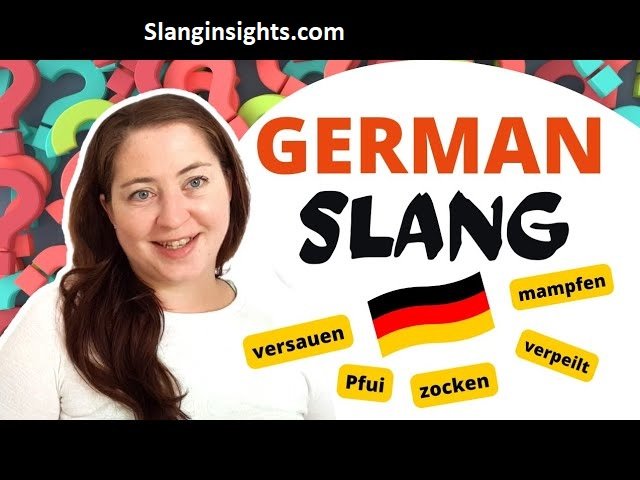
German slang words are informal expressions commonly used in everyday conversations across Germany.
These words help speakers sound more natural and understand native conversations better. Popular examples include Alter (dude), Krass (awesome or crazy), Geil (cool), Bock haben (to feel like doing something), Moin (hello), Quatschen (to chat), Kohle (money), and Abhauen (to leave quickly).
Younger Germans frequently use slang in text messages, social media, and casual conversations with friends.
Learning German slang words can improve your listening skills, make your speech sound more authentic, and help you connect with native speakers more easily.
Table of Contents
Quick Table
| German Slang Word | Meaning in English | Example Usage |
|---|---|---|
| Alter | Dude, bro | Alter, that was amazing! |
| Krass | Crazy, awesome | That’s krass! |
| Geil | Cool, great | This song is geil. |
| Bock haben | To feel like doing something | Ich habe Bock auf Pizza. |
| Moin | Hello | Moin! How are you? |
| Quatschen | To chat | Let’s quatschen later. |
| Kohle | Money | I need more Kohle. |
| Abhauen | To leave quickly | Let’s abhauen before it rains. |
| Kumpel | Buddy, friend | He’s my best Kumpel. |
| Zocken | To play video games | We’re zocken tonight. |
The German Slang Mistake That Made Everyone Laugh
My first week in Munich, I walked into a bakery, ordered a pretzel, and told the woman behind the counter that her shop was geil — meaning I thought it was cool.
She stared at me for a solid three seconds. Her eyebrows did something alarming. Then she burst out laughing and called her colleague over.
Turns out, geil technically means “horny.” It’s evolved into everyday slang for “awesome” or “cool,” yes — but context matters, tone matters, and apparently my delivery was very, very wrong.
That one embarrassing moment kicked off my obsession with German slang. Not the textbook kind — the real stuff.
The words people actually use with friends, in bars, over WhatsApp, and during football matches. So here’s the guide I wish I’d had before I accidentally propositioned a pretzel baker.
Why German Slang Is Actually Hard
Most language apps will teach you Guten Morgen and Wie geht’s? until you could say them in your sleep. But nobody warns you that real conversations sound nothing like that.
German slang is a moving target. It shifts by generation, by city, by immigrant influence (a lot of modern German slang has Turkish, Arabic, and English roots), and by what’s trending on social media.
The slang a 45-year-old uses in Hamburg is genuinely different from what a 19-year-old says in Berlin.
Add to that the regional dialects — Bavarian, Cologne-ish, Saxon — and you’ve got a language that sounds like three different languages depending on where you’re standing.
But here’s the thing: once you pick up even a handful of these words, Germans notice. They light up.
The wall comes down a little. I’ve had more genuine conversations with locals because I casually dropped a piece of slang than I ever managed with grammatically perfect formal German.
The Essential German Slang Words
Let’s start with the ones you’ll actually hear.
Geil
/ ɡaɪ̯l /
Technically means “horny” — but in everyday usage, it’s become the go-to word for “awesome,” “cool,” or “great.” Used by basically everyone under 60.
“Das Konzert war so geil!” — “That concert was so awesome!”
Alter
/ ˈaltɐ /
Literally “old person” or “dude.” Used as an interjection — think “man,” “dude,” or “bro” in English. Works for any gender.
“Alter, das war knapp!” — “Man, that was close!”
Krass
/ kʁas /
Can mean “intense,” “wild,” “crazy,” or “impressive” depending on tone. One of the most versatile words in young German. Borrowed from the idea of something being striking or extreme.
“Krass, das habe ich nicht erwartet.” — “Wow, I didn’t expect that.”
Digga
/ ˈdɪɡa /
Northern German slang (especially Hamburg) for “dude” or “mate.” Very casual. Has Turkish and hip-hop influences. If you’re in Munich, you might say “Bro” instead — yes, Germans use that too.
“Digga, wo warst du gestern?” — “Dude, where were you yesterday?”
Moin
/ mɔɪ̯n /
Northern Germany’s universal greeting. Works for good morning, good afternoon, good evening, and honestly hello at any time. Minimal effort, maximum authenticity. North Germany
“Moin!” — can be used literally any time of day. One “Moin” = standard greeting. Two “Moin Moin” = very enthusiastic.
Läuft bei dir
/ lɔʏ̯ft baɪ̯ diːɐ̯ /
Literally “things are running for you” — said with admiration when someone’s doing really well or pulled off something impressive. The German equivalent of “you’re killing it.”
“Du hast die Prüfung bestanden und einen neuen Job? Läuft bei dir!” — “You passed the exam AND got a new job? You’re on fire!”
Bock haben
/ bɔk ˈhaːbn̩ /
“To be up for something” or “to feel like doing something.” Saying you have “Bock” means you’re in. “Keinen Bock” means you’re absolutely not in. This one comes up constantly.
“Hast du Bock auf Kino heute Abend?” — “Are you up for the cinema tonight?”
Ich glaub’ mein Schwein pfeift
/ ɪç ɡlaʊ̯p maɪ̯n ʃvaɪ̯n pfaɪ̯ft /
Literally “I think my pig is whistling.” German’s colorful way of expressing total disbelief or shock. Kind of like “you’ve got to be kidding me.” Germans love pig-based expressions — don’t ask me why.
When someone tells you something completely unbelievable: “Ich glaub’ mein Schwein pfeift!”
Alles klar
/ ˈalɛs klaːɐ̯ /
Technically “everything’s clear” — but functions like “all good,” “sounds good,” “got it,” or even just “hello.” One of those phrases that does ten different jobs depending on context.
“Alles klar?” / “Ja, alles klar!” — “Everything good?” / “Yeah, all good!”
Hammer
/ ˈhamɐ /
Yes, like the tool. As slang, it means “amazing,” “incredible,” or “insane” (in a good way). You’ll hear older Germans use it more than younger ones, who’d probably say “krass” or “geil” instead.
“Das war ein Hammer-Spiel!” — “That was an incredible game!”
The Newer Stuff: Slang That’s Taken Over
This is where it gets interesting. Modern German slang is hugely influenced by immigrant communities — particularly Turkish-German and Arabic-German speakers — and by internet culture. Some of these words don’t even look German at first glance.
Wallah
/ ˈwala /
From Arabic — means “I swear to God” or “I promise.” Widely used by young Germans across all backgrounds as an intensifier or a way to express sincerity. You’ll hear it constantly in Berlin.
“Wallah, das ist wahr!” — “I swear, that’s true!”
Lan
/ lan /
From Turkish — means “dude” or “man.” Common in cities with large Turkish communities like Berlin and Frankfurt. Often paired with “Digga” or used on its own.
“Was machst du, Lan?” — “What are you doing, man?”
Auf jeden
/ aʊ̯f ˈjeːdn̩ /
Short for “auf jeden Fall” — “definitely” or “for sure.” One of the most common affirmatives in casual speech. Germans drop the “Fall” part entirely in conversation.
“Kommst du morgen?” — “Auf jeden!” — “Are you coming tomorrow?” — “Definitely!”

Common Mistakes (I Made Most of These)
Using “geil” in a formal or semi-formal setting. I told a potential employer that their office was “geil” during a tour. I did not get called back. Save it for friends.
Assuming Northern slang works in the South. Dropping “Moin” in Munich will get you laughed at (lovingly, but still). And Bavarians have their own entire vocabulary — “Grüß Gott” instead of hello, “servus” as both hello and goodbye.
Overusing slang to sound cool. Using five slang words in one sentence sounds forced. One well-placed “krass” at the right moment lands much better than trying to rebuild your entire vocabulary overnight.
Not reading the room on borrowed slang. Words like “Wallah” and “Lan” come from specific communities. Using them respectfully with friends in casual contexts is fine. Dropping them in random situations can come across as trying too hard.
How to Actually Learn This Stuff
Here’s my honest advice on picking up German slang without it sounding rehearsed:
- Watch German YouTube or Twitch. Gaming channels and lifestyle vloggers are goldmines. Rezo, for example, is popular with younger Germans and absolutely packed with natural slang.
- Use the app Tandem or HelloTalk to find actual German speakers for language exchange. A 20-minute voice chat teaches you more slang than a week of Duolingo.
- Watch German reality TV or soap operas with German subtitles. “Berlin Tag & Nacht” is practically a slang dictionary in show form.
- Check out the r/german subreddit — native speakers there often explain modern slang in context, which is way more valuable than a dictionary definition.
- Don’t be afraid to ask. Germans generally appreciate the effort. If you hear a word you don’t understand, asking “Was bedeutet das?” (What does that mean?) is completely acceptable and usually leads to a fun conversation.
A Quick Regional Cheat Sheet
Berlin: Digga, Wallah, Lan, krassHamburg: Moin, Digga, MackerBavaria: Servus, Griaß di, OidaCologne: Alaaf, JeckNationwide: Alter, geil, Bock, auf jeden
“Oida” is worth a special mention. It’s the Viennese/Austrian/Bavarian equivalent of “Alter” — “dude” or “man” — and it’s everywhere in southern German-speaking culture. You’ll also see it spelled “Oida” on T-shirts, which is kind of its own cultural moment.
“The moment a German switches from formal to casual with you — starts using your first name, drops a ‘Digga’ or two — that’s when you know you’ve actually connected.”
The Words Germans Are Tired of Hearing
Every language has slang that’s jumped the shark. In German, a few words have become so overused that native speakers have started rolling their eyes at them.
Chillen (to chill/relax) — borrowed from English — is now so standard it’s barely slang anymore. Boah (an exclamation of surprise or exasperation) still gets used, but younger speakers find it a bit dated.
And saying something is “mega” or “ultra” (as in “mega cool”) has been around long enough that it’s become kind of the parent-trying-to-be-cool version of slang.
This is why I’d always recommend learning slang from current media rather than books. A slang guide written in 2018 might be teaching you things people stopped saying in 2021.
The Real Point of All This
Learning German slang isn’t about sounding cool or tricking people into thinking you’re a native speaker. It’s about showing up to the conversation with a little more warmth — meeting people where they actually are, not where the textbook says they should be.
The pretzel baker in Munich who laughed at my terrible use of “geil”? She ended up giving me a free pretzel and spending ten minutes teaching me the right words to use. That conversation was worth more than any flashcard app.
So try a few of these out. Mess up occasionally. Ask when you don’t understand. That’s exactly how it’s supposed to go.
FAQ’s
What are German slang words?
German slang words are informal expressions used in casual conversations. They help speakers sound more natural and understand native German better.
Why should I learn German slang words?
Learning slang improves your listening skills, makes conversations easier, and helps you communicate like a native speaker.
What is a common German slang word?
One of the most common German slang words is Alter, which means “dude” or “bro.” Another popular term is Krass, meaning “crazy” or “awesome.”
Do young Germans use slang often?
Yes. Teenagers and young adults frequently use slang in daily conversations, social media posts, and text messages.
Is German slang the same in every region?
No. Different regions of Germany have their own unique expressions and pronunciations, although many slang terms are understood nationwide.
Conclusion
German slang words are an important part of everyday communication and can make your language skills sound more natural and authentic.
While standard German is essential for grammar and formal situations, slang expressions help learners understand movies, music, social media, and casual conversations with native speakers.
Popular terms such as Alter, Krass, Geil, and Kohle are widely used and can greatly improve your ability to connect with German speakers.
Because slang evolves over time, new words and expressions continue to emerge, especially among younger generations. Regional differences also add variety to the language, making German culture even more interesting to explore.
By learning commonly used slang words, you can gain confidence in speaking and better understand how Germans communicate in real-life situations.
Whether you are studying German for travel, work, or personal interest, mastering slang expressions will help you sound more fluent and enjoy the language on a deeper level.