50 Sopranos Vocabulary Words Every Fan Needs to Know
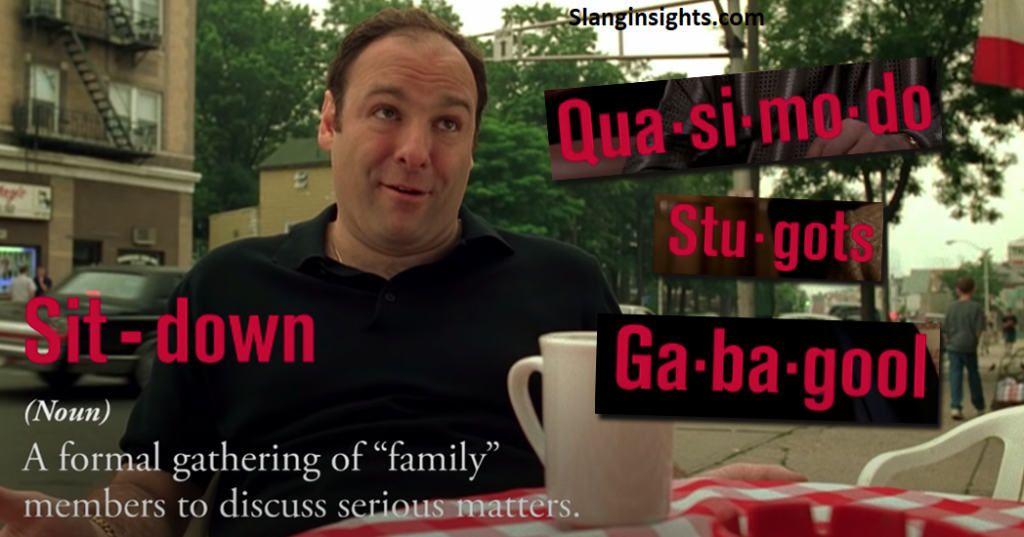
Sopranos vocabulary reflects the rich blend of Italian-American culture, mob slang, and New Jersey dialect that made the show so iconic.
Words like “gabagool” (a mispronunciation of capicola), “fuhgeddaboudit” (forget about it), and “goomah” (a mistress) capture the distinct linguistic style of the series.
Terms such as “made man,” “wiseguy,” and “consigliere” reveal the inner workings of organized crime, while phrases like “bada bing” add flavor and personality to everyday conversations among characters.
This unique vocabulary not only shaped the show’s authenticity but also influenced pop culture, with many terms becoming widely recognized even outside the world of the Sopranos.
Quick Table
Table of Contents
How The Sopranos Introduced Me to a Whole New Language
I still remember the first time I watched The Sopranos with my buddy who grew up in North Jersey. Every five minutes he’d pause the show and go “wait, you don’t know what that means?”
By episode three, I felt like I needed subtitles just to understand the subtitles.
That was almost ten years ago. I’ve since rewatched the entire series probably six times, dragged my wife into it (she resisted for months), and somehow became the guy at parties who explains what “forget about it” actually means when someone says it wrong.
So if you’re starting the show now, or you finished it and still don’t know why everyone calls each other “gabagool,” this one’s for you.
Why The Sopranos Vocabulary Even Matters
Here’s the thing people miss. The slang in this show isn’t just decoration. It’s basically a second language, and if you don’t get it, entire conversations feel like static.
I remember watching an episode with a friend who’d never seen the show, and Tony said someone was “a mope,” and my friend genuinely asked if that was a type of pasta. That’s when I realized how much this show relies on you picking up the lingo as you go.
The writers didn’t dumb anything down for the audience. That’s actually why the show holds up so well. But it also means first-time viewers miss half the jokes and insults without realizing it.
The Words You’ll Hear Constantly (And What They Actually Mean)
Let me break down the ones that come up over and over, because these are the building blocks.
Gabagool — This one confused me for weeks. It’s actually just how a lot of Italian-Americans in Jersey and New York pronounce “capicola,” which is a type of cured pork. Christopher orders it in a deli scene and it sounds nothing like the word on the menu. That’s not a script error, that’s dialect.
Goomar — This means mistress or girlfriend on the side. Tony has one (Gloria, then others). It comes from the Italian word “comare.” Once you know this word, you’ll notice half the plots revolve around someone’s goomar causing problems.
Skipper — This is what capos are sometimes called, referring to the guy who leads a crew under a boss. Paulie is a skipper. It threw me off at first because I kept thinking of boat captains.
Made man — This one’s actually explained in the show itself, so it’s less confusing, but worth mentioning. It means someone who’s been formally inducted into the family, usually after proving themselves through violence or loyalty. Not everyone around the crew is “made.”
Gumad — Similar to goomar, sometimes used interchangeably. Regional pronunciation differences are wild in this show.
Wiseguy — A general term for a mob guy, someone connected to organized crime. This term you’ve probably heard outside the show too, but Sopranos uses it constantly.
Bada bing — Not just the name of the strip club. It’s an expression that basically means “just like that” or “instantly,” similar to “just like that, boom, done.”
The Insults (Because Half the Dialogue Is Just Insults)
Honestly, one of the most entertaining parts of learning this vocabulary is realizing how creative the insults are.
Mope — A loser, someone pathetic or incompetent. Tony uses this a lot when he’s frustrated with someone underperforming.
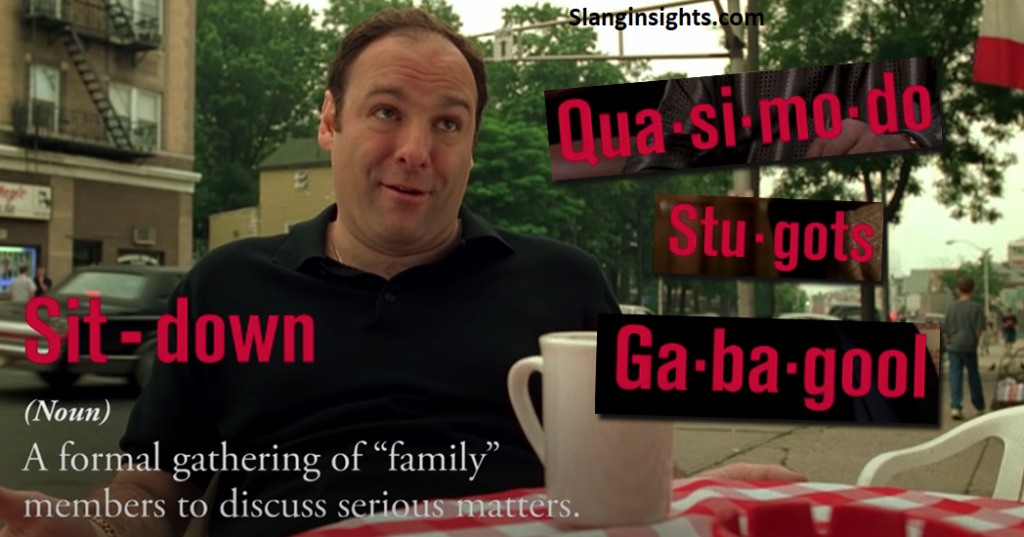
Stunad or stunad (spelled differently depending on who’s subtitling) — This means stupid or a fool. It comes from the Italian word “stonato.”
Mamaluke — Another word for a fool or idiot. I had to look this one up because I’d genuinely never heard it before the show.
Cugine — A young, lower-ranking mob associate, usually someone trying to prove himself. Sometimes used almost affectionately, sometimes as a put-down depending on tone.
I made the mistake early on of trying to use “mamaluke” in real conversation with my dad, who’s actually Italian-American from Brooklyn, and he just stared at me and said “where’d you learn that, from television?”
So yeah, use these words for fun, not to impress actual Italian relatives.
Business and Crime Related Terms
This is where it gets a little more complex, but once you understand these, entire plotlines make more sense.
The envelope — Refers to payoffs or bribes, usually cash literally handed over in an envelope. You’ll see this constantly with cops, politicians, and union guys.
Sit-down — A formal meeting between mob figures to resolve a dispute. These scenes are usually tense because someone’s about to get accused of something or asked to explain themselves.
Earner — Someone who consistently brings in money for the family. Being a good earner matters more than almost anything else in this world, even more than loyalty sometimes.
Button man — Someone whose job is essentially to carry out hits. Not every wiseguy is a button man.
Going to the mattresses — This means preparing for war between crime families, historically referring to when gang members would sleep on mattresses in safe houses during conflicts. The Sopranos references this concept a few times.
Family and Relationship Terms
Comare — The proper Italian term that goomar comes from, technically meaning godmother, but used in this context for mistress.
Consigliere — An advisor to the boss, someone who gives counsel on business and family matters. Silvio plays this role for Tony.
Underboss — Second in command, right below the boss. This role causes a lot of drama throughout the series because of who wants it and who has it.
How I Actually Learned All This (Step by Step)
If you’re trying to actually absorb this vocabulary instead of just nodding along confused, here’s what worked for me.
Step one, watch with subtitles on. I know it sounds basic, but Italian-American dialect combined with fast dialogue means you’ll miss words even if English is your first language. HBO Max has solid subtitle options, and I turned them on for my second full rewatch.
Step two, don’t pause and Google every single word. I made this mistake early on and it killed the pacing of episodes. Instead, I kept a notes app open and jotted down words I didn’t understand, then looked them up after finishing an episode.
Step three, watch interviews with David Chase or the cast. There are some great ones on YouTube where they explain specific slang choices and why they picked certain words for authenticity. This helped me understand the difference between show-invented slang and real regional dialect.
Step four, if you know anyone from North Jersey or Italian-American neighborhoods in New York, ask them. I did this with my friend’s dad, who grew up two towns over from where parts of the show were filmed, and he confirmed most of the slang, though he laughed at how “Hollywood” some of it sounded compared to real life.
Common Mistakes People Make With This Vocabulary
The biggest mistake I see people make is assuming every word is universal mob slang. Some of it is genuinely just regional Italian-American dialect that predates organized crime entirely. Gabagool has nothing to do with crime, it’s just cured meat.
Another mistake is using this vocabulary too seriously outside the context of the show. I’ve seen people try to sound tough using these words in casual conversation, and honestly it just comes off like they’re doing a bit, which is fine if that’s the intention.
People also mix up goomar and cugine a lot, probably because both start with similar sounds and both refer to people connected to the main character. Goomar is romantic, cugine is professional rank. Different categories entirely.
Last thing worth mentioning, don’t assume the subtitles are always spelling things “correctly.” Since a lot of this is spoken dialect rather than standard Italian, different fan wikis and even official show materials spell words differently.
Stunad, for example, shows up as stunad, stunod, and even studnad depending on the source. Don’t stress about spelling, focus on understanding the meaning.
FAQ’s
What does “gabagool” mean?
“Gabagool” is a phonetic, Italian-American pronunciation of “capicola,” a type of Italian cold cut. It became a famous example of Sopranos-style dialect.
What does “fuhgeddaboudit” mean?
“Fuhgeddaboudit” is a stylized way of saying “forget about it,” often used to dismiss something or express certainty about a situation.
What is a “made man” in the Sopranos?
A “made man” refers to someone who has been formally inducted into the mafia, gaining full status and protection within the organization.
What does “omerta” mean?
“Omerta” is the mafia’s code of silence, a strict rule that forbids members from cooperating with law enforcement or revealing organization secrets.
What is a “consigliere”?
A “consigliere” is a trusted advisor to the mob boss, often responsible for offering counsel and helping settle disputes.
Conclusion
Sopranos vocabulary is more than just clever dialogue, it’s a reflection of Italian-American culture, mob tradition, and the distinct linguistic identity of the New Jersey mafia world portrayed in the show.
Words like “gabagool,” “fuhgeddaboudit,” and “goomah” bring humor and authenticity, while terms like “made man,” “consigliere,” and “omerta” reveal the deeper structure and code of conduct within organized crime.
Together, these words created a language that felt real, immersive, and unforgettable to audiences.
Beyond entertainment, this vocabulary has left a lasting mark on pop culture, with many terms still used in everyday conversation or referenced in other media.
The show’s ability to blend humor, drama, and cultural authenticity through language is a major reason why it remains iconic decades after its debut.
Whether you’re a longtime fan or new to the series, understanding this vocabulary adds depth to the viewing experience and highlights how impactful The Sopranos was in shaping modern pop culture and slang.