Sopranos Dictionary Decode Every Mob Term From the Show
Sopranos dictionary helps fans decode the rich Italian-American slang and mob lingo used throughout the iconic HBO series.
Words like “gabagool” (a mispronunciation of capicola, an Italian cured meat) and “goomar” (a mistress) reflect the show’s authentic New Jersey-Italian culture.
Terms like “made man” describe a fully initiated mafia member, while “wise guy” refers to an organized crime associate.
A “sit-down” is a formal meeting to resolve disputes, and “whacked” means killed.
Understanding this Sopranos dictionary not only deepens appreciation for the show’s dialogue but also offers a fascinating glimpse into the blended language of mob culture and everyday Italian-American expressions.
Table of Contents
Quick Table
| Slang Term | Meaning |
|---|---|
| Gabagool | Mispronunciation of capicola, an Italian cured meat |
| Goomar | A mistress or side girlfriend |
| Made Man | A fully initiated member of the mafia |
| Wise Guy | A mob associate or organized crime member |
| Sit-Down | A formal meeting to resolve disputes |
| Whacked | Killed or murdered |
| Fugazy | Fake or phony |
| Skipper | A mob captain who leads a crew |
| Comare | A mistress (Italian-American term, similar to goomar) |
| Cugine | A young, low-ranking mob associate |
| Button Man | A soldier who carries out mob orders, including hits |
| Earner | A mobster skilled at generating income for the family |
| Rat | An informant who cooperates with law enforcement |
| Omerta | The mafia code of silence |
| Consigliere | A trusted advisor to the mob boss |
How I Learned The Sopranos Slang the Hard Way
I remember the exact moment I felt lost watching The Sopranos for the first time.
Tony was on the phone with Paulie, and Paulie said something about a guy getting “whacked” over a beef about a “bust-out,” and I just sat there with my remote in hand thinking, wait, what?
I’d paused the show, opened a new tab, and typed “what does bust-out mean sopranos” into Google before the scene even finished. That became a pattern for me.
Watch three minutes, pause, search a word, watch three more minutes, pause again. If you’ve done this too, you’re not alone, and honestly, it’s part of what makes this show so good.
The dialogue isn’t written for outsiders. You’re basically eavesdropping on guys who talk like this in real life, or at least like the writers imagined they would.
So after binging the whole series twice (once alone, once with my girlfriend who kept asking “wait, is that good or bad?” every five minutes), I basically built my own mental glossary.
I’m sharing it here because I wish someone had handed me this list back when I started season one.
Why The Sopranos Even Needs a Dictionary
David Chase and his writers pulled a lot of this slang from real Italian-American mob culture, some of it Italian, some of it Neapolitan or Sicilian dialect twisted through generations of Jersey and New York accents, and some of it just straight-up invented prison or street lingo that got absorbed into the culture.
The thing is, the show never stops to explain itself. Nobody turns to the camera and says “by the way, a goomah is a mistress.” You’re expected to pick it up from context, the same way you’d pick it up if you actually grew up around this world. That’s authentic, but it’s also confusing as hell if English is your only reference point.
The Words I Kept Having to Look Up
Let me walk you through the ones that tripped me up the most, because chances are they’ll trip you up too.
Goomar / Goomah — This one comes up constantly. It basically means mistress or girlfriend on the side, derived from the Italian word “cumare” (comare). Tony’s relationship with Irina and later Valentina falls squarely into this category. The wives all know what it means even if they pretend not to.
Comare — Same root as goomah, sometimes used more broadly for a close (often older) female friend, but in the show’s world it usually circles back to the mistress meaning.
Wiseguy — A made member of the mafia, someone who’s been formally inducted. Not every guy hanging around the Bada Bing is a wiseguy. Some are just associates, which is a completely different tier.
Made Man — Related to wiseguy. This means someone has been officially initiated into the family through a ceremony. Big Pussy talks about this a lot before things go sideways for him.
Skipper / Captain — A guy who runs his own crew under a boss. Tony starts the series as a capo (captain) before moving up.
Consigliere — The advisor to the boss, technically not supposed to be involved in violence, more of a legal and strategic mind. Silvio plays this role for Tony, and Tom Hagen plays the same role in The Godfather if you want a reference point.
Underboss — Second in command. This is where a lot of the power struggles in the show actually come from.
Button Man — A soldier, basically foot soldier level in the organization, does the dirty work when ordered.
Bust-Out — This one confused me the most honestly. It’s a scheme where a wiseguy takes over a legit business, runs up massive credit and debt buying inventory, sells everything off cheap or keeps it for himself, then lets the business collapse into bankruptcy. Davey Scatino’s sporting goods store gets bust-out’d in season one and it’s brutal to watch.
Whacked / Clipped / Popped — All slang for being killed. The show uses these interchangeably and casually, which honestly says a lot about how normalized violence is in that world.
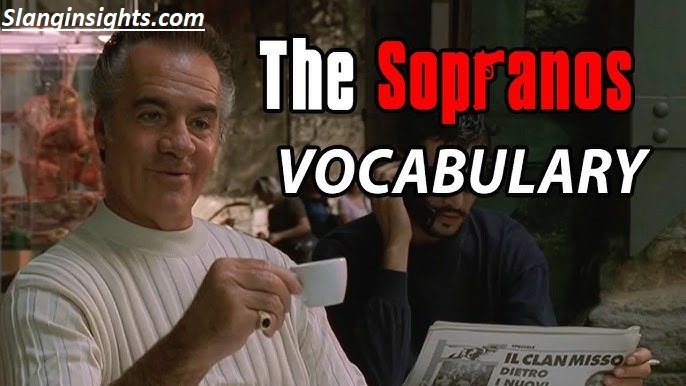
Rat / Cooperating Witness — Someone who talks to the FBI. The worst possible label you can get, worse than being a bad earner, worse than almost anything else.
Earner — A guy who consistently brings in money for the family. Being a good earner buys you a lot of protection even if you’re a pain in the ass otherwise.
Family — Not your actual blood relatives necessarily, this refers to the criminal organization itself. Tony has two families and the show constantly plays with that tension.
Omerta — The code of silence. Never talk to law enforcement, no matter what.
Regime — A capo’s crew, the group of guys working under him.
Shylock — A loan shark, someone lending money at insane interest rates, often with violence as the collection method.
Fugazy / Fugazi — Fake, not real. You’ll hear this used for counterfeit goods or a fake situation.
Stunad / Stunad — An idiot, a fool. Junior calls people this constantly.
Mannaggia — Basically “damn it” in Italian, an exclamation of frustration.
Va fa Napoli / Va Fangool — I’ll let you guess what this one means, it’s not polite, and yes it comes up a lot.
How I Actually Started Remembering These
Here’s what worked for me, step by step, if you want to actually retain this stuff instead of just googling every episode:
Step one: Watch with subtitles on. This sounds obvious but it genuinely helps because half the confusion comes from accents and mumbled dialogue, not the words themselves.
Step two: Keep a notes app open. I used the regular Notes app on my phone, nothing fancy. Every time a word confused me, I typed it in, watched the scene again if needed, and filled in the meaning once I figured it out from context or a quick search.
Step three: Rewatch key episodes after finishing a season. The pilot episode hits different once you understand terms like “made man” and “capo.” I went back and rewatched the first three episodes after finishing season one and caught so much more.
Step four: Look up real mafia history alongside the show. I ended up reading a bit about the actual Lucchese and Genovese crime families, and some interviews with former FBI agents. It’s wild how much research David Chase and his writers actually did.
Mistakes I Made Early On
I assumed every insult was an actual mob term. It’s not. Sometimes Paulie is just being Paulie and calling someone a name because he’s annoyed, not because it’s coded language.
I also mixed up “made man” and “wiseguy” for way too long, treating them as the same thing. They overlap but they’re not identical, a wiseguy is the general term while made man specifically refers to someone who went through the induction ceremony.
Another one: I thought “goomah” was an insult at first. It’s not really an insult in their world, it’s just a description, almost matter-of-fact, which honestly tells you a lot about the culture the show is portraying.
Where This Actually Helped Me Beyond the Show
Weirdly enough, once you learn this stuff, you start noticing it everywhere. Other mob movies and shows borrow the same vocabulary constantly. Goodfellas, The Godfather, even newer stuff like The Many Saints of Newark (the Sopranos prequel movie) uses this same language. Once you’ve got the dictionary down, you’re not lost anymore in any of these.
It also made me appreciate the writing so much more. These aren’t random words thrown in for flavor. Every term carries weight and history, and once you know what’s actually being said, entire scenes hit differently.
The therapy scenes between Tony and Dr. Melfi especially, because he’s constantly translating his world into terms she can understand, and now you get both sides of that translation.
FAQ’s
What does “gabagool” mean in The Sopranos?
Gabagool is a Northern Italian-American mispronunciation of “capicola,” a type of Italian cured pork meat, often used casually in the show’s dialogue.
What is a “made man” in mafia terms?
A made man is someone who has been formally initiated into the mafia, granting them full membership and status within the crime family.
What does “omerta” mean?
Omerta refers to the mafia’s strict code of silence, where members refuse to cooperate with law enforcement or reveal information about criminal activities.
Who is a “consigliere” in The Sopranos?
A consigliere is a trusted advisor to the mob boss, often responsible for offering counsel and mediating disputes within the family.
What’s the difference between a “goomar” and a “comare”?
Both terms refer to a mistress, but “goomar” is the more commonly used slang version, while “comare” is closer to the original Italian term.
Conclusion
A Sopranos dictionary offers more than just a glossary — it’s a window into the layered culture, humor, and tension that made the show a groundbreaking piece of television.
Terms like “gabagool,” “made man,” and “omerta” aren’t just slang; they carry historical weight rooted in real Italian-American and mafia traditions.
Understanding these words helps viewers appreciate the authenticity behind the dialogue and the subtle ways language reflects loyalty, power, and identity within the show’s world.
Whether you’re rewatching the series or diving in for the first time, having a Sopranos dictionary on hand makes every conversation between characters richer and more meaningful.
From casual family dinners to tense mob sit-downs, the language used in The Sopranos reveals the blend of tradition and street culture that defined its characters.
As the show continues to influence pop culture and inspire new fans, this dictionary ensures no one misses the meaning behind the mob’s unique vocabulary.